Istorijski kontekst
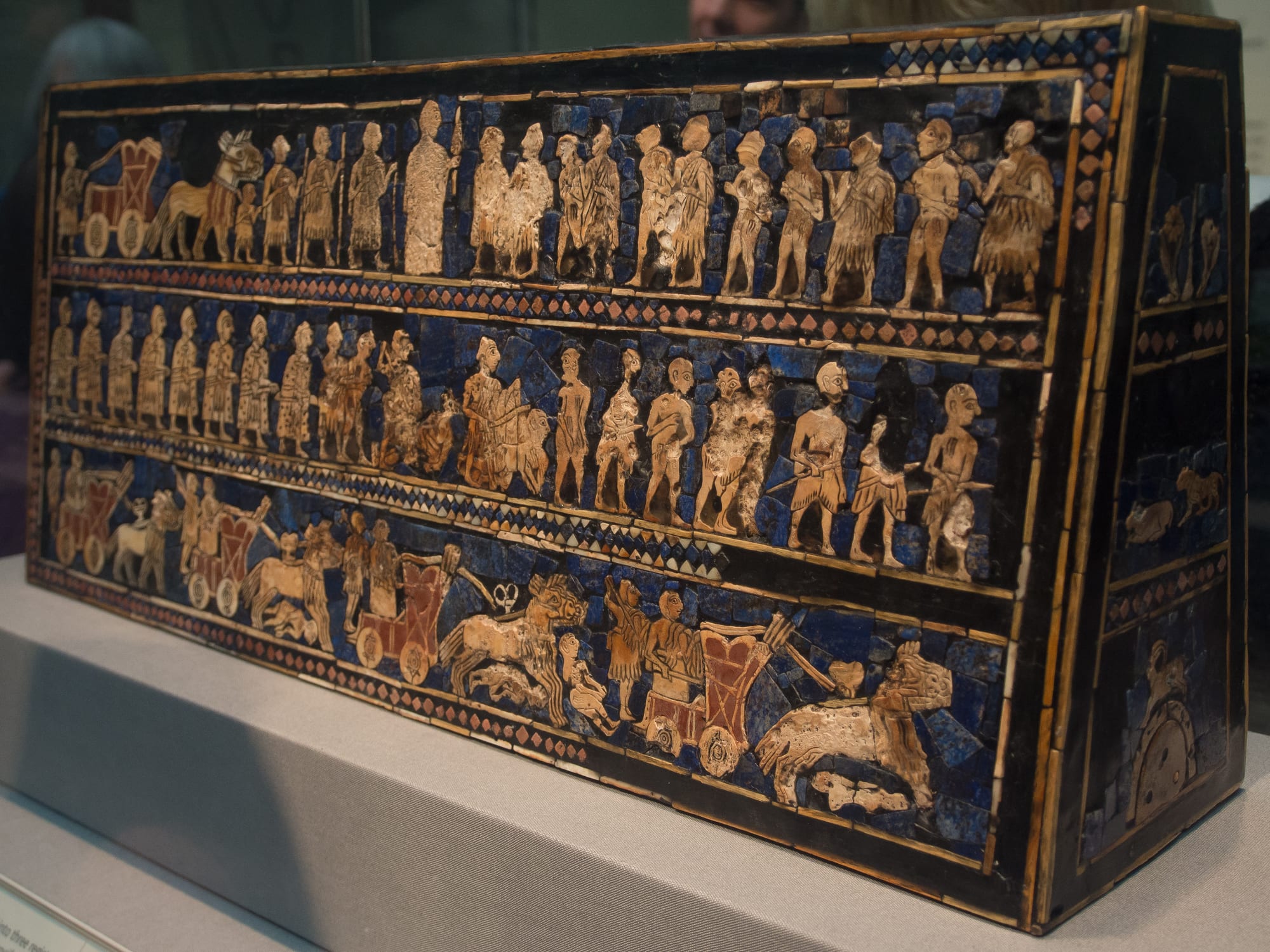
Standard iz Ura jedan je od najizuzetnijih artefakata koji su preživeli iz trećeg milenijuma pre nove ere, šuplja drvena kutija ukrašena na svoja dva glavna lica razrađenim figurativnim scenama komponovanim od školjki, crvenog krečnjaka i lapis lazulija postavljenih u bitumen. Iskopan tokom zime 1927-1928. godine od strane britanskog arheologa ser Čarlsa Leonarda Vulija iz Kraljevske nekropole u Uru, na teritoriji današnjeg južnog Iraka, predmet datira iz perioda Rane dinastije III (oko 2600-2400. pre n.e.), vremena kada je sumerska civilizacija dostigla vrhunac urbane sofisticiranosti. Vuli je pronašao Standard u uglu velike komore u grobnici PG 779, jednoj od najbogatijih sahrana na nekropoli, gde je ležao zdrobljen težinom srušene zemlje, sa drvenom jezgrom potpuno istrunulom. Bitumenski lepak je očuvao relativne pozicije intarzijskih delova, omogućavajući Vulijevom timu da rekonstruiše scene, mada originalni trodimenzionalni oblik predmeta ostaje stvar pretpostavke — Vulijeva rekonstrukcija kao kutije sa ravnim stranicama možda ne odražava tačno originalni oblik, za koji neki naučnici smatraju da je bio više nalik šupljem prizmatičnom šatoru.
Formalna analiza
Naziv „Standard” dao je Vuli, koji je pretpostavio da je predmet nošen na motki tokom procesija, poput vojnog standarda, mada je ovo tumačenje uglavnom napušteno. Alternativne teorije predlažu da je služio kao zvučna kutija muzičkog instrumenta (lire ili harfe, od kojih je nekoliko pronađeno u Kraljevskoj nekropoli), kontejner za figure za igru, ili čisto ceremonijalni predmet bez praktične funkcije. Prisustvo Standarda u kraljevskoj grobnici, okruženoj telima desetina pratilaca žrtvovanih da prate pokojnika na onaj svet, smešta ga unutar izvanrednih pogrebnih praksi Ura rane dinastije, gde je vladajuća elita inscenirala razrađene rituale smrti koji su uključivali masovno ljudsko žrtvovanje, dragocene grobne priloge i sahranjivanje čitavih volovski vučenih kola. Kakva god da je bila njegova prvobitna namena, dva glavna panela Standarda — konvencionalno označena kao „Rat” i „Mir” — predstavljaju najopsežnije sačuvane narativne kompozicije iz predsargonske Mesopotamije i pružaju neprocenjiv uvid u političku ideologiju i vizuelnu kulturu sumerskog kraljevstva.
Panel Rata, čitan odozdo naviše prema mesopotamskoj konvenciji, predstavlja sekvencijalni narativ vojnog pohoda, bitke i kraljevskog trijumfa u tri horizontalna registra. Donji registar prikazuje četvorotočkaše bojne kočije koje vuku onageri (azijski divlji magarci), čiji puni točkovi gaze tela palih neprijatelja — najraniji poznati prikaz točkova u borbi. Srednji registar prikazuje pešadijske vojnike u identičnim ogrtačima i kožnim šlemovima koji vode nage, vezane ratne zarobljenike, od kojih su neki ranjeni i krvare. Gornji registar kulminira figurom kralja, prepoznatljivog po većoj visini — konvencija poznata kao hijerarhijsko skaliranje koja će se zadržati kroz čitavu staroblisku i egipatsku umetnost — koji stoji u centru primajući zarobljenike dok mu pomoćnici drže kočiju u pripravnosti iza njega. Narativ se kreće od haosa i nasilja na dnu ka ceremonijalnom redu na vrhu, ostvarujući vizuelnu ideologiju u kojoj kraljevska vlast transformiše nered ratovanja u strukturiranu hijerarhiju državne moći.
Panel Mira, koji zauzima naličje, predstavlja odgovarajuću viziju prosperiteta i društvene harmonije, ponovo organizovanu u tri registra. Donji registar prikazuje ljude koji nose teške terete — zavežljaje, vreće i korpe — i vode onagere, predstavljajući poljoprivredni višak i stočno bogatstvo koji podupiru ekonomiju grada. Srednji registar prikazuje povorku figura koje nose stoku (bikove, koze i ovce) i druge namirnice, moguće danak ili darove namenjene kraljevskoj gozbi. Gornji registar, kompozicioni klimaks, prikazuje scenu gozbe u kojoj kralj, ponovo najviša figura, sedi naspram šest sedećih dvorjana ili zvaničnika, svi drže čaše dok muzičar svira liru sa bikovom glavom i pevač nastupa. Uparivanje Rata i Mira nije slučajno, već programsko: zajedno, dva panela artikulišu dvostruke temelje sumerskog kraljevstva — sposobnost odbrane grada-države vojnom silom i kapacitet da se osigura prosperitet kroz efikasno upravljanje i božansku naklonost. Ova dvojnost rezonira sa sumerskom književnom tradicijom, naročito kraljevskim himnama i gradskim tužbalicama koje hvale kralja kao i ratnika i pastira.
Tehničko izvođenje Standarda otkriva nivo umetničke sofisticiranosti i materijalnog luksuza koji osporava svaku predstavu o mesopotamskoj umetnosti kao primitivnoj ili gruboj. Figurativne scene komponovane su tehnikom koja se ponekad opisuje kao mozaik, ali se preciznije klasifikuje kao intarzija: pojedinačni komadi školjki (verovatno iz Persijskog zaliva), crvenog krečnjaka (uvezenog sa Iranskog platoa ili Arabijskog poluostrva) i lapis lazulija (dobavljenog iz udaljenih rudnika Badahšana u severoistočnom Avganistanu, više od 2.500 kilometara od Ura) su pojedinačno oblikovani, isečeni i gravirani finim detaljima pre nego što su postavljeni u matricu od bitumena nanetog preko drvene jezgre. Figure od školjki urezane su sa izvanrednom preciznošću — pojedinačna lica pokazuju različite izraze, vojnički ogrtači prikazuju tekstilne šare, a životinje ispoljavaju anatomski specifične osobine koje razlikuju onagere od pripitomljenih konjskih vrsta. Lapis lazuli, jedan od najcenjenijih luksuznih materijala na drevnom Bliskom istoku, obezbeđuje živopisnu plavu pozadinu na kojoj se blede figure od školjki ističu sa upečatljivom jasnoćom. Nabavka ovih materijala sa ogromnog geografskog prostranstva — Persijskog zaliva, Irana, Avganistana — svedoči o opsežnim trgovačkim mrežama na duge udaljenosti koje su održavale sumersku urbanu civilizaciju.
Ikonografija i simbolika
Narativna struktura Standarda iz Ura anticipira konvencije koje će dominirati starobliskom umetnošću tokom milenijuma. Upotreba horizontalnih registara za organizovanje sekvencijalnih događaja, primena hijerarhijskog skaliranja za označavanje društvenog statusa, prikazivanje figura u kompozitnoj perspektivi (glava i noge u profilu, torzo frontalno) i procesionalni raspored ponovljenih sličnih figura — sve su to odlike koje će se zadržati kroz akadsku, neoesumersku, asirsku i vavilonsku umetnost, i koje nalaze bliske paralele u egipatskim vizuelnim konvencijama. Standard tako zauzima temeljnu poziciju u razvoju narativne umetnosti starog sveta, demonstrirajući da su do sredine trećeg milenijuma pre nove ere mesopotamski umetnici razvili sofisticiranu vizuelnu gramatiku za prikazivanje složenih narativa sa više epizoda unutar strukturiranog slikovnog polja. Jasnoća i čitljivost ovog sistema — lakoća sa kojom posmatrač može pratiti radnju od registra do registra, identifikujući protagonistu, redosled događaja i društvenu hijerarhiju — sugeriše zrelu tradiciju narativnog stvaranja slika sa korenima koji se protežu znatno pre datuma nastanka Standarda.
Recepcija i nasleđe
Vulijevo iskopavanje Kraljevske nekropole Ura između 1922. i 1934. godine, sprovedeno zajednički od strane Britanskog muzeja i Muzeja arheologije i antropologije Univerziteta Pensilvanije, bio je jedan od prelomnih arheoloških projekata dvadesetog veka, a Standard je bio među najspektakularnijim nalazima. Vuli je bio pažljiv iskopavač po standardima svog doba, koristeći sistematski metod mreže i vodeći detaljne terenske beleške i fotografije koje ostaju esencijalni primarni izvori. Njegov popularni opis iskopavanja, Ur Haldejski (1929), približio je otkrića široj čitalačkoj publici i etablirao Ur — biblijsko rodno mesto Avramovo — kao jedno od najpoznatijih arheoloških nalazišta na svetu. Nalazi iz Kraljevske nekropole, podeljeni između Britanskog muzeja, Penn muzeja i Iračkog muzeja u Bagdadu, čine najbogatiju kolekciju rane mesopotamske umetnosti i luksuznih predmeta ikada pronađenu, uključujući zlatni nakit, lire sa ukrasima bikovskih glava, cilindrične pečate i slavnog Ovna u grmlju od zlata i lapis lazulija.
Standard iz Ura traje kao predmet od ogromnog umetnoistorijskog i kulturnog značaja, ne samo zbog onoga što otkriva o sumerskoj civilizaciji, već i zbog pitanja koja nastavlja da izaziva. Njegova prava funkcija ostaje nepoznata, originalni oblik neizvestan, a identitet kralja prikazanog na panelima stvar nagađanja — kandidati uključuju Meskalamduга, Akalamduга i druge vladare poznate iz natpisa pronađenih u nekropoli. Ove dvosmislenosti su same po sebi poučne, podsećajući nas da čak i najrečitiji vizuelni artefakti iz daleke prošlosti odoljevaju lakom tumačenju i da je razdaljina između naših modernih kategorija i drevnog sumerskog iskustva ogromna i ne može se potpuno premostiti. Ono što Standard bez ikakve sumnje komunicira jeste zapanjujuća umetnička ambicija i materijalna sofisticiranost jedne od najranijih urbanih civilizacija čovečanstva — društva koje je, pre pet milenijuma, proizvelo narativnu umetnost jasnoće, složenosti i lepote koja zahteva divljenje i pažljivo proučavanje i danas.