Istorijski kontekst
Bista Nefertiti stoji kao jedno od najprepoznatljivijih umetničkih dela iz antičkog sveta, remek-delo egipatskog portretizma čije je otkriće 1912. godine od strane nemačkog arheologa Ludviga Borharta fundamentalno izmenilo moderno razumevanje umetničkih dostignuća drevnog Bliskog istoka. Borhatova iskopavanja kompleksa radionice u Tel el-Amarni, kratkovekoj prestonici koju je uspostavio jeretički faraon Akhenaton, iznela su ovu izvanrednu skulpturu iz zbirke umetničkih modela i nedovršenih radova. Nalaz je pripisan radionici dvorskog vajara identifikovanog natpisom na konjskim naočnjacima kao „Tutmose”, majstora zanatije čiji je atelje očigledno služio kao primarni izvor kraljevskog portretizma tokom amarnskog perioda (oko 1353-1336. pre nove ere). Borhatov sopstveni dnevnik iskopavanja otkriva njegovo neposredno prepoznavanje izuzetnog kvaliteta biste — njegova suzdržana terenska beleška, „Opis je beskoristan, mora se videti”, prikriva senzaciju koja će uslediti kada je delo prvi put javno izloženo u Berlinu 1924. godine.
Bista pripada revolucionarnom umetničkom miljeu amarnskog perioda, tokom koga je faraon Akhenaton (rođen kao Amenhotep IV) preokrenuo vekove egipatske verske ortodoksije izdizanjem sunčanog diska Atona na status jedinog božanstva i preseljenjem prestonice iz Tebe u novi grad, Ahetaton (današnja Amarna). Ova teološka revolucija bila je praćena jednako dramatičnom transformacijom umetničkih konvencija. Dok se tradicionalna egipatska umetnost pridržavala krutih kanona idealizacije i kompozitne perspektive, amarnska umetnost uvela je zapanjujući naturalizam — izdužene lobanje, meke stomake, pune usne i individualizovane crte lica zamenile su bezvremene, standardizovane forme ranijih dinastija. Nefertiti, čije ime znači „lepotica je došla”, služila je kao Akhenatova Velika kraljevska supruga i čini se da je posedovala izvanrednu političku i versku vlast, moguće čak vladajući kao koregent ili jedini faraon pod imenom Neferneferuaton. Bista tako predstavlja ne samo portret kraljice, već dokument jednog od najradikalnijih kulturnih prevrata u antičkoj istoriji.
Formalna analiza
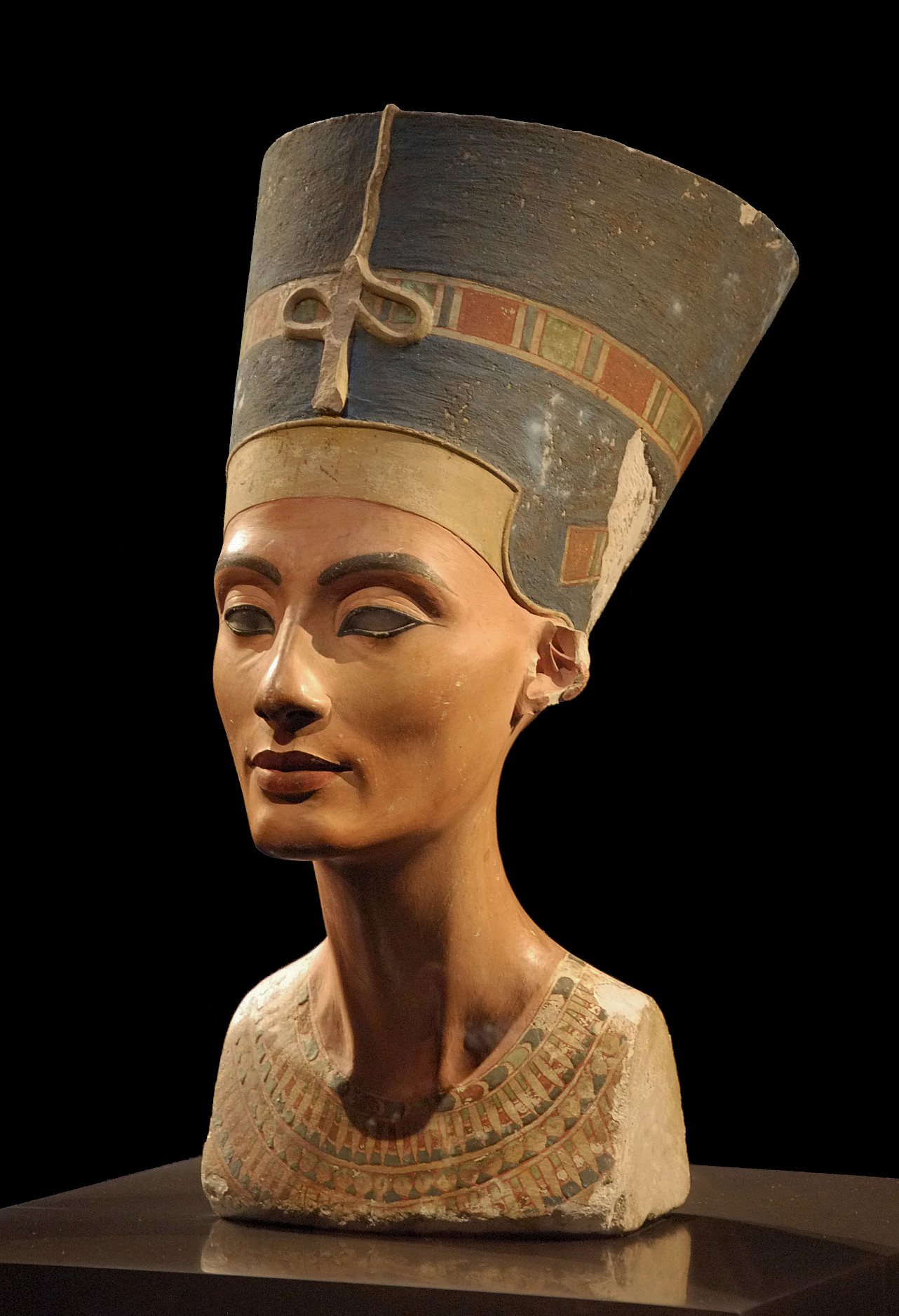
Sa formalnog stanovišta, bista postiže izvanrednu sintezu idealizacije i individualizacije koja je razlikuje i od ranijeg egipatskog portretisma i od preteranog naturalizma drugih amarnskih dela. Skulptura je isklesana iz jednog bloka krečnjaka, sa finijim detaljima — delikatnim obrvama, suptilnim modelovanjem jagodičnih kostiju, elegantnom linijom vilice — izgrađenim u slojevima oslikanog štuka. Polihromna površina, izuzetno dobro očuvana, koristi sofisticiranu paletu: tople oker tonove za kožu, duboko crvenu za usne, crne konture koje definišu obrve i preživelo desno oko (umetnut od gorskog kristala postavljenog u crni vosak), i živopisnu plavu za visoku, ravnom zavrenu krunu jedinstvenu za Nefertitinu ikonografiju. Proslavljna simetrija biste zapravo nije matematički savršena — suptilne asimetrije u jagodičnim kostima i blage linije oko usta daju neobičan osećaj života licu, kvalitet koji je naveo naučnike da debatuju da li je delo završen portret ili majstorski model (Modellbüste) korišćen kao vodič za druge vajare u radionici.
Nedostajuće levo oko generisalo je trajnu naučnu debatu. Za razliku od umetnutog desnog oka, leva očna duplju je glatka i prazna, bez oštećenja ili tragova koji bi sugerisali da je umetnutak ikada bio prisutan. Izneseno je nekoliko hipoteza: da je bista zaista radionički model, namerno ostavljena nedovršenom da demonstrira faze proizvodnje; da je oko izgubljeno u antici; ili, spekulativnije, da je sama Nefertiti patila od očnog oboljenja koje je vajar verno zabeležio. CT skeniranja sprovedena 2006. godine na Institutu za nauku o snimanjima u Berlinu otkrila su klesano jezgro od krečnjaka ispod slojeva štuka, sa potpuno formiranim licem koje pokazuje suptilne bore oko usta i nabore na obrazima — detalje koje je površina štuka ugladila, sugerirajući proces idealizacije primenjene preko prvobitno naturalističnijeg prikazivanja. Ova slojevita konstrukciona tehnika govori o sofisticiranoj radioničkoj praksi u kojoj realizam i idealizam nisu bili suprotnosti, već komplementarne faze u stvaranju kraljevske slike.
Ikonografija i simbolika
Ikonografski značaj biste proteže se izvan njenog statusa kao portreta. Visoka plava kruna, ponekad nazvana „Nefertitina kapa-kruna”, jedinstvena je u egipatskoj umetnosti za prikaze ove kraljice i mogla je nositi specifično teološko značenje unutar kulta Atona. Urej (uspravljenar kobra) na čelu krune signalizira kraljevsku vlast, dok široka ogrlica situira figuru u ustaljene konvencije elitnog egipatskog ukrašavanja. Izduženi vrat, bilo da je anatomski veran ili amarnska stilistička konvencija, daje bisti kvalitet aristokratske rafinovanosti koji je duboko oblikovao zapadne percepcije drevne egipatske estetike. Kombinacija kraljevskog mira i čulne lepote u bisti učinila je nju, s pravom ili ne, primarnim objektivom kroz koji moderna publika zamišlja drevnu egipatsku civilizaciju — jednim predmetom koji nosi nesrazmerno veliku reprezentativnu odgovornost.
Recepcija i nasleđe
Kritička recepcija Biste Nefertiti bila je nerazdvojiva od politike kulturnog nasleđa. Od trenutka njenog dolaska u Berlin, pitanja su okruživala okolnosti njenog izvoza iz Egipta. Borhatova podela nalaza sa Egipatskom službom za antikvitete, pod nadzorom francuskog egiptologa Pjera Lakoa, ispitivana je decenijama, sa optužbama da je Borhat namerno pogrešno predstavio značaj biste kako bi je obezbedio za svog nemačkog patrona, Džejmsa Sajmona, koji ju je naknadno poklonio berlinskim muzejima. Egipat je u više navrata tražio povratak biste, argumentujući da je napustila zemlju pod sumnjivim okolnostima tokom perioda kolonijalnog disbalansa moći. Nemačka je konzistentno odbijala, pozivajući se na zakonitost sporazuma o podeli iz 1913. Debata o repatrijaciji smešta bistu na raskršće istorije umetnosti, međunarodnog prava i postkolonijalnog diskursa, čineći je oglednim primerom u širim argumentima o etici enciklopedijskih muzeja i vlasništvu nad antikvitetima.
Uticaj biste na moderne koncepcije lepote i na umetničku praksu bio je ogroman i višeslojan. Od njenog javnog debija, reprodukovana je u bezbrojnim medijima — od komercijalne reklame do likovne umetnosti — postavši globalni simbol ženske elegancije i drevne sofisticiranosti. Umetnici tako raznoliki kao Men Rej, Fred Vilson i Isa Genken bavili su se njenim likovnim jezikom, često ispitujući rasne i kulturne politike ugrađene u njenu recepciju. Mirna, simetrična lepota biste prizivana je u studijama facijalne estetike i proporcionalne harmonije, mada takve primene rizikuju da tri milenijuma kulturne distance svedu na anahroni univerzalizam. Ono što ostaje van spora je izvanredna zanatska veština predmeta i njegova moć da komunicira preko ogromnih vremenskih i kulturnih razlika — trihliljadugodišnja polihromna skulptura koja nastavlja da privlači pažnju miliona, otelotvorujući radikalan predlog amarnskog perioda da kraljevska umetnost može biti istovremeno idealizovana i duboko, prepoznatljivo ljudska.