Istorijski kontekst
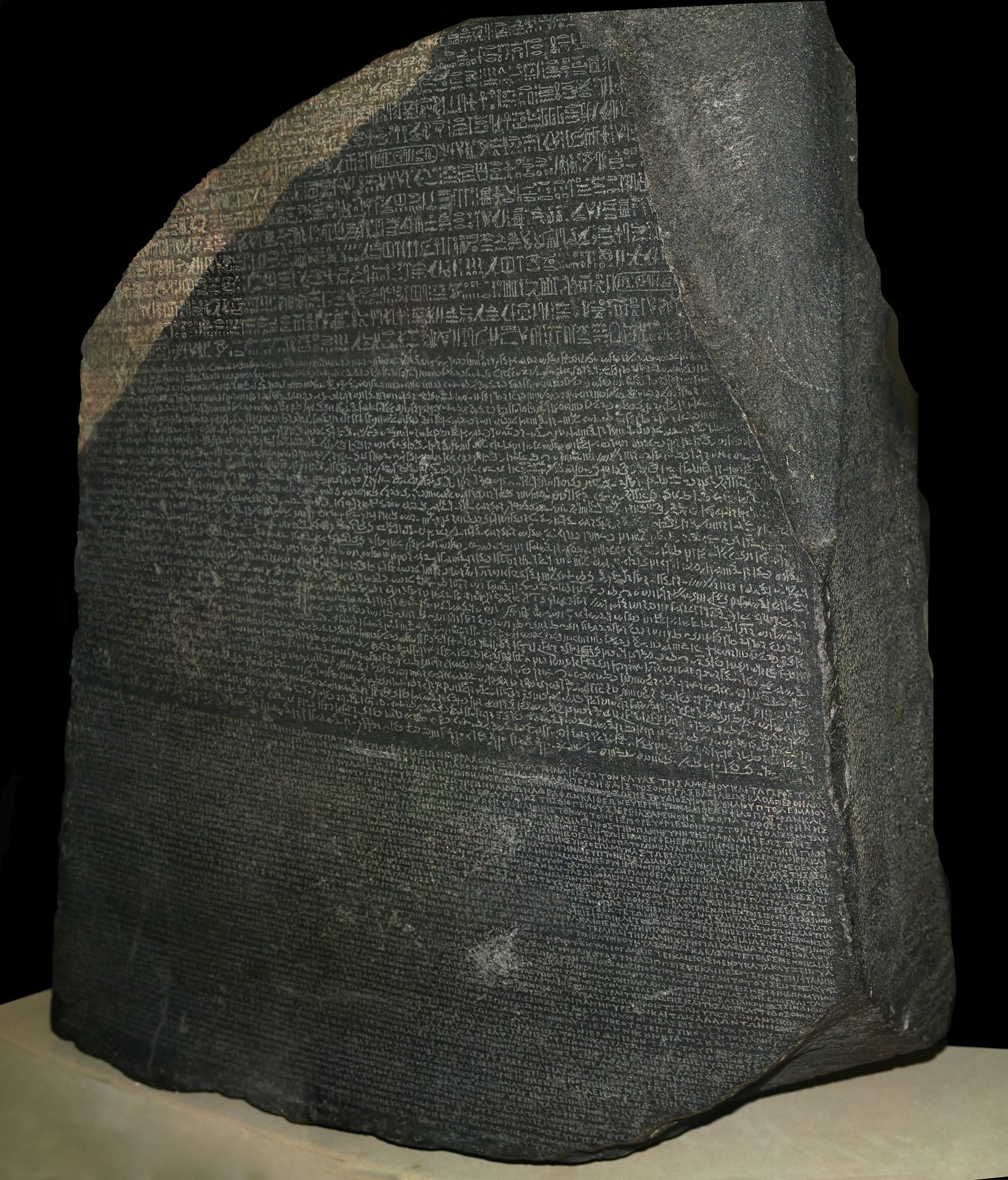
Rozeta kamen je fragment veće granodoritske stele prvobitno podignute u hramu, najverovatnije u Saisu u zapadnoj delti Nila, sa svešteničkim dekretom izdatim 27. marta 196. godine pre nove ere, tokom vladavine Ptolemeja V Epifana. Dekret, sastavljen tokom sinoda egipatskih sveštenika sazvanog u Memfisu, potvrdio je kraljevski kult trinaestogodišnjeg kralja i nabrojao njegove dobrotvorne činove prema hramovima, uključujući poreske olakšice, amnestiju za političke zatvorenike i vojne pobede. Ono što je ovu inače rutinsku ptolemejsku političku komunikaciju transformisalo u verovatno najslavniji objekat u istoriji arheologije bila je odluka da se dekret upiše na tri pisma: egipatskim hijeroglifima, svešteničkim pismom rezervisanim za monumentalne i svete kontekste; demotskim, kurzivnim administrativnim pismom korišćenim u svakodnevnom egipatskom životu; i grčkim, jezikom vladajuće ptolemejske dinastije. Ovaj trojezični format nije bio neuobičajen u ptolemejskom Egiptu, gde su grčki govoreći makedonski vladari morali da komuniciraju i sa svojom helenističkom administracijom i sa domorodačkim egipatskim sveštenstvom, ali je Rozeta kamen najkompletniji i najznačajniji preživeli primer.
Kamen je otkriven u julu 1799. od strane vojnika u francuskoj ekspedicionoj sili Napoleona Bonaprte tokom izgradnje utvrđenja blizu grada Rašida (Rozete) u delti Nila. Kapetan Pjer-Fransoa Bušar, oficir inžinjerije, prepoznao je značaj ispisane ploče i prijavio nalaz generalu Žak-Fransoa Menou. Otkriće je došlo u ključnom trenutku šireg francuskog poduhvata da pregleda i katalogizuje drevno nasleđe Egipta, intelektualnog projekta koji će na kraju proizvesti monumentalni opis Egipta (Description de l’Egypte). Francuski naučnici, uključujući orijentaliste Žan-Žozefa Marsela i matematičara Renea-Eduara de Vilije di Teraža, odmah su počeli da prave kopije i gipsane odlivke natpisa. Međutim, nakon francuskog poraza od strane britanskih snaga 1801, kamen je ustupljen Britaniji prema članu XVI Ugovora iz Aleksandrije. General Menou je prvobitno pokušao da zatraži kamen kao ličnu imovinu, ali je britanski komandant, general Džon Heli-Hačinson, insistirao na njegovom predavanju. Transportovan je u London i položen u Britanski muzej 1802, gde je ostao od tada — osim kratkog ratnog premeštanja u poštanski tunel ispod Holborna tokom Blica.
Dešifrovanje hijeroglifskog pisma pomoću Rozeta kamena spada među najveća intelektualna dostignuća devetnaestog veka, proces koji se odvijao tokom dve decenije i uključivao žestoko naučno rivalstvo. Prvi značajan napredak došao je od engleskog polihistora Tomasa Janga, koji je do 1814. pravilno identifikovao da kartuše (ovalni prstenovi koji okružuju određene hijeroglifske grupe) sadrže kraljevska imena, i da hijeroglifski tekst nije čisto ideografski već uključuje fonetske elemente. Jang je uspešno transliterovao ime „Ptolemej” iz kartuše na kamenu, otkriće koje je objavio u Encyclopaedia Britannica 1819. Međutim, upravo je francuski lingvista Žan-Fransoa Šampolion postigao odlučujuće dešifrovanje. Gradeći na Jangovom uvidu i crpeći iz sopstvenog dubokog poznavanja koptskog — poslednje faze egipatskog jezika, očuvane u liturgiji egipatskih hrišćana — Šampolion je demonstrirao u svom čuvenom Pismu g. Dakjeu iz 1822. da hijeroglifi predstavljaju složen sistem koji kombinuje logografske, alfabetske i determinativne znakove. Njegovo dešifrovanje imena Ramzes i Tutmos sa hramova Abu Simbela i Karnaka, koristeći principe izvedene iz Rozeta kamena, potvrdilo je da hijeroglifi mogu predstavljati zvukove kao i ideje, otključavajući čitav korpus faraonskih natpisa.
Formalna analiza
Kao materijalni objekat, Rozeta kamen otkriva sofisticirane zanatske tradicije ptolemejskog Egipta. Stela je isklesana od granodiorita, krupnozrnaste magmatske stene vađene u regionu Asvana, koja se od granita razlikuje višim udelom plagioklasnog feldspata, što kamenu daje karakterističnu tamno sivu boju sa ružičastim inkluzijama. Ispisana površina je pažljivo obrađena i polirana da primi tekst, koji je urezan sa izvanrednom preciznošću uprkos tvrdoći materijala. Hijeroglifski deo, koji zauzima gornji deo preživelog fragmenta, odlikuje formalni, monumentalni stil natpisa iz hramova Kasnog perioda, sa pažljivo proporcioniranim znakovima organizovanim u horizontalnim registrima. Srednji demotski deo koristi tečne ligature pisma izvedenog iz hijeratskog, koje je samo kurzivna adaptacija hijeroglifa. Grčki tekst na dnu prikazan je u standardnim lapidarnim kapitalima ptolemejske epigrafije. Približno dve trećine hijeroglifskog dela je izgubljeno, zajedno sa lunetom (zaobljenim vrhom, koji je verovatno nosio scenu kralja pred bogovima), ali su demotski i grčki delovi suštinski kompletni, sa samo manjim lakunama.
Politički sadržaj Memfiskog dekreta upisanog na kamenu osvetljava složenu dinamiku moći u ptolemejskom Egiptu. Do 196. godine pre nove ere, ptolemejsko kraljevstvo bilo je u krizi: Gornji Egipat bio je u pobuni pod domaćim egipatskim faraonima Horveneferom i Anhveneferom od 205. pre n.e., seleukidski kralj Antioh III zauzeo je ptolemejske posede u Levantu, a mladi Ptolemej V je došao na vlast putem pučanskog udara koji je ubio njegovog regenta. Raskošna hvala dekreta za kraljevu pobožnost i velikodušnost mora se čitati na pozadini ove političke nestabilnosti kao proračunati čin ideološke konsolidacije, pokušaj sveštenstva da legitimiše mladog monarha u zamenu za materijalne ustupke. Odredba da dekret bude postavljen u hramovima „pismom reči bogova, pismom dokumenata i pismom Jonjana” — to jest, na hijeroglifskom, demotskom i grčkom — odražava trojezičnu realnost ptolemejske administracije i potrebu režima da komunicira svoj legitimitet preko kulturnih i jezičkih granica.
Recepcija i nasleđe
Kolonijalna politika koja okružuje pribavljanje Rozeta kamena učinila ga je jednim od najistaknutijih objekata u savremenim debatama o kulturnoj repatrijaciji. Egipat je u više navrata zatražio povratak kamena, najznačajnije preko bivšeg ministra za antikvitete Zahija Havasa, koji je 2003. formalno podneo zahtev Britanskom muzeju. Muzej je dosledno odbijao, argumentujući da je kamen legalno ustupljen prema uslovima ugovora iz 1801, da je odgovorno konzerviran i univerzalno dostupan u Londonu, i da enciklopedijska kolekcija Muzeja pruža esencijalni komparativni kontekst. Kritičari odgovaraju da je ugovor nametnut pod vojnom prisilom između dve kolonijalne sile, od kojih nijedna nije konsultovala egipatski narod, i da uklanjanje kamena primerjuje sistematsku ekstrakciju kulturnog nasleđa koja je karakterisala evropski imperijalizam. Debata je dodatno zakomplikovana statusom kamena kao ikone identiteta Britanskog muzeja — to je pojedinačno najposećeniji objekat u instituciji i neprekidno je izlagan od 1802, čineći njegovo odsustvo gotovo nezamislivim sa kustoskog stanovišta, čak i dok etički argumenti za povratak postaju sve ubedljiviji.
Nasleđe Rozeta kamena proteže se daleko izvan egiptologije u širu kulturu kao univerzalna metafora za prevod i razumevanje. Izraz „Rozeta kamen” ušao je u svakodnevni govor da označi bilo koji ključ koji otključava prethodno nedostupno telo znanja, pozajmljujući ime popularnom softveru za učenje jezika, instrumentu NASA svemirske sonde i nebrojenim naslovima knjiga i tehnološkim projektima. Ova metaforička sveprisutnost odražava istinski obim onoga što je kamen omogućio: dešifrovanje hijeroglifa otvorilo je pristup civilizaciji u rasponu od tri milenijuma, otkrivajući književnost, religiju, administraciju i svakodnevni život drevnog Egipta sopstvenim rečima Egipćana, a ne kroz iskrivljeni objektiv grčkih i rimskih komentatora. Bez Rozeta kamena, hramovi Karnaka, grobnice Doline kraljeva i papirusi nebrojenih privatnih biblioteka ostali bi nemi spomenici, njihovi natpisi neprozirni kao što su bili za srednjovekovne arapske i renesansne evropske putnike koji su ih divili bez razumevanja.
Trajna moć kamena leži u njegovoj paradoksalnoj prirodi: on je istovremeno prozaičan birokratski dokument i svetsko-istorijski artefakt, svešteničkaoreska priznanica i glavni ključ jedne od najstarijih pismenih civilizacija čovečanstva. Njegova fizička skromnost — polomljena ploča tamnog kamena, otprilike veličine malog stola, površina zagušena jedva čitljivim tekstom — prkosi njegovoj intelektualnoj enormnosti. Posetioci Sobe 4 Britanskog muzeja često izražavaju iznenađenje njegovim relativno neupadljivim izgledom, očekujući nešto grandioznije, a ipak sama običnost objekta pojačava njegovu pouku: da najradikalnije transformišuća otkrića često ne proizlaze iz objekata intrinsične lepote, već iz tekstova koji pozivaju na strpljiv, mukotrpan rad interpretacije. Rozeta kamen nas podseća da je civilizacija, u svom jezgru, čin komunikacije, i da oporavak izgubljenih glasova — koliko god fragmentaran, koliko god politički opterećen — ostaje jedno od najdubljih dostignuća ljudske nauke.