Istorijski kontekst
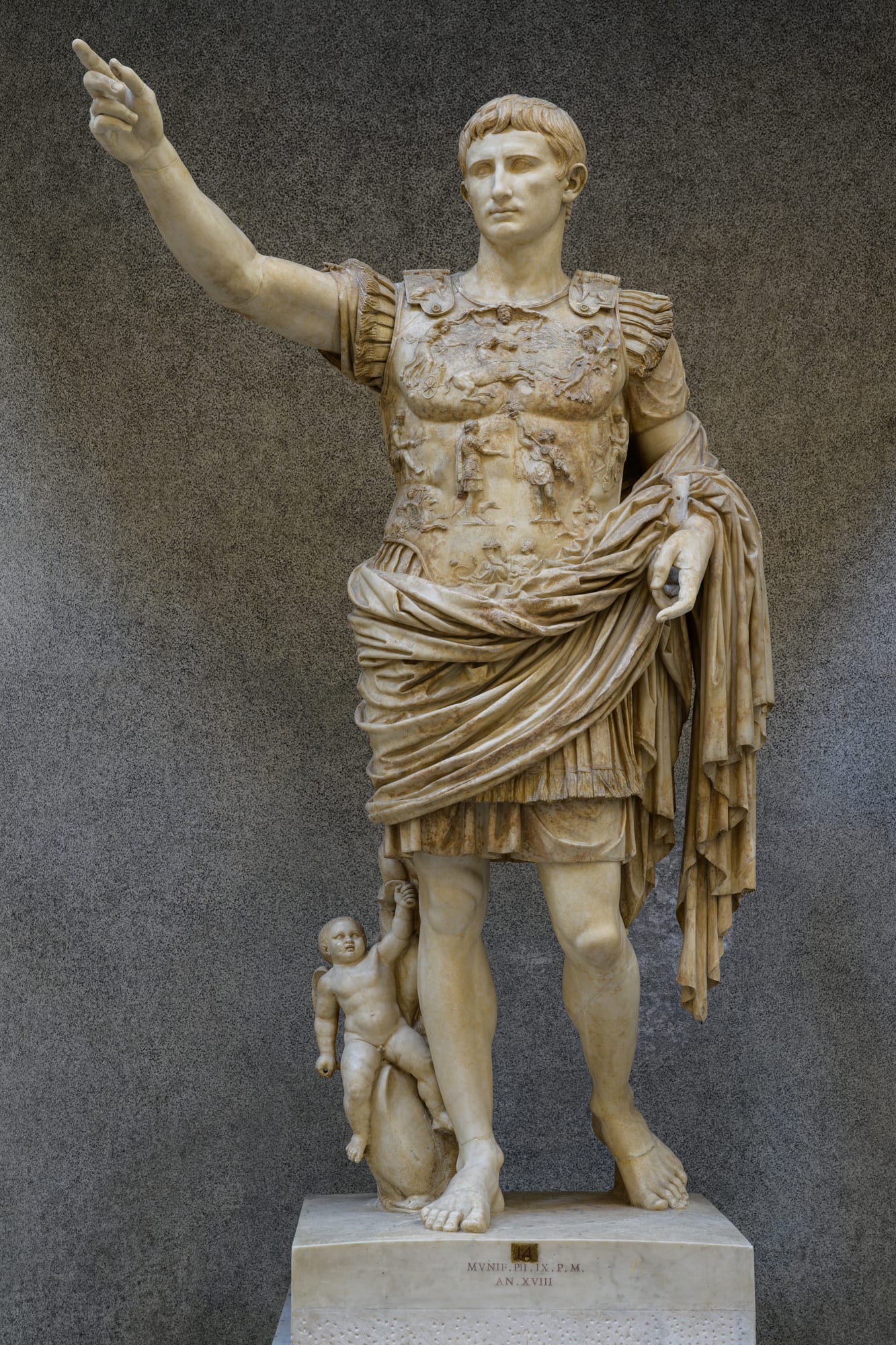
Augustus of Prima Porta je najslavniji portret prvog rimskog cara i jedna od najsofisticiranijih vežbi u političkom oblikovanju slike koja je preživela iz antičkog sveta. Otkriven 20. aprila 1863. u ruševinama Vile Livije u Prima Porti, približno petnaest kilometara severno od Rima duž Via Flaminia, kip prikazuje Gaja Oktavijana Turina — Avgusta, kako je titulisan od 27. godine pre nove ere — u vojničkom kostimu, sa podignutom desnom rukom u gestu adlocutio komande, dok je leva ruka prvobitno držala štap ili koplje. Vila u kojoj je pronađen pripadala je Liviji Druzili, Avgustovoj trećoj supruzi, a postavljanje kipa u privatnu carsku rezidenciju umesto javnog foruma sugeriše da je mogao služiti kao vrsta dinastičke ikone, podsetnik na carevu božansku vlast i vojna dostignuća u intimnom okruženju porodičnog seoskog odmarališta. Delo se generalno razume kao mermerna kopija, nastala ubrzo nakon Avgustove smrti 14. godine nove ere, bronzanog originala koji je mogao stajati na javnom mestu u Rimu, iako original nikada nije pronađen.
Odnos kipa prema klasičnom grčkom skulpturalnom kanonu odmah je uočljiv u njegovom stavu, koji blisko parafrazira Dorifora (Kopljanika) argivskog vajara Polikleta iz petog veka pre nove ere. Dorifor, poznat prvenstveno kroz rimske mermerne kopije, otelotvoravao je Polikletov teorijski spis o idealnim ljudskim proporcijama — Kanon — i ustanovio kontrapost stav koji će dominirati zapadnom figuralnom skulpturom dva milenijuma. Avgust stoji u gotovo identičnom prenošenju težine, desna noga nosi težinu tela dok leva zaostaje sa blago savijenim kolenom, proizvodeći karakteristično naginjanje karlice i odgovarajuće protivnaginjanje ramena. Prisvajajući ovaj stav, vajar je povezao Avgusta sa grčkim idealom kalos kagathos — lepog i vrlog građanina — istovremeno tvrdeći da rimski car otelotvoruje i prevazilazi klasično nasleđe. Izbor je bio namerna i politički nabijen: Avgustov kulturni program, koji je pesnik Horacije sumirao kao „zarobljena Grčka je zarobila svog žestokog osvajača”, sistematski je prisvajao grčke umetničke forme da legitimiše rimsku carsku vlast.
Formalna analiza
Ikonografski najsloženiji element kipa je razrađeni reljef na oklopa (grudni oklop), koji nosi gusto programsku reljefnu kompoziciju centriranu na scenu kosmičkog i političkog značaja. U centru, partski ratnik — identifikovan po karakterističnim pantalonama i mekoj kapi — vraća rimsku vojnu zastavu figuri u rimskoj vojnoj odeći, gotovo sigurno bogu Marsu ili personifikaciji rimske vojske. Ova scena komemorira diplomatski trijumf iz 20. godine pre nove ere, kada je Avgust pregovarao o vraćanju legionarskih orlova koje je Kras izgubio u katastrofalnoj bici kod Kara 53. godine pre nove ere, postignuće koje je Avgust proslavljao kao ekvivalentno vojnoj pobedi. Sa strana ove centralne vinjete nalaze se personifikacije osvojenih ili umirenih naroda — ožalošćena ženska figura koja predstavlja pokorenu provinciju, možda Galiju ili Hispaniju, i figura sa umotanim mačem koja simbolizuje umirenje. Gore, bog neba Kelus širi svoj plašt, dok Sol (Sunce) vozi svoju kočiju a Aurora (ili Luna) sledi sa posudom za rosu. Dole, Apolon jaše grifona a Dijana jelena, uokvirujući boginju zemlje Telus, koja leži sa rogom izobilja, označavajući poljoprivredni prosperitet Avgustovog mira. Ovaj kosmološki okvir transformiše specifičan diplomatski događaj u izjavu univerzalne, božanski zapovedane rimske supremacije.
Portretna glava predstavlja primer avgustovskog klasicizujućeg stila koji se dramatično odvojio od verističke tradicije kasnorepublikanskog portreta. Gde su republikanski portreti senatora i generala naglašavali starost, iskustvo i moralni autoritet nemilosrdnim prikazivanjem bora, opuštene kože i ćelavih glava — tradicija ukorenjena u rimskom poštovanju predačkog autoriteta i izlaganju posmrtnih maski (imagines) — Augustus of Prima Porta predstavlja cara kao večno mladu figuru, glatkog, neizborananog lica uokvirenog karakterističnim razdvojenim pramenovima preko čela koji su postali standardni ikonografski marker Avgustovskih portreta širom carstva. Ova idealizacija eksplicitno se oslanjala na klasičnu grčku tradiciju, posebno na spokojnu, bezvremensku lepotu Polikletovih i Praksitelovih glava, istovremeno uspostavljajući novi imperijalni tip portreta koji bi bio replíciran u stotinama kopija distribuiranih po provincijama. Rezultat nije toliko sličnost koliko brend: Avgustovo lice postalo je logo rimske moći, trenutno prepoznatljivo od Britanije do Sirije, a njegovo mladoliko savršenstvo komuniciralo je bezvremenski, natljudski autoritet principata.
Ikonografija i simbolika
Kod Avgustovog desnog gležnja, mala figura Kupidona (Erosa) jaše delfina, naizgled dekorativni detalj koji nosi dubok dinastički i teološki značaj. Kupidon je sin Venere (Afrodite), a delfin aludira na boginjino rođenje iz mora — zajedno, upućuju na tvrdnju Julijevske porodice o poreklu od Venere kroz njenog smrtnog sina Eneju, trojanskog heroja koga je Vergilije slavio u Enejidi kao osnivača rimskog naroda. Ova genealoška tvrdnja, centralna za Avgustovsku propagandu, smeštala je cara u božansku lozu koja je legitimisala njegovu izvanrednu političku poziciju: ne samo magistrat ili general, već potomak bogova. Kupidon takođe funkcioniše kao strukturna potpora, povezujući težinu ispružene leve ruke sa bazom kroz delfinov rep, uobičajeno rešenje u rimskoj mermernoj skulpturi za stabilizovanje poza koje je jači medij bronze mogao održati bez dodatne potpore. Umetnoistorijski, ova mala figura ilustruje kako su rimski vajari ugrađivali političke poruke u svaki element kompozicije, čineći čak i najpraktičniju strukturnu neophodnost delom šireg programa imperijalne ideologije.
Nedavne naučne analize potvrdile su da je Augustus of Prima Porta, kao i većina antičke mermerne skulpture, prvobitno bio polikromna — bogato oslikan u bojama koje modernim posmatračima, naviknutim na belinu očišćenog mermera, deluju zapanjujuće živopisno. Ultraljubičasta fluorescentna fotografija i Ramanova spektroskopija, sprovedene u Vatikanskim muzejima i Ny Carlsberg Glyptotek u Kopenhagenu, identifikovale su tragove pigmenta na oklopu, plaštu, kosi i površinama kože. Vojnički plašt prebačen preko leve ruke bio je oslikan u duboki tirski purpur — najskuplji pigment antičkog sveta, rezervisan za imperijalne i božanske figure — dok je oklop nosio polikromne detalje u plavoj, crvenoj, okeru i zlatu koji bi učinili njegov složeni reljefni program mnogo čitljivijim nego što je danas. Kosa je bila obojana crvenkaston braon, usne i koža su bile toniranem toplim tonovima puti, a oči su imale oslikane šarenice i zenice koje bi usmeravale pogled figure sa intenzitetom izgubljenim u praznom mermernom pogledu neoslikane površine. Ovi nalazi duboko menjaju naše razumevanje vizuelnog efekta kipa: daleko od stroge, monohromne figure koju danas vidimo, originalni Avgust bio je blesak imperijalne boje, jednako živo prisutan kao živući car koji se obraća svojim trupama.
Recepcija i nasleđe
Uticaj kipa Augustus of Prima Porta na kasniji imperijalni portret bio je ogroman i trajan. Kip je ustanovio vizuelni vokabular — gest adlocutio, oklopljeno telo, idealizovana portretna glava, božanski atributi — koji bi bio prilagođavan i rekombinovan u imperijalnim portretima vekovima, od Trajana i Hadrijana do Konstantina i dalje. Takođe je postavio šablon za odnos između portreta vladara i klasičnog grčkog prototipa, odnos koji bi zapadna umetnost višestruko preispitivala, od Karla Velikog i prisvajanja rimske imperijalne ikonografije do Napoleonovog naručivanja portreta od Antonija Kanove u obličju Marsa Mirotovrca. Avgustovski model portreta kao političke komunikacije — istovremeno ličan i institucionalan, dovoljno realističan da bude prepoznatljiv i dovoljno idealizovan da bude autoritativan — ostaje temelj zvaničnog portreta u zapadnoj kulturi, vidljiv u svemu od renesansnih vojvodskih portreta do moderne predsedničke fotografije.
Širi značaj kipa leži u njegovoj demonstraciji da umetnost u rimskom svetu nikada nije bila samo dekorativna ili komemorativna, već je služila kao primarni instrument političke moći. Svaki element kipa Augustus of Prima Porta — njegov stav, kostim, reljefni program, božanski atributi, sama materijalnost — bio je proračunat da komunicira specifičan skup poruka o carevom autoritetu, njegovom odnosu sa bogovima, vojnim dostignućima i ulozi garanta kosmičkog reda. Delo otkriva društvo u kome su vizuelne slike bile shvaćene kao jednako moćne kao zakoni, jednako ubedljive kao govori i jednako obavezujuće kao ugovori. U tom smislu, Augustus of Prima Porta nije samo portret vladara već manifest čitavog političkog sistema, sistema u kome je oblikovana slika cara bila suštinska tehnologija vladanja, projektujući moć preko ogromnih razdaljina carstva koje se prostiralo od Atlantika do Eufrata.