Istorijski kontekst
Trajanov stub, posvećen u maju 113. godine nove ere, stoji kao jedan od najambicioznijih spomenika rimskog carskog perioda i centralna tačka ogromnog arhitektonskog kompleksa poznatog kao Trajanov forum, poslednji i najgrandiozniji od carskih foruma. Projektovao ga je Apolodor iz Damaska, preeminentni arhitekta-inženjer trajanskog doba koji je takođe zamislio sam forum, prateću Baziliku Ulpija i dve biblioteke koje su prvobitno flankirale stub. Spomenik je podignut da komemorira dve pobedničke kampanje cara Marka Ulpija Trajana protiv Dačana 101-102. i 105-106. godine. Ovi ratovi, koji su rezultirali uništenjem dačkog kraljevstva pod njegovim formidabilnim vladarom Decebalomis i uklapanjem Dakije (otprilike savremene Rumunije) kao rimske provincije, doneli su ogromno bogatstvo carstvu u vidu opljačkanog zlata i srebra iz dačkih rudnika, resursa koji su finansirali veći deo Trajanovog ambicioznog građevinskog programa. Stub je prvobitno stajao između dva krila Bibliotheca Ulpia, a natpis na bazi beleži da je podignut da demonstrira visinu brda koje je iskopano da stvori platformu foruma, mada ova tvrdnja može biti jednako retorička koliko i topografska.
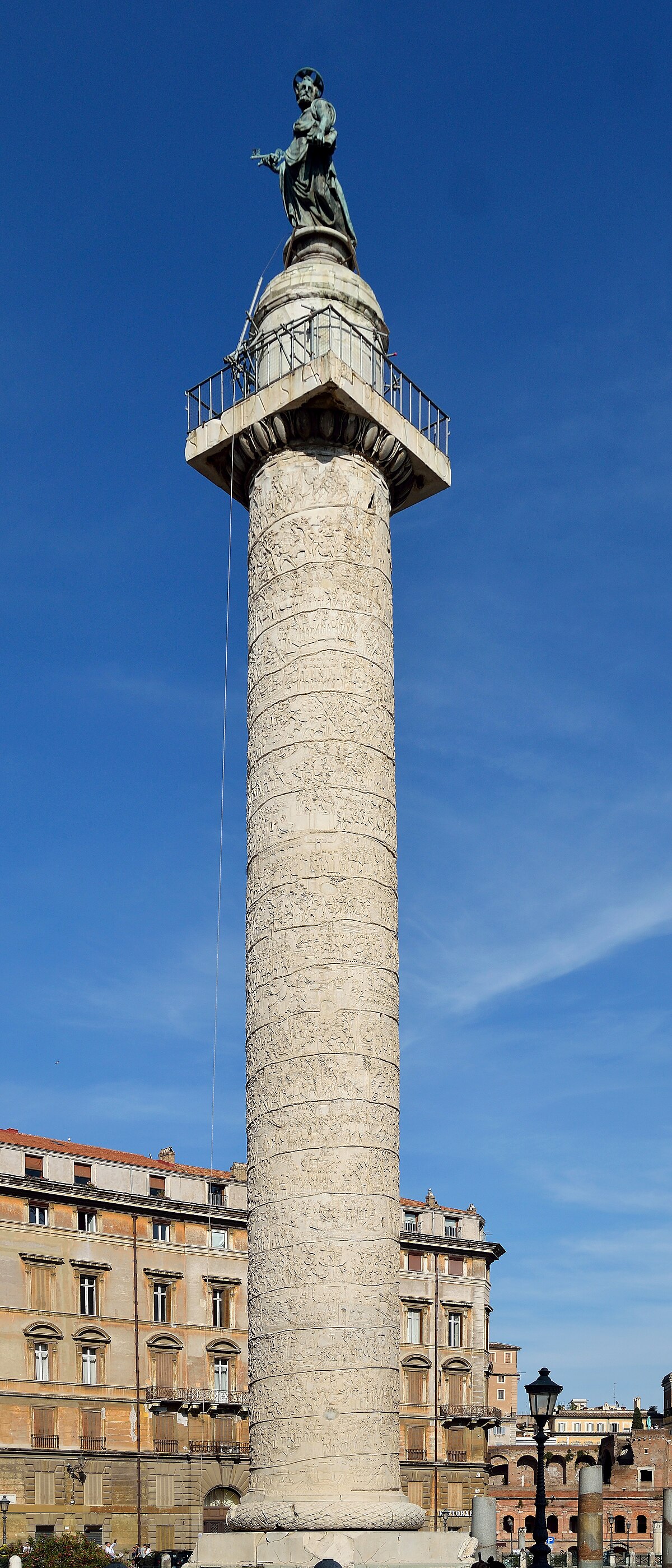
Spomenik se sastoji od dvadeset ogromnih bubnjeva od lunskog (kararskog) mermera, od kojih svaki teži otprilike trideset dve metričke tone, složenih do visine od otprilike trideset metara, sa ukupnom visinom uključujući postolje od skoro trideset osam metara. Unutar stubnog tela, spiralno stepenište od 185 stepenika, osvetljeno sa četrdeset malih proreznin prozora, vodi do vidikovca na vrhu, gde je prvobitno stajala kolasalna bronzana statua Trajana pre nego što je 1588. zamenjena figurom Svetog Petra, postavljenom od strane pape Siksta V. Baza stuba služila je kao grobnica: zlatna urna sa Trajanovim kremiranim ostacima postavljena je u malu komoru unutar postolja, izvanredna čast s obzirom na to da je rimski zakon normalno zabranjivao sahrane unutar svete granice grada (pomerijuma). Odluka Senata da Trajanu dodeli ovu privilegiju odražavala je izuzetno poštovanje u kome je Optimus Princeps bio drže, i uspostavila je stub istovremeno kao trijumfalni spomenik, pogrebni marker i delo narativne umetnosti bez presedana u antičkom svetu.
Formalna analiza
Najizvanrednija odlika stuba je njegova neprekidna spiralna reljefna traka, koja se spiralno obavija oko stabla u dvadeset tri zavoja od baze do kapitela, pokrivajući ukupnu dužinu od otprilike 190 metara i sadržeći oko 2.662 pojedinačne figure isklesane u niskom do srednjem reljefu. Friz pripoveda dve dačke kampanje u ugrubo hronološkom redosledu, razdvojene figurom Viktorije koja ispisuje štit otprilike na polovini stuba, i obuhvata izvanredan raspon vojnih i ceremonajalnih aktivnosti: prelaze reka, izgradnju utvrđenja i mostova, diplomatska poslanstva, religiozne žrtve (suovetaurilia), otvorene bitke, opsade, predaju varvarskih poglavica i konačni poraz i samoubistvo Decebala. Dubina reljefa progresivno raste od otprilike dva centimetra pri bazi do skoro dvanaest centimetara pri vrhu, proračunata optička korekcija dizajnirana da kompenzuje sve oštriji ugao posmatranja i osigura vizuelnu čitljivost sa tla, mada naučnici dugo debatuju o tome da li su gornji registri zaista bili namenjeni čitanju golim okom ili su obližnje bibliotečke terase pružale bliže tačke osmatranja.
Figuralni stil Trajanovog stuba predstavlja odlučan raskid sa helenizujućim klasicizmom ranije carske reljefne skulpture, kao što su procesione frize Ara Pacis Augustae. Figure su prikazane na način koji su istoričari umetnosti raznovrsno opisivali kao „plebejski”, „narodni” ili „dokumentarni”, karakterisan zdepastijim proporcijama, naglašenijim gestovima i preferencijom za konceptualnu jasnoću nad naturalističkom prostornom iluzijom. Scene su organizovane kombinacijom kontinuiranog narativa, u kome se isti protagonist pojavljuje više puta unutar jednog vizuelnog polja, i ptičije perspektive ili nagnute ravni tla koja omogućava posmatraču da razume složene prostorne rasporede kao što su planovi logora, prelazi reka i borbene formacije. Sam Trajan pojavljuje se preko šezdeset puta kroz čitav friz, dosljedno prepoznatljiv po svojoj visini i centralnom položaju, funkcionišući kao nit narativnog kontinuiteta koja ujedinjuje ogromnu kompoziciju. Klesanje otkriva rad više ruku, verovatno organizovanih u radioničke timove odgovorne za različite sekcije, pa ipak ukupna koherentnost dizajna sugeriše jednu kontrolišuću inteligenciju, gotovo sigurno Apolodora ili majstora skulptora koji je radio pod njegovim nadzorom, koji je zamislio čitav narativni program pre nego što su bubnjevi isklesani i sklopljeni.
Recepcija i nasleđe
Značaj Trajanovog stuba daleko prevazilazi njegovu komemorativnu funkciju, jer predstavlja nenadmašni vizuelni dokument rimske vojne organizacije, inženjerstva, logistike i strategije. Reljef sa izuzetnom specifičnošću prikazuje opremu, odeću i taktičke formacije rimskih legionarskih i pomoćnih trupa, građevinske tehnike korišćene u izgradnji puteva, mostova i utvrđenja (uključujući prikaz Trajanovog čuvenog mosta preko Dunava, koji je takođe projektovao Apolodor), i izgled, naoružanje i običaje dačkog neprijatelja. Vojni istoričari, arheolozi i studenti rimske materijalne kulture eksploatisali su slike stuba vekovima kao primarni izvor za razumevanje rimske vojske na vrhuncu njene moći, mada naučnici sada pokazuju veći oprez u tretiranju reljefa kao dokumentarnih zapisa, prepoznajući da su oblikovani umetničkim konvencijama, političkim imperativima i narativnim zahtevima koji mogu iskriviti ili stilizovati istorijsku stvarnost.
Stub je uspostavio monumentalni tip koji je odmah imitiran i čiji su odjeci trajali kroz zapadnu umetnost skoro dva milenijuma. Stub Marka Aurelija, podignut u Rimu između 176. i 192. godine da komemorira markomanke ratove, direktno je reprodukovao format spiralnog reljefa, uz usvajanje ekspresionističkijeg, emotivno nabijeniijeg skulpturalnog stila koji mnogi naučnici tumače kao odraz tamnije, uznemirenije atmosfere Markove vladavine. Napoleonov Vendômski stub u Parizu (1806-1810), liven od bronze zarobljenih neprijateljskih topova i obavijen spiralnim reljefom austerlicke kampanje, eksplicitno je prisvojio trajanski model da bi legitimisao carsku francusku moć. Izvan ovih direktnih potomaka, koncept neprekidnog narativnog reljefa na stubu uticao je na srednjovekovno rukopisno iluminiranje, romaničku skulpturu crkvenih portala, pa čak i na sekvencijalno slikovno pripovedanje modernih grafičkih romana i filma. Trajanov stub ostaje in situ u Rimu, izuzetno dobro očuvan uprkos skoro dva milenijuma izloženosti, i nastavlja da služi kao referentna tačka za diskusije o narativnoj umetnosti, carskoj propagandi i odnosu između vizuelnog predstavljanja i istorijskog pamćenja u zapadnoj tradiciji.