Istorijski kontekst
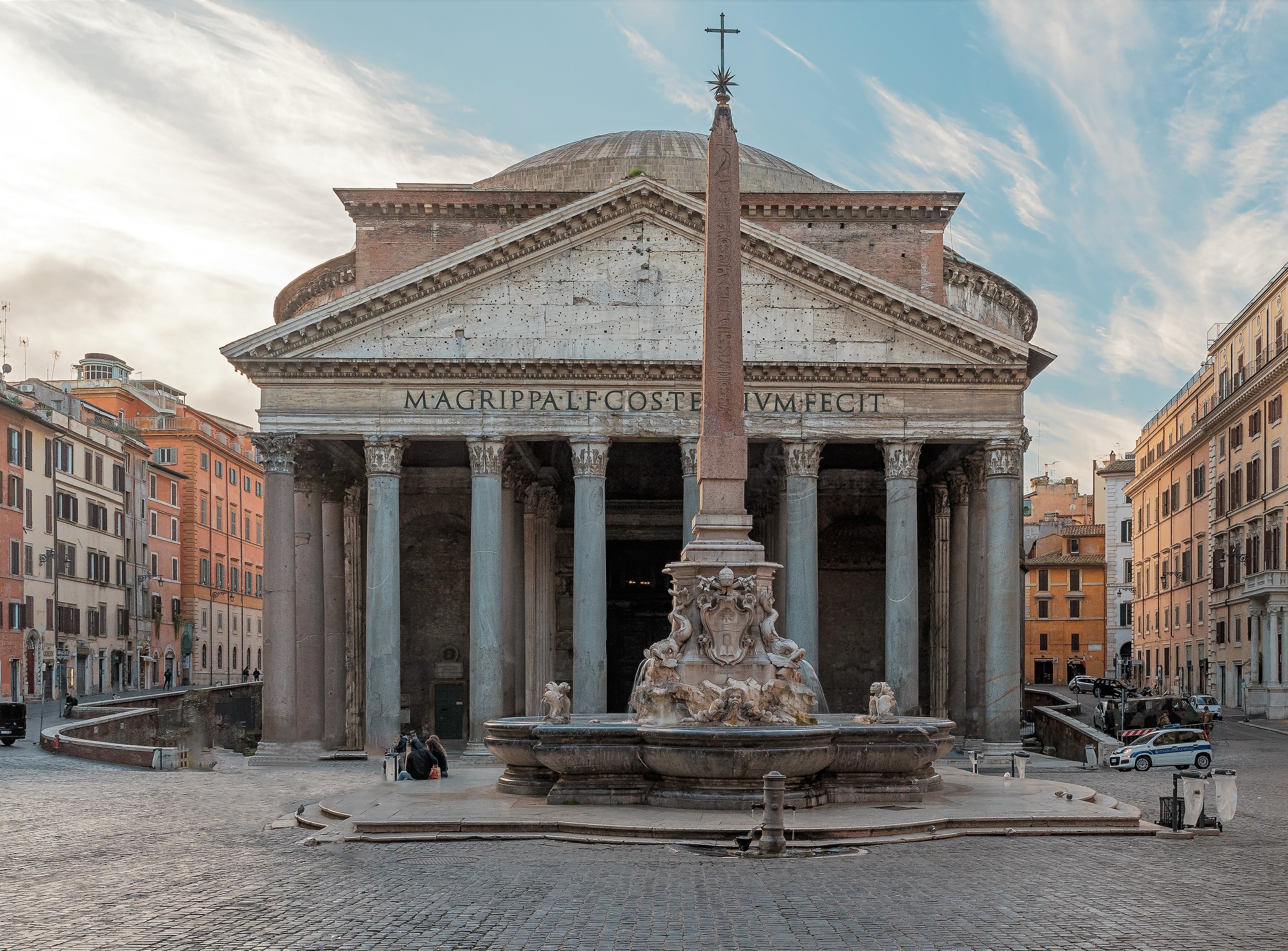
Panteon stoji kao najkompletnije i najbolje očuvano monumentalno zdanje antičkog Rima, struktura čija su inženjerska smelost i prostorna veličanstvenost inspirisali arhitekte tokom gotovo dva milenijuma. Zdanje vidljivo danas konstruisano je za vreme vladavine cara Hadrijana, najverovatnije između 118. i 125. godine n.e., zamenjujući dva ranija hrama na istom mestu — prvi sagrađen od strane Marka Agripe 27-25. godine p.n.e., drugi domicijanska rekonstrukcija koja je izgorela 110. godine. Hadrijanova odluka da zadrži Agripinu originalnu posvetu na fasadi — „M. AGRIPPA L.F. COS. TERTIUM FECIT” (Markus Agripa, sin Lucijusa, konzul po treći put, sagradio je ovo) — dugo je zamagljivala pravi datum zdanja, koji je definitivno utvrđen tek analizom pečata na ciglama u dvadesetom veku. Arhitekta se tradicionalno identifikuje kao Apolodor iz Damaska, Hadrijanov preeminentni inženjer i projektant Trajanovog foruma, mada su antički izvori ćutljivi o autorstvu Panteona, a Apolodorov odnos sa Hadrijanom bio je navodno konfliktan, završavajući se, prema Kasiju Dionu, arhitektovim pogubljenjem.
Plan zdanja je radikalno jednostavan: masivna cilindrična rotunda (doboš) nadvišena hemisferičnom kupolom, frontirana dubokim, stupovitim tremom (pronaosom) korintskih stubova u tradicionalnom hramskom formatu. Genijnost dizajna leži u odnosu između ovih elemenata i u unutrašnjem prostoru koji stvaraju. Unutrašnji prečnik rotunde i visina od poda do okulusa jednaki su — 43,3 metra — što znači da se savršena sfera može upisati u enterijer — kupola formira gornju hemisferu, a njeno nastavljanje ispod linije opruganja formira donju. Ova geometrijska čistoća daje prostoru kvalitet kosmičke potpunosti koji su antički posetioci povezivali sa nebeskim svodom; ime „Panteon” (hram svih bogova) može odražavati ovu kosmološku simboliku, sa kupolom koja predstavlja nebesko svetilište a okulusom sunce.
Kupola je vrhunsko inženjersko dostignuće Panteona. Sa prečnikom od 43,3 metra, ostala je najveća kupola na svetu sve dok kupola firentinske katedrale Bruneleskija (1436) nije premašila u visini ali ne i u čistom rasponu, i ostaje najveća nearmirana betonska kupola ikada sagrađena. Konstrukcija je koristila rimski beton (opus caementicium), mešavinu vulkanskog pepela (pucolana), kreča, vode i agregata, prosutog preko privremene drvene oplate. Inženjeri su primenili briljantnu strategiju graduisane gustine: agregat u donjim delovima kupole se sastoji od teškog travertina i tufa, prelazeći u lakše komade cigle u srednjim slojevima, i konačno u lagani vulkanski plovućac blizu vrha, smanjujući strukturno opterećenje precizno tamo gde je to najvažnije. Pet koncentričnih prstenova kaseta (dvadeset osam u svakom prstenu, ukupno 140) nisu samo dekorativni već služe strukturnoj funkciji, smanjujući masu kupole za procenjenu trećinu uz održavanje njenog geometrijskog integriteta. Stepenasti prstenovi na eksterijeru donje kupole dodaju težinu na osnovi, suprotstavljajući se bočnom potisku koji bi inače napukao strukturu.
Formalna analiza
Okulus — kružni otvor na vrhu kupole, prečnika 8,8 metara — najdramatičnija je odlika zdanja i jedini izvor prirodne iluminacije. Otvoreno ka nebu, propušta stub svetlosti koji se kreće po unutrašnjim površinama kako sunce prelazi nebom, proizvodeći uvek promenjljiv spektakl svetla i senke koji transformiše statičnu arhitekturu u dinamično, gotovo teatralno iskustvo. Na prolećnu ravnodnevicu, sunčev zrak pogađa ulazna vrata; u podne 21. aprila — tradicionalni datum osnivanja Rima — osvetljava prag, kalendarsko poravnanje koje je možda bilo namerno i koje bi nosilo duboku simboličku značaj. Kiša takođe ulazi kroz okulus, drenažirajući se kroz blago konveksni pod u diskretne drenove; termička dinamika enterijera, sa toplim vazduhom koji se diže kroz otvor, minimizuje količinu kiše koja zapravo dopire do poda. Okulus takođe služi kritičnu strukturnu funkciju: uklanjanjem najtežeg dela betona na najvišoj tački kupole, dramatično smanjuje zatezne napone koji bi se inače koncentrisali na kruni.
Unutrašnja dekoracija, mada mnogo izmenjena tokom vekova, zadržava svoju fundamentalnu artikulaciju. Zid rotunde organizovan je u dve zone: donji registar naizmeničnih pravougaonih i polukružnih niša (originalno sa statuama planetarnih bogova), uokvirenih korintskim stubovima i pilastrima od polihromatskog mermera — giallo antico, porfira, pavonaceta i numidijskog žutog — i gornja atička zona (opsežno restaurisana u osamnaestom veku) koja posreduje između zida i kupole. Pod, očuvan u svom originalnom uzorku, geometrijska je kompozicija krugova i kvadrata u porfiru, granitu i giallo anticou, njegova konveksna zakrivljenost olakšava drenažu ka perimetru. Ukupni efekat je preplavljujućeg prostornog jedinstva: cilindrični zid, hemisferična kupola i kružni pod i okulus ponavljaju i pojačavaju jedno drugo, stvarajući unutrašnje iskustvo izvanredne koherentnosti i spokoja.
Opstanak Panteona — izvanredan s obzirom na sistematsko uništavanje ili eksploataciju gotovo svakog drugog antičkog rimskog hrama — pripisuje se njegovom prenamenjivanju u hrišćansku crkvu. Godine 609. vizantijski car Foka poklonio je zdanje papi Bonifaciju IV, koji ga je posvetio kao crkvu Santa Marija ad Martires, posveta koju i dalje nosi. Ova crkvena funkcija zaštitila ga je od eksploatacije koja je progutala druge antičke spomenike (Koloseum, hramove Foruma, Terme Karakale), mada nije sprečila delimične izmene: papa Urban VIII Barberini notorno je skinuo bronzanu tavanicu trema 1625. da bi obezbedio materijal za Berinijev baldahin u crkvi Svetog Petra i za topove u zamku Sant’Anđelo, izazvavši čuveni paskvil „Quod non fecerunt barbari, fecerunt Barberini” (Što varvari nisu učinili, učinili su Barberini). Zdanje takođe služi kao mesto sahrane nekoliko italijanskih kraljeva i, najslavnije, Rafaela, čija grobnica u jednoj od unutrašnjih niša privlači hodočasnike i ljubitelje umetnosti do danas.
Recepcija i nasleđe
Arhitektonsko nasleđe Panteona je praktično bez granica. Bruneleski ga je proučavao pre dizajniranja kupole firentinske katedrale; Bramante i Mikelanđelo crpeli su iz njegovog primera za Baziliku Svetog Petra; Paladio ga je analizirao u svojih Četiri knjige o arhitekturi; a njegov uticaj prožima neoklasičnu arhitekturu od prosvetiteljstva naovamo — Tomas Džeferson je modelovao Rotundu Univerziteta Virdžinije direktno po Panteonu, kao što je i Džon Rasel Poup pri dizajniranju Nacionalne galerije umetnosti u Vašingtonu. Demonstracija zdanja da unutrašnji prostor, a ne spoljašnja masa, može biti primarni predmet arhitekture predstavljala je revolucionarni konceptualni napredak koji bi našao svoju najpuniju razradu u velikim kupolarskim prostorima vizantijske, renesansne i barokne arhitekture. Gotovo dve hiljade godina nakon svoje gradnje, Panteon ostaje ne samo spomenik rimskoj inženjerskoj moći već živa demonstracija sposobnosti arhitekture da stvara prostore transcendentne lepote i simboličke rezonancije — zdanje koje je, kako je istoričar umetnosti Vilijam Makdonald primetio, „bilo više divljeno, više proučavano i češće imitirano od bilo kog drugog zdanja u istoriji arhitekture.”