Istorijski kontekst
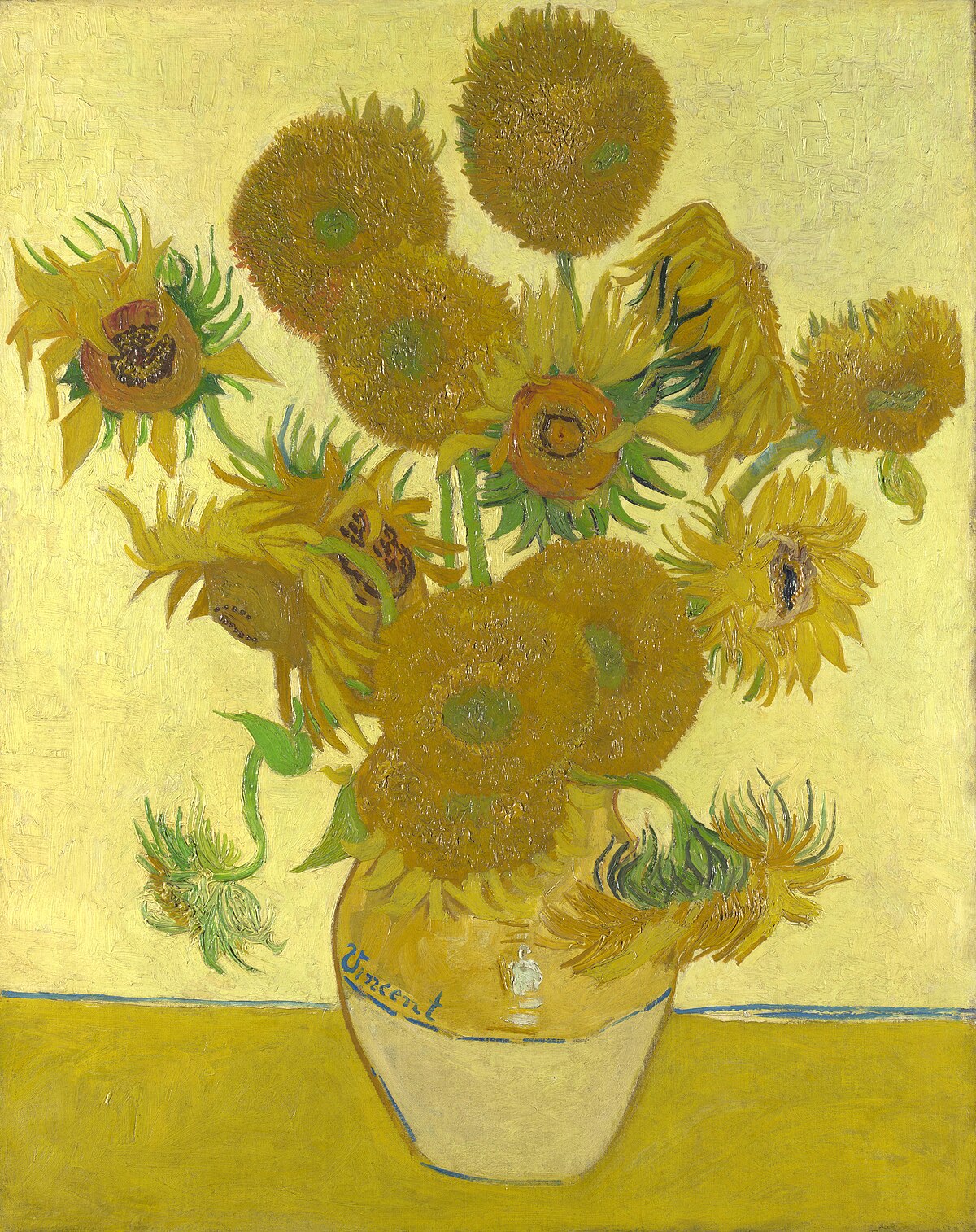
Vinsent van Gog naslikao je slavne Suncokrete u avgustu 1888. godine u Arlu, na jugu Francuske, gde se preselio iz Pariza ranije te godine u potrazi za jačom svetlošću, živopisnijim bojama i snom o osnivanju umetničke kolonije koju je nazvao “Atelje Juga”. Slika je zamišljena kao jedna iz serije mrtvih priroda sa suncokretima namenjenih da ukrase gostinsku spavaću sobu Žute kuće na Plas Lamartin, koju je Van Gog pripremao za očekivani dolazak Pola Gogena. Suncokret je već bio Van Gogov lični simbol — naslikao je studije suncokreta u Parizu 1887. — a serija iz Arla uzdigla je motiv do ikoničnog statusa koji ga je od tada učinio praktično sinonimom za samog umetnika. Londonsko platno, koje prikazuje petnaest suncokreta u jednostavnoj keramičkoj vazi na bledožutoj pozadini, najpoznatije je od četiri završene verzije.
Period u Arlu predstavlja vrhunac Van Gogove umetničke produkcije, koncentrisani nalet kreativnosti tokom kojeg je proizveo približno dvesta slika za petnaest meseci. Radeći sa izuzetnim intenzitetom, često završavajući platno za jedan dan, Van Gog je bio vođen uverenjem da boja poseduje inherentnu ekspresivnu i duhovnu moć nezavisnu od njene opisne funkcije. Slike suncokreta otelotvoruju ovo verovanje: žuta, koju je Van Gog povezivao sa prijateljstvom, toplinom, zahvalnošću i regenerativnom moći sunca, dominira svakim aspektom kompozicije, od samih cvetova do vaze, stola i pozadine. Slike su eksplicitno zamišljene kao gestovi dobrodošlice i umetničke počasti Gogenu, koga je Van Gog obožavao i čija je saradnja, kako se nadao, trebalo da inauguriše novu eru u modernom slikarstvu. Ta saradnja, koja je počela u oktobru 1888, završila se katastrofalno u decembru Van Gogovim mentalnim slomom i zloglasnim incidentom sa odsecanjem uva.
Formalna analiza
Kompozicija je varljivo jednostavna: buket suncokreta raspoređen u trbuštastoj vazi, centriran na horizontalnoj površini nasuprot ravnoj pozadini. Ova frontalna, simetrična prezentacija podseća na direktnost japanskih drvoreza koje je Van Gog strastveno sakupljao, i eliminiše prostornu složenost tradicionalnih aranžmana mrtve prirode da fokusira pažnju posmatrača u potpunosti na boju, teksturu i individualni karakter svakog cveta. Petnaest suncokreta prikazano je u raznim fazama životnog ciklusa — od čvrsto zatvorenih pupoljaka do potpuno otvorenih do uvelih i povijenih — stvarajući suptilnu vremensku dimenziju unutar naizgled statičnog žanra mrtve prirode. Ova pažnja prema organskim procesima rasta, sazrevanja i propadanja tumačena je kao meditacija o smrtnosti i obnavljanju u skladu sa Van Gogovim duboko usađenim duhovnim uverenjima.
Tehnika je među Van Gogovim najfizički asertivnijim. Impasto — gusto nanesena boja koja stoji u vidljivom reljefu na površini platna — pretvara sliku u gotovo skulpturalni objekat. Pojedinačne latice prikazane su zakrivljenim, trakastim potezima hrom žute, kadmijum žute i žutog okera koji izbijaju sa površine, bacajući stvarne senke koje se menjaju sa uglom gledanja i ambijentalnom svetlošću. Semenke u centru svake cvasti izgrađene su od tačkica i mrljica kontrastnih smeđih, narandžastih i zelenih pigmenata, stvarajući guste teksturalne čvorove koji usidruju okolni sjaj žute. Van Gogova hromatska strategija je smelа: slikajući žuto na žutom — cvetove na žutoj pozadini — on primorava posmatrača da uoči izuzetan raspon tonalnih i hromatskih varijacija unutar onoga što se u početku čini monohromatskim poljem. Suptilni prelazi od limun žute do zlatne do zelenkasto žute otkrivaju sofisticiranu kolorističku inteligenciju koja deluje kroz nijanse pre nego kroz kontrast.
Recepcija i nasleđe
Suncokreta su ušli u National Gallery u Londonu 1924. godine, kupljeni sredstvima iz Courtauld fonda, i od tada su postali jedna od najprepoznatljivijih slika na svetu — slika toliko temeljno reprodukovana i komercijalizovana da njenu radikalnu originalnost može biti teško ponovo sagledati. Ipak, u kontekstu slikarstva kasnog devetnaestog veka, Van Gogovo dostignuće je bilo istinski revolucionarno. Uzdizanje skromnog buketa običnih cvetova do statusa velikog umetničkog iskaza izazvalo je hijerarhiju žanrova koja je vladala evropskim slikarstvom vekovima, dok je ekspresivni intenzitet tehnike — boja nanesena sa fizičkom urgentnošću koja čini umetnički rad vidljivim u svakom potezu — anticipirala gesturalnu apstrakciju dvadesetog veka. Provencijencija slike, koja je prešla od Tea van Goga do njegove udovice Jo van Gog-Bonger, koja je decenijama posvećeno promovisala Vinsentovu posmrtnu reputaciju, sama je po sebi značajno poglavlje u istoriji recepcije moderne umetnosti.
Slike Suncokreta izvršile su nemerljiv uticaj na kasniju umetnost i vizuelnu kulturu. Njihova demonstracija da boja i tekstura mogu nositi emocionalno značenje nezavisno od predmeta bila je fundamentalna za fovizam, ekspresionizam i na kraju apstraktni ekspresionizam. Konkretnije, Van Gogova impasto tehnika — insistiranje na boji kao fizičkoj supstanci sa sopstvenim ekspresivnim svojstvima pre nego kao transparentnom mediju za iluziju — otvorila je put koji vodi od Polokovih drip slika do materijalnih istraživanja savremenih umetnika poput Anselma Kifera. Slike su takođe odigrale ključnu ulogu u konstruisanju mita o Van Gogu kao arhetipskom mučenom geniju, narativa koji je, koliko god reduktivan, oblikovao popularno razumevanje onoga što znači biti umetnik u modernom svetu. Za istoričare umetnosti, Suncokreta ostaju suštinske studije slučaja u odnosu između umetničke biografije, ekspresivne namere, materijalne tehnike i kulturne recepcije.