Istorijski kontekst
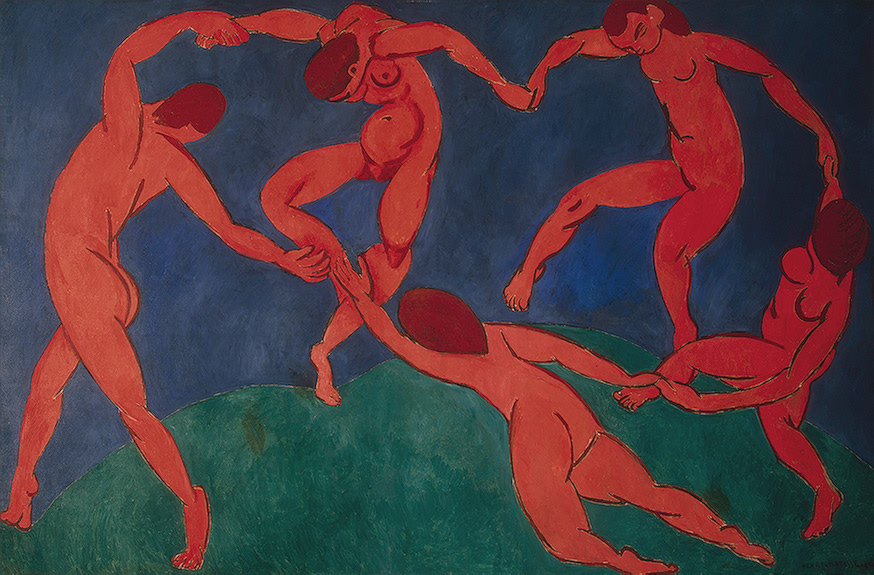
Ples (La Danse) Anrija Matisa iz 1910. godine jedno je od vrhunskih dostignuća modernizma ranog dvadesetog veka — monumentalna slika koja svodi ljudsku figuru, pejzaž i sam čin slikanja na njihove najgolije suštine. Platno dimenzija 260 sa 391 centimetar prikazuje pet nagih figura uzetih za ruke u kružnom plesu na pozadini reduciranoj na dve trake zasićene boje: duboko plava za nebo i živo zelena za zemlju. Tela su oslikana u jednobojnom, ravnom vermiljonu bez unutrašnjeg modelovanja, senki i sa minimalnim anatomskim detaljima, njihove forme definisane gotovo isključivo vijugavim, arabeska konturnim linijama koje prenose izvanrednu kinetičku energiju. Sliku je naručio Sergej Šćukin, bogati moskovski trgovac tekstilom koji je bio jedan od najvizionarnijih kolekcionara umetnosti ranog dvadesetog veka i čije je pokroviteljstvo Matisa i Pikasa duboko oblikovalo tok ruske avangardne umetnosti. Šćukin je nameravao da Ples i njegovo pratéće delo Muzika ukraše stepenište njegove moskovske rezidencije, Palate Trubeckoj.
Formalna analiza
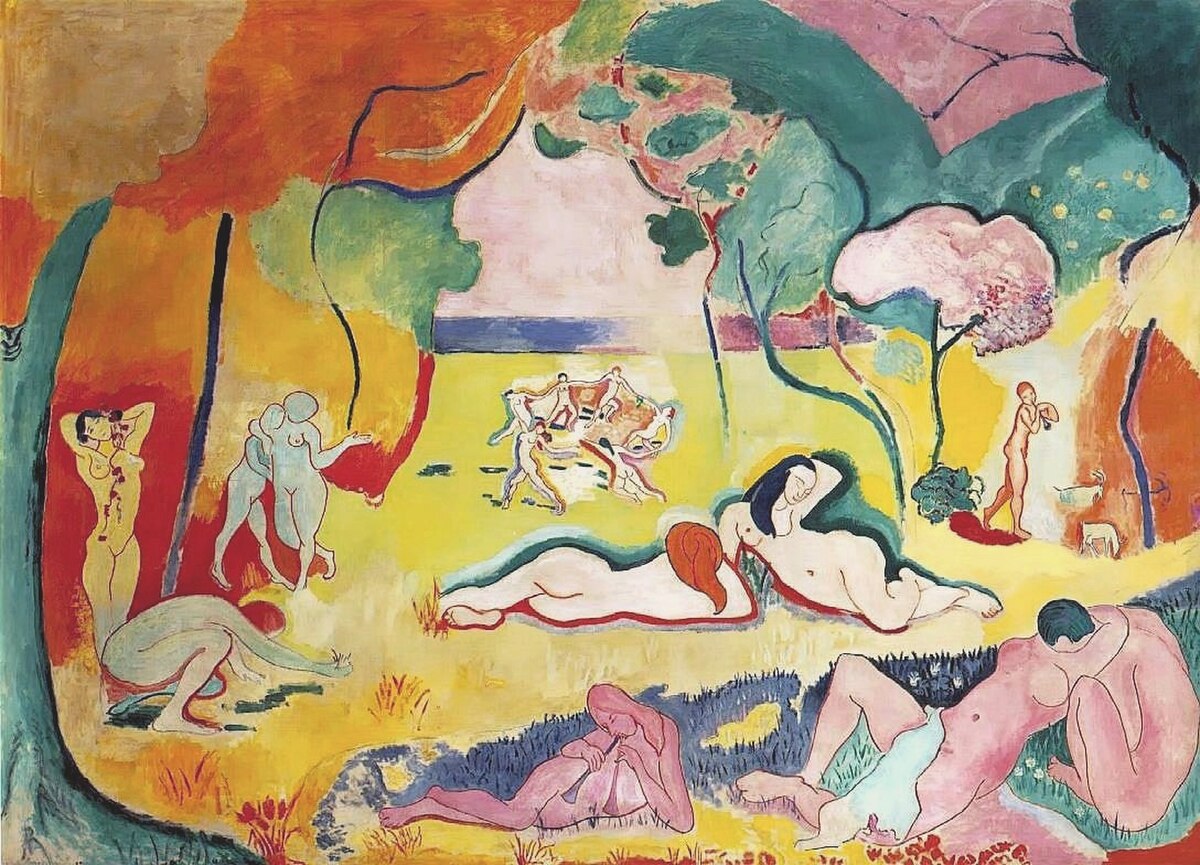
Geneza Plesa može se pratiti do Matisovog ranijeg remek-dela Radost života (Le Bonheur de vivre), naslikanog 1905-1906. i sada u Fondaciji Barns u Filadelfiji. U pozadini te velike, složene kompozicije — koja je i sama bila revolucionarno delo koje je razjarilo kritičare i čak kolege avangardne slikare — pojavljuje se mala grupa plesača u krugu, čije isprepletene forme već sugerišu kružni motiv koji će Matis izolovati i monumentalizovati četiri godine kasnije. Prelaz sa Radosti života na Ples je studija radikalne simplifikacije: dok je ranije delo inkorporiralo višestruke figuralne grupe, bujan pastoralan pejzaž i raznovrsnu fovističku paletu boja, slika iz 1910. eliminiše sve suvišno, destilujući temu na njene najelementarnije komponente. Ovaj proces redukcije — koji je Matis opisao kao potragu za „kondenzacijom senzacija” — bio je jedan od definirajućih impulsa njegove umetnosti, razlikujući njegov pristup od istovremenih složenosti kubizma koji su razvijali Pikaso i Brak.
Koloristička shema Plesa — vermiljon, plava i zelena — namerno je odabrana za maksimalan emocionalni i vizuelni uticaj. Matis je objasnio svoje rezonovanje u izjavi kritičaru Šarlu Estjenu: „Imam tri boje za nebo, drugu za tela i drugu za zemlju. Ove tri boje su dovoljne. Ako koristim više boja, rezultat će biti konfuzija.” Ovo nije bila samo estetska preferencija, već teorijska pozicija ukorenjenom u Matisovom iskustvu kao vođe fovista — grupe slikara koji su šokirali pariski umetnički svet na Jesenjnem salonu 1905. platnima toliko intenzivne, nenaturalističke boje da ih je kritičar Lui Voksel prozvao les fauves („divlje zveri”). Fovistička revolucija, mada kratkotrajna kao koherentan pokret (otprilike 1904-1908), uspostavila je princip da boja može biti oslobođena svoje deskriptivne funkcije i upotrebljena kao autonomna ekspresivna sila. Ples predstavlja najpotpunije ostvarenje ovog principa: vermiljon tela ne stoji ni u kakvom odnosu sa bojom ljudske kože, a plava i zelena stoje samo u najshematičnijem odnosu sa nebom i travom. Boja ovde nije opis, već prizivanje — sredstvo prizivanja primalnog, visceralnog odgovora koji zaobilazi racionalnu analizu.
Sam ples — krug figura čija savijajuća, naprezajuća tela generišu snažan osećaj rotacionog pokreta — ima duboke korene i u istoriji umetnosti i u antropologiji. Matis je crpeo iz niza izvora, od antičkih grčkih vaza koje je proučavao u Luvru do farandole, tradicionalnog provansalskog lančanog plesa koji je posmatrao u ribarskom selu Koliur tokom leta 1905. (istog leta koje je proizvelo prve fovističke slike). Kružni ples spada među najdrevnije i najuniverzalnije ljudske rituale, pojavljujući se u kulturama od praistorijskih pećinskih slika do srednjovekovnih iluminacija rukopisa do balkanskih narodnih tradicija, a njegov kružni oblik nosi snažne asocijacije sa zajednicom, ceremonijom, ekstazom i cikličkim ritmovima prirode. Matisove plesačice nisu elegantne niti graciozne u bilo kom klasičnom smislu; njihova tela su teška, njihovi pokreti žestoki i gotovo nasilni, njihova lica prazna ili jedva naznačena. One evociraju ne rafinirani balet visoke kulture, već nešto starije i elementarnije — dionizijsko predavanje koje povezuje modernog posmatrača sa najdubljim slojevima ljudskog fizičkog i duhovnog iskustva.
Recepcija slike kada je izložena na Jesenjem salonu 1910. u Parizu — zajedno sa pratećim delom Muzika, koje prikazuje pet figura u sličnoj kolorističkoj shemi, kako sede i sviraju instrumente — bio je jedan od velikih skandala ranog modernizma. Kritičari su napadali slike zbog sirovog crteža, kričavih boja i onoga što je percipirano kao namerna ružnoća. Nagota figura, prikazana bez idealizujućih konvencija koje su klasični akt činile prihvatljivim, dodala je optužbu za nepristojnost estetskim prigovorima. Sam Šćukin, uznemiren neprijateljskom recepcijom, u početku je posustao u svojoj posvećenosti narudžbini, telegrafišući Matisu: „Nalazim vaš panel Ples tolikog plemstva da sam odlučio da prkosim našem buržoaskom mnjenju i okačim na svoje stepenište motiv sa aktovima.” Na kraju je prihvatio obe slike, koje su instalirane u njegovoj moskovskoj rezidenciji 1911. i postale centralna dela u kolekciji koja je takođe uključivala šesnaest Gogena, trinaest Monea i pedeset Pikasa — jednu od najizvanrednijih privatnih kolekcija moderne umetnosti ikada sakupljenih.
Formalne inovacije Plesa — spljošteni slikovni prostor, eliminacija modelovanja i perspektive, upotreba boje kao nezavisnog strukturalnog elementa — postavile su Matisa u direktan dijalog sa, i implicitnu opoziciju prema, kubističkoj revoluciji koju su istovremeno sprovodili Pikaso i Brak. Dok je kubizam fragmentirao formu u višestruka simultana gledišta i gradio složene, arhitektonske strukture od preklapajućih ravni, Matis je sledinio suprotnu strategiju radikalne simplifikacije i ekspanzije. Arabeska konturne linije Plesa — fluidne, neprekidne i dekorativne u najdubljem smislu te reči — afirmišu primat linije kao ritma, a ne linije kao strukture. Matis je ovu distinkciju kasnije eksplicitno artikulisao, opisujući svoj cilj kao „umetnost ravnoteže, čistote i vedrine, lišenu uznemirujuće ili deprimirajuće tematike… nešto poput dobrog naslanjača u kome se odmara od fizičkog umora.” Ova često citirana primedba korišćena je da umanji Matisovu ambiciju, ali se bolje razume kao radikalan estetski manifest: insistiranje da najuzvišenija funkcija umetnosti nije da analizira ili dekonstruiše stvarnost, već da je transformiše u iskustvo čulnog, gotovo fizičkog zadovoljstva.
Značaj i nasleđe
Nakon Ruske revolucije 1917, Šćukinova kolekcija je nacionalizovana od strane sovjetske države, i Ples i Muzika konačno su pronašli svoj stalni dom u Muzeju Ermitaž u Sankt Peterburgu, gde se nalaze i danas. Putovanje slika od moskovskog trgovčevog stepeništa do sovjetskog državnog muzeja sama je po sebi parabola nasilnih transformacija dvadesetog veka, a njihov uticaj na rusku umetnost — posebno na Kazimira Maljeviča i suprematistički pokret — ubedljivo su argumentovali naučnici. U široj trajektoriji Matisove karijere, Ples predstavlja presudni trenutak: tačku na kojoj je njegova umetnost postigla sintezu monumentalne razmere, radikalne boje i primalne tematike koja će informisati sva njegova kasnija dela, od velikih marokanskih slika 1912-1913. preko odaliska perioda u Nici do izvanrednih papirnih kolaaža poslednjih godina, u kojima će se krug plesačica ponovo pojaviti, transformisan ali nepogrešiv, u delima poput Puža iz 1953.