Istorijski kontekst
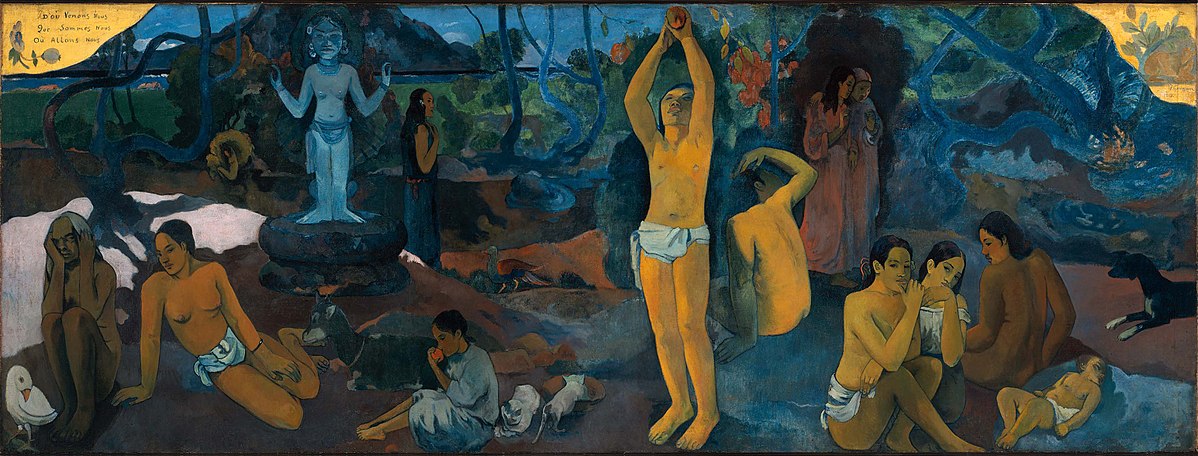
Pol Gogen je naslikao Odakle dolazimo? Šta smo? Kuda idemo? tokom zime 1897-1898. godine u svom ateljeu pod slamnatim krovom u Punaauiji, Tahiti, tokom onoga što je po svim svedočenjima bio jedan od najočajnijih perioda njegovog života. Pateći od uznapredovalog sifilisa, savladan dugovima i shrvam nedavnom vešću o smrti svoje ćerke Alin u Kopenhagenu, Gogen je zamislio monumentalno platno kao svojevrsni slikani testament — konačnu, sveobuhvatnu izjavu svoje umetničke i filozofske vizije pre planirani pokušaj samoubistva. Radio je grozničavo, navodno završivši kompoziciju široku skoro četiri metra za otprilike mesec dana bez pripremnih crteža, slikajući direktno na grubu podlogu od jute koja je površini dala hrapavu, tapiseriji sličnu teksturu saglasnu sa arhaičnim i mitološkim aspiracijama dela.
Slika se mora razumeti u širem kontekstu Gogenovog samovoljnog egzila iz evropske civilizacije, projekta koji je uokvirio u terminima primitivističke potrage za autentičnim ljudskim iskustvom neiskvarenim zapadnom modernošću. Putujući prvi put na Tahiti 1891. godine, Gogen je u polinezijskoj kulturi tražio vitalnost i duhovni integritet za koji je verovao da su ugašeni u industrijalizovanoj Evropi. Ova primitivistička ideologija, duboko problematična u svojoj romantizaciji i prisvajanju autohtonih kultura, ipak je proizvela slike izuzetne vizuelne snage. Odakle dolazimo? predstavlja krunsko ostvarenje Gogenovog tahićanskog projekta, objedinjujući ikonografiju iz polinezijske religije, budističke hramske skulpture i zapadne alegorijske tradicije u sinkretičku viziju koja teži univerzalnom filozofskom značaju. Tri pitanja upisana u gornjem levom uglu platna — funkcionišući kao naslov, a ne kao potpis — uokviruju kompoziciju kao egzistencijalnu istragu o rođenju, postojanju i smrti.
Formalna analiza
Kompozicija se razvija kao kontinuirani friz koji se čita zdesna nalevo, obrnuvši zapadnu konvenciju narativnog napredovanja sleva nadesno i podražavajući format drevnih egipatskih ili javanskih hramskih reljefa koje je Gogen obožavao. Na desnoj strani, beba koja spava i tri žene koje sede predstavljaju početak života; centralna stojeća figura, koja se pruža nagore da ubere voće sa drveta, oličava punoću ljudske vitalnosti i želje; na levoj strani, stara žena u čučećem stavu očaja ili rezignacije suočava se sa smrtnošću, dok čudna bela ptica sa gušterom u kandžama uvodi notu enigmatičnog simboličkog komentara. Idol-nalik figura u pozadini, koja svetli plavo naspram tamnog lišća, predsedava scenom kao dvosmisleno duhovno prisustvo crpeno iz Gogenove eklektične sinteze polinezijske i azijske religijske ikonografije.
Gogenova boja u ovoj slici postiže izuzetnu sintezu dekorativnog bogatstva i emotivne ekspresivnosti. Dominantna paleta dubokih plavih, zelenih i zlatno-oker tonova stvara noćnu ili sumračnu atmosferu koja prožima scenu misterijom i svečanošću. Topli smeđi tonovi kože figura pružaju primarni hromatski kontrapunkt hladnom pejzažu, uspostavljajući vizuelnu harmoniju između čovečanstva i prirode koja je centralna za Gogenove tematske preokupacije. Boja je naneta u širokim, ravnim površinama relativno nemodulisane boje, tehniku koju je Gogen nazvao „kloazonizmom” u pozivanju na kloazone emajl, koja potiskuje trodimenzionalno modelovanje u korist dekorativnog uzorka i simboličke jasnoće. Gruba podloga od jute neravnomerno upija pigment, proizvodeći matiranu, izvedenu površinu koja pojačava arhaični, monumentalni karakter slike i oštro je razlikuje od uglačanih površina akademskog slikarstva.
Recepcija i nasleđe
Gogen je preživeo pokušaj samoubistva i naknadno poslao sliku svom dileru Ambroazu Volaru u Pariz, gde je izložena i primljena kao značajna izjava umetnika čija je reputacija brzo rasla među avangardom. Stjecanje dela od strane Muzeja lepih umetnosti u Bostonu 1936. godine učvrstilo je njeno mesto kao jedne od najvažnijih postimpresionističkih slika u američkoj kolekciji, i od tada služi kao centralni eksponat galerija evropske umetnosti muzeja. Istoričari umetnosti opsežno su raspravljali o ikonografskom programu slike, pri čemu su naučnici identifikovali izvore koji se kreću od reljefa hrama Borobudur koje je Gogen poznavao sa fotografija do muralnih slika Pjera Pivija de Šavana, od Maneovog Olimpije do tahićanskih mitova o stvaranju koje je Gogen zabeležio u svom rukopisu Ancien Culte Mahorie.
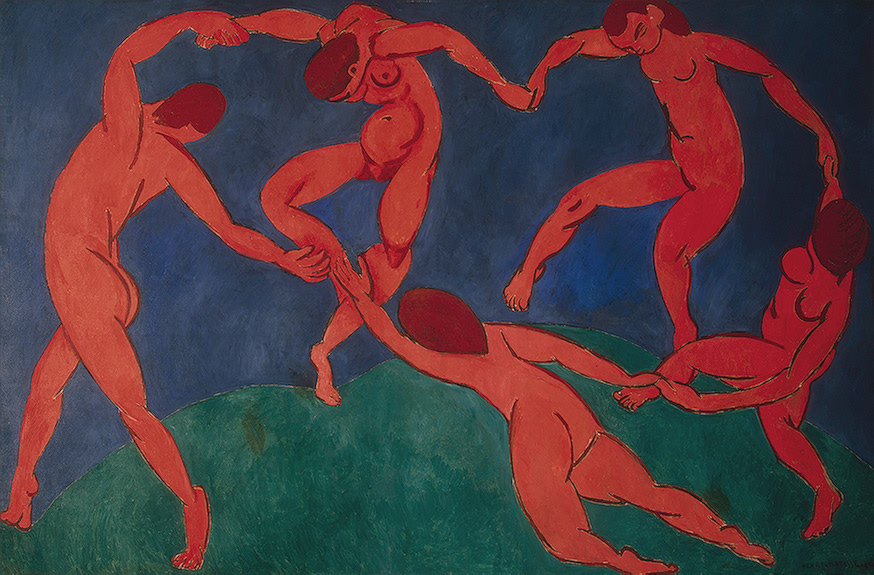
Uticaj slike na kasniju umetnost bio je i direktan i difuzan. Fovisti, posebno Matis i Deren, crpli su iz Gogenovog oslobađanja boje od deskriptivne funkcije i njegove spremnosti da spljošti slikovni prostor u ekspresivne i dekorativne svrhe. Nemački ekspresionisti, uključujući grupu Briike, našli su u Gogenu model za umetnika kao duhovnog tragaoca koji odbacuje buržoasku konvenciju. Šire gledano, Odakle dolazimo? uspostavio je paradigmu za veliku alegorijsku sliku koja se bavi fundamentalnim egzistencijalnim pitanjima kroz simbolička, a ne narativna sredstva — paradigmu koja odjekuje kroz Pikasovu Gerniku, Rotkove kapelne slike i dalje. Istovremeno, savremena postkolonijalna nauka podvrgla je Gogenov tahićanski projekat rigoriznoj kritici, ispitujući dinamiku moći ugrađenu u njegove reprezentacije polinezijskih tela i kulture, i insistirajući da svako uvažavanje estetskih dostignuća slike mora biti praćeno kritičkim suočavanjem sa njenim ideološkim temeljima.