Istorijski kontekst
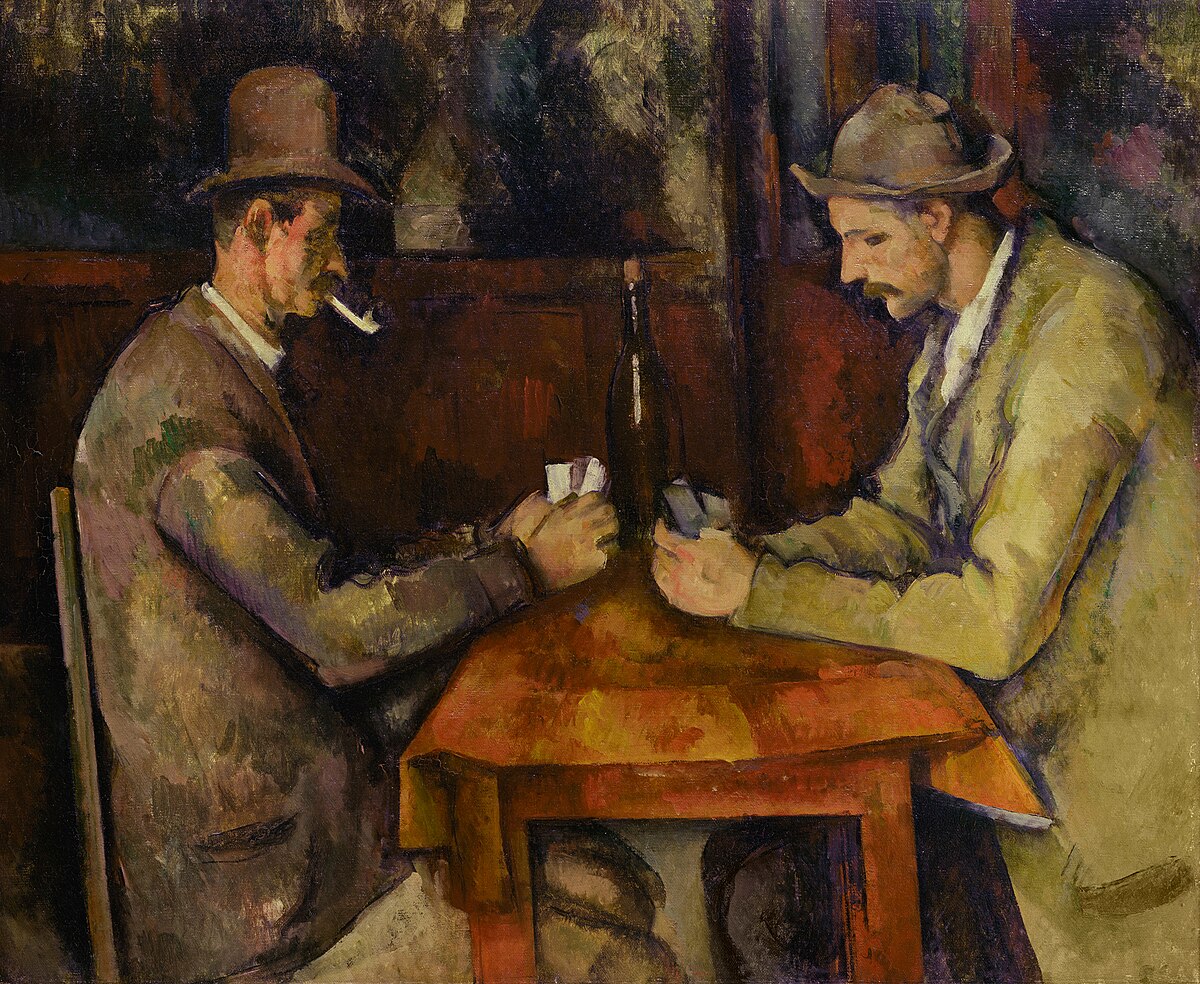
Igrači karata Pola Sezana pripada seriji od pet slika istog motiva koje je umetnik naslikao između otprilike 1890. i 1896. godine, predstavljajući jedan od najambicioznijih projekata figurativnog slikarstva u njegovoj zreloj karijeri. Serija napreduje od većih kompozicija sa više figura, sa pet igrača karata, do sve prečišćenijih verzija, kulminirajući u intimnim platnima sa dva lika, od kojih je verzija iz Muzeja Orsej najslavnija. Modeli su bili poljoprivredni radnici sa imanja Ža de Bufan, porodičnog imanja van Eks-an-Provansa gde je Sezan živeo i radio veći deo svog kasnijeg života. Kartanje je bila poznata razonoda u ruralnoj Provansi, a Sezanov izbor motiva povezao je njegovo slikarstvo sa dugom tradicijom prikaza igrača karata u evropskoj umetnosti koja seže unazad do Karavađa i braće Le Nen, čije žanrovske scene seljačkog života u Luvru je pažljivo proučavao.
Sezanovo bavljenje temom igrača karata tokom devedesetih godina devetnaestog veka poklopilo se sa periodom u kome je njegova reputacija prolazila kroz dramatičnu transformaciju. Dugo odbacivan od strane kritičara i žirija Salona, Sezan je dobio svoju prvu značajnu samostalnu izložbu u galeriji Ambroaza Volara u Parizu 1895. godine, događaj koji je otkrio njegovo delo novoj generaciji umetnika i kolekcionara. Slike igrača karata, sa svojom kombinacijom tradicionalnog motiva i radikalno inovativne slikovne strukture, predstavljaju primer kvaliteta koji su Sezana učinili tako privlačnim za nastajuću avangardu: duboko poštovanje starih majstora spojeno sa spremnošću da preispita temeljne premise slikovnog predstavljanja. Serija stoga zauzima ključnu istorijsku poziciju, gledajući unazad ka žanrovskim tradicijama evropskog slikarstva, dok istovremeno anticipira strukturalna pitanja koja će dominirati modernizmom ranog dvadesetog veka.
Formalna analiza
Platno iz Muzeja Orsej postiže kompozicionu ekonomiju koja se približava monumentalnosti uprkos svojim skromnim dimenzijama. Dva igrača raspoređena su simetrično sa obe strane malog stola, njihova tela formirajući dve masivne, otprilike piramidalne zapremine koje se naginjaju prema vertikalnoj osi definisanoj flašom vina u centru. Ova bilateralna simetrija nije kruta, već suptilno varirana: igrač levo nosi svetliji sako i lulu, njegov stav je nešto uspravniji, dok se igrač desno, u tamnijem kaputu, više naginje nad svojim kartama. Ove asimetrije unutar ukupne simetrične strukture generišu tihu vizuelnu napetost koju Sezan koristi da sugeriše psihološku dinamiku igre — koncentraciju, kalkulaciju i tiho nadmetanje volja.
Sezanov konstruktivni potez četke primenjen je sa izuzetnom disciplinom kroz čitavu kompoziciju. Odeća figura izgrađena je od preklapajućih ravni boje — plavih, oker, ljubičastih i prigušenih zelenih — nanesenih paralelnim potezima koji istovremeno modeluju trodimenzionalnu formu i potvrđuju dvodimenzionalni integritet površine slike. Sto, naslikan u toplim smeđim i narandžastim tonovima, funkcioniše kao prostorni klin koji istovremeno razdvaja i povezuje dve figure, dok njegova skraćena površina stvara suptilnu napetost sa zaravnjenom pozadinom. Sama pozadina, topla, neodređena smeđe-zlatna, odbija da specificira određeni unutrašnji prostor, apstrahujući scenu od anegdotskog konteksta i dajući joj bezvremenski, gotovo arhetipski kvalitet. Paleta je namerno suzdržana, izbegavajući živopisne boje u korist tonske harmonije zemljanih tonova i prigušenih plavih, što pojačava ozbiljnost i mirnoću kompozicije. Svaki element služi dominantnoj formalnoj logici slike: svođenje posmatrane stvarnosti na suštinske geometrijske odnose bez žrtvovanja gustine i prisustva stvarnih tela u stvarnom prostoru.
Recepcija i nasleđe
Serija Igrači karata prepoznata je kao jedno od vrhovnih dostignuća postimpresionističkog slikarstva, a verzija iz Muzeja Orsej, koju je francuska država nabavila iz kolekcije Pelerin 1969. godine, među najproučavanijim je slikama u zbirkama muzeja. Umetnoistorijskiznačaj serije leži u njenoj demonstraciji da tradicionalni žanrovski motiv može poslužiti kao sredstvo radikalne formalne inovacije — da se vekovni motiv seljaka koji igraju karte može transformisati, kroz Sezanovu strukturalnu viziju, u sliku arhitektonski rigoriznu koliko i svaka apstraktna kompozicija. Ovo spajanje tradicije i inovacije učinilo je seriju posebno uticajnom za kubističke slikare, koji su u Sezanovim fasetiranim formama i komprimovanim prostorima videli direktan presedan za sopstvenu fragmentaciju predstavljanja.
Kulturni odjek Igrača karata prevazilazi njihov formalni uticaj. Godine 2011, jednu verziju kompozicije (onu koja je ranije bila u kolekciji grčkog brodovlasnika Džordža Embirikosa) kupila je kraljevska porodica Katara za cenu koja navodno prelazi 250 miliona dolara, čineći je u to vreme najskupljom slikom ikada prodatom. Ova izuzetna tržišna procena, mada pripada domenu ekonomije a ne estetike, ipak svedoči o ikoničnom statusu slike i o trajnoj moći Sezanove vizije. Za istoričare umetnosti i slikare podjednako, serija ostaje referentna tačka za razmišljanje o tome kako se slikovna struktura može izvesti iz strpljivog posmatranja vidljivog sveta — kako geometrija dvojice ljudi koji sede za stolom može dati kompoziciju klasične veličanstvenosti i formalne savršenosti.