Istorijski kontekst
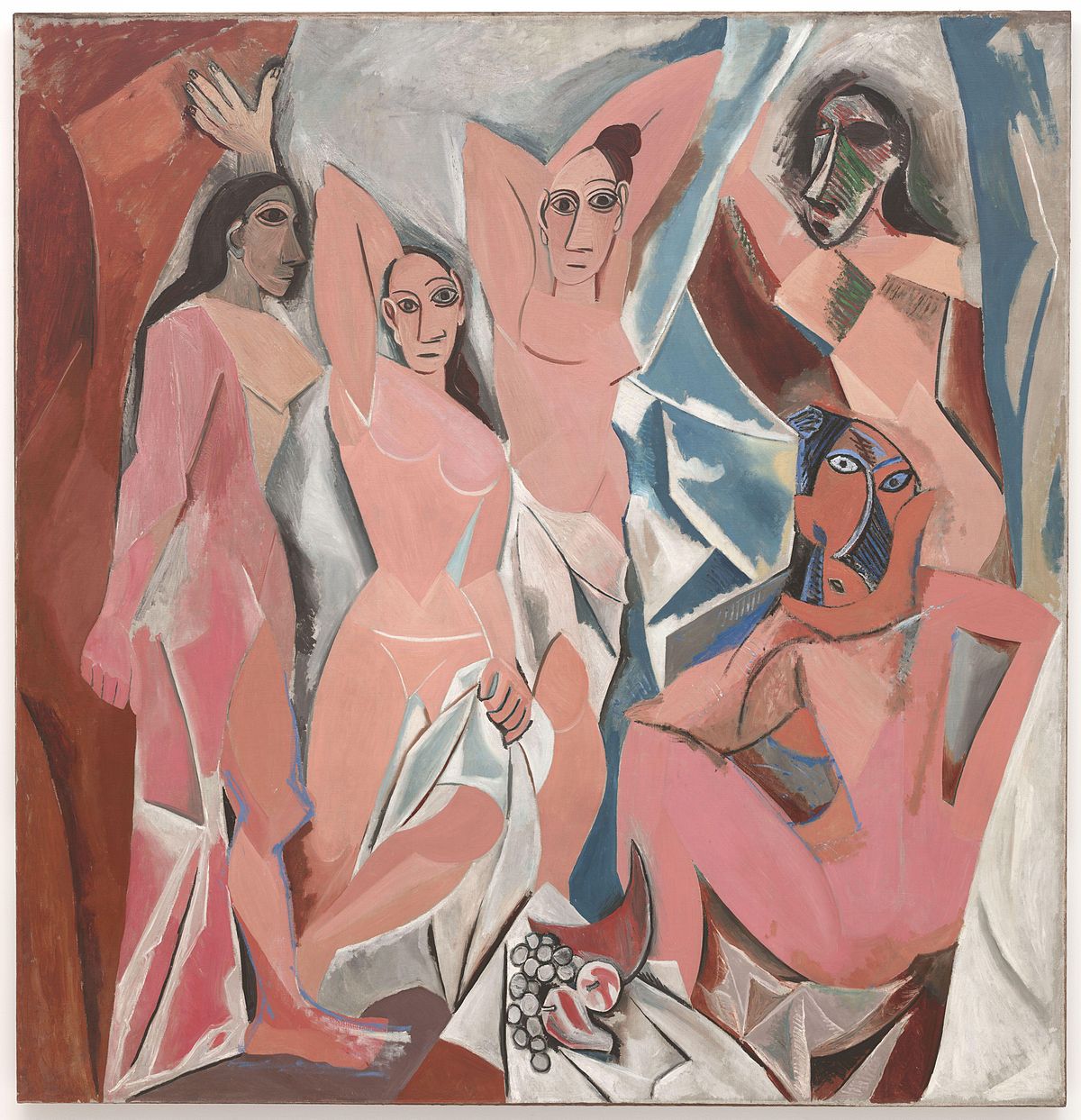
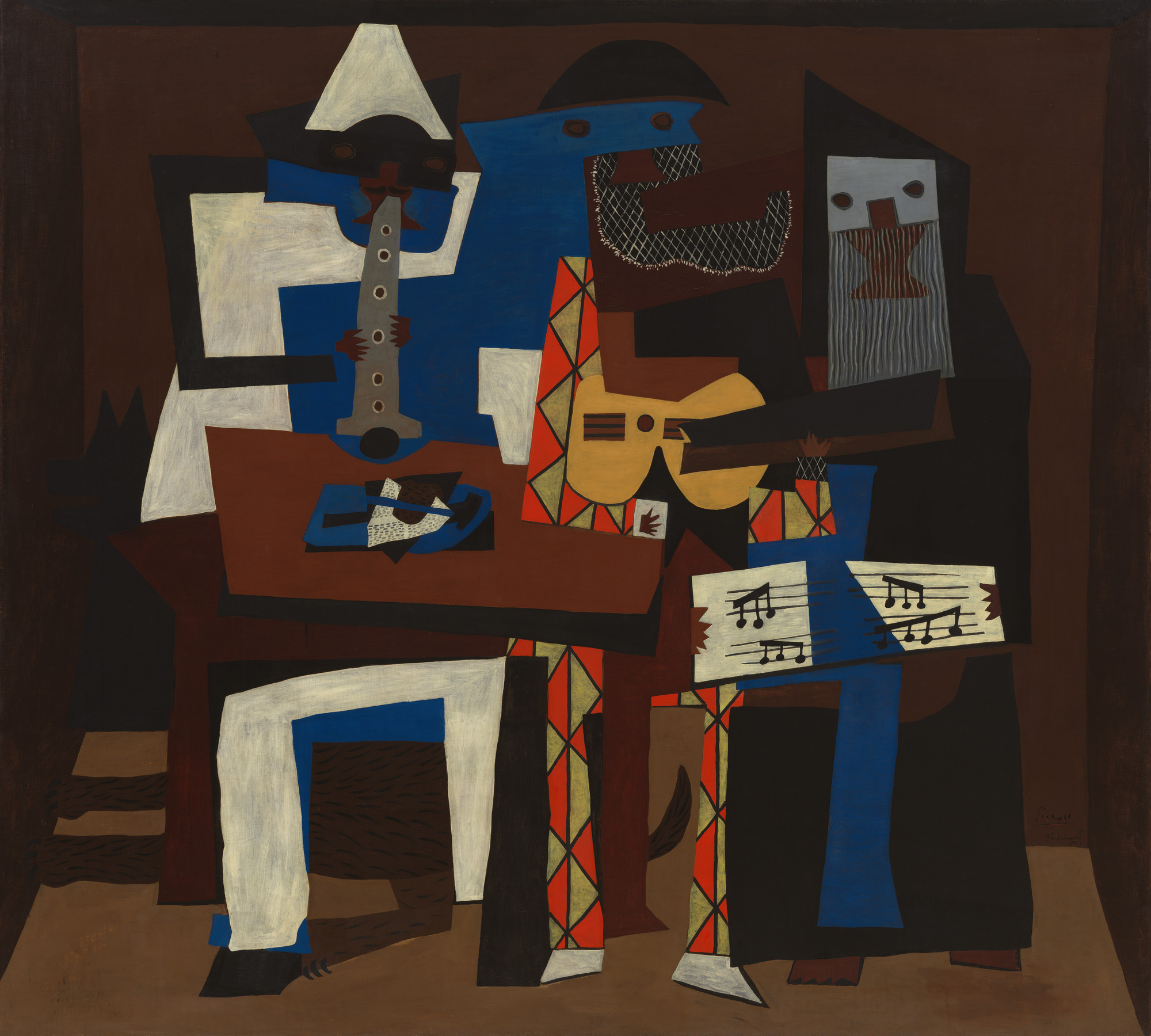
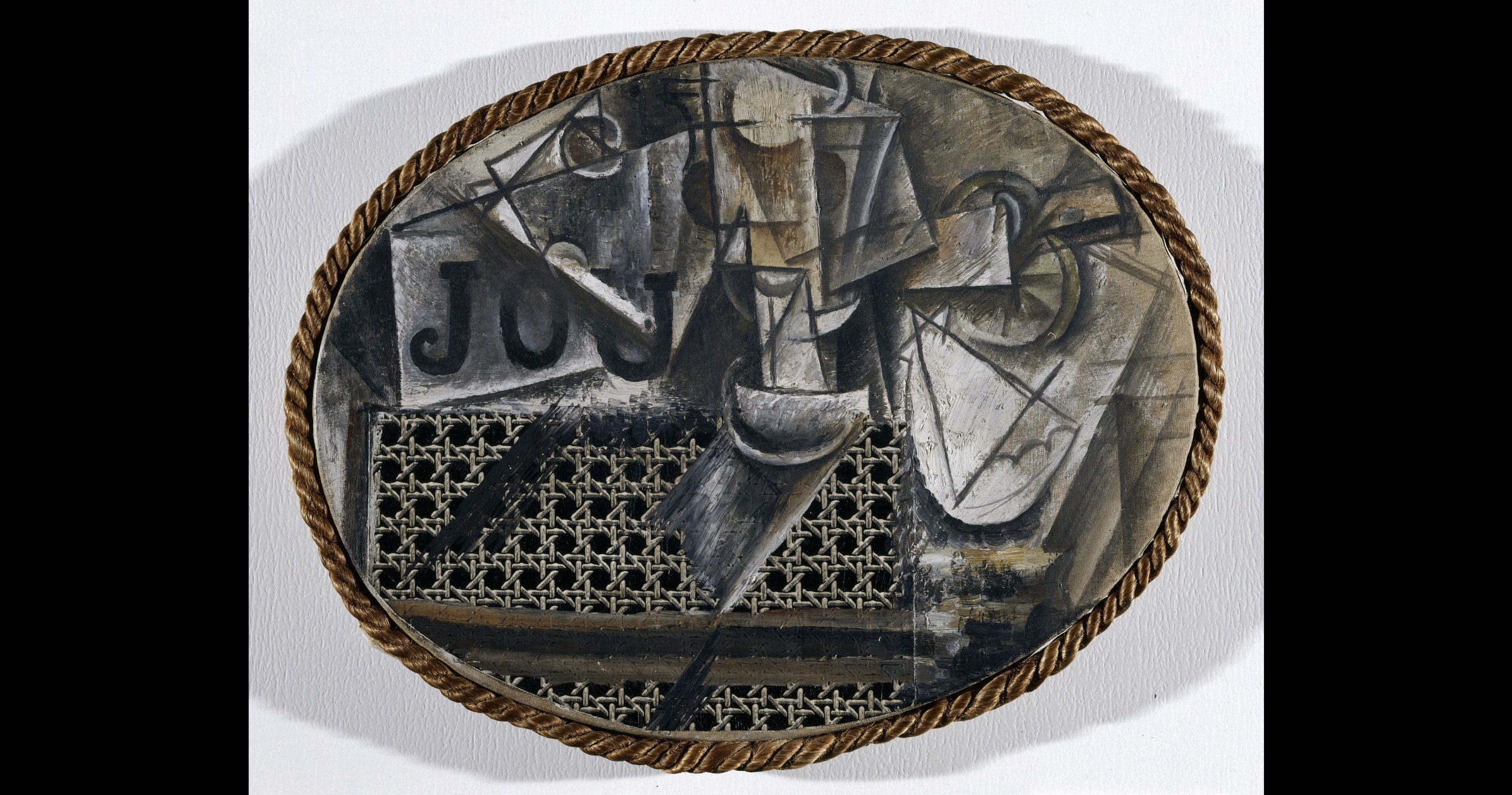
Nastala u Parizu u proleće 1912. godine, Mrtva priroda sa pletenom stolicom konvencionalno je identifikovana kao prvi kolaž u istoriji moderne umetnosti — distinkcija koja, iako je predmet naučne debate o tačnoj hronologiji, odražava paradigmatski značaj dela. Pikaso je proizveo delo tokom prelaznog trenutka između analitičkog i sintetičkog kubizma, kada su i on i Brak tražili načine da ponovo uvedu čitljivost i materijalnu prisutnost u kompozicije koje su postale gotovo apstraktne. Rešenje na koje je Pikaso naišao bilo je zapanjujuće jednostavno: umesto da naslika šaru pletenja kafanske stolice, zalepio je komad komercijalno štampanog voskovanog platna — onog tipa koji se koristio za prekrivanje kuhinjskih stolova — direktno na površinu platna. Ovaj jedini gest ukinuo je razliku između prikazivanja i ugrađivanja, između znaka i same stvari, i otvorio konceptualna vrata kroz koja je prošao velik deo umetnosti dvadesetog veka.
Ovalni format, neobičan za Pikasa, evocira oblik kafanskog stola gledanog odozgo i daje kompoziciji intiman, gotovo domaćinski kvalitet. Uže koje služi kao okvir — obično parče konopa iz gvoždare — dalje destabilizuje hijerarhiju između materijala likovne umetnosti i svakodnevnih predmeta. Kulturni milje u kome je ova inovacija nastala bio je milje intenzivnog eksperimentisanja: Brak je istovremeno razvijao svoju tehniku papier-colle, futuristi su u Italiji ugrađivali nekonvencionalne materijale, a širi etos pariške avangarde podsticao je transgresiju ustanovljenih granica. Ipak, upravo je Pikasova specifična intervencija — umetanje masovno proizvođene, mehanički štampane površine u ručno slikanu kompoziciju — najodlučnije dovela u pitanje romantičarske pojmove umetničke originalnosti i manuelne veštine.
Formalna analiza
Kompozicija je organizovana oko napetosti između slikanih i zalepljenih elemenata. Voskovano platno, koje zauzima donji levi kvadrant ovala, predstavlja tromp-lej imitaciju pletenja stolice — koja je i sama već reprezentacija, pošto štampana šara oponaša pletenu teksturu stvarnog pletiva. Pikaso tako uspostavlja vrtoglavi lanac označavanja: pravo voskovano platno koje imitira pravo pletenje stolice, ugrađeno u sliku koja takođe sadrži ručno slikane pasaže koji imitiraju druge predmete (čašu, krisku limuna, slova „JOU” iz zaglavlja novina Le Journal). Posmatrač je suočen sa višestrukim, konkurentskim registrima iluzije i stvarnosti unutar jedne male površine, od kojih svaki funkcioniše prema različitim konvencijama reprezentacije.
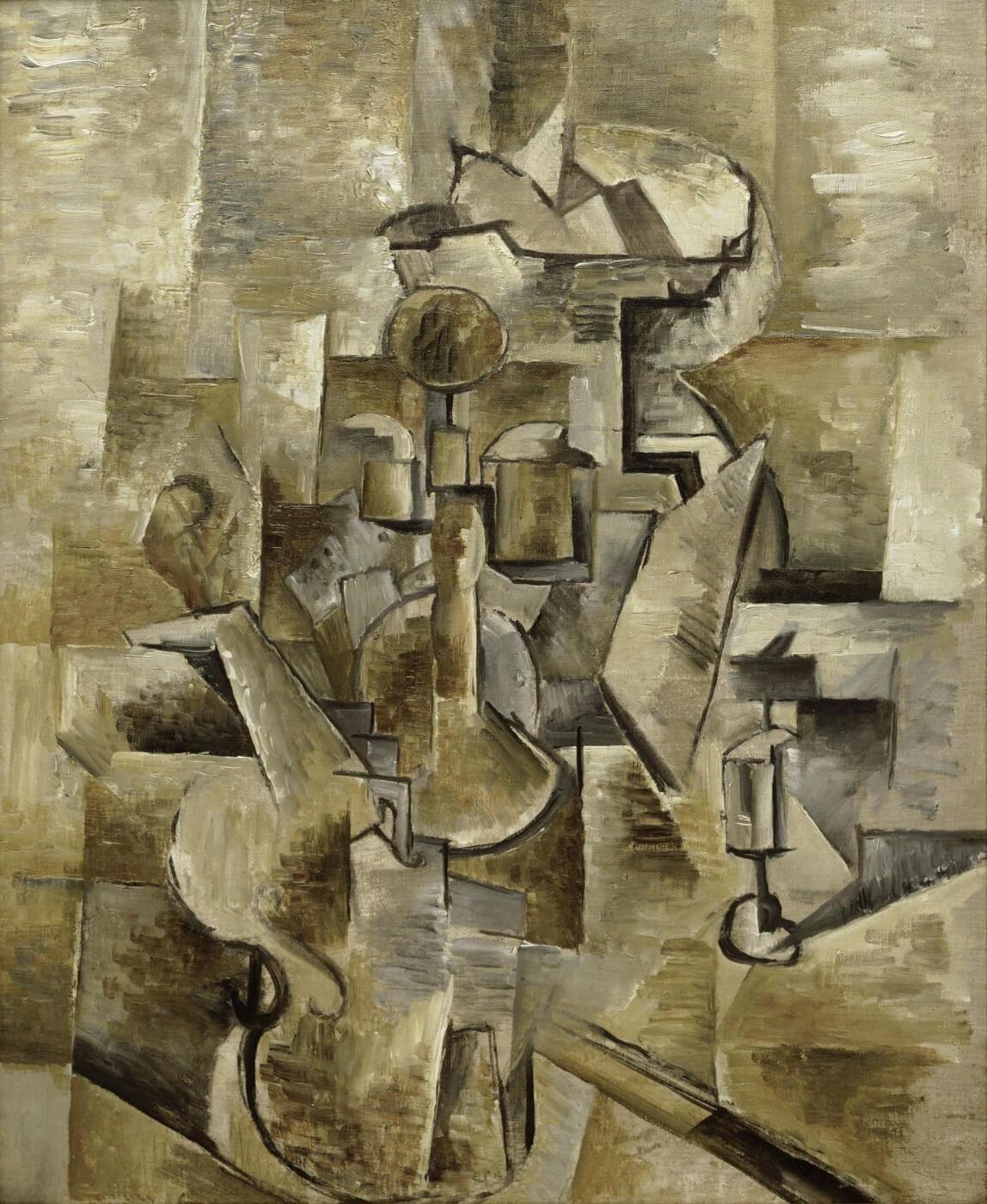
Slikani delovi koriste vokabular analitičkog kubizma — prigušene okere, sive i crne nanesene u preklapajućim fasetiranim ravnima — ali prisustvo voskovanog platna uvodi stranu teksturu i mehaničku pravilnost koja oštro kontrastira sa gesturalnim potezima četke koji ga okružuju. Okvir od užeta dodaje treći materijalni registar: skulpturalni, taktilni i agresivno trodimenzionalni, on proviruje iz slikovne ravni i insistira na statusu dela kao objekta. Ovalni format sadrži ove disparatne elemente unutar koherentnog vizuelnog polja, dok slova „JOU” (skraćenica koja je igra reči sa francuskim jouer, igrati se) najavljuju ludički duh koji animira čitav poduhvat. Veličina ovde takođe igra ulogu: skromne dimenzije dela — jedva veće od prostirke za jelo — pojačavaju njegovu tematsku povezanost sa kafanskim stolom i svakodnevnim svetom novina, pića i nameštaja.
Značaj i nasleđe
Umetnoistorijsko značaj Mrtve prirode sa pletenom stolicom teško je prenaglasiti. Uvodeći ne-umetnički materijal u prostor slikarstva, Pikaso je pokrenuo praksu kolaža koja će postati jedna od najrasprostranjenijih tehnika u modernoj i savremenoj umetnosti. Neposredne posledice bile su vidljive u roku od nekoliko meseci: Brakov prvi papier-colle, Posuda za voće i čaša, usledio je u septembru 1912, a do 1913. oba umetnika su proizvodila razrađene konstrukcije koje su kombinovale boju, papir, pesak i pronađene predmete. Dugoročne posledice protežu se kroz dadaističku fotomontažu, nadrealističku asamblaž, Raušenbergove Combine i strategije aproprijacije postmoderne umetnosti — sve prakse koje svoj rod vode od Pikasove odluke da zalepi komad voskovanog platna na platno.
Osim tehnike, delo je pokrenulo fundamentalna filozofska pitanja o prirodi reprezentacije koja nastavljaju da animiraju teoriju umetnosti. Ako komad štampanog voskovanog platna može da predstavlja pletenje stolice jednako efikasno — ili efikasnije — od slikane imitacije, onda koja je specifična vrednost slikarske iluzije? Ovo pitanje anticipira logiku redimejda Marsela Dišana i, šire, konceptualni zaokret u umetnosti koji privileguje ideju nad zanatom. Trenutni dom dela u Musee Picasso u Parizu, gde je ušlo u kolekciju kroz dation (plaćanje poreza u naturi) nakon umetnikove smrti, osigurava njegovu kontinuiranu dostupnost naučnicima i posetiocima kao temeljnog dokumenta modernističke inovacije.