Istorijski kontekst
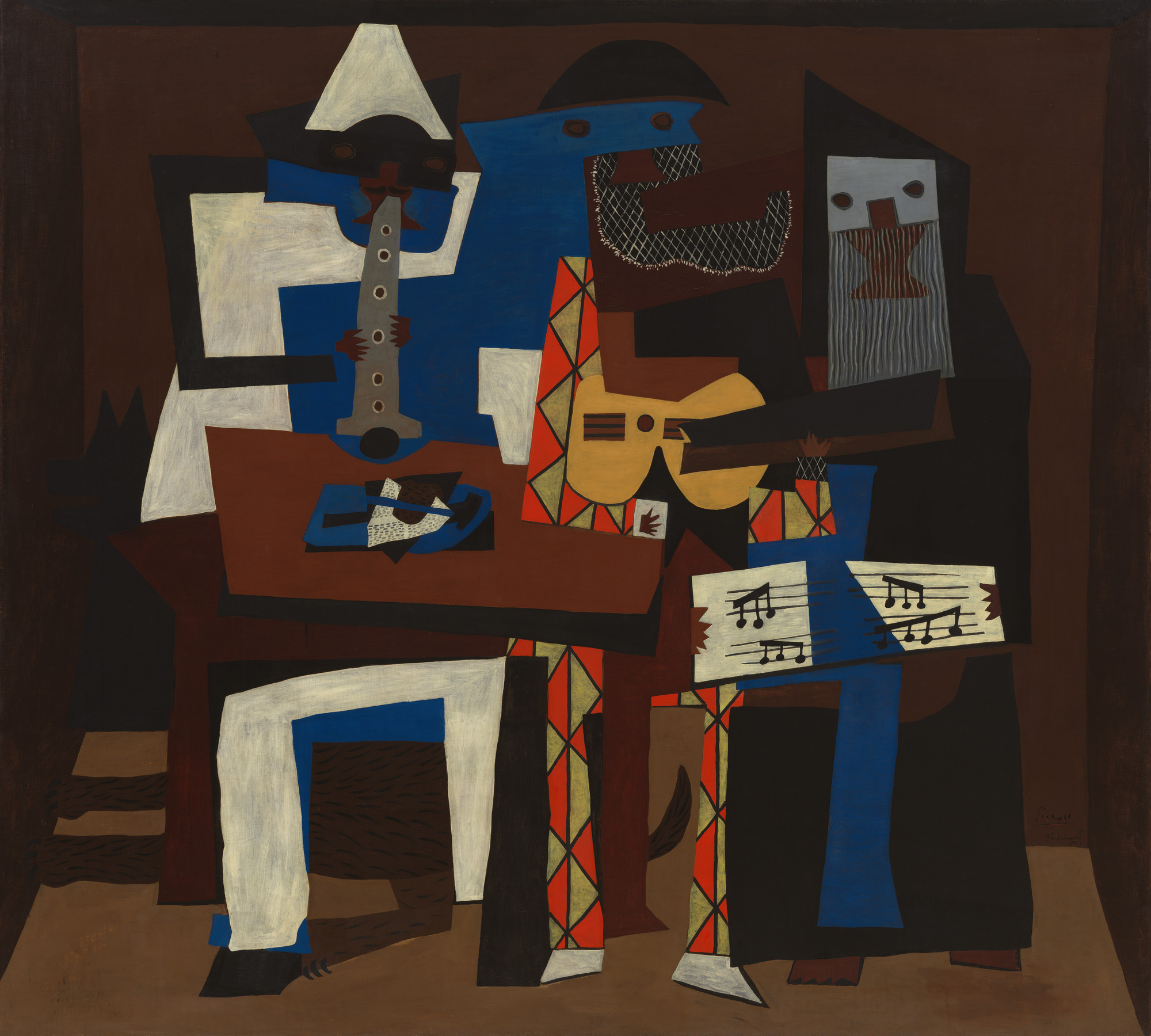
Naslikani tokom leta 1921. u Fontenblou, Tri muzičara označavaju kulminaciju Pikasovog sintetičko-kubističkog perioda i stoje kao jedno od najvećih platana koje je posvetio tom stilu. Do tog datuma kubizam više nije bio revolucionarni eksperiment kakav je bio deceniju ranije; postao je ustanovljeni idiom, a Pikaso je istovremeno radio u neoklasičnom figuralnom maniru inspirisanom njegovim nedavnim posetama Italiji i angažmanom sa Baletima Rusima Sergeja Djagileva. Koegzistencija ova dva radikalno različita načina — monumentalna kubistička apstrakcija i klasicizam nalik Engrovom — navela je naučnike da tumače sliku kao namernu potvrdu trajne vitalnosti kubizma u trenutku kada se pariška avangarda okretala takozvanom “povratku redu”. U ovom čitanju, delo je koliko polemička izjava o budućnosti modernizma toliko i prikaz tri maskirana muzičara.
Same figure — tipično identifikovane kao Pjero, Arlekin i monah — potiču iz tradicije komedije del arte koja je fascinirala Pikasa tokom čitave karijere. Ovi tipski likovi pojavljivali su se u njegovom radu još od Ružičastog perioda, ali su ovde ponovo osmišljeni u ravnom, oštroivičnom vokabularu sintetičkog kubizma. Prisustvo psa ispod stola, jedva vidljivog u tamnom donjem registru, dodaje notu domaće topline koja ublažava formalnu strogost slike. Pikaso je tog leta proizveo dve velike verzije kompozicije; platno u MoMA, sa tamnijom paletom i čvršće uklopljenim formama, generalno se smatra razrešenijim i arhitektonskijim od dva.
Formalna analiza
Najupečatljivija formalna karakteristika slike je njena simulacija kolaža čisto slikarskim sredstvima. Svaka figura je konstruisana od širokih, ravnih površina zasićene boje — dubokih plavih, toplih smeđih, jarko žutih, izrazito belih i naglašeno crnih — čije se ivice uklapaju poput delova slagalice. Pikaso manipuliše preklapanjem i transparentnošću da stvori plitko ali čitljivo prostorno slojevanje: Arlekin u centru zauzima prednji plan, flankiran Pjerom sa leve i monahom sa desne strane, dok tamna osnova usidruje sve tri figure nasuprot impliciranog unutrašnjeg zida. Uprkos radikalnom pojednostavljivanju forme, svaki muzičar ostaje prepoznatljiv kroz pažljivo postavljene atribute — klarinet koji drži Pjero, gitara Arlekina, harmonika ili note monaha — koji funkcionišu kao semiotička sidra unutar apstraktnog polja.
Kompozicija je rigorozno organizovana duž horizontalno-vertikalne mreže koja prati gotovo kvadratni format slike. Dijagonalni akcenti — ugao ruke, nagib muzičkog instrumenta — uvode kontrolisanu dinamiku bez narušavanja ukupne stabilnosti. Paleta, iako smela, je pažljivo modulisana: topli i hladni tonovi se smenjuju da spreče dominaciju bilo kojeg pojedinačnog dela, a Pikaso koristi crnu ne samo kao konturu već kao aktivan kompozicioni element koji povezuje disparatne zone boja. Monumentalno merilo — preko dva metra u svakom pravcu — pretvara ono što bi moglo biti duhovita dekorativna vežba u dominantno arhitektonsko prisustvo, pozivajući na poređenje sa muralnim slikarstvom i pojačavajući osećaj da kubizam može delovati u merilu istorijskog slikarstva.
Recepcija i nasleđe
Tri muzičara se često navode kao remek-delo sintetičkog kubizma i jedno od definišućih dela umetnosti dvadesetog veka. Njihova sinteza estetike papier-collé sa velikoformatnim uljnim slikarstvom demonstrirala je da formalne inovacije kubizma mogu generisati slike monumentalne ambicije, suprotstavljajući se kritičarima koji su pokret odbacivali kao pogodan samo za skromne mrtve prirode i intimne formate. Uticaj slike može se pratiti kroz džezu inspirisane apstrakcije Stuarta Dejvisa 1930-ih i 1940-ih, oblikovana platna Frenka Stele i grafičku smelost pop arta — sve pokrete koji su nasledili naglasak sintetičkog kubizma na ravnoj boji, oštrim ivicama i igri između reprezentacije i apstrakcije.
Delo takođe zauzima centralnu poziciju u istoriografiji modernizma kao primer kako jedan umetnik može održavati simultane i kontradiktorne stilske opredeljenja. Pikasova spremnost da radi i u kubističkom i u neoklasičnom modusu tokom istog perioda osporila je teleološki narativ avangardnog napretka i anticipirala postmoderne strategije stilskog pluralizma. U MoMA, slika funkcioniše kao krunski kamen u muzejskoj kanonskoj prezentaciji kubizma, zaključujući narativni luk koji počinje sa Sezanom i prolazi kroz analitički kubizam da bi stigao do ovog raspoloženog, samouverenog sažetka. Njena trajna popularnost kod publike svedoči o retkoj sposobnosti slike da pomiri formalnu složenost sa neposrednim vizuelnim zadovoljstvom.