
Istorijski kontekst
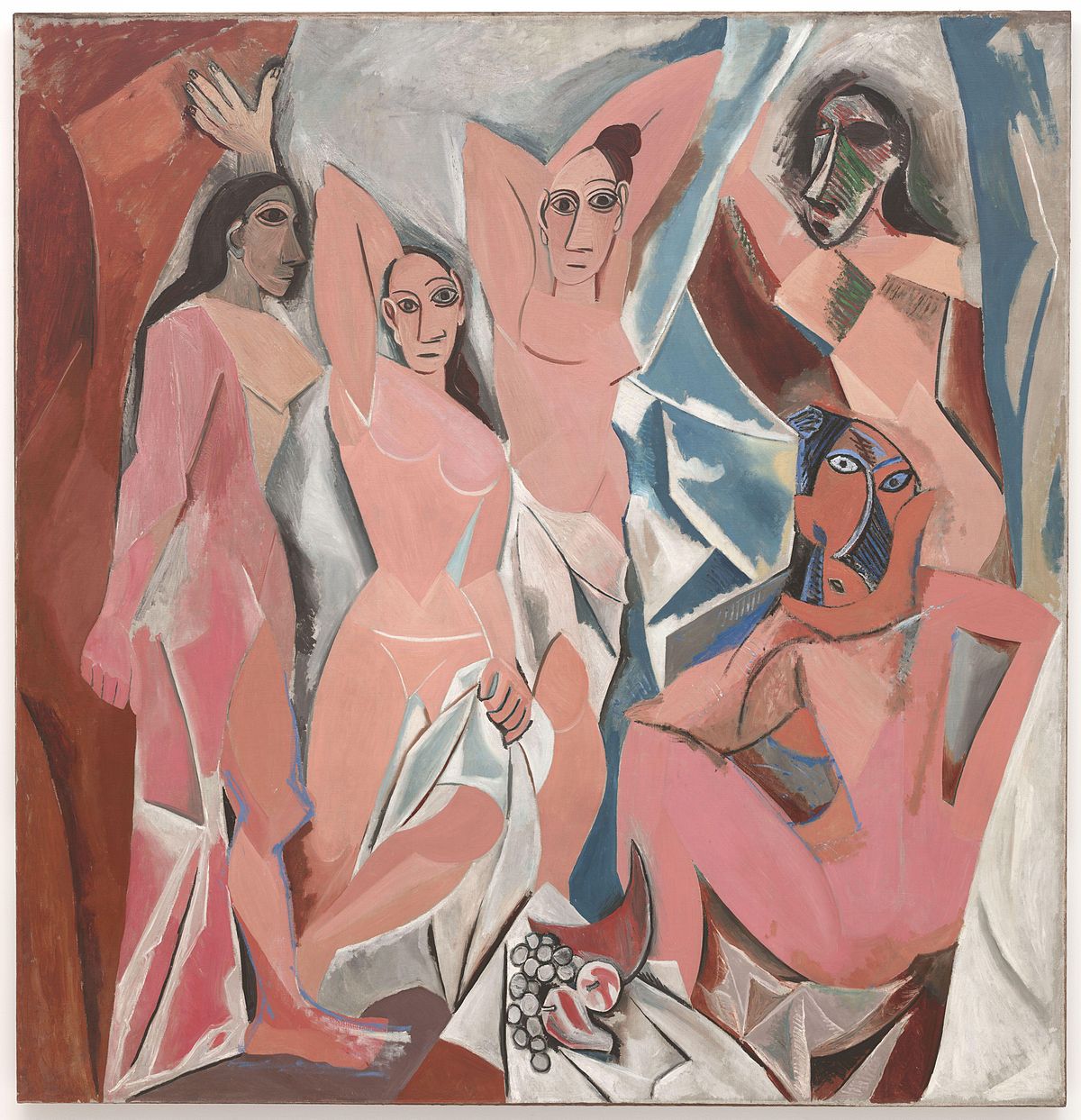
Gospođice iz Avinjona Pabla Pikasa opšte su prihvaćene kao najrevolucionarnija slika dvadesetog veka — delo koje je razbilo konvencije zapadne slikarske reprezentacije sa takvom silinom da su čak i umetnikovi najbliži saveznici uzmakli u šoku. Naslikana između kraja 1906. i jula 1907. u Pikasovom ateljeu Bato-Lavoar na Monmartru, monumentalna platna prikazuje pet golih žena u pozama izlaganja povezanim sa bordelom — konkretno, kako naslov (koji je dao pesnik Andre Salmon, a ne sam Pikaso) sugeriše, bordeli ulice Karer d’Avinji u barselonskoj četvrti crvenih fenjera, koju je Pikaso posećivao u mladosti. Slika je prošla kroz opsežne revizije tokom nastanka: rane studije uključivale su muške figure — mornara i studenta medicine koji nosi lobanju — čije je uklanjanje skoncentrisalo kompoziciju u čisto, neposredovano suočavanje između posmatrača i pet žena, lišavajući narativni kontekst i ostavljajući samo sirovu činjenicu njihovih netremičnih, ugaonih tela.
Formalna analiza
Formalni radikalizam Gospođica odmah je očigledan u tretmanu tela i lica figura, koji krše svaki princip anatomske koherentnosti, prostorne doslednosti i estetske harmonije koji je upravljao zapadnim figuralnim slikarstvom od renesanse. Tri figure sa leve strane pokazuju uticaj drevne iberijske skulpture — krute frontalne poze, velike bademaste oči, pojednostavljene forme uha — sa kojima se Pikaso susreo u iberijskim galerijama Luvra u proleće 1907. Ali dve figure sa desne strane predstavljaju daleko radikalniji otklon: njihova lica su iskrivljena u ugaone konfiguracije nalik maskama koje se direktno oslanjaju na afričke skulptorske tradicije, posebno Dan, Fang i Grebo maske Zapadne i Centralne Afrike koje je Pikaso gotovo sigurno video u Muzeju etnografije Trokadero u junu 1907. Figura koja čuči u donjem desnom uglu je najšokantniji deo slike — njeno telo se istovremeno vidi spreda i otpozadi, lice je nazubljen sklop ugaonih ravni prošaranih paralelnim linijama, kao da su konvencije perspektive jedne tačke gledišta nasilno rastrgane i ponovo sklopljene prema sasvim drugačijoj logici.
Uticaj Pola Sezana je podjednako ključan, mada deluje na strukturnijoj razini. Sezanove kasne kompozicije kupačica — sa geometrijskim pojednostavljivanjem ljudskog tela, plitkim, nagnutim slikovnim ravnima i odbijanjem da formu razreše u glatke, kontinuirane konture — pružile su Pikasu konceptualni okvir za njegov napad na perspektivalni prostor. Sezanov čuveni nalog da „prirodu tretiramo cilindrom, sferom, konusom” nalazi svoju najekstremniju realizaciju u Gospođicama, gde je žensko telo svedeno na niz ugaonih, facetiranih ravni koje se ispupčuju i povlače bez obzira na anatomsku logiku. Pozadina takođe odražava Sezanov uticaj: draperija nalik zavesi u plavoj i beloj u gornjim uglovima tretirana je kao niz ravnih, nazubljenih ravni koje odbijaju da se povuku u prostornu dubinu, umesto toga navaljivajući napred da zauzmu istu slikovnu ravan kao i same figure. Rezultat je radikalno spljoštavanje slikovnog prostora — ukidanje razlike između figure i pozadine, prvog i zadnjeg plana, koje je organizovalo zapadno slikarstvo od Đota.
Mrtva priroda na dnu centra platna — mali aranžman voća uključujući krišku lubenice, grožđe, krušku i jabuku — pruža ključni kontrapunkt figurama iznad. Renderovana na relativno konvencionalan način u poređenju sa iskrivljenim telima, mrtva priroda učvršćuje kompoziciju u tradiciji Sezanovih stonihi aranžmana, dok istovremeno funkcioniše kao simbolički element. Voće je tumačeno kao referenca na iskušenje Eve, na seksualnu dostupnost žena i na tradiciju vanitas mrtve prirode, u kojoj pokvarljiva hrana simbolizuje prolaznost zemaljskih zadovoljstava. Njeno postavljanje na nivou očiju posmatrača, ispupčeno napred na nagnutom stolu koji kao da prodire u naš prostor, čini posmatrača saučesnikom u sceni — ne distanciranim posmatračem već učesnikom, klijentom koji ulazi u bordel i biva suočen sa agresivnim, nepokolebljivim pogledima žena.
Recepcija i nasleđe
Reakcija na Gospođice među samim Pikasovim krugom bila je pretežno negativna. Žorž Brak, koji će uskoro postati Pikasov partner u razvoju kubizma, navodno mu je rekao: „Kao da od nas tražiš da jedemo kučinu ili da pijemo benzin i bljujemo vatru.” Kolekcionar i kritičar Leo Štajn nazvao je to „užasnim neredom”. Anri Matis, čiji Radost života (1906) — mirna, hedonistička vizija golih figura u pastoralnom pejzažu — predstavljao je sve što su Gospođice nastojale da unište, navodno je sliku smatrao uvredom i namerne provokacijom. Andre Deren je predvideo da će Pikaso biti pronađen obešen iza svog platna. Čak je i obično simpatični trgovac Daniel-Anri Kanvajler bio u početku zbunjen. Potreseni neprijateljstvom, Pikaso je smotao platno i čuvao ga u svom ateljeu, gde je ostalo uglavnom neviđeno godinama. Nije bilo javno izloženo do 1916, na Salonu d’Anten koji je organizovao Andre Salmon, i nije ga stekla javna kolekcija do 1939. godine, kada ga je Muzej moderne umetnosti kupio sredstvima iz legata Lili P. Blis.
Istoričar umetnosti Leo Štajnberg u svom kapitalnom eseju iz 1972. „Filozofski bordel” ostaje najuticajnija kritička analiza slike. Štajnberg je tvrdio da pravi subjekt Gospođica nije ženski akt već sam čin gledanja — da Pikaso nije naslikao pet žena već pet različitih modusa slikovne reprezentacije, od relativnog naturalizma centralnih figura do radikalne fragmentacije dva lica sa desne strane, čineći platno svojevrsnom antologijom reprezentativnih mogućnosti raspoređenih u jednom vizuelnom polju. Štajnberg je dalje tvrdio da agresivna frontalnost slike — netremični pogledi žena upućeni posmatraču — predstavlja radikalno preokretanje tradicionalnog odnosa između posmatrača i akta, u kome muški pogled objektivizira pasivno žensko telo. U Gospođicama, žene uzvraćaju pogled, odbijajući svoju dodeljenu ulogu objekata kontemplacije, i posmatrač postaje objekat njihovog pogleda. Ovo preokretanje dinamike gledanja anticipira feminističku umetničku kritiku kasnog dvadesetog veka, mada su sami Pikasovi stavovi prema ženama bili sve samo ne feministički.
Odnos između Gospođica i kasnijeg razvoja kubizma složen je i predmet velikih debata. Slika se često opisuje kao „proto-kubistička”, i njena fragmentacija forme i prostora jasno anticipira analitički kubizam koji će Pikaso i Brak razviti između 1908. i 1912. Ipak, u mnogim aspektima Gospođice su nasilnije, emocionalno sirovije i seksualno nabijanije od bilo čega u zrelom kubizmu, koji je težio intelektualnoj hladnoći i formalnoj uzdržanosti. Divlja energija slike — njeno odbijanje lepote, agresivno suočavanje posmatrača, spremnost da rizikuje ružnoću i nekoherentnost u potrazi za novom slikovnom istinom — pripada koliko tradiciji ekspresionizma toliko i kubizmu. Ona stoji na raskrsnici višestrukih modernističkih impulsa — primitivističke fascinacije nezapadnom umetnošću, sezanovske dekonstrukcije slikovnog prostora, ekspresionističkog privilegovanja subjektivnog intenziteta nad objektivnom lepotom — i njena nesvodiva složenost je ono što je čini ključnim delom umetnosti dvadesetog veka.
Više od jednog veka nakon nastanka, Gospođice iz Avinjona nastavljaju da provociraju i uznemiruju. Njeno prisvajanje afričke umetnosti preispitano je kroz postkolonijalnu teoriju i kritičku teoriju rase, pri čemu naučnici dovode u pitanje odnose moći inherentne u Pikasovom korišćenju nezapadnih formi lišenih kulturnog konteksta. Njen prikaz ženskog tela analiziran je kroz feminističke prizme koje u njoj nalaze i radikalno narušavanje patrijarhalnog vizuelnog zadovoljstva i ponovnu potvrdu muške umetničke vlasti nad ženskim oblikom. Njen status osnivačkog dokumenta kubizma osporili su naučnici koji se zalažu za distribuiraniju, kolaborativniju genezu pokreta. Ipak, fundamentalno dostignuće slike ostaje neosporno: u jednom žestokom činu slikovne destrukcije i reinvencije, Pikaso je demonstrirao da konvencije zapadne reprezentacije — perspektiva, anatomska koherentnost, jedinstvo tačke gledišta, idealizacija ljudskog tela — nisu prirodni zakoni već istorijske konstrukcije, i da njihovo rušenje može otvoriti put ka prethodno nezamislivim mogućnostima za vizuelnu umetnost.