Istorijski kontekst
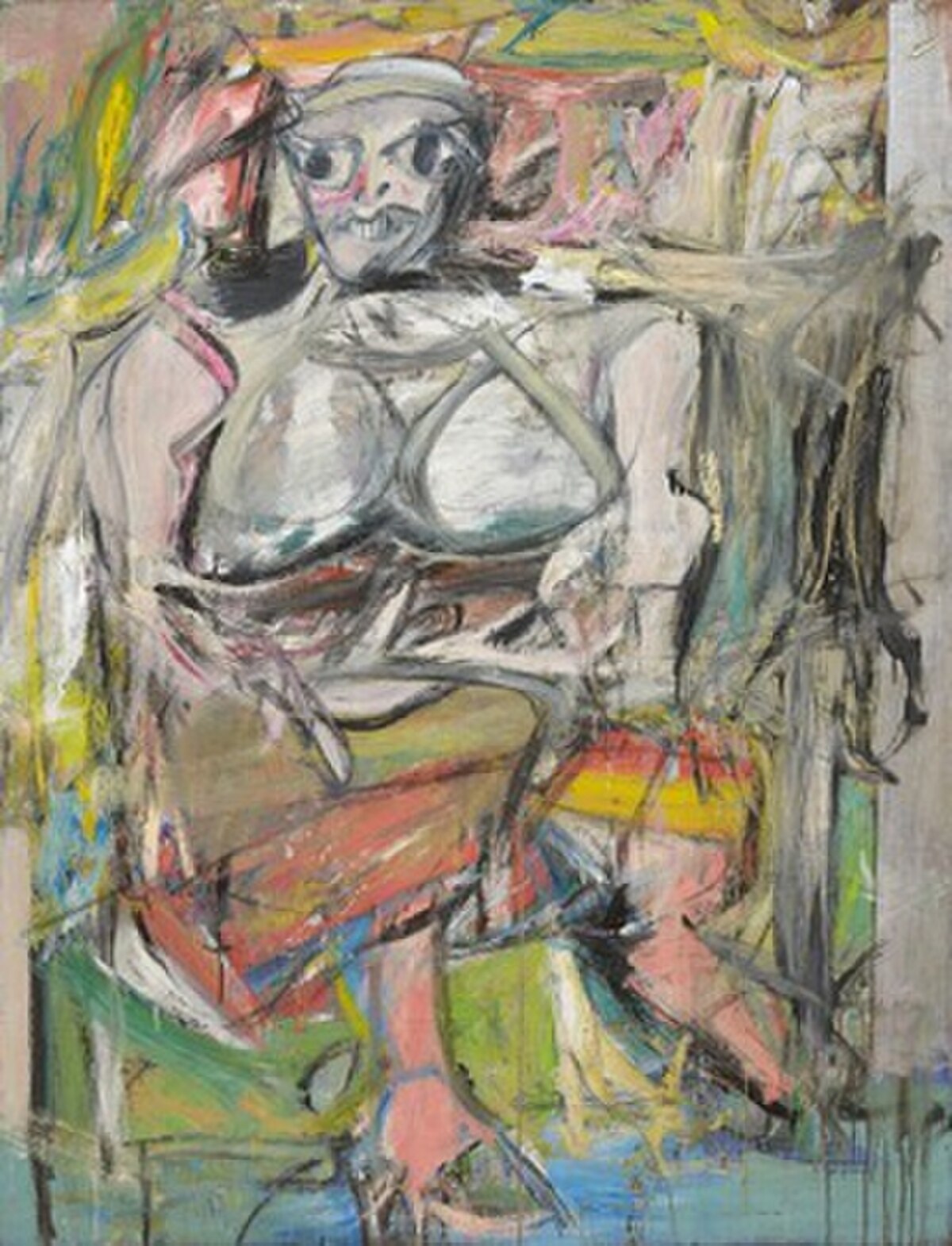
Kada je Žena I prvi put izložena u galeriji Sidnija Dženisa u martu 1953. godine, izazvala je kontroverzu koja je raskolila njujoršku umetničku scenu. Do ranih pedesetih godina, apstraktni ekspresionizam se etablirao kao dominantna sila u američkom slikarstvu, a njegovi najistaknutiji predstavnici — Polok, Rotko, Klajn, Madervell — bili su posvećeni čistoj apstrakciji. Vilem de Kuning, koji je radio zajedno sa ovim umetnicima od četrdesetih godina i bio priznat kao jedan od najdarovitijih slikara pokreta, izgledao je kao da je izdao stvar. Pred njima je bilo monumentalno platno na kome je dominirala prepoznatljiva, čak agresivno očigledna, ljudska figura: žena, koja sedi frontalno, sa ogromnim ukočenim očima, širokim grimasom osmehnutih razgolićenih zuba i obešenim grudima, prikazana u oluji sjekućih, ključajućih poteza četke. Za one koji su verovali da napredak modernog slikarstva vodi neumitno ka apstrakciji, slika je bila provokacija — čak i izdaja.
De Kuning se mučio sa Ženom I skoro dve godine, započevši sliku u junu 1950. i opsesivno je prerađujući kroz desetine iteracija. Istoričar umetnosti Tomas Hes detaljno je dokumentovao proces: de Kuning bi izgradio figuru, sastrugao je, ponovo nacrtao ugljenom na mokroj boji, ponovo je izgradio i ponovo sastrugao, u ciklusu stvaranja i razaranja koji je otelotvoravao njegovo uverenje da slika treba da ostane večito nerešena, večito u procesu. Do proleća 1952. napustio je platno u frustraciji, proglasivši ga neuspehom. Bio je istoričar umetnosti Majer Šapiro koji je, posetivši de Kuningov atelje, ubedio ga da se vrati slici i dovede je do nekog oblika završetka. Konačna verzija — utoliko ukoliko se bilo koja de Kuningova slika može nazvati „konačnom” — zadržava arheološke dokaze ove produžene borbe: sablasni pentimenti ranijih verzija vidljivi su ispod površine, pasaži sastrugane i ponovo nanete boje stvaraju palimpsest preklapajućih odluka, a sama figura kao da se istovremeno materijalizuje i rastvara pred očima posmatrača.
Odnos slike prema istoriji prikazivanja žene u zapadnoj umetnosti složen je i namerno provokativan. De Kuning je crpeo iz izvora koji se kreću od paleolitskih figurina plodnosti i drevnih mesopotamskih idola do Rubensovih mesnatih aktova, Pikasovih monumentalnih kupačica iz dvadesetih godina i razrogačenih fotografija pin-ap devojaka koje je isecao iz časopisa i kolažirao na ranije studije za sliku. Žena sintetizuje ove tradicije u figuru koja je istovremeno arhaična i savremena, veličanstvena i groteskna, zavodljiva i zastrašujuća. Sam de Kuning se opirao tumačenjima koja su sliku svrstavala bilo kao mizoginu agresiju ili feministički arhetip, jednostavno insistirajući da su „Žene imale veze sa ženom slikanom kroz sve epohe, svim tim idolima.”
Formalna analiza
Kompoziciona struktura Žene I odigrava neprekidni rat između figuracije i apstrakcije. Sedeća figura zauzima centar platna, njeno telo grubo simetrično, njene oči upiljene direktno u posmatrača sa intenzitetom koji susret čini konfrontacionim. Ipak, na svakom mestu gde se figura nameće kao prepoznatljiv oblik, okolni slikarski rad preti da je apsorbuje i rastvori. Pozadina — ako se uopšte može tako nazvati — sastoji se od istih agresivno obrađivanih pasaža uljane boje koji sačinjavaju figuru, tako da je razlika između figure i osnove u neprekidnom fluksu. Žena izranja iz boje i povlači se nazad u nju; ona je istovremeno i tema slike i izgovor za pravu temu slike, a to je sam čin slikanja.
De Kuningova tehnika je brutalno fizička. Površina boje pokazuje dokaze svake faze svog produženog nastajanja: oblasti gustog impasta gde je pigment nanesen na platno širokom molerskom četkom, pasaži gde je mokra boja sastrugana do platna paletnim nožem, linije crteža ugljenom vidljive tamo gde je de Kuning ponovo ucrtavao konture figure na još mokroj površini, i kapljice i prskotine koje beleže nasilje njegovog napada. Paletu dominiraju tonovi puti — ružičasti, žuti, oker — prekinuti pasažima zelene, plave i crne koji odbijaju da se slože u koherentne prostorne odnose. Koža figure nije naturalističko meso tradicionalnog slikarstva, već ključajuća površina pigmenta koja potvrđuje svoj materijalni identitet boje čak i dok sugeriše fizičnost tela.
Lice je najupečatljiviji pasaž slike. Oči su ogromne, okrugle i bez treptanja, prikazane sa direktnošću koja priziva frontalne poglede vizantijskih ikona i egipatskih pogrebnih portreta. Usta su širok, zubati osmeh koji lebdi između hilarnosti i pretnje — osmeh koji otkriva previše, sugerišući istovremeno zavodljiv prikaz pin-ap devojke i razgolićene zube predatora. Grudi su prikazane kao teški, obešeni oblici koji potvrđuju materijalnu težinu tela i biološku funkciju sa eksplicitnošću koja odbija i idealizaciju i stidljivost. Čitava figura zrači primalnom energijom koja duguje koliko paleolitskim figurinama toliko i bilo kojoj tradiciji zapadnog slikarstva.
De Kuningovo tretiranje prostora je namerno dvosmisleno. Figura izgleda kao da sedi na nekoj površini — postoje naznake stolice — ali prostorni indikatori su protivrečni i nepotpuni. Pozadina se smenjuje između pasaža koji sugerišu dubinu i pasaža koji potvrđuju ravnost slikovne površine. Ova prostorna nerazrešenost nije neuspeh veštine, već namerna strategija: de Kuning je nastojao da održi stanje vizuelne i psihološke napetosti u kome ništa nije ustaljeno, ništa stabilno, i u kome je posmatračev pokušaj da organizuje vizuelno polje u koherentne prostorne odnose neprekidno osujećen.
Značaj i nasleđe
Žena I transformisala je pejzaž posleratnog američkog slikarstva. Demonstrirajući da figurativna ikonografija može koegzistirati sa najradikalnijim slikarskim ambicijama apstraktnog ekspresionizma, de Kuning je otvorio vrata kroz koja će proći naredne generacije umetnika. Slika je direktno uticala na figurativni ekspresionizam slikara oblasti Zaliva (Dejvid Park, Ričard Dibenkorn, Elmer Bišof), koji su sredinom pedesetih počeli da ponovo uvode figuru u apstraktne slikarske kontekste. Pružila je ključni presedan za neoekspresionističke slikare osamdesetih godina — Georg Bazelica, Džulijana Šnabela, Žan-Mišela Baskijata — koji su slično odbacili zabranu figuracije i emocionalne intenzivnosti koja je dominirala naprednim slikarstvom u intervenirajućim decenijama.
Slika je takođe inaugurisala veliki podserijal unutar de Kuningovog opusa. Između 1950. i 1953. godine, proizveo je šest slika Žena (numerisanih od I do VI), od kojih je svaka istraživala različite aspekte odnosa figure prema površini boje i prema istoriji reprezentacije. Serijal u celini predstavlja jednu od najupornijih i najdubljih meditacija o ljudskoj figuri u umetnosti dvadesetog veka, a Žena I, kao temeljni iskaz, nosi težinu čitavog projekta. Dve godine borbe koje su je proizvele upisane su u njenu površinu — površinu koja beleži ne jedan kreativni čin, već produženi, agonizujući dijalog između umetnika i njegovih materijala, između želje da se predstavi i impulsa ka apstrakciji.
Kupovina Žene I od strane Muzeja moderne umetnosti 1953. godine, iste godine kada je prvi put izložena, bio je čin institucionalne hrabrosti. Slika je bila duboko kontroverzna: mnogi kritičari su je videli kao retrogradnu predaju figuraciji, dok su je drugi smatrali remek-delom sirove emocionalne snage. Alfred Bar, osnivački direktor MoMA-e, odmah je prepoznao njen značaj i nabavio je za stalnu kolekciju, odluka koju je potvrdila naknadna istorija. Danas Žena I stoji uz Pikasove Gospođice iz Avinjona i Polokove drip slike kao jedno od ključnih dela angažmana modernističkog slikarstva sa ljudskom figurom — delo koje odbija da razreši napetost između reprezentacije i apstrakcije, držeći oba impulsa u stanju dinamične, trajne i duboko uznemirujuće suspenzije.