Istorijski kontekst
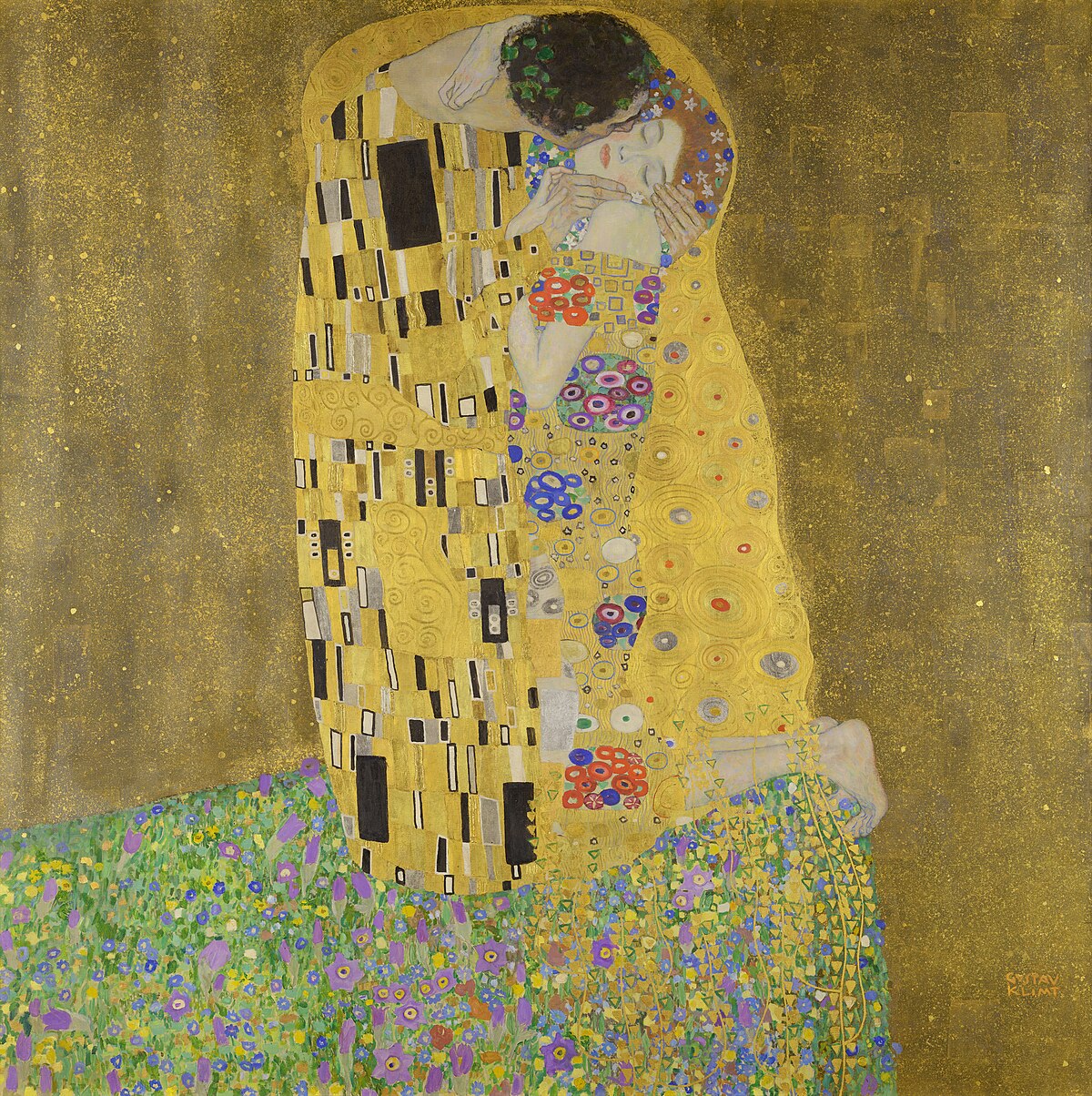
Poljubac (Der Kuss) Gustava Klimta, naslikan između 1907. i 1908. godine, vrhunsko je dostignuće umetnikove takozvane Zlatne faze — perioda od približno jedne decenije tokom kojeg je Klimt ugrađivao pravi zlatni listić, srebrni listić i metalik boju u svoja platna, stvarajući dela izuzetnog materijalnog bogatstva koja su brisala granice između slikarstva, mozaika i dekorativne umetnosti. Slika prikazuje par koji kleči na ivici litice posute cvećem, njihova tela obavijena bogato ornamentisanim zlatnim ogrtačima, dok se muškarac naginje da pritisne usne na ženin obraz dok ona naginje glavu i zatvara oči u gestu ekstatičnog prepuštanja. Dimenzija 180 sa 180 centimetara — savršeni kvadrat — platno je monumentalnih razmera, a njegova svetlucava zlatna površina daje mu hijeratički, transcendentni kvalitet vizantijske ikone pre nego konvencionalne zapadne štafelaj slike. Austrijska država otkupila je delo direktno sa izložbe Kunstschau 1908. u Beču, i ono je od tada ostalo u Austrijskoj galeriji Belvedere, gde je daleko najposećenije delo kolekcije i jedna od najreprodukovanih slika u istoriji umetnosti.
Zlatna faza nastala je iz Klimtovog dubokog angažovanja sa vizantijskom umetnošću, koju je upoznao iz prve ruke tokom dve posete Raveni 1903. godine. Mozaici iz šestog veka u Bazilici San Vitale i Mauzoleju Gale Placidije — sa njihovim svetlucavim zlatnim teserama, spljoštenim, hijeratičkim figurama i spojem verske svečanosti sa čulnom materijalnom lepotom — ostavili su dubok utisak na Klimta, koji je u njima prepoznao presedan za sopstvenu ambiciju da stvori umetnost koja prevazilazi konvencionalnu razliku između “likovnog” i “dekorativnog”. Uticaj Ravene sveprisutan je u Poljupcu: u zlatnoj osnovi koja obavija figure i eliminiše prostornu dubinu, u šarama nalik mozaiku na ogrtačima, i u ikoničnoj frontalnosti kompozicije, koja zagrljaj ne prikazuje kao naturalističku scenu već kao sveti ritual — čin pobožnosti prikazan vizuelnim jezikom religiozne umetnosti. Ipak, Klimtovo preuzimanje vizantijskih formi nikada nije bilo puki pastiš; on je ove drevne izvore filtirao kroz senzibilitet bečkog fin de siècle-a, prožimajući ih psihološkom složenošću i erotskim nabojem koji bi bili nezamislivi u njihovom izvornom crkvenom kontekstu.
Dekorativne šare koje pokrivaju zlatne ogrtače para nose simboličko značenje koje prevazilazi njihovu čisto vizuelnu funkciju. Muškarčev ogrtač ukrašen je smelim, pravougaonim formama — pravougaonicima, spiralama i crno-belim geometrijskim oblicima — dok ženin odervni sadrži kružne, cvetne motive u mekšim bojama: koncentrične krugove, ovoidne forme i rasute divlje cvetove. Ovaj kontrast između muške geometrije i ženskog organskog oblika — između uglatog i zaobljenog, tvrdog i mekog — ponavljajući je motiv u Klimtovom radu i odražava širi jugendštil interes za interakciju između geometrijske strukture i prirodnih, biomorfnih formi. Šare istovremeno funkcionišu kao čista dekoracija, kao simbolički rodne oznake i kao vizuelna metafora za komplementarno sjedinjenje muških i ženskih principa — ideja sa dubokim korenima i u zapadnoj filozofiji (Platonov Simpozijum) i u istočnoj duhovnosti. Tela para, spojena i delimično skrivena ispod zlatnih ogrtača, postaju gotovo nerazlučiva, njihovi individualni identiteti rastvoreni u činu zagrljaja.
Formalna analiza
Poljubac se mora razumeti u kontekstu Bečke secesije, umetničkog pokreta koji je Klimt suosnovao 1897. i koji je definisao kulturni pejzaž Beča na prelasku vekova. Secesija — čiji je moto “Svakom dobu njegova umetnost, umetnosti njena sloboda” (Der Zeit ihre Kunst, der Kunst ihre Freiheit) bio upisan iznad ulaza u ikoničnu izložbenu zgradu Jozefa Marije Olbriha — predstavljala je pobunu protiv konzervativnog umetničkog establišmenta bečkog Künstlerhaus-a i prihvatanje međunarodnog Art Nouveau i Arts and Crafts pokreta. Centralni deo secesijskog programa bilo je odbacivanje akademske hijerarhije koja je štafelaj slikarstvo i skulpturu stavljala iznad “primenjenih” umetnosti arhitekture, dizajna nameštaja, metalurgije i tekstila. Klimtova upotreba zlatnog listića i dekorativnih šara — tehnika preuzetih iz zlatarstva i mozaičnog rada pre nego iz tradicije uljnog slikarstva — bila je namerna afirmacija ovog antihijerarhijskog principa. U Poljupcu, razlika između slike i dekorativnog objekta nije samo zamagljena već učinjena irelevantnom: platno je istovremeno slika, draguljima oivičena površina i objekat gotovo liturgijske lepote.
Identitet para u Poljupcu bio je predmet uporne spekulacije. Najčešće ponavljana teorija identifikuje muškarca kao samog Klimta a ženu kao njegovu dugogodišnju pratilja i muzu Emiliju Flege, istaknutu bečku modnu dizajnerku sa kojom je Klimt održavao intiman i složen odnos od ranih 1890-ih do svoje smrti 1918. Iako nijedan konačan dokaz ne potvrđuje ovu identifikaciju, okolnosne veze su sugestivne: muškarčeve crte lica, delimično zaklonjene pognutom glavom, podudaraju se sa Klimtovim izgledom, a ženin tip haljine i fizički tip podsećaju na Flege kako se pojavljuje na Klimtovom portretu iz 1902. Neki naučnici su takođe primetili veze sa Klimtovim odnosom sa Adele Bloh-Bauer, bogatom bečkom socijalnom figurom koju je Klimt naslikao dva puta — portret iz 1907, sa sličnom raskošnom površinom od zlatnog listića, završen je upravo kada je Poljubac započinjao. Bilo da slika prikazuje konkretan par ili idealizovani, univerzalni zagrljaj, njena emocionalna rezonancija proizlazi iz napetosti između intimnosti ljudskog gesta — nežnosti poljupca, ranjivosti ženinih zatvorenih očiju i izloženog vrata — i monumentalne, gotovo neosobne veličanstvenosti njenog zlatnog okruženja.
Erotska dimenzija Poljupca deluje kroz karakterističnu klimtovsku strategiju simultanog otkrivanja i prikrivanja. Ženino telo je delimično vidljivo ispod zlatnog ogrtača — njena gola ramena, krivina listova, stopala koja se savijaju preko ivice litice — dok je muškarčev oblik gotovo u potpunosti sakriven ispod njegovog geometrijskog plašta. Sam zagrljaj je nabijen erotskim intenzitetom — muškarčeve ruke na ženinom licu, njeni prsti upleteni oko njegovog vrata — ali bogato dekorativna površina funkcioniše kao svojevrsni ekran ili veo koji istovremeno pojačava i obuzdava seksualnu energiju. Ova dijalektika između erotskog i dekorativnog centralna je za Klimtovu umetnost i za širu kulturu bečkog fin de siècle-a, gde je Zigmund Frojd istovremeno razvijao svoje teorije potiskivanja, sublimacije i odnosa između površine i dubine. Klimtova zlatna površina je, u izvesnom smislu, vizuelni ekvivalent frojdovske psihe: blistav, kulturno sankcionisan eksterijier ispod kojeg se snažne erotske i instinktivne sile istovremeno izražavaju i kontrolišu.
Neposredan kritički i popularni uspeh dela bio je neuobičajen za Klimta, čija su provokativnija dela — naročito stropne slike za Bečki univerzitet Filozofija, Medicina i Jurisprudencija (1899-1907), sa njihovom otvorenom nagošću i neskrivenim prikazima patnje — izazivala žestoku kontroverzu i optužbe za pornografiju. Poljubac je, nasuprot tome, od početka prihvaćen kao remek-delo, njegova erotika dovoljno sublimisana zlatom i ornamentom da bude javno prihvatljiva, a emocionalni sadržaj dovoljno univerzalan da prevaziđe frakcionalne sporove bečke kulturne politike. Neposredna kupovina slike od strane austrijske vlade sa izložbe Kunstschau 1908. — prelomne izložbe koja je takođe predstavila mladog Egona Šilea bečkoj javnosti — signalizirala je zvanično priznanje Klimtovog statusa koje mu je izmicalo tokom kontroverze oko univerzitetskih slika.
Recepcija i nasleđe
Poljubac označava i vrhunac i zaključenje Klimtove Zlatne faze. Nakon 1908, udaljio se od zlatnog listića ka kolorističnijem, slikarskijem stilu pod uticajem mlađih ekspresionista — naročito Šilea i Oskara Kokoške, obojicu koje je podržavao i promovisao. Kasni pejzaži i portreti, sa njihovim gustim poljima cvetnog šara i zasićenom bojom, predstavljaju drugačiju vrstu dekorativnog intenziteta, ali nikada nisu ponovo uhvatili izuzetni svetlucavi kvalitet zlatnih dela. Klimt je umro 6. februara 1918, žrtva pandemije gripa koja je prohujala Evropom u poslednjim mesecima Prvog svetskog rata, a sa njim je umro i kulturni svet habzburškog Beča koji je proizveo i negovao njegovu umetnost. Poljubac opstaje kao definišuća slika tog izgubljenog sveta — vizija ljubavi, lepote i čulne prefinjenosti postavljene na ivicu ponora, zlatni par koji se zagrljuje na svojoj litici dok se praznina otvara ispod njih.