Istorijski kontekst
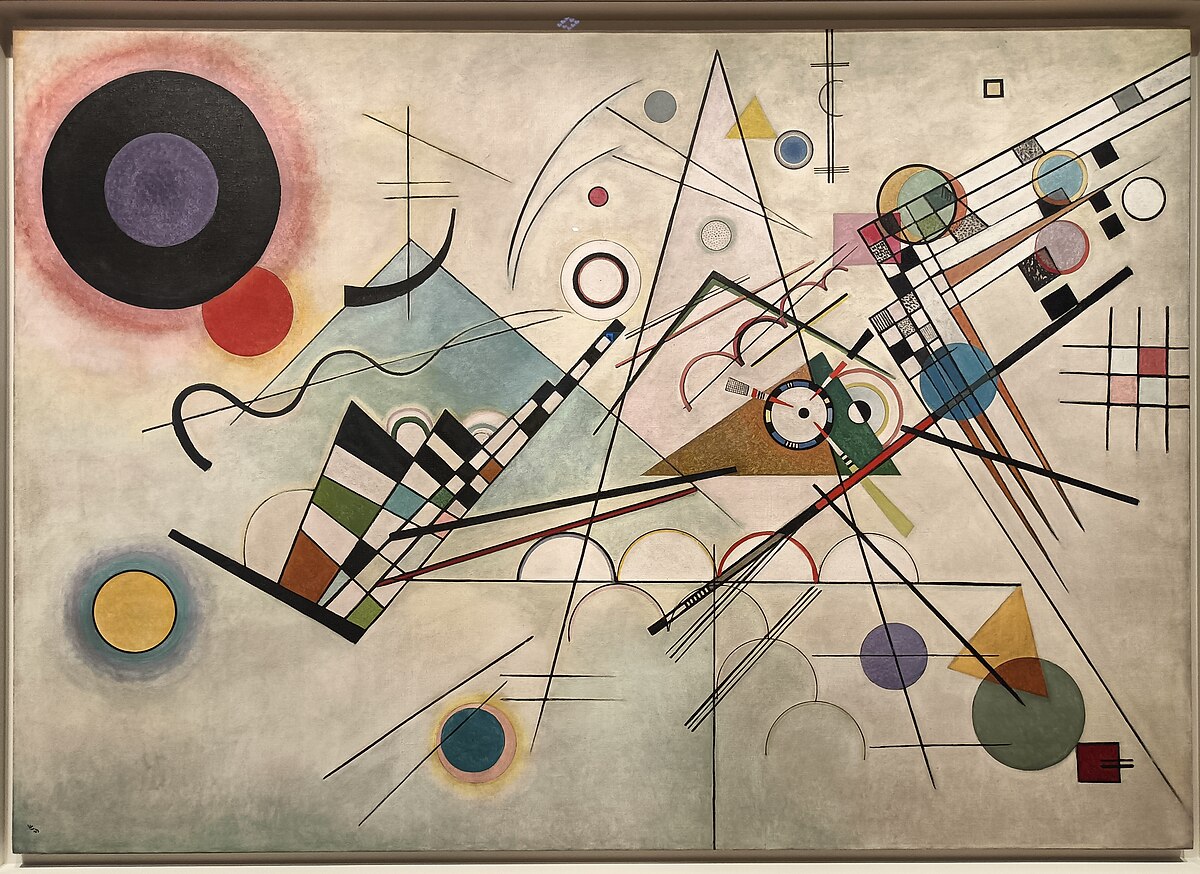
Kompozicija VIII Vasilija Kandinskog, naslikana 1923. godine tokom njegove prve godine predavanja na Bauhausu u Vajmaru, predstavlja prekretnicu u istoriji apstraktne umetnosti — tačku u kojoj je Kandinskijeva pionirska apstrakcija, koja je nastala iz vrućih emotivnih pejzaža njegovog minhenskog ekspresionističkog perioda, pretrpela fundamentalnu transformaciju u precizan, geometrijski vizuelni jezik. Slika je složena orkestracija geometrijskih oblika — krugova, trouglova, polukrugova, pravih linija, lukova, mreža i šahovskih obrazaca — raspoređenih na svetloj pozadini u kompoziciji koja sugeriše i matematičku strogost i dinamičan, gotovo muzički pokret. Sa 140 puta 201 centimetar, to je veliko i zapovedno platno, a sam Kandinski ga je smatrao jednim od svojih najvažnijih dostignuća, kulminacijom serije koju je smatrao najpotpunijim izrazom svojih umetničkih i duhovnih ambicija. Kompozicije — numerisane od I do X i protežući se od 1910. do 1939. — bile su, po Kandinskijevoj sopstvenoj taksonomiji, najviša kategorija njegovog rada: velikoformatne, pažljivo planirane slike koje su sintetisale njegova teorijska načela u definitivne vizuelne iskaze.
Prelaz od ekspresionističke ka geometrijskoj apstrakciji koji Kompozicija VIII otelotvoruje bio je podstaknut Kandinskijevim prelaskom iz Minhena na Bauhaus, revolucionarnu školu umetnosti i dizajna koju je arhitekta Valter Gropijus osnovao u Vajmaru 1919. godine. Kandinski je proveo godine od 1896. do 1914. u Minhenu, gde je bio centralna figura živahne avangardne scene grada, suosnivajući Neue Künstlervereinigung München 1909. i uticajnu grupu Blaue Reiter (Plavi jahač) 1911. godine. Slike ovog perioda — uključujući prvi apstraktni akvarel iz 1910. i rane Kompozicije — karakterisale su eksplozivna boja, zamašni gestualni potezi četkom i biomorfni oblici koji su zadržavali tragove pejzaža, figure i arhitektonskih motiva ispod svojih apstraktnih površina. Međuperiod u Rusiji (1914-1921), gde je Kandinski bio uključen u revolucionarne umetničke institucije i susreo geometrijsku apstrakciju Kazimira Maljeviča i Vladimira Tatljina, inicirao je pomak ka većoj geometrijskoj jasnoći. Ali intelektualna sredina Bauhausa — sa naglaskom na racionalnom dizajnu, funkcionalnoj formi i integraciji umetnosti i tehnologije — kristalizovala je Kandinskijev prelaz od intuitivne, emotivno vođene apstrakcije njegove mladosti ka arhitektonskoj, intelektualno rigoroznoj apstrakciji njegove zrelosti.
Teorijski temelji Kompozicije VIII izloženi su u Kandinskijevim dvema velikim raspravama: O duhovnom u umetnosti (Über das Geistige in der Kunst), objavljenoj 1911, i Tačka i linija prema ravni (Punkt und Linie zu Fläche), objavljenoj 1926. kao deo serije bauhauskih knjiga. Raniji tekst, napisan tokom minhenskog perioda, artikuliše Kandinsijevo uverenje da je krajnja svrha umetnosti izraz „unutrašnje nužnosti” — duhovnog sadržaja koji umetnik komunicira kroz formu i boju, nezavisno od bilo kakvog reprezentativnog motiva. Kandinski je postulirao da, baš kao što muzika komunicira direktno duši kroz apstraktni medijum zvuka, tako i slikarstvo može komunicirati kroz apstraktne medijume boje i forme, bez posrednika prepoznatljive slike. Kasniji tekst, pisan dok je predavao na Bauhausu i direktno informisan delima poput Kompozicije VIII, sistematizuje ovu intuiciju u precizan analitički okvir. Svakom geometrijskom elementu pripisana su specifična ekspresivna svojstva: tačka je napetost i koncentracija; linija je pokret i pravac (horizontalne linije sugerišu hladnoću i ravnost, vertikalne toplotu i visinu, dijagonale dinamičku nestabilnost); krug otelotvoruje kosmičko savršenstvo i duhovnu celovitost; trougao prenosi agresivnu, uzvišujuću energiju.
Formalna analiza
Kandinsijevo razumevanje odnosa između slikarstva i muzike nije bilo samo metaforičko, već ukorenjeno u neurološkom stanju sinestezije — nevoljnog mešanja čulnih modaliteta u kome stimulacija jednog čula izaziva automatske odgovore u drugom. Kandinski je izveštavao da doživljava zvukove pri gledanju boja i da vidi boje pri slušanju muzike, i ova višečulna percepcija duboko je oblikovala njegovu umetničku praksu. Opisivao je žutu boju kao zvuk trube, plavu kao violončelo ili orgulje, zelenu kao srednje tonove violine. Sam naslov „Kompozicija” pozajmljen je iz muzičke terminologije, a analogija između vizuelne i muzičke kompozicije upravlja strukturom slike: geometrijski oblici funkcionišu kao note i akordi, njihovi prostorni odnosi generišu vizuelne ritmove, harmonije i kontrapunkte analogne onima muzičke partiture. Veliki krug u gornjem levom uglu Kompozicije VIII — taman, rezonantan, zapovedan — funkcioniše kao tonika ili bas akord, dok manji krugovi razbacani po platnu stvaraju melodijske varijacije. Linije koje se ukrštaju i uglovi generišu disonancu i rezoluciju, napetost i razrešenje, u vizuelnom analogu muzičke dinamike.
Specifičan formalni vokabular Kompozicije VIII odražava Kandinsijevo sistematsko ispitivanje geometrijskih oblika i njihovih ekspresivnih svojstava, razvijeno kroz njegovo predavanje na Bauhausu. Sliku dominiraju krugovi — koje je Kandinski zvao „najskromnija forma, ali se bezuslovno nameće” — i napetost između kružnih i ugaonih oblika. Veliki crni krug, delimično preklapajući manji crveni krug, usidrava gornji levi kvadrant kompozicije, dok veliki, blepo ljubičasti krug zauzima gornji centar, a brojni manji krugovi u raznim bojama raspoređeni su po platnu. Trouglovi, naslikani oštrim, preciznim konturama, uvode kontrastirajuću energiju: oštre, agresivne, usmerene, oni presecaju platno poput strela ili vršaka kopalja, uravnotežujući samodovoljan mir krugova. Gusta mreža pravih linija — neke tanke i delikatne, druge debele i emfatične — ukršta se po kompoziciji, stvarajući preseke i geometrijske podstrukture koje organizuju vizuelno polje u zone variraže gustine i aktivnosti. Istaknuti šahovski obrazac u gornjem desnom uglu uvodi notu pravilnosti i ponavljanja, dok zakrivljeni lukovi i polukrugovi posreduju između stroge geometrije krugova i ugaonog naboja trouglova.
Odnos između Kompozicije VIII i ostalih dela u seriji Kompozicija osvetljava evoluciju Kandinsijeve umetničke misli tokom tri decenije. Kompozicije I do V (1910-1911), sve uništene ili izgubljene tokom ratova, pripadale su ekspresionističkom minhenskom periodu i karakterisale su se turbulentnim, kvazi-figurativnim slikama — konjanici, planine, trube, poplave — naslikani eksplozivnom bojom. Kompozicija VI (1913) i Kompozicija VII (1913), preživela remek-dela rane serije, predstavljaju klimaks Kandinsijeve ekspresionističke apstrakcije: ogromna, složena platna vrtložne boje i dinamičnog pokreta koja zadržavaju tragove apokaliptičnih i otkroviteljskih slika. Kompozicija VIII označava odlučni raskid: ekspresionistička turbulencija zamenjena je geometrijskom jasnoćom, gusti impasto glatkim, ravnim površinama, emotivni intenzitet intelektualnom preciznošću. Kasnije Kompozicije — IX (1936) i X (1939), naslikane tokom Kandinsijeivih poslednjih godina u Parizu — guraju geometrijski vokabular dalje ka biomorfnim oblicima pod uticajem nadrealizma i mikroskopskih slika, stvarajući sintezu organskog i geometrijskog koja predstavlja finalnu evoluciju njegovog umetničkog jezika.
Kritička debata oko Kompozicije VIII i Kandinsijeve geometrijske apstrakcije u širem smislu bila je usredsređena na napetost između intelektualne strogosti i emotivnog izraza — između glave i srca, da tako kažemo. Neki kritičari, uključujući Kandinsigevog kolegu sa Bauhausa Pola Klea, smatrali su da su geometrijska dela žrtvovala spontani emotivni intenzitet ranijih slika zarad cerebralnog formalizma koji je rizikovao sterilnost. Drugi, uključujući uticajnog kritičara Klementa Grinberga, kasnije su hvalili geometrijska dela upravo za njihovu formalnu disciplinu i doprinos razvoju čiste apstrakcije. Sam Kandinski je insistirao da je opozicija lažna: geometrijski oblici nisu bili hladni ili mehanički, već zasićeni duhovnim sadržajem, njihovi precizni odnosi izražavali unutrašnja stanja jednako direktno i snažno kao i najturbulentniji potez četke. „Kontakt oštrog ugla trougla sa krugom”, pisao je, „nije manje moćan u svom dejstvu od dodira prsta Boga sa prstom Adama kod Mikelanđela.”
Recepcija i nasleđe
Kompozicija VIII ušla je u kolekciju Solomona R. Gugenhajma, američkog rudarskog magnata čija je strast prema neobjektivnoj umetnosti — negovana od strane umetnice i savetnice Hile Rebaj — dovela do osnivanja muzeja koji nosi njegovo ime. Gugenhajm je nabavio sliku 1930. kao deo značajne kolekcije Kandinsijevih dela, i ona je postala temeljni kamen Muzeja neobjektivnog slikarstva (kasnije Muzej Solomon R. Gugenhajm) kada je otvoren u privremenim prostorijama u Njujorku 1939. godine. Kada je ikonična spiralna zgrada Frenka Lojda Rajta na Petoj aveniji otvorena 1959, Kompozicija VIII zauzela je svoje mesto kao jedno od definišućih dela u kolekciji posvećenoj stavu da apstraktna umetnost predstavlja jedno od najviših dostignuća ljudskog duha. Slika nastavlja da izaziva i nagrađuje posmatrače koji joj pristupaju ne kao zagonetki koju treba dešifrovati, već kao vizuelnom iskustvu koje treba osetiti — tihoj simfoniji forme i boje koja govori, kao što je Kandinski verovao da svaka istinska umetnost mora, direktno duši.