Istorijski kontekst
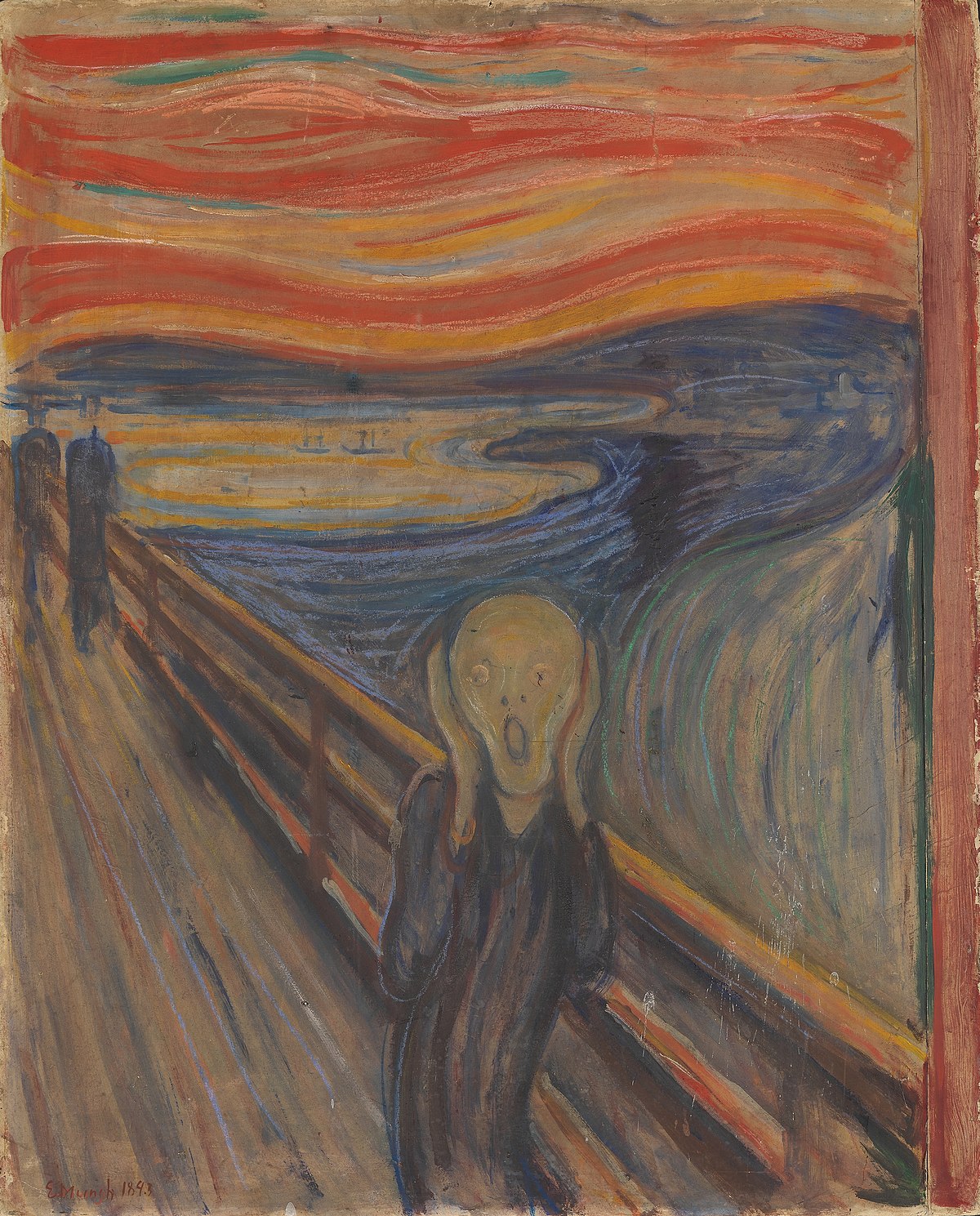
Krik (Skrik) Edvarda Munka je suštinska slika moderne egzistencijalne anksioznosti — slika toliko duboko apsorbovana u globalnu vizuelnu kulturu da funkcioniše manje kao zasebno umetničko delo a više kao univerzalni piktogram za teror, otuđenost i psihičku patnju. Verzija iz 1893. u Nacionalnoj galeriji u Oslu — izvedena uljem, temperom i pastelom na kartonu — najslavnija je od četiri verzije koje je Munk stvorio između 1893. i 1910: dve slike (druga, iz 1910, u Munkovom muzeju u Oslu) i dva pastela (1893. i 1895). Slika takođe postoji kao litografija iz 1895, koju je Munk štampao u malom tiražu, šireći kompoziciju široj publici. Ovo kompulsivno ponavljanje jednog motiva kroz više medija i decenija sugeriše da je slika za Munka predstavljala ne prolaznu umetničku ideju već trajnu psihološku opsesiju — viziju koju nije mogao ni potpuno ostvariti ni napustiti.
Nastanak slike zabeležen je u Munkovom dnevniku sa neposrednošću koja je ovaj odlomak učinila jednim od najčešće citiranih tekstova u istoriji umetnosti: “Šetao sam putem sa dva prijatelja — sunce je zalazilo — odjednom je nebo postalo krvavocrveno — zastao sam, osećajući se iscrpljeno, i naslonio se na ogradu — krv i jezici vatre iznad plavočrnog fjorda i grada — moji prijatelji su nastavili dalje, a ja sam stajao tamo drhtavо od straha — i osetio sam beskonačan krik koji prolazi kroz prirodu.” Ovaj opis je ključan za pravilno razumevanje slike: centralna figura ne vrišti već čuje ili oseća krik koji prožima čitav prirodni svet. Ruke figure pritisnute su na uši ne u činu vokalizacije već u očajnom pokušaju da blokira preplavljujući, kosmički zvuk. Krik pripada samoj prirodi — krvavocrvenom nebu, talasastom fjordu, vrtoglavom predelu — a figura je njegov bespomoćni receptor, koji vibrira u užasnutoj simpatiji sa patnjom sveta.
Lokacija je identifikovana sa značajnom preciznošću kao put duž Ekeberga, brda jugoistočno od Osla (tadašnje Kristijanije) sa pogledom na Oslofjord. Sa ove tačke, gledajući severo-severozapadno, mogu se videti grad, fjord i brda Hovedeje u daljini — topografske karakteristike koje odgovaraju pozadini slike. Krvavocrveno nebo pokrenulo je opsežne naučne spekulacije. 2003. godine, astronomi Donald Olson i drugi predložili su da je Munk možda bio svedok spektakularnih atmosferskih efekata izazvanih erupcijom Krakatoa u Indoneziji 1883, koja je izbacila ogromne količine vulkanskog pepela u stratosferu, proizvodeći žive crvene i narandžaste zalaske sunca vidljive širom Evrope mesecima nakon toga. Savremeni opisi iz Kristijanije opisuju izuzetne prikaze zalazaka sunca krajem 1883. i početkom 1884, upravo u periodu kada se smatra da je Munkov dnevnički zapis napisan. Iako se direktna uzročna veza ne može dokazati, korelacija između atmosferskih efekata Krakatoa i Munkovog krvavocrvenog neba je sugestivna, dodajući sloj geološke katastrofe registru kosmičkog poremećaja na slici.
Formalna analiza
Formalni jezik Krika neodvojiv je od njegovog psihološkog sadržaja. Talasaste, serpentinske linije koje definišu nebo, vodu i predeo ne samo da prikazuju ove elemente već izražavaju sinestetičko iskustvo koje je Munk opisao — transformaciju zvuka u vidljivi oblik. Krik je prikazan kao vizuelni fenomen: koncentrični talasi koji se šire od glave figure stapaju se sa vrtlogom linija neba i sinuoznim krivinama fjorda, kao da čitav vidljivi svet vibrira na frekvenciji krika. Ovo rastvaranje granice između subjekta koji percipira i sveta koji se percipira — figura koja postaje nerazlučiva od svog okruženja, unutrašnje iskustvo projektovano na spoljašnji pejzaž — anticipira centralne preokupacije ekspresionizma, koji će se pojaviti kao formalni pokret u Nemačkoj deceniju kasnije. Krute dijagonale mosta i ograde, koje se povlače u dubinu, jedine su prave linije u kompoziciji, čija racionalna geometrija služi kao kontrapunkt organskim distorzijama figure i predela i naglašava, kontrastom, iracionalnost iskustva koje uokviruju.
Sama centralna figura jedna je od najizuzetnijih invencija u istoriji umetnosti. Lišena svih individualnih obeležja — starosti, pola, društvenog identiteta — svedena je na lobanjoliku ovoidnu glavu, šuplje oči i otvorena usta: minimalna notacija ljudskog bića preplavljenog senzacijom. Androginost figure je namerna i suštinska; to nije portret Munka ili bilo koje konkretne osobe već univerzalna šifra za svest koja doživljava iskustvo — Jedermann koji se suočava sa prazninom. Iscrpljeni, bezkostani kvalitet tela, njegov nedostatak skeletne strukture ili mišićne definicije, sugeriše sopstvo koje se rastvara, koje gubi koherentnost pod pritiskom iskustva koje prolazi. Dve figure koje se udaljavaju mostom pozadi — Munkovi prijatelji, koji nastavljaju svoju šetnju neuznemireni — služe kao razarajući kontrapunkt: sposobnost za obično iskustvo, za šetanje i razgovor, upravo je ono što je centralna figura izgubila. Most razdvaja dva načina postojanja: normalno i anksiozno, društveno i izolovano, razumno i preplavljeno.
Filozofska rezonancija slike proteže se izvan njenog neposrednog biografskog i umetničko-istorijskog konteksta. Munk je bio duboko upoznat sa skandinavskom intelektualnom tradicijom, i Krik je ubedljivo povezan sa egzistencijalističkom filozofijom Serena Kjerkegora, čiji je Pojam anksioznosti (1844) analizirao Angst — strepnju bez konkretnog objekta, fundamentalno stanje ljudskog postojanja pre nego odgovor na konkretnu pretnju — kao neizbežnu posledicu ljudske slobode i samosvesti. Figura u Kriku ne plaši se nikakve konkretne opasnosti; nema vidljive pretnje u predelu. Teror je bez osnova, bez objekta, egzistencijalan — nastaje iz samog čina svesnog postojanja u svetu koji se doživljava kao tuđ i preplavljujuć. Ovo kjerkegorijansko čitanje situira Krik na preseku umetnosti i filozofije, čineći ga vizuelnim ekvivalentom egzistencijalističke propozicije da egzistencija prethodi esenciji, da sopstvo nije stabilna datost već krhka konstrukcija neprestano ugrožena ponorom besmisla.
Recepcija i nasleđe
Modernu istoriju slike obeležile su dramatične krađe koje su paradoksalno pojačale njen ikonični status. Dana 12. februara 1994, na dan otvaranja Zimskih olimpijskih igara u Lihameru u Norveškoj, dva lopova su provalila u Nacionalnu galeriju kroz prozor, skinula sliku sa zida za manje od jednog minuta i ostavila poruku “Hvala na lošem obezbeđenju.” Slika je pronađena tri meseca kasnije u policijskoj zamci. Dana 22. avgusta 2004, naoružani pljačkaši oteli su verziju Krika iz 1910. zajedno sa Munkovom Madonom iz Munkovog muzeja usred bela dana, pred uplašenim posetiocima. Obe slike su pronađene 2006, neznatno oštećene ali restaurabilne. Ove krađe pretvorile su Krik u kulturni događaj izvan sveta umetnosti, generišući globalnu medijsku pokrivenost koja je dodatno učvrstila njegov status najprepoznatljivije slike psihičkog ekstrema u zapadnoj umetnosti.
Krik zauzima ključnu poziciju u istoriji moderne umetnosti, stojeći na pragu između simbolizma i ekspresionizma, između vere devetnaestog veka u reprezentaciju i prihvatanja subjektivne distorzije u dvadesetom veku. Njegov uticaj proteže se od nemačkih ekspresionista (Kirhner, Nolde, Hekel) preko vrištećih papa Frensisa Bejkona do žanra horor filmova, a njegova ikonična silueta apsorbovana je u tkivo popularne kulture — najistaknutije kao osnova za emodži “Lice koje vrišti od straha” i masku iz filma Krik (1996) Vesa Krejvena. Ipak, moć slike da uznemiri ostaje neumanjena njenom sveprisutnošću. Ispod poznatosti slike leži iskustvo koje se opire pripitomljivanju: zastrašujući trenutak kada običan svet postaje čudan, kada sopstvo gubi svoje granice, kada krik postojanja postaje čujan — trenutak koji je Munk svojim genijem zauvek fiksirao uljem, temperom i pastelom na krhkom listu kartona.