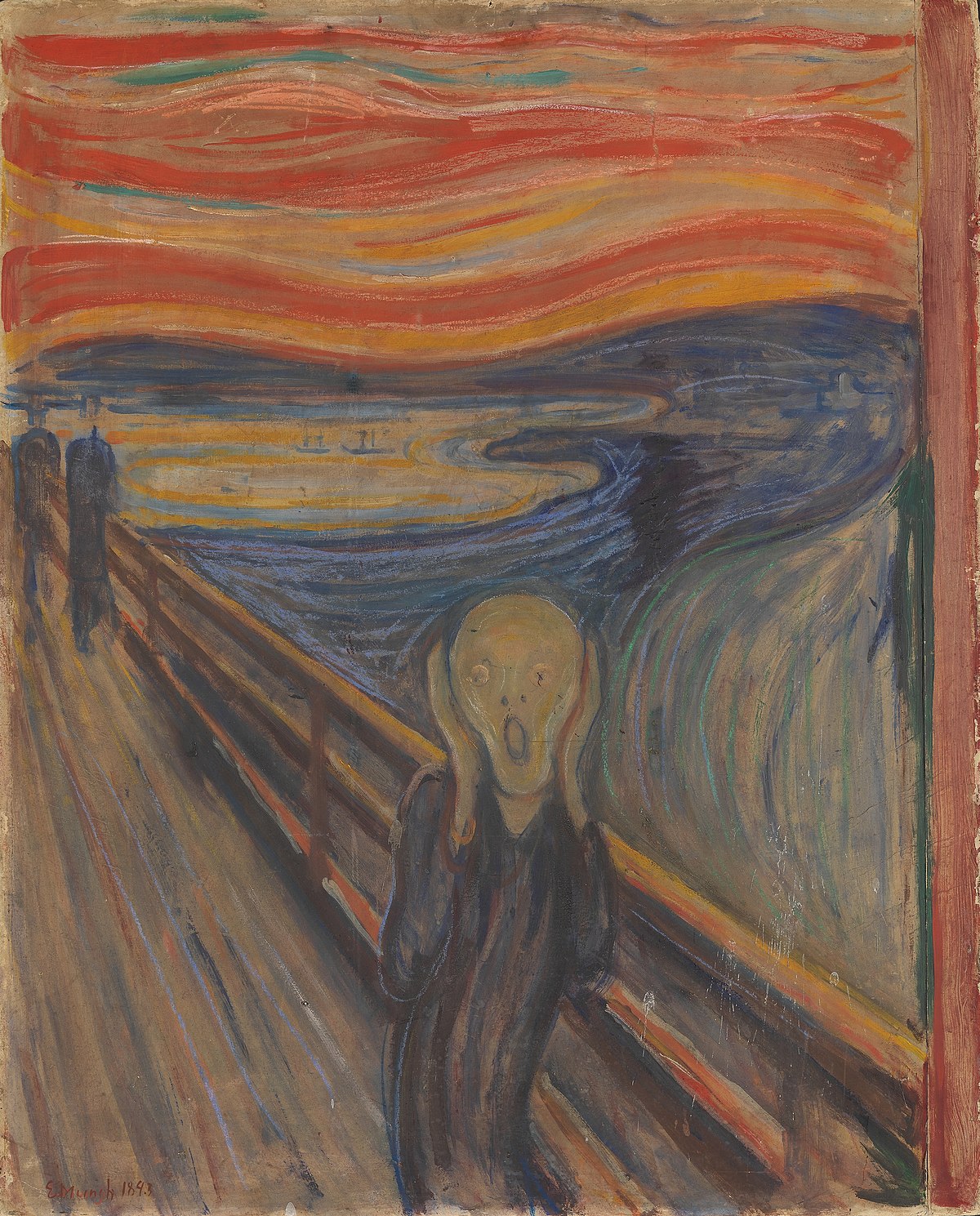
Pre nego sto je ekspresionizam dobio ime, Edvard Munk mu je dao sliku. Godine 1893, norveški slikar je stvorio The Scream, prikazujuci agoniziranu figuru nalik lobanji kako stoji na mostu ispod neba vrtloznih crvenih i narandzastih tonova. Munk je kasnije napisao da je inspiracija dosla tokom setnje pri zalasku sunca kada je “osetio veliki, beskrajni krik koji prodire kroz prirodu.” Slika ne prikazuje spoljasnji dogadjaj; ona projektuje unutrasnje psiholosko stanje na ceo vidljivi svet. Sam pejzaz vristi. Ova radikalna ideja — da umetnost treba da izrazi umetnikovu emocionalnu i duhovnu stvarnost umesto da reprodukuje izgled stvari — postala je temelj ekspresionizma. Munkov uticaj je bio ogroman, posebno u nemackom govornom podrucju, gde su njegove izlozbe u 1890-im i ranim 1900-im pomogle da se katalizuje nova generacija umetnika koji zele da razbiju uglacane povrsine akademske umetnosti.
Godine 1905, cetiri studenta arhitekture u Drezdenu — Ernst Ludvig Kirhner, Fric Blajl, Erih Hekel i Karl Smit-Rotluf — osnovali su Di Brike (Most), grupu posvecenu izgradnji mosta izmedju umetnosti proslosti i novog, sirovog, emocionalno direktnog oblika izraza. Crpeli su inspiraciju iz Vangogovih strastvenih poteza cetke, Gogenovih smelih boja i rezbarenih formi africke i okeanijske umetnosti, kao i uglatih drvoreza kasnosrednjovekovnih nemackih graficara. Njihove slike i grafike prikazivale su moderni grad uznemirujucim, kiselim bojama i uglatim, namerno grubim formama: ulicne scene zive nervoznom energijom, aktovi u ateljeima i pejzazima prikazani sa prvobitnim intenzitetom koji je sokirao gradjansku publiku. Kirhnerove berlinske ulicne scene, naslikane neposredno pre Prvog svetskog rata, hvataju freneticni tempo i dubinsku anksioznost modernog urbanog zivota kroz izduzene figure nalik maskama i sukobljene komplementarne boje.
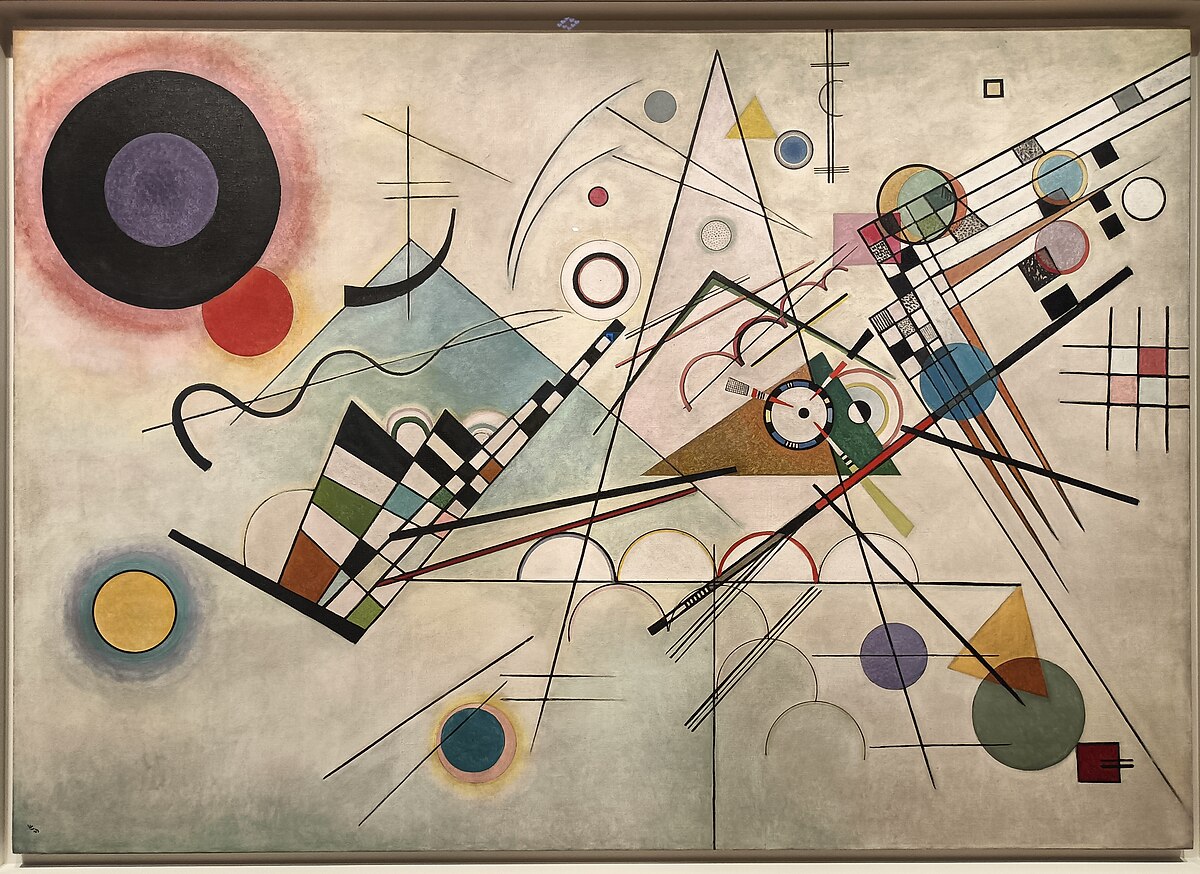
U Minhenu, drugacija konstelacija umetnika formirala je Der Blaue Rajter (Plavi jahac) 1911, predvodjena ruskim emigrantom Vasilijem Kandinskim i nemackim slikarem Francom Markom. Dok je Di Brike bila namerno sirova i konfrontaciona, Der Blaue Rajter je bio duhovno i intelektualno ambiciozniji. Kandinski, duboko pod uticajem teozofije i sinestezije, verovao je da boja i forma mogu komunicirati direktno sa dusom, poput muzike, bez potrebe za prepoznatljivim subjektom. Njegove slike su se progresivno kretale od labavo reprezentativnih pejzaza ka cistoj apstrakciji. Composition VII (1913), ogromno, turbulentno platno vrtloznih boja i dinamickih formi, predstavlja jednu od prvih potpuno apstraktnih slika u istoriji zapadne umetnosti. Mark, koji je poginuo kod Verdena 1916, slikao je zivotinje u pejzazima sijajucih boja, trazeci da uhvati duhovnu sustinu prirode kroz nenaturalisticka sredstva.
U Becu, ekspresionisticki impuls je poprimio posebno intenzivan psiholoski karakter. Egon Sile, sticeenik Gustava Klimta, proizveo je autoportrete i studije figura mučne emocionalne sirovosti, tela iskrivljena u uglaste, cesto seksualno eksplicitne poze, koža prikazana u sarenim tonovima zelene, ljubicaste i sirove sijene. Sileova linija je izuzetna: nervozna, uglasta i precizna cak i u svojoj prividnoj grubosti, prenoseci osecaj ranjivosti i egzistencijalne izlozenosti koji i danas zapanjuje. Oskar Kokoška, jos jedan becki slikar, stvarao je portrete prodornog psiholoskog karaktera, koristeci uzbudjene poteze cetke i jezive boje da otkrije unutrasnje nemire svojih modela. Njegova rana drama Ubica, nada zena (1909) smatra se jednom od prvih ekspresionistickih drama, demonstrirajuci da se uticaj pokreta prostirao daleko izvan vizuelnih umetnosti u pozoriste, knjizevnost, film i muziku.
Trajektorija ekspresionizma je nasilno prekinuta usponom nacizma. Godine 1937, nacisticki rezim je organizovao zloglasnu izlozbu “Degenerisana umetnost” u Minhenu, izlazuci dela Kirhnera, Noldea, Kandinskog, Marka i mnogih drugih kao dokaz kulturne korupcije. Hiljade ekspresionistickih dela konfiskovano je iz nemackih muzeja, a mnogim umetnicima je zabranjeno da slikaju. Kirhner, u egzilu u Svajcarskoj, oduzeo je sebi zivot 1938. Pa ipak, uticaj pokreta se pokazao neuniStivim. Njegovo insistiranje da umetnost mora izrazavati unutrasnju istinu pre nego spoljasnji izgled, i da su iskrivljavanje, preuvelicavanje i sirova emocija legitimna umetnicka sredstva, direktno je proteklo u apstraktni ekspresionizam u Americi, neoekspresionizam 1980-ih i sire uverenje da je primarna svrha umetnosti komunikacija ljudskog osecanja.
Pojedinacni clanovi Di Brike razvili su distinktivne glasove unutar zajednicke posvecensti grupe emocionalnoj direktnosti. Berlinske ulicne scene Ernsta Ludviga Kirhnera, naslikane izmedju 1913. i 1915, stoje medju najsnazijim prikazima modernog urbanog otudjenja u zapadnoj umetnosti. Dela poput Street, Berlin (1913) i Potsdamer Platz (1914) prikazuju grad kao prostor nervozne, gotovo grabezljive energije, naseljen izduzenim, uglatim figurama cija lica podsecaju na africke maske i cija tela deluju kompresovana klaustrofobicnom arhitekturom oko njih. Paleta je namerno iritirajuca — kisele zelene i roze postavljene nasuprot crnih kontura — prenoseci senzorno preopterecenje metropolitanskog zivota. Emil Nolde, koji je kratko bio clan Di Brike pre nego sto je krenuo nezavisnim putem, usmerio je ekspresionisticki intenzitet u religiozno slikarstvo sa izvanrednim rezultatima. Njegov poliptih Life of Christ (1911-1912) je ponovo zamislio biblijske scene u plamtecim, gotovo halucinantnim bojama, sa figurama cije iskrivljene crte prenose duhovni zanos i patnju sa visceralnom mocu koja je sokirala tadashnje crkvene autoritete. Noldeovi akvareli cveca i obalnih pejzaza, sa svojim zasicenim, razlivajucim pigmentima, predstavljaju neka od tehnicki najdotjeranijih dela u ekspresionistickom kanonu.
Intelektualne i duhovne ambicije Der Blaue Rajtera izdvajale su ga od sirovijeg primitivizma Di Brike. Traktat Vasilija Kandinskog O duhovnom u umetnosti iz 1911. ostaje jedan od temeljnih tekstova apstraktne umetnosti, tvrdeci da boje i forme poseduju inherentna duhovna svojstva koja mogu komunicirati direktno sa dusom bez posredovanja prepoznatljivog subjekta. Kandinski, koji je dozivljavao sinesteziju i percipirao boje kao zvukove i muzicke tonove kao vizuelne forme, povlacio je eksplicitne analogije izmedju slikarstva i muzike, tezeci da stvori vizuelne kompozicije slozene i emocionalno rezonantne poput simfonija. Franc Mark, Kandinskog najblizi saradnik, tezio je da slika svet kakav ga zivotinje dozivljavaju, koristeci simbolicku boju — plavu za muzkost i duhovnost, zutu za zenstvenost i radost, crvenu za materiju i nasilje — da prikazhe stvorenja poput konja, jelena i lisica u pejzazima sjajnih, prizmatickih boja. Dela poput The Fate of the Animals (1913), sa svojom apokalipticnom fragmentacijom sume i stvorenja u krhotine ciste boje, jezivo su anticipirala katastrofu Prvog svetskog rata, u kojoj ce sam Mark poginuti u bici kod Verdena 1916.
Austrijski ekspresionizam je cinio posebnu i narocito intenzivnu struju sirag pokreta, oblikovanu psiholoskim vrenjem beckog fin de sieclea. Konfrontacioni autoportreti Egona Silea su medju najnemilosrdnijim vezbama u samoispitivanju u istoriji umetnosti. U delima poput Self-Portrait with Physalis (1912), Sile prikazuje sebe u iskrivljenim, gotovo nemogucim pozama, iznemoglo telo prikazano u sirovim, sarenim tonovima koze, pogled istovremeno izazivacki i ranjiv. Namerno izlaganje tela, cesto seksualno eksplicitno i uvek psihiloski golo, cinilo je radikalni napad na gradjansku pristojnost koji je doveo do Sileovog kratkog zatvaranja 1912. po optuzbi za izlaganje eroticnih crteza gde su ih maloletnici mogli videti. Oskar Kokoska je zaradio nadimak “najdivljija zver Beca” za svoje rane “psiholoske portrete”, u kojima je koristio uzbudjene, grebuce poteze cetke i jezive, svetlucave boje da prodre ispod drustvenih maski svojih modela. Njegov portret Adolfa Losa i njegove turbulentne, gotovo halucinantne slike pejzaza anticipirale su psihoanaliticke preokupacije koje ce prožimati umetnost dvadesetog veka.
Izlozba “Degenerisana umetnost” (Entartete Kunst) u Minhenu 1937. stoji kao jedno od najjezeecijih presecanja politike i umetnosti u modernoj istoriji. Nacisticki rezim je konfiskovao preko dvadeset hiljada dela moderne umetnosti iz nemackih javnih kolekcija i izlozio priblizno 650 njih, ukljucujuci velika dela Kirhnera, Noldea, Kandinskog, Marka, Klea, Diksa, Bekmana i mnogih drugih, u namerno haoticnim, pretrpanim instalacijama dizajniranim da izazovu ismevanje i gad. Dela su bila propracena podrugljivim oznakama, sloganima nalik grafitima i poredjenjima sa umetnosccu duševno bolesnih. Ironicno, izlozba je privukla preko dva miliona posetilaca samo u Minhenu, daleko nadmasivsi istovremenu “Veliku nemacku umetnicku izlozbu” nacisticki odobrenog akademskog realizma. Mnoga konfiskovana dela su naknadno prodata u inostranstvo radi prikupljanja deviza, dok su druga unistena. Nekoliko umetnika, ukljucujuci Kirhnera, koji je oduzeo sebi zivot 1938, i Noldea, kome je zabranjeno da slika cak i privatno, pretrpeli su razorne licne posledice. Ova epizoda ostaje ostro upozorenje o ranjivosti umetnicke slobode pred politickim autoritarizmom i trajnoj moci umetnosti da ugrozi ideoloske rezime.