Istorijski kontekst
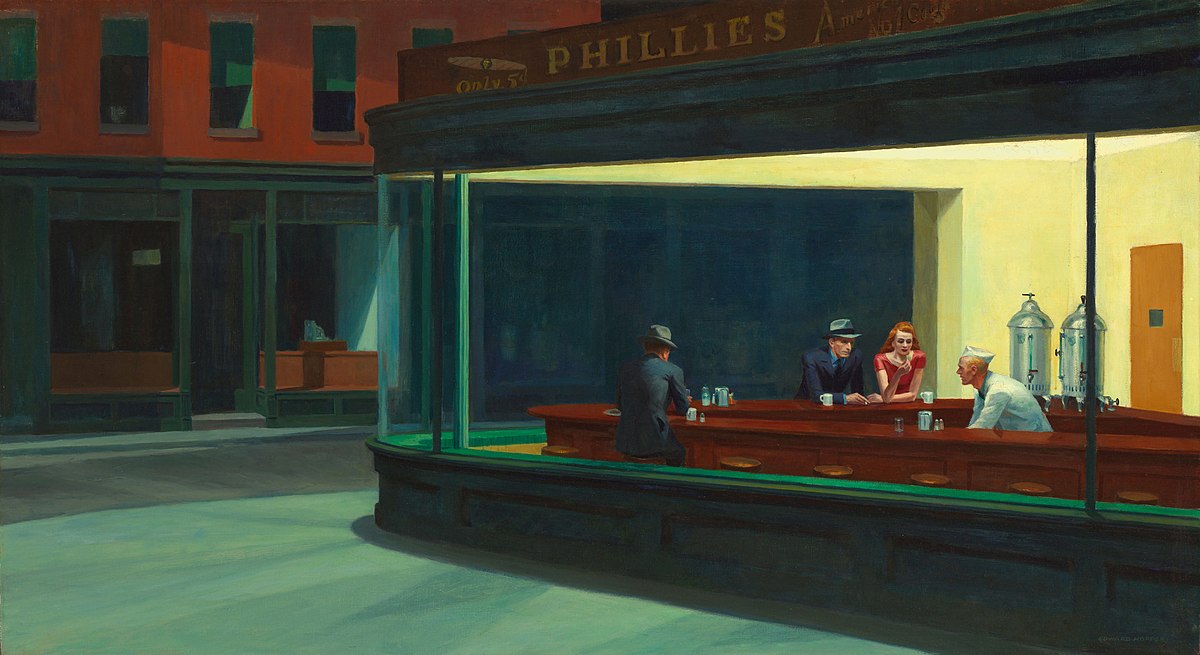
Noćne ptice Edvarda Hopera, dovršene u januaru 1942. — samo nekoliko nedelja nakon japanskog napada na Perl Harbor koji je uvukao Sjedinjene Države u Drugi svetski rat — najpoznatija su američka slika dvadesetog veka i jedna od najšire reprodukovanih slika u istoriji umetnosti. Platno prikazuje četiri figure u jasno osvetljenom ugaonom restoranu kasno uveče: par koji sedi jedan do drugog, usamljenog čoveka viđenog s leđa i konobara u beloj uniformi koji se saginje nad nečim iza šanka. Restoran, klinasta struktura sa velikim staklenim izlozima koji se omotavaju oko ugla inače napuštene urbane raskrsnice, sija intenzivnim, zelenkasto-belim fluorescentnim svetlom koje se prosipa na prazan trotoar i zamračene fasade prodavnica preko puta. Nema vidljivog ulaza u restoran — nema prikazanih vrata — detalj koji je izazvao beskrajne interpretativne komentare i koji doprinosi sveprožimajućoj atmosferi zatvorenosti, izolacije i psihološke zarobljenosti slike. Četiri figure ne komuniciraju; sede u blizini ali ne u vezi, svaka zatvorena unutar privatnog sveta misli ili sanjarenja, lica im izvučena i apstrahovana pod oštrim veštačkim svetlom.
Hoper je započeo Noćne ptice u nedeljama nakon Perl Harbora, i mada nikada nije eksplicitno povezao sliku sa ratom, tajming je teško ignorisati. Njegova supruga Džo Hoper, koja mu je služila kao primarni model i vodila pedantne zapise o njegovom radu u svom dnevniku, zabeležila je da je sliku inspirisao „restoran na Grinič aveniji gde se dve ulice susreću” — generalno identifikovan kao restoran koji je nekada stajao na raskrsnici Grinič avenije i Jedanaeste ulice u manhetnskom Grinič Vilidžu, blizu Hoperovog stana na Vašington skveru. Međutim, kompozicija slike nije verna transkripcija nijednog pojedinačnog lokala već sintetička konstrukcija koja kombinuje posmatrane arhitektonske elemente sa Hoperovim karakterističnim procesom pojednostavljivanja i geometrijske apstrakcije. Oštro udaljavajuća perspektiva enterijera restorana, dramatičan kontrast između osvetljenog enterijera i tamnog eksterijera i eliminacija svih suvišnih detalja stvaraju scenu koja je istovremeno topografski specifična — nepogrešivo njujorški ugao — i univerzalno evokativna urbane samoće.
Formalna analiza
Najslavnija i najdiskutovanija formalna odlika slike je njen tretman svetlosti. Enterijer restorana preplavljen je oštrom, ravnomernom iluminacijom koja ne baca vidljive senke na figure ili šank — kvalitet koji odgovara fluorescentnom osvetljenju koje je ubrzano zamenjivalo inkandescentne sijalice u američkim komercijalnim enterijerima tokom ranih 1940-ih. Ovo veštačko svetlo, hladno i nemilosrdno, stvara efekat radikalno različit od toplog, atmosferskog kijaroskura tradicionalnog slikarstva: spljoštava formu, oduzima boji toplinu i izlaže figure sa kliničkom, gotovo forenzičkom jasnoćom. Kontrast sa spoljnom tamom je apsolutan. Izlozi trgovina preko puta zatvoreni su i neosvetljeni, njihovi prozori reflektuju sjaj restorana u bledim zelenkastim pravougaonicima. Trotoar je prazan — nema pešaka, nema automobila, nema nikakve kretnje. Efekat je dve jasno razdvojene ontološke zone — svetlost i tama, enterijer i eksterijer, nastanjeno i praznina — razdvojene transparentnom ali neprobojnom barijerom stakla. Figure u restoranu vidljive su posmatraču (i bilo kom hipotetičkom prolazniku) ali nedostupne, zapečaćene iza stakla poput primeraka u muzejskoj vitrini.
Četiri figure u Noćnim pticama renderovane su sa Hoperovom karakterističnom ekonomičnošću: dovoljno detalja da sugerišu individualni identitet i psihološko stanje, ali nedovoljno da konstituišu portretisanje ili narativ. Džo Hoper je pozirala za crvenkosu ženu koja sedi pored muškarca sa fedorom — kao što je pozirala za praktično svaku žensku figuru na Hoperovim slikama tokom njihovog dugog braka. Par sedi blizu ali se ne dodiruje; žena ispituje nešto u rukama (kutijicu šibica? salvetu? gest je namerno dvosmislen), dok muškarac bulji napred, sa cigaretom među prstima. Usamljena figura preko šanka, viđena s leđa, najenigmatičnije je prisustvo slike — čovek sam za barom, zgrbljenog držanja koji sugeriše umor, potištenost ili jednostavno kasno doba. Konobar, jedina figura angažovana u svrhovitoj aktivnosti, saginje se prema paru sa onim što bi moglo biti pažljivost ili samo profesionalna navika. Nijedna od ovih figura ne priča priču; one sugerišu priče — fragmente narativa koje je posmatrač pozvan da dopuni ali koje sama slika odbija da razreši.
Recepcija i nasleđe
Hoperova umetnička loza smešta ga u tradiciju američkog realizma — tradiciju Tomasa Ekinsa, Vinsloa Homera i Ešken škole Roberta Henrija, Džordža Belouza i Džona Slouna — ali je njegov odnos sa ovom tradicijom složen i često pogrešno shvaćen. Za razliku od Ešken slikara, koji su slavili bučnu vitalnost urbanog života, Hopera su privlačile njegove tišine, praznine, trenuci mirnoće i izolacije. Njegov predmet nije bila gomila već pojedinac izdvojen iz gomile — žena sama u hotelskoj sobi, bileter u praznom pozorištu, usamljena figura na benzinskoj pumpi na napuštenom autoputu. U tom pogledu, njegov senzibilitet bio je bliži evropskoj tradiciji otuđenja — usamljenim gradskim pejzažima De Kirika, egzistencijalnoj samoći Đakomertija, anomiji Kafke i Kamija — nego populističkoj energiji američkog Scene slikarstva. Ipak, Hoperove slike su nepogrešivo, nesvodivo američke: restorani, benzinske pumpe, moteli, bioskopi i železničke pruge koji naseljavaju njegova platna specifične su teksture američkog života sredinom dvadesetog veka, i njegova vizija usamljenosti neodvojiva je od specifičnog pejzaža američke modernosti — njenih ogromnih rastojanja, automobilske kulture, prolaznih, neukorenjenih populacija i sveprisutnog komercijalizma.
Kompoziciona struktura Noćnih ptica otkriva Hoperov rigorozan pristup slikovnom dizajnu ispod prividne jednostavnosti realističke površine. Slika je organizovana oko niza uzajamno uklopljenih geometrijskih formi: klinasti restoran, duga horizontala šanka, vertikalni akcenti aparata za kafu i figura, snažna dijagonala udaljavajućeg prozora restorana. Horizontalni format platna — gotovo dvostruko širi nego što je visoko — naglašava bočni zamah kompozicije i doprinosi kinematografskom, širokoglednom kvalitetu koji je sliku učinio referentnom tačkom za filmske reditelje od Bilija Vajldera do Ridlija Skota do Vima Vendersa. Hoper je priznao uticaj kinematografije na svoj rad, napominjući da je bio redovan bioskopski gledalac i da je filmska dramatična upotreba svetla, kadra i narativne sugestije informisala njegovo slikovno razmišljanje. Recipročni uticaj bio je podjednako snažan: Noćne ptice su citirane kao vizuelni izvor za filmove od Ubica (1946) do Istrebljivača (1982) do Kraja nasilja (1997), a njene slike su prožele vizuelni vokabular film noara — tog kvintesencijalno američkog žanra urbane tame, moralne dvosmislenosti i egzistencijalnog užasa.
Odsustvo vrata u Noćnim pticama — nigde na slici nije vidljiv ulaz ili izlaz — postalo je najdiskutovaniji pojedinačni detalj u Hoperovoj nauci, generišući interpretacije koje se kreću od jednostavno arhitektonskih (vrata su jednostavno iza ugla, van vidnog polja posmatrača) do duboko alegorijskih (gosti su zarobljeni, zapečaćeni unutar svog staklenog oklopa poput figura u čistilištu moderne otuđenosti). Sam Hoper bio je karakteristično lakonski po tom pitanju, ne nudeći nikakvo objašnjenje i odbacujući interpretativna pitanja sa istom ćutljivom uzdržanošću koja je karakterisala njegovu javnu personu. Dnevnik Džo Hoper beleži njegovu primedbu da su Noćne ptice inspirisane „restoranom na Grinič aveniji gde se dve ulice susreću” i da je „scenu mnogo pojednostavio i restoran učinio većim.” Ovo pojednostavljivanje — eliminacija arhitektonskih detalja, čišćenje ulice, svođenje scene na njene geometrijske i psihološke esencijale — ključ je moći slike. Ogolivši buku i nered stvarnog urbanog iskustva, Hoper je destilovao nešto suštinsko o modernom stanju: paradoks blizine bez povezanosti, vidljivosti bez intimnosti, svetlosti bez topline.
Noćne ptice kupljene su od strane Umetničkog instituta u Čikagu za 3.000 dolara u roku od nekoliko meseci od dovršetka — značajan iznos za savremenu američku sliku u to vreme, i svedočanstvo neposrednog prepoznavanja njenog značaja. Ostala je u Umetničkom institutu od tada, postajući najkopularniji rad muzeja i jedna od najprepoznatljivijih slika u američkoj kulturi. Njen uticaj proteže se daleko izvan sveta umetnosti: referisana je, parodirana i reinterpretirana u bezbroj filmova, fotografija, karikatura, reklama i književnih dela, od pesme Džojs Kerol Outs „Noćne ptice Edvarda Hopera, 1942” do omota albuma Toma Vejtsa do čuvene parodije Gotfrida Helnvajna u kojoj se pojavljuju Džejms Din, Hamfri Bogart, Merlin Monro i Elvis Prisli. Ipak, sama sveprisutnost slike nije umanjila njenu sposobnost da zaustavi i uznemiri. Susretnuta uživo, njena razmera, njena tišina i njena nemilosrdna jasnoća nastavljaju da proizvode jezoviti efekat koji ju je učinio definišućom slikom američke urbane samoće — slika koja transformiše najsvakidašnjiji ambijent, kasnonoćni restoran, u pozornicu za suštinsku ljudsku dramu izolacije i čežnje.