Istorijski kontekst
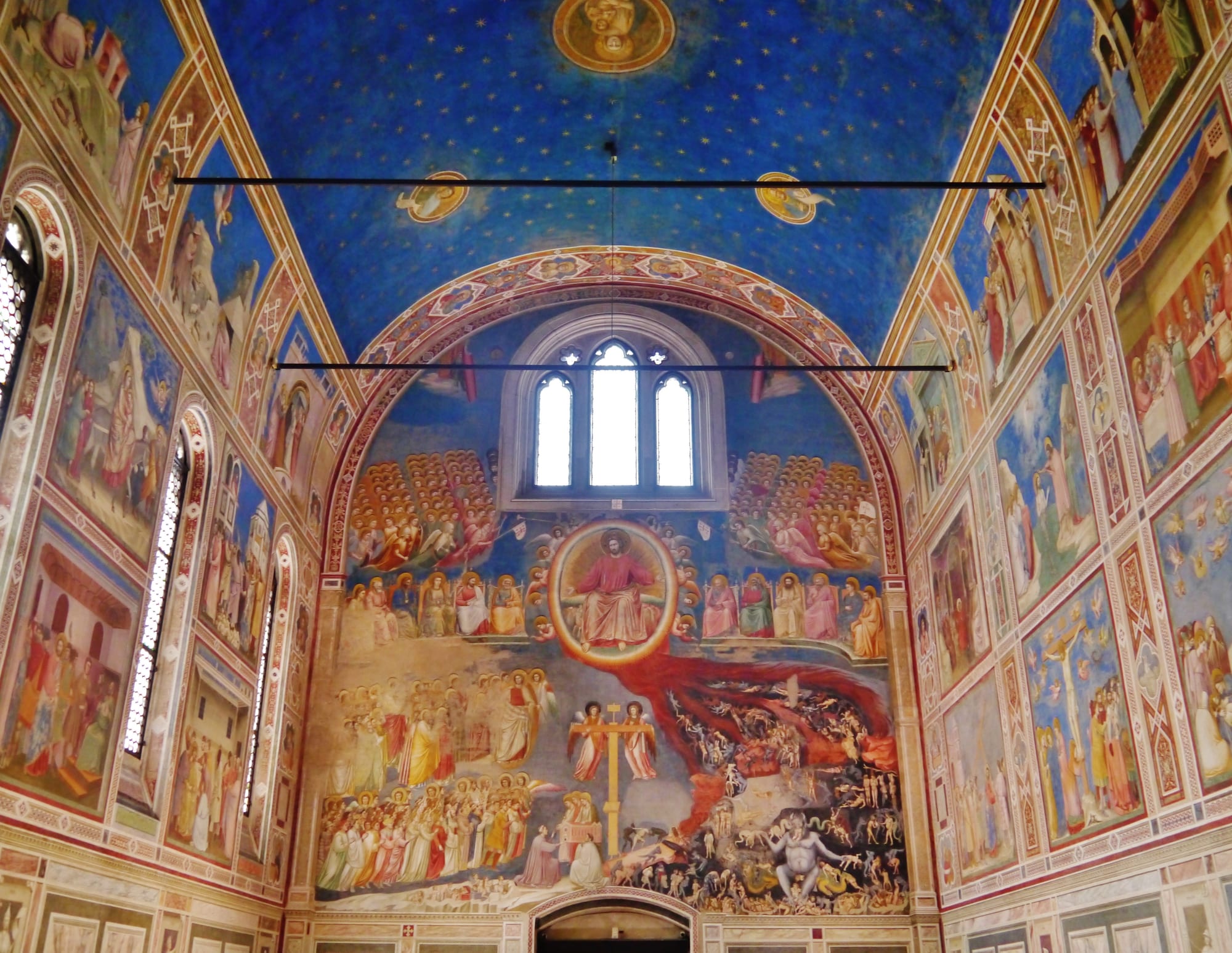
Ciklus fresaka kapele Skrovjenji (poznate i kao Arena kapela, po obližnjoj rimskoj areni) u Padovi predstavlja najvažniju prekretnicu u istoriji zapadnog slikarstva, trenutak kada je umetnost slikovnog pripovedanja ponovo izmišljena kroz radikalne inovacije Đota di Bondonea. Kapelu je naručio Enriko Skrovjenji, jedan od najbogatijih građana Padove, čije su motivacije bile i pobožne i iskupiteljske. Enrikov otac, Reinaldo Skrovjenji, bio je ozloglašeni lihvar — toliko zloglasan da ga je Dante smestio u sedmi krug pakla u Inferno (Pevanje XVII), sedećeg na užarenom pesku sa kesom za novac na kojoj se nalazio porodični grb oko vrata. Kapela, izgrađena na zemljištu koje je Enriko kupio 1300. godine, bila je posvećena Devici Blagoveštenja (Santa Marija dela Karita) i bila je namenjena, barem delimično, kao čin pokajanja za porodične grehe pohlepe. Enriko se pojavljuje na Poslednjem sudu na ulaznom zidu, nudeći model kapele Devici — konvencionalni gest donatorske pobožnosti, ali ovde opterećen specifičnom urgentnošću sina koji nastoji da iskupi očevu osudu.
Đotov dekorativni program obuhvata čitavu unutrašnju površinu jednostavne kapele sa cilindričnim svodom, organizujući trideset osam narativnih scena u tri horizontalna registra na severnom i južnom zidu, sa dodatnim scenama na trijumfalnom luku i monumentalnim Poslednjim sudom koji pokriva čitav ulazni zid. Narativni ciklus se odvija u strogom hronološkom redosledu, počinjući u gornjem registru južnog zida scenama iz života roditelja Device, Joakima i Ane (preuzetih iz apokrifnog Protoevanđelja Jakovljevog), nastavljajući se kroz život Device i detinjstvo i službu Hristovu, i kulminrajući u Stradanju, Raspeću i Vaskrsenju na najnižem registru. Ispod narativnih scena, podnožje naslikano u monohromatskom grizaju simulira mermerne panele prošarane alegorijskim figurama Vrlina (na jugu, okrenutih svetlu) i Poroka (na severu, u senci) — moralni okvir koji utemeljuje biblijske narative u etičkom životu posmatrača.
Oplakivanje mrtvog Hrista, pozicionirano na emocionalnoj kulminaciji narativne sekvence na donjem registru južnog zida, široko je smatrano pojedinačnim najvećim dostignućem predrenesansnog slikarstva. Kompozicija je organizovana oko dijagonale golog, stenovitog brda koje se spušta od gornjeg desnog ka donjem levom uglu, usmeravajući oko ka centralnoj grupi: mrtvi Hrist leži preko krila Device, koja drži njegovo torzo i pretraživaući mu lice sa intenzitetom tuge koji je gotovo nepodnošljiv. Oko njih, figure ožalošćenih izražavaju žalost kroz vokabular gesta i držanja koji je istovremeno teatralno čitljiv i psihološki specifičan — Sveti Jovan zabacuje ruke unazad u grču bola; Magdalena drži Hristova stopala; dve figure sa kapuljačama viđene s leđa stvaraju snažan osećaj izolacije i unutrašnjosti. Gore, deset anđela kruže nebom u stavovima lamentiranja, njihova skraćena tela i individualizovani izrazi žalosti — bes, očajanje, neverica — razbijajući spokojnu, dekorativnu funkciju koju su anđeoske figure imale u vizantijskoj umetnosti. Emocionalna moć scene proizilazi iz Đotove neviđene sposobnosti da prikaže ljudsko osećanje kroz telesnu formu — da učini vidljivim unutrašnja stanja tuge, nežnosti i očajanja kroz raspored težine, ugao glave, napetost spojenih ruku.
Formalna analiza
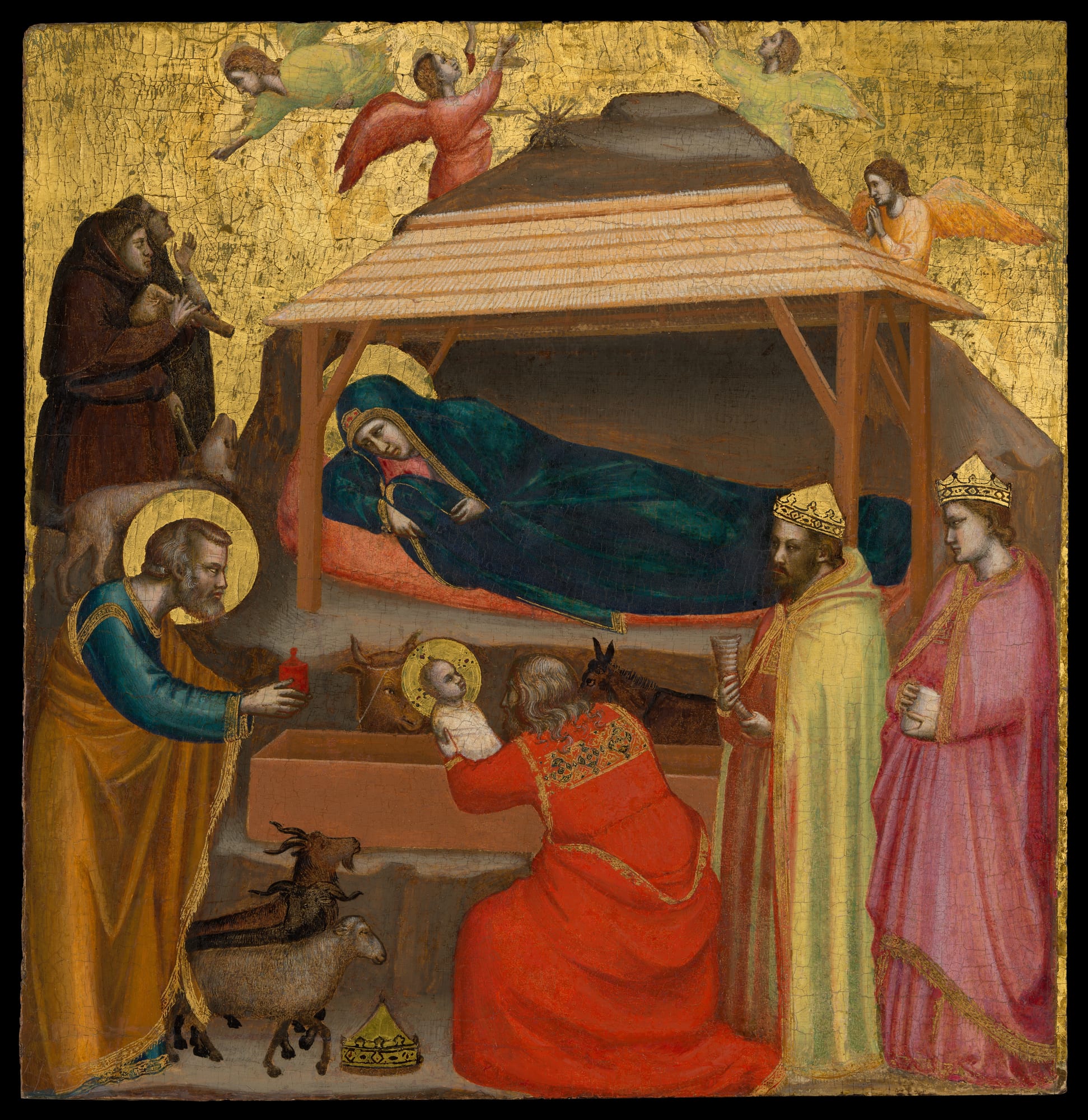
Đotove tehničke inovacije, razmatrane u celini, predstavljaju revoluciju u slikovnoj reprezentaciji. Tamo gde je vizantijsko slikarstvo koristilo ravne zlatne pozadine, frontalne poze i linearnu stilizaciju za stvaranje slika hijeratskog, onostranog autoriteta, Đoto je uveo koherentan (mada još ne matematički sistematičan) prostorni iluzionizam: njegove figure zauzimaju trodimenzionalan prostor sugerisan jednostavnim arhitektonskim okruženjima i pejzažnim elementima; one bacaju senke; preklapaju se jedna s drugom na načine koji impliciraju dubinu; stoje sa svojom težinom opipljivo pritiskajućom nadole, stopala zasađena na tlo umesto da lebde iznad njega. Njegovo modelovanje forme kroz graduirane tonove svetla i tame — kjaroskuro u svojoj najranijoj značajnoj primeni na narativno slikarstvo — daje njegovim figurama vajarsku čvrstinu koja je poređena sa klesanim formama njegovog bliskog savremenika, pisanskog vajara Đovanija Pizana. Draperija, daleko od shematskih nabora vizantijske konvencije, pada u teškim, pojednostavljenim masama koje otkrivaju telo ispod, prenoseći i fizičku težinu i emocionalno stanje nosioca — zgužvana u strepnji, razlivena u spokoju, smežurana u tuzi.
Odnos između Đotovog dostignuća i rada njegovog učitelja, Čenija di Pepa (poznatog kao Čimabue), osvetljava razmere stilskog preloma. Čimabue, aktivan u poslednjim decenijama trinaestog veka, već je uveo elemente naturalizma i emocionalnog intenziteta u vizantijsku tradiciju — njegova Madona iz Santa Trinite (oko 1280-1290) daje Hristu detetu stepen težine, a anđelima izraze individualnosti — ali njegove figure ostaju fundamentalno vezane konvencijama maniera greca: zlatne pozadine, izdužene proporcije, linearni obrasci draperije i prostorna kompresija koja negira iluziju dubine. Đotovo odstupanje od ove tradicije prepoznato je od strane savremenika kao epohalno. Dante, u Čistilištu (Pevanje XI), napomenuo je da „Čimabue mislio je da drži primat u slikarstvu, a sada Đoto uzima slavu, tako da je onog prvog ime potamnelo.” Hroničar iz četrnaestog veka Filipo Vilani pisao je da je Đoto „vratio slikarstvo nekadašnjem dostojanstvu i velikom ugledu”, a Bokačo je u Dekameronu hvalio njegovu sposobnost da prevari samo oko. Ova svedočanstva, mada učestvuju u retoričkim konvencijama umetničke biografije, registruju istinsko prepoznanje da je nešto fundamentalno novo ušlo u svet.
Značaj i nasleđe
Teološka dimenzija Đotovih inovacija ne sme se zanemariti. Njegovo insistiranje na fizičkoj stvarnosti svetog narativa — težina Hristovog mrtvog tela, toplina zagrljaja Joakima i Ane na Zlatnoj kapiji, preplašeno uzmaknuće pastira na anđeovsko blagovesti — nije bila samo estetska preferencija, već je nosila doktrinarne implikacije. Prikazujući svete figure kao opipljivo prisutne u prepoznatljivom fizičkom svetu, Đoto je afirmisao inkarnacionu teologiju centralnu za hrišćanstvo — doktrinu da je Bog postao telo, ušao u istoriju i iskusio ljudsku patnju. Freske čine ovu teologiju vidljivom: Hrist krvari, plače, jede i umire sa telesnom specifičnošću koja insistira na realnosti božansko-ljudskog susreta. Ova integracija naturalizma i teologije postala bi animirajući princip italijanskog renesansnog slikarstva, od Mazača do Rafaela.
Kapela Skrovjenji prošla je sveobuhvatnu restauraciju završenu 2002, tehnički zahteven projekat koji je adresirao vekove nakupljenih oštećenja od prodora vlage, čađi sveća, strukturalnog sleganja i ranijih intervencija. Restauracija, koja je obuhvatila ugradnju sofisticiranog sistema za kontrolu klime koji zahteva od posetilaca da prođu kroz komoru za aklimatizaciju pre ulaska u kapelu, otkrila je originalni sjaj Đotove palete — duboki ultramarin svoda (naslikan skupocenim lapis lazulijem), tople okere i zemljane tonove narativnih scena i luminozne beline arhitektonskog uokviravanja. Očišćene freske potvrdile su ono što su istoričari umetnosti dugo tvrdili: da Đoto nije bio samo revolucionarni crtač i pripovdač već i kolorista velike suptilnosti, čija orkestracija toplih i hladnih tonova, zasićenih i prigušenih nijansi, stvara hromatsko okruženje jednako pažljivo kalibrisano kao prostorna i emocionalna drama narativa. Kapela ostaje, kako je istoričar umetnosti Džejms Stablbajn izjavio, „najvažniji pojedinačni spomenik zapadnog slikarstva”, šarka na kojoj se umetnost srednjeg veka okrenula da postane umetnost renesanse.