Istorijski kontekst
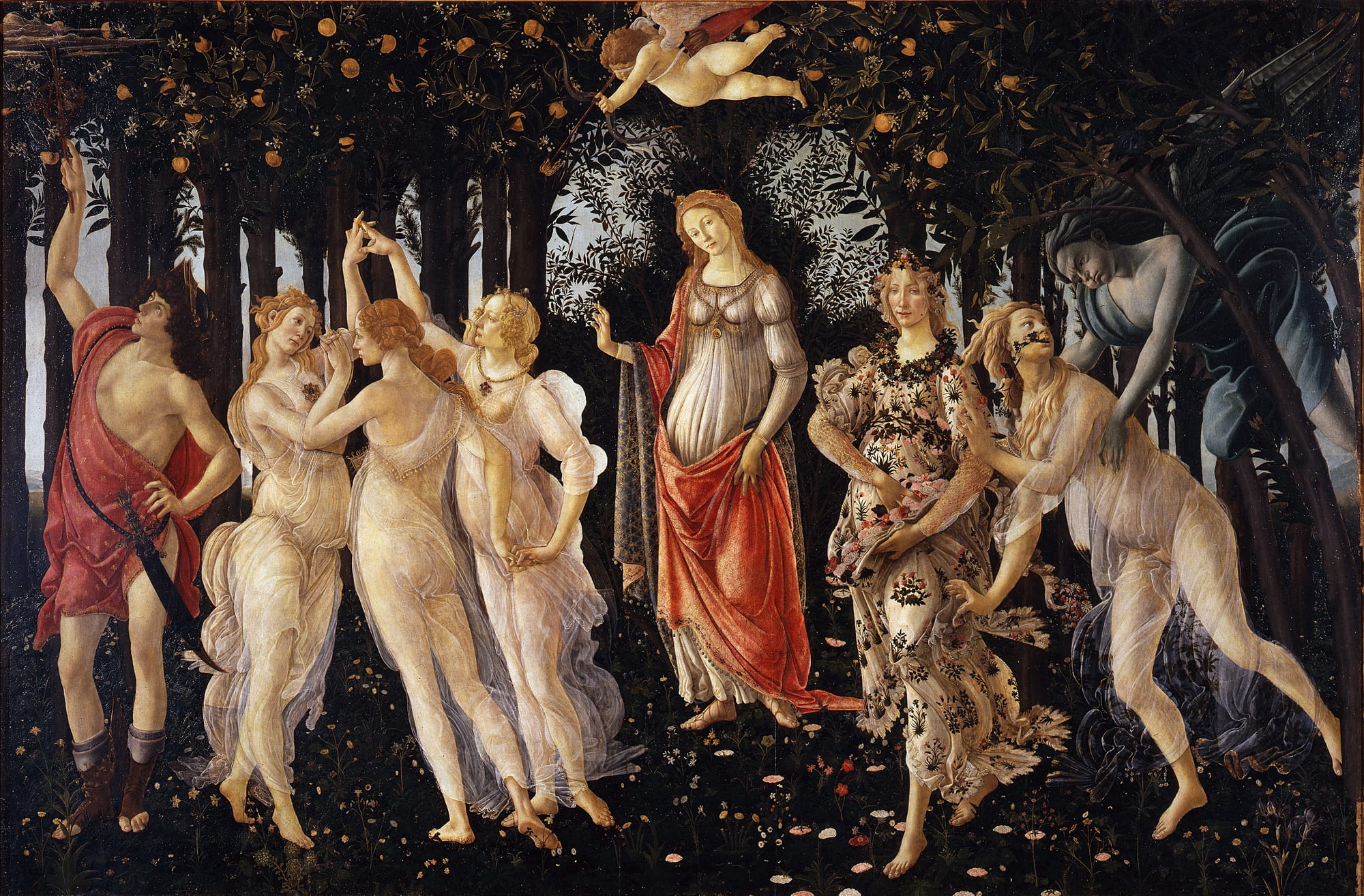
Primavera, koju je naslikao Sandro Botičeli negde između 1477. i 1482. godine, jedna je od najanaliziranijih i najdiskutovanijih slika u zapadnom kanonu, delo čije je precizno značenje izmicalo definitivnom tumačenju više od pet vekova uprkos — ili možda upravo zbog — izvanredne specifičnosti njegove ikonografije. Monumentalni panel, dimenzija 203 sa 314 centimetara, prikazuje devet mitoloških figura raspoređenih preko zatamnjenog gaja narandži, njihove forme organizovane u labavoj frizovskoj kompoziciji koja se čita s desna nalevo kao narativni niz. Slika je prvi put dokumentovana u inventaru palate Mediči u Firenci iz 1499, navedena kao da visi u sobi pored odaje Lorenca di Pjerfrančeska de Medičija, mlađeg rođaka Lorenca Veličanstvenog. Većina naučnika danas veruje da je delo naručio sam Lorenco di Pjerfrančesko ili njegov staratelj Lorenco Veličanstveni, moguće za proslavu Lorencove ženidbe sa Semiramide Apijani 1482, mada alternativne teorije o datiranju i pokroviteljstvu i dalje postoje.
Identifikacija pojedinačnih figura, iako nije univerzalno usaglašena, prati široko prihvaćenu shemu. Krajnje desno, plavoputi bog vetra Zefir, naduvenih obraza od daha zapadnog vetra, goni i hvata nimfu Hloris, iz čijih usta izviru cveće dok prolazi metamorfozu u Floru, boginju proleća, koja stoji neposredno levo razbacujući cvetove iz nabora svoje cvetom izvezene haljine. Ova transformacija, opisana u Ovidijevim Fastima (Knjiga V), predstavlja dolazak samog proleća — trenutak kada sirova, nasilna sila vetra oplođava zemlju i iznosi cveće. U centru kompozicije stoji Venera, skromno obučena i blago uzdignuta na zatamnjenoj podlozi, desna ruka podignuta u gestu dobrodošlice ili blagoslova, dok iznad nje slepi Kupidon upire zapaljenu strelu ka centralnoj figuri Tri Gracije, koje plešu u krugu na levoj strani slike. Krajnje levo, bog Merkur, prepoznatljiv po krilatim sandalama i kaduceju, pruža ruku naviše da rastera oblake sa vrhova drveća pomoću svog štapa.
Formalna analiza
Intelektualni kontekst za sliku je neoplatonski filozofski krug koji je cvetao u medičejskoj Firenci, centriran oko filozofa Marsilia Fičina i pesnika Anđela Policijana. Fičinova pisma mladom Lorencu di Pjerfrančesku, pisana kasnih 1470-ih, pozivaju mladića da kontemplira Veneru kao simbol Humanitas — ujedinjenje lepote, ljubavi i intelektualne vrline — i naučnici od Abija Varburgove prelomne studije iz 1893. nastojali su da čitaju sliku kao vizuelno otelotvorenje Fičinove filozofije. U ovom tumačenju, kompozicija prati progresiju od zemaljske, čulne ljubavi (Zefirov nasilan progon Hloris) kroz njenu transformaciju u lepotu (Florin cvet) do carstva idealne, duhovne ljubavi kojom predsedavaju Venera i Gracije, kulminitajući u Merkurovom kontemplativnom usponu ka božanskom. Policijanove Stance per la Giostra (1475-1478), sa bujnim opisima carstva Venere, pružaju mnoge specifične vizuelne motive slike, mada Botičeli transformiše književni opis u nešto daleko složenije i autonomnije od puke ilustracije.
Ikonografija i simbolika
Jedna od najizvanrednijih odlika slike je njena botanička preciznost. Istoričarka umetnosti Mirela Levi D’Ankona identifikovala je preko pet stotina pojedinačnih biljnih vrsta prikazanih na slici, uključujući približno 190 različitih cvetnica, od kojih su mnoge prikazane sa dovoljnom tačnošću da omoguće naučnu identifikaciju. Pod livade je prekriven margaretama, ljubičicama, različcima, zimzelenima i perunikama; drveće uključuje narandže, lovor i mirtu (posvećenu Veneri); a Florina haljina je izvezena različcima, margaretama, ružama i drugim vrstama prepoznatljivim do roda a često i do nivoa vrste. Ovo botaničko obilje nije samo dekorativno već nosi simboličku težinu: mnoge biljke imaju specifične asocijacije u klasičnoj mitologiji, srednjovekovnoj herbalnoj tradiciji i neoplatonskom simbolizmu. Narandže koje ispunjavaju gaj, na primer, bile su povezane sa porodicom Mediči (italijanska reč za narandže, „mele mediche”, igra se na prezime porodice) i sa zlatnim jabukama Hesperida, povezujući rajski vrt slike sa medičejskim pokroviteljstvom i klasičnim mitom.
Tehnika tempere koju Botičeli koristi u Primaveri proizvodi blistavu, emajlu sličnu površinsku kvalitetu koja razlikuje njegovo delo od atmosferske mekoće uljenog slikarstva koje se tada razvijalo u Holandiji i Veneciji. Radeći sa jajnom temperom na dasci od topole pripremljenom sa gesom, Botičeli je izgrađivao forme sloj po sloj finih, paralelnih poteza četkice — tehnika zvana šrafiranje — koja omogućava preciznu kontrolu tona i boje ali se opire glatkom mešanju mogućem u ulju. Rezultat je površina izvanredne jasnoće i sjaja, sa bojama koje zadržavaju svoj intenzitet čak i u zatamnjenom okruženju gaja narandži. Tonovi puti Gracija, prikazani u bledim, hladnim tonovima sa porcelanskom glatkoćom, i diafana kvaliteta njihovih gaznih draperija — kroz koje su vidljive konture njihovih tela — predstavljaju tehnički podvig koji eksploatiše sposobnost medijuma tempere za precizan, linearan detalj. Tamna pozadina gaja, na kojoj su blede figure siluetovane, stvara efekat kutije za nakit koji pojačava kvalitetu slike kao dragocene, samodovoljna lepote.
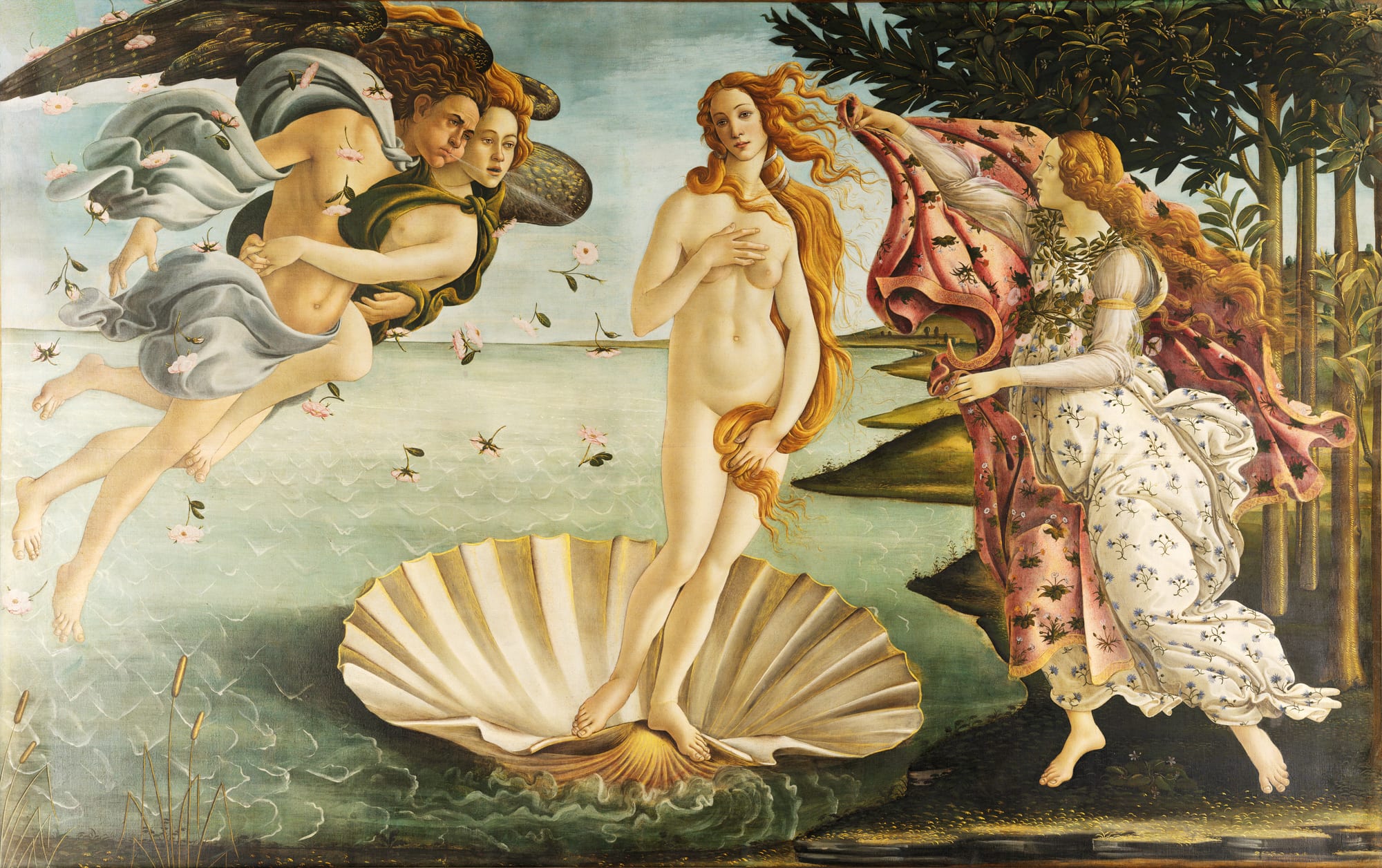
Odnos između Primavere i Botičelijeve druge velike mitološke slike, Rođenje Venere (oko 1485), bio je predmet opsežne debate. Dva dela dele formalne karakteristike — frizovsku kompoziciju, arhaičnu ravnost, izdužene proporcijeformi, dominaciju linije nad volumenom — i tematske preokupacije, obe centrirane oko Venere kao neoplatonskog simbola lepote i ljubavi. Neki naučnici su predložili da su slike zamišljene kao par, Rođenje Venere prikazujući nebesku Veneru (Venus Caelestis) a Primavera zemaljsku Veneru (Venus Naturalis), zajedno predstavljajući dva aspekta ljubavi opisana u Fičinovom De Amore. Međutim, razlike u medijumu (tempera na dasci nasuprot temperi na platnu), skali i verovatnom datumu izrade komplikuju ovo čitanje, i precizan odnos između dva dela ostaje nerešen. Ono što je jasno je da obe slike nastaju iz istog intelektualnog miljea i predstavljaju Botičelijevo najpostojanije bavljenje neoplatonskim filozofskim programom medičejskog kruga.
Interpretativna istorija slike odražava šire promene u umetničko-istorijskoj metodologiji. Varburgovo čitanje iz 1893, koje je naglasilo književne izvore i kulturni kontekst, inaugurisalo je ikonološki pristup koji je dominirao umetničkom istorijom sredinom dvadesetog veka; Gombrihova reinterpretacija iz 1945, crpeći iz Fičinovih pisama, pomerila je pažnju na filozofski sadržaj; a novija nauka istražuje odnos slike prema medičejskoj političkoj propagandi, bračnom ritualu i društvenoj konstrukciji roda u kvatročento Firenci. Feministkinje istoričarke umetnosti primetile su uznemirujuće implikacije epizode Zefir-Hloris — u suštini scene seksualnog napada preokvirene kao generativnog, čak pozitivnog događaja — i dovele u pitanje meru u kojoj slavljenje ženske lepote na slici služi patrijarhalnim interesima. Drugi naučnici su naglasili nesvodivu dvosmislenost slike, argumentujući da se njeno značenje ne može svesti na nijedan pojedinačni književni, filozofski ili politički program i da njena trajna fascinacija leži upravo u njenom otporu definitivnom tumačenju.
Recepcija i nasleđe
Primavera je ušla u kolekciju Uficija 1919, prebačena iz vile Mediči kod Kastela, gde je visila od bar sredine šesnaestog veka. Veliko čišćenje i restauracija 1982. uklonili su vekove potamnelog laka i otkrili sjaj Botičelijeve originalne boje — azurno nebo vidljivo kroz krošnje drveća, žive ružičaste i crvene Florinih razbacanih cvetova, suptilne modulacije tonova puti u isprepletenim telima Gracija. Danas, zajedno sa Rođenjem Venere, Primavera zauzima centralno mesto u Botičelijevim salama Uficija, gde obe slike privlače milione posetilaca godišnje. Uticaj Primavere na naknadnu umetnost bio je manje direktan od uticaja Rođenja Venere — njena složena, višefiguralna alegorija se opire lakom prisvajanju — ali njena vizija rajskog vrta gde lepota, ljubav i priroda postoje u harmoničnom jedinstvu odzvanjala je kroz pet vekova zapadne vizuelne kulture, od pastoralnih fantazija Vatoa do prerafaelitskog medijevalizma Bern-Džonsa.