Istorijski kontekst
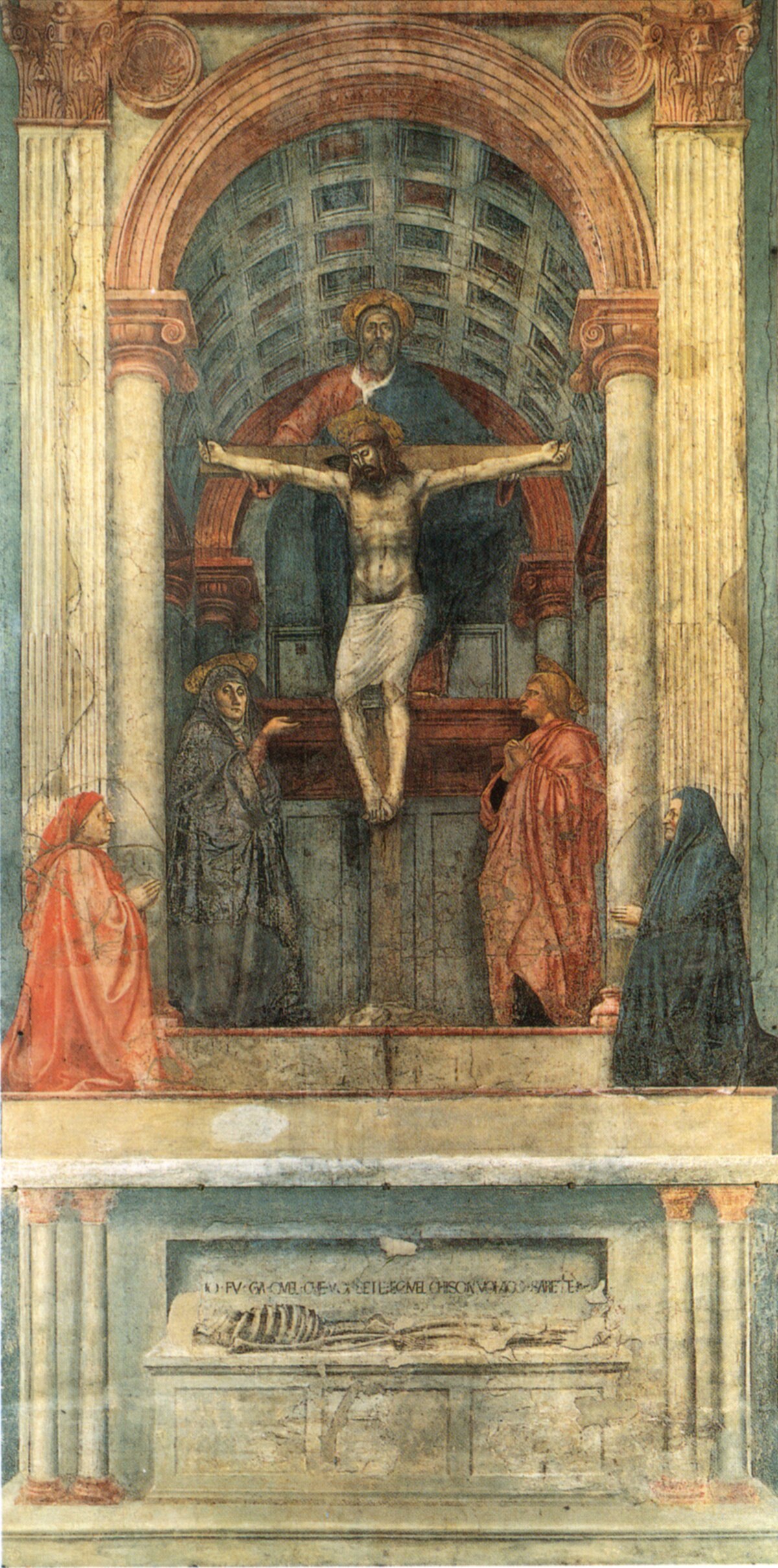
Mazačovo Sveto Trojstvo, naslikano oko 1427. godine na levom zidu broda u dominikanskoj crkvi Santa Maria Novela u Firenci, predstavlja jedno od najznačajnijih pojedinačnih dela u istoriji zapadnog slikarstva. Izvedeno kada je umetnik imao približno dvadeset šest godina — samo godinu ili dve pre njegove prerane smrti u Rimu sa dvadeset sedam — freska demonstrira potpuno razvijeno vladanje matematičkom linearnom perspektivom koje je smešta na sam čelo slikovne revolucije koja se odvijala u ranoj Firenci petnaestog veka. Tačne okolnosti narudžbine ostaju predmet debate, ali je freska gotovo sigurno finansirana od strane člana porodice Lenci, čiji je grb identifikovan na pilastrima, a dve donatorske figure koje kleče izvan oslikane kapele generalno se razumeju kao patron i njegova žena. Dominikanski kontekst je značajan: Santa Maria Novela bila je centar tomističke teologije, a rigorozna intelektualna struktura dela — njegova sistematska geometrija, hijerarhijsko uređenje božanskih i ljudskih figura i meditacija o smrti i spasenju — odražava racionalnu teološku tradiciju povezanu sa dominikanskim redom.
Freska je nastala u firentinskom miljeu naelektrisanom inovacijama u prostornom prikazivanju. Filipo Bruneleski je nedavno izveo svoje čuvene demonstracije perspektive — verovatno oko 1415-1420. — koristeći oslikane panele i ogledala da dokaže da se trodimenzionalni prostor može projektovati na dvodimenzionalnu površinu prema preciznim matematičkim pravilima. Leon Batista Alberti bi kodifikovao ove principe u svom traktatu „De Pictura” 1435. godine, ali Mazačovo Sveto Trojstvo prethodi tom tekstu za skoro deceniju, čineći ga najranijom sačuvanom primenom Bruneleskijeve perspektive u velikoj razmeri u slikarstvu. Zaista, nekoliko naučnika je predložilo da je sam Bruneleski možda pomogao Mazaču sa perspektivnom konstrukcijom, s obzirom na arhitektonsku preciznost oslikanog bačvastog svoda, čiji se kasetni plafon povlači sa geometrijskom egzaktnošću ka jednoj tački bežišta.
Formalna analiza
Kompozicija je organizovana kao monumentalna iluzionistička kapela koja se čini da se uvlači u zid crkve, stvarajući trompe-l’oeil efekat izuzetne ubedljivosti. Oslikana arhitektura — bačvasto zasvođen prostor flankirani korintskim stubovima i jonskim pilastrima postavljenim na klasicistički arhitrav — izvedena je sa takvom preciznošću da su istoričari umetnosti bili u stanju da rekonstruišu tačan plan fiktivne kapele, koji odgovara proporcionalnim sistemima rimske arhitekture kako se razumevala kroz Bruneleskijeve studije antičkih građevina. Tačka bežišta perspektivne konstrukcije nalazi se u osnovi krsta, otprilike u visini očiju stojećeg posmatrača, što znači da se oslikana arhitektura čini da se prirodno nastavlja iz realnog prostora crkvenog broda, brišući granicu između stvarnog i prikazanog prostora na način koji je bio potpuno bez presedana.
Figuralna hijerarhija je pažljivo strukturirana kroz višestruke prostorne ravni. Bog Otac stoji na izbočini na zadnjem zidu svoda, podržavajući krake krsta na kome je Hrist raspet, dok golub Svetog Duha lebdi na Hristovom vratu — vertikalno poravnanje koje čini trinitarnu teologiju vizuelno eksplicitnom. Bogorodica i Sveti Jovan stoje na platformi unutar oslikane kapele, zauzimajući posredničku zonu između božanskog prostora Trojstva i zemaljskog prostora donatora, koji kleče na izbočini izvan same kapele, blago se projektujući u prostor posmatrača. Ispod čitave kompozicije, oslikani sarkofag prikazuje skelet praćen italijanskim natpisom „IO FU GIA QUEL CHE VOI SIETE E QUEL CH’I SON VOI ANCO SARETE” — „Bio sam nekada ono što ste vi, a ono što sam ja bićete i vi” — memento mori koji utemeljuje teološki program u kontemplaciji smrtnosti. Paleta je suzdržana i monumentalna: duboki crveni i plavi za draperije figura, topli tonovi kamena za arhitekturu, i pažljiva modulacija svetlosti i senke koja pojačava trodimenzionalnost iluzionističkog prostora.
Recepcija i nasleđe
Sveto Trojstvo je univerzalno prepoznato kao prelomnica u istoriji zapadne umetnosti, delo u kome su teorijske mogućnosti linearne perspektive prvi put potpuno realizovane u monumentalnom slikarstvu. Njegov uticaj na naknadno firentinsko slikarstvo bio je neposredan i dubok: prostorna logika koju je demonstrirao Mazačo preuzeta je i razrađena od strane Fra Anđelika, Filipa Lipija, Andree del Kastanja i Pjera dela Frančeske, postajući temeljna gramatika renesansnog slikovnog prostora koja će dominirati evropskim slikarstvom sledećih pet vekova. Freska takođe predstavlja ključni trenutak u odnosu između slikarstva i arhitekture, inaugurišući tradiciju iluzionističkog arhitektonskog slikarstva koja će doživeti svoj apoteoz u plafonskim freskama Andree Mantenje, Koreda i rimskih baroknih majstora.
Fizička istorija dela odražava promenljive sudbine ranorenensansne umetnosti u narednim vekovima. 1570. godine, Đorđo Vazari — koji je obilno pohvalio Mazača u svojim „Životima umetnika” — ipak je postavio novu oltarsku sliku direktno ispred freske, skrivajući je od pogleda. Freska je ponovo otkrivena 1861. tokom renoviranja, mada je donji deo koji sadrži skelet i sarkofag bio odvojen i premešten u drugi deo crkve, gde je ostao do 1952, kada je celokupna kompozicija ponovo ujedinjena na svom originalnom mestu. Moderna konzervatorska analiza otkrila je preciznu tehniku perspektivne konstrukcije, uključujući urezane linije i rupu za ekser u tački bežišta koje je Mazačo koristio da vodi svoju kompoziciju. Sveto Trojstvo ostaje obavezno štivo za svakog studenta renesansne umetnosti, ne samo kao tehnička demonstracija perspektive, već kao duboko integrisano delo teologije, arhitekture i slikarstva koje oličava intelektualnu ambiciju rane Firentinske renesanse u njenom najkoncentrovanijiem obliku.