Istorijski kontekst
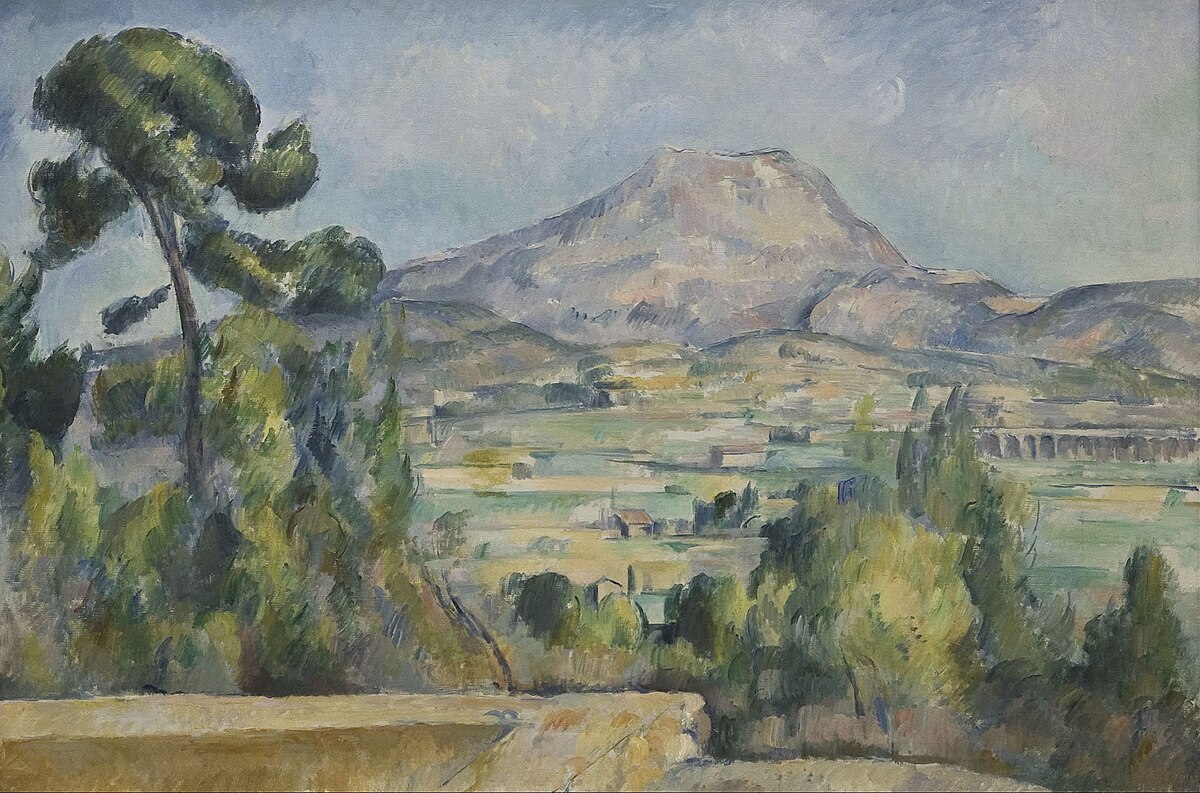
Planina Sent-Viktoar, krečnjački greben koji se uzdiže istočno od Eks-an-Provansa, postala je centralni motiv kasne karijere Pola Sezana, a serija slika koje joj je posvetio između 1880-ih i svoje smrti 1906. konstituiše jedno od najdoslendnijih istraživanja jednog pejzažnog motiva u istoriji zapadne umetnosti. Ovo konkretno platno, naslikano oko 1897, prikazuje planinu viđenu iz napuštenog kamenoloma Bibemis, lokacije u blizini koje je Sezan unajmio malu kolibu i redovno posećivao tokom kasnih 1890-ih. Ugaone, rđasto obojene stene kamenoloma pružale su prirodnu arhitekturu prvog plana koja je rezonovala sa Sezanovim rastućim slikovnim preokupacijama: međuigrom između geometrijske strukture i organskog oblika, između ravnosti slikovne površine i dubine posmatranog prostora, i između stabilnosti kompozicionog reda i vitalnosti perceptivnog iskustva.
Sezanov povratak u Eks-an-Provans nakon decenija povremenog boravka u Parizu i njegovoj okolini označio je odlučujući zaokret u njegovom umetničkom razvoju. Sve izolovanliji od pariškog umetničkog sveta, ali duboko poštovan od mlađih slikara koji su ga tražili, Sezan je vodio samotnu i intenzivno fokusiranu praksu usredsređenu na provansalski pejzaž koji je poznavao od detinjstva. Pogledi iz kamenoloma Bibemis predstavljaju posebno značajnu fazu u ovom kasnom radu, jer su kamenolomske formacije nastale ljudskom rukom — blokovi kamena isečeni u pravilne oblike vekovima eksploatacije — nudile predmet koji je već bio delimično apstraktan, premošćujući jaz između prirode i geometrije koji je Sezan slavno nastojao da pomiri u svojoj umetnosti. Slika tako otelotvoruje filozofsko jezgro Sezanovog projekta: pronalaženje trajne slikovne strukture adekvatne složenosti vizuelnog iskustva bez žrtvovanja neposrednosti senzacije.
Formalna analiza
Kompozicija je organizovana u tri jasno razdvojene prostorne zone: masivne oker stenovite formacije kamenoloma u prvom planu, tamnozelenu traku borova u srednjem planu i bledoplavo-ljubičastu siluetu planine Sent-Viktoar na pozadini neba. Ova trodelna struktura mogla bi sugerisati konvencionalno pejzažno povlačenje u dubinu, ali Sezan sistematski podriva tradicionalnu perspektivnu dubinu svojim tretmanom boje, poteza četke i ivice. Tople narandžaste i žute kamenoloma isijavaju napred dok hladne plave planine ustupaju, ipak Sezan modulira ove temperaturne odnose tako da se mrlje tople boje pojavljuju u daljini a hladni tonovi infiltriraju prvi plan, stvarajući složenu prostornu oscilaciju koja drži oko u pokretu celom površinom umesto da ga uranja u iluzionističku dubinu.
Konstruktivni potez četke — Sezanova prepoznatljiva tehnika nanošenja boje u paralelnim, grubo pravougaonim potezima koji prate konture oblika dok istovremeno potvrđuju ravnost platna — korišćen je svuda sa izvanrednom doslednošću i raznovrsnošću. Svaki potez ima dvostruku funkciju, istovremeno opisujući facet posmatrane stvarnosti i doprinoseći autonomnoj slikovnoj arhitekturi slike. Kamenje kamenoloma izgrađeno je od preklapajućih ravni okera, narandžaste i sijene, njihove facetovane površine rimuju se sa ugaonim potezima četke koji ih čine. Lišće je renderovano u gustim, prepletenim mrljama zelene koje komprimuju prostor i stvaraju gotovo neprobojnu vizuelnu zavesa između prvog i zadnjeg plana. Sama planina, uprkos svojoj udaljenosti, renderovana je istim promišljenim konstruktivnim potezom, potvrđujući njeno prisustvo kao naslikane forme na površini platna čak i dok se povlači u atmosfersko plavo. Rezultat je slika koja postiže izvanrednu ravnotežu između reprezentacije i apstrakcije, dubine i ravnosti, senzacije i strukture.
Recepcija i nasleđe
Ova slika, sada smeštena u Baltimorskom muzeju umetnosti kao deo ugledne Kolekcije Kon koju su sakupile sestre Klaribel i Eta Kon, prepoznata je kao jedan od najfinijih primera Sezanove kasne pejzažne prakse. Pogledi iz kamenoloma Bibemis zauzimaju ključnu poziciju u istoriji umetnosti jer čine vidljivim proces kojim se posmatrana priroda prevodi u slikovnu strukturu — proces koji bi postao eksplicitan predmet mnogo ranog slikarstva dvadesetog veka. Kada je Sezan savetovao mladog Emila Bernara da „prirodu tretira cilindrom, sferom, konusom”, artikulisao je princip koji je već bio očigledan u delima poput ovog, gde geološke forme kamenoloma izgledaju kao da anticipiraju geometrijska pojednostavljivanja kubizma.
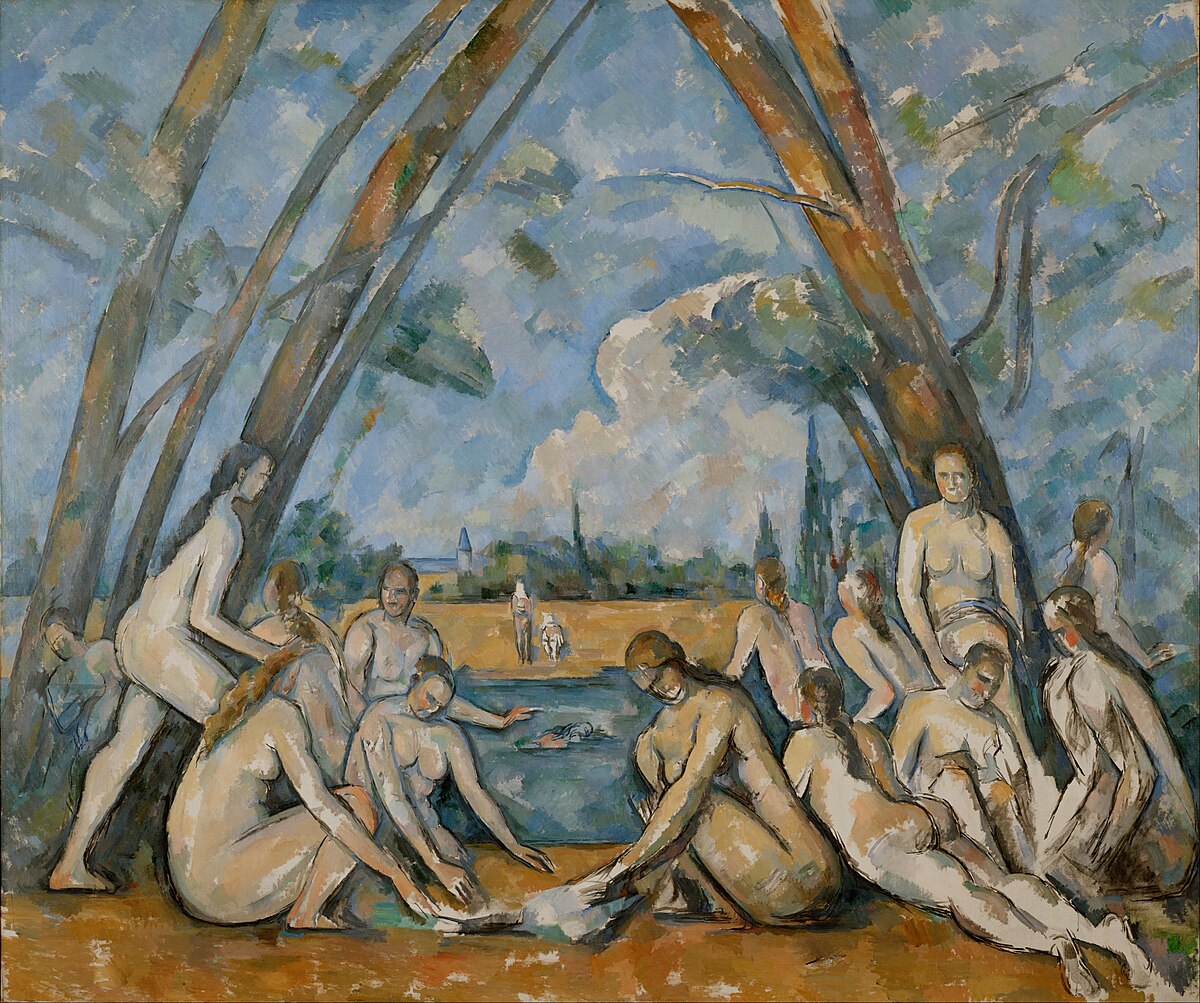
Uticaj Sezanovih slika planine Sent-Viktoar na kasniju umetnost teško je prenaglasiti. Pikaso i Brak, razvijajući kubizam između 1907. i 1914, direktno su crpeli iz Sezanovih metoda lomljenja forme u facetovane ravni i komprimiranja slikovnog prostora. Matis, koji je posedovao malu Sezanovu sliku kupačica, pripisivao je starijem umetniku zaslugu što ga je naučio da razmišlja o boji kao o strukturnom a ne samo dekorativnom elementu. Apstraktni ekspresionisti, posebno u pejzažno izvedenim apstrakcijama umetnika poput De Kuninga i slikara polja boje, priznavali su Sezana kao temeljnog uzora. Ovo konkretno platno, sa svojom emfatičnom materijalnošću, odbijanjem lake prostorne čitljivosti i insistiranjem na slikanoj površini kao areni rigoroznog perceptivnog istraživanja, otelotvoruje kvalitete koji su učinili Sezana, u često citiranoj frazi, „ocem svih nas”.