Istorijski kontekst
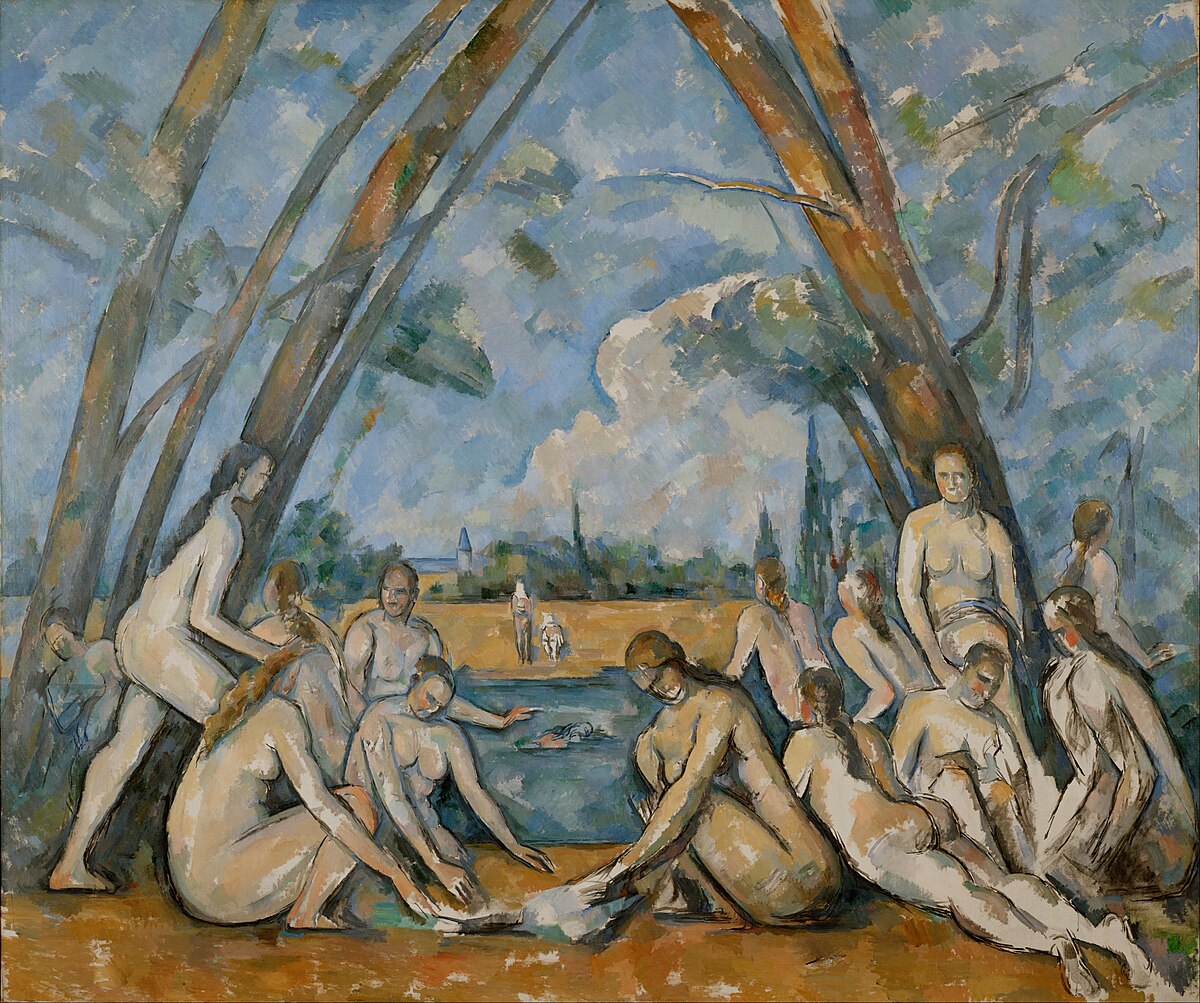
Velike kupačice predstavljaju kulminaciju Sezanove celoživotne posvećenosti temi nagih figura u pejzažu, predmetu koji ga je zaokupljao od njegovih najranijih platana romantičarskog perioda do poslednjih godina karijere. Sezan je radio na ovoj monumentalnoj slici — daleko najvećem platnu koje je ikada pokušao — s prekidima od otprilike 1900. do smrti u oktobru 1906, ostavljajući je u stanju koje je različito opisivano kao nedovršeno i kao namerno otvoreno. Slika pripada grupi tri velike kompozicije kupačica iz Sezanovih poslednjih godina, od kojih su ostale danas u Barnsovoj fondaciji i Nacionalnoj galeriji u Londonu, svaka istražujući različite konfiguracije odnosa figure i pejzaža. Filadelfijska verzija je najarhitektonski ambiciozna od tri, njena kompozicija organizovana oko velike gotičke formacije nagnutog drveća koje uokviruju kupačice i otvaraju se ka dalekoj visti neba i vode.
Tema kupačica nosila je složene lične i umetničko-istorijske rezonance za Sezana. Kao mladić u Eksu u Provansi, kupao se sa svojim prijateljem iz detinjstva Emilom Zolom u reci Ark, i ta sećanja na mladenačku slobodu u provansalskom pejzažu prožimala su slike kupačica nostalgičnom, arkadijskom dimenzijom. Istovremeno, tema nagih figura u pejzažu povezivala je Sezana sa velikom tradicijom pastoralnog slikarstva od Đorđonea i Ticijana preko Pusena i Rubensa — majstora čija je dela intenzivno studirao u Luvru. Sezanova ambicija bila je ništa manje nego „ponovo napraviti Pusena prema prirodi”, kako je čuveno izjavio — postići klasičnu grandioznost i strukturalnu koherenciju kompozicije starih majstora kroz metode direktnog posmatranja i konstruktivne boje koje je razvijao decenijama usamljene prakse. Velike kupačice su njegov najpostojaniji pokušaj da realizuje tu izvanrednu ambiciju.
Formalna analiza
Kompozicija je dominirana velikim trougaonim svodom koji formiraju dve grupe drveća nagnute ka unutra sa obe strane platna, njihova stabla i grane stvaraju arhitektonski okvir koji podseća na šiljaste lukove gotičkih katedrala. Ova arborealna arhitektura uspostavlja fundamentalni strukturalni princip slike: integraciju figura i pejzaža u jedinstven, objedinjen slikovni organizam. Četrnaest kupačica raspoređeno je u dve grupe koje flankiraju centralnu osu, njihova tela ponavljaju i rimuju se sa dijagonalnim zamahom stabala drveća. Figure na levoj strani leže i sede u relativno stabilnim pozama, dok su one na desnoj dinamičnije, sa nekoliko koje koračaju ili gestikuliraju ka vodi. Mala figura koja gazi u srednjem planu vodi oko kroz svod drveća ka luminoznoj plavoj daljini izvan njega, uspostavljajući prostornu recesiju koja je istovremeno potvrđena i spljošena Sezanovim karakterističnim tretmanom boje i poteza četkice.
Površina slike izvanredna je po svojoj kombinaciji gustine i prozirnosti. U nekim pasažima, naročito u nebu i vodi, tkanje platna je vidljivo kroz tanke nalivke plave i bele boje, dajući tim delovima kvalitet luminozne otvorenosti. U drugima, naročito u stablima drveća i pojedinim figurama, boja je naneta gušće u preklapajućim konstruktivnim potezima plave, zelene, okera i ljubičaste. Same figure prikazane su sa namernim antinaturalizmom koji je uznemirvo rane posmatrače ali se pokazao proročanskim: anatomske proporcije su iskrivljene, lica su ostavljena kao sumarno tretirane maske, a tonovi puti modelovani su istim plavim i zelenim koje se koriste za okolni pejzaž, efektivno rastapajući granicu između tela i okruženja. Ova integracija figure i osnove kroz zajedničku boju i potez četkice predstavlja jednu od Sezanovih najradikalnijih inovacija, anticipirajući slikovne strategije kubizma i all-over kompozicije kasnijeg apstraktnog slikarstva. Paleta je izgrađena oko luminozne trijade plave, zelene i okerno-zlatne, proizvodeći hromatsko jedinstvo koje pojačava kompozicionu integraciju svih elemenata.
Značaj i nasleđe
Velike kupačice ušle su u Filadelfijski muzej umetnosti 1937. kroz kolekciju Videner i od tada su prepoznate kao jedna od najznačajnijih slika moderne ere. Njihov uticaj na umetnost ranog dvadesetog veka bio je neposredan i dubok. Matis, koji je video sliku u Volarovoj galeriji i kasnije sam nabavio malu Sezanovu kompoziciju kupačica, opisao je Sezanove kupačice kao delo koje ga je „duhovno podržavalo u kritičnim momentima moje umetničke karijere”. Pikasove Gospođice iz Avinjona (1907), sa njihovim uglatim, licima nalik maskama i spljošenom prostornom konstrukcijom, nezamislive su bez prethodnika Sezanovih poznih slika kupačica. Arhitektonska organizacija slikovne površine i podređivanje pojedinačnih formi sveobuhvatnoj strukturalnoj logici pružili su šablon za kubističku kompoziciju, dok je integracija figure i pejzaža kroz zajedničku boju anticipirala rastapanje razlika između figure i pozadine u apstraktnoj umetnosti.
Značaj slike proteže se izvan njene uloge kao izvora za pokrete koji su usledili. Ona predstavlja jedinstven pokušaj pomirenja naizgled nepomirljivih umetničkih vrednosti: monumentalne ambicije muzejskog slikarstva i empirijske skromnosti rada prema posmatranju; strukturalne jasnoće klasične kompozicije i perceptivne složenosti modernog viđenja; vanvremenskog spokoja pastoralne tradicije i nemirnog formalnog eksperimentisanja avangarde. To što Sezan nije u potpunosti razrešio ove napetosti — to što slika zadržava oblasti očigledne nedovršenosti i pasaže nerazrešene prostorne dvosmislenosti — samo po sebi je tumačeno kao suštinsko za njeno značenje. Namerna otvorenost dela, njegovo odbijanje završenog i definitivnog, postalo je model za modernističku praksu u kojoj se proces i borba vrednuju iznad rezolucije. Velike kupačice tako stoje ne samo kao kulminacija Sezanove karijere već i kao prag, obeležavajući prelaz iz slikarstva devetnaestog veka ka radikalnom eksperimentisanju dvadesetog.