Istorijski kontekst
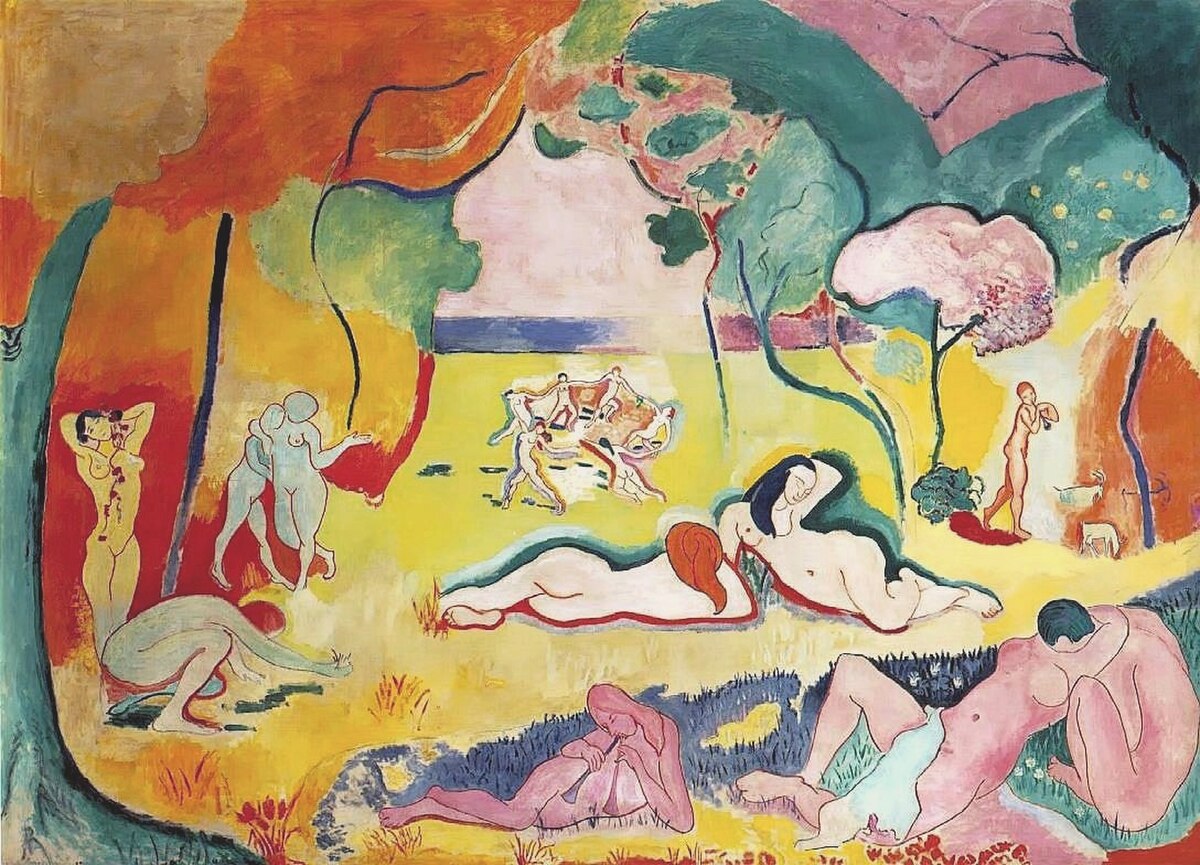
Izložena na Salonu nezavisnih u proleće 1906. godine, Radost života predstavlja Matisov najambiciozniji pokušaj da sintetiše hromatske inovacije fovizma sa velikom tradicijom pastoralnog akta koja se proteže od Đorđoneovog Seoskog koncerta preko Ticijana, Pusena i Sezanovih Kupačica. Slika je nastala u mesecima nakon fovističke senzacije na Jesenjem salonu 1905, i može se čitati kao Matisov odgovor na izazov demonstriranja da novi koloristički jezik može podržati monumentalnu, višefiguralnu kompoziciju, a ne samo oživeti portret ili pejzažnu skicu. Tema — nage figure koje leže, grle se, sviraju muziku i plešu u idličnom pejzažu — crpi iz dubokog rezervoara zapadne ikonografije dok je lišava narativne specifičnosti: ovo nisu mitološki likovi koji izvode prepoznatljivu priču, već anonimna tela koja nastanjuju zonu čistog čulnog zadovoljstva.
Prijem slike bio je mešovit ali značajan. Leo Štajn je kupio sliku sa Salona, nastavljajući njegov i Gertrudin obrazac ranog, odlučnog podrškavanja Matisovih najizazovnijih dela. Mladi Pablo Pikaso, koji je video sliku u stanu Štajnovih u ulici Fleurus, prema izveštajima je bio i impresioniran i provociran njenom ambicijom; mnogi istoričari umetnosti tvrdili su da su Gospođice iz Avinjona (1907) delimično zamišljene kao kompetitivan odgovor na Matisovu pastoralu, zamenjujući nasilje i konfrontaciju Matisovom lenošću i harmonijom. Slika je kasnije prešla u vlasništvo Alberta C. Barnsa, filadelfijskog farmaceutskog magnata čija je idiosinkratična kolekcija i obrazovni program obezbedio da bude viđena u pedagoškom kontekstu umesto u konvencionalnom muzejskom okruženju — okolnost koja je i obogatila i komplikovala njenu recepciju.
Formalna analiza
Kompozicija je organizovana kao niz uzajamno ukrštenih arabeski koje vode oko u razmahnutim, krivolinijskim putanjama preko ekspanzivnog platna. Figure su raspoređene u labavim grupacijama — par ljubavnika u srednjem planu, krug plesača u pozadini, ležeći aktovi u prvom planu — koje stvaraju vizuelne rime i odjeke bez nametanja krute geometrijske strukture. Pejzaž je prikazan u širokim, ravnim površinama zasićene boje — zlatnim žutim, dubokim zelenim, toplim ružičastim i hladnim lavandama — omeđenim sinuoznim konturnim linijama koje podsećaju na art nuvo i, udaljenije, na japanske drvoreze. Matis namerno potiskuje modelovanje i senku, spljošćavajući figure u dekorativne siluete koje postoje na istoj ravni kao pejzaž, proizvodeći efekat tapiserijskog jedinstva.
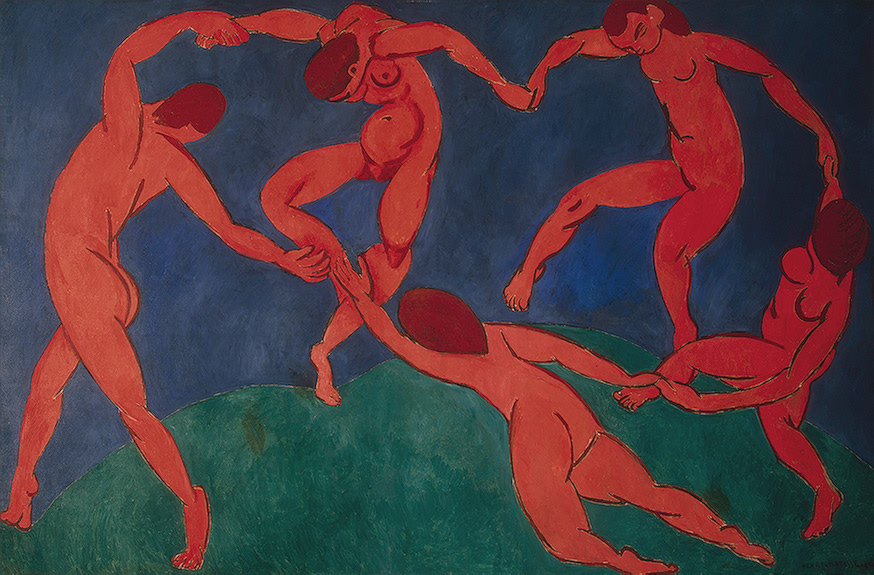
Prostorna logika slike je namerno anti-perspektivna. Pejzaž ne povlači se u dubinu kroz atmosfersku perspektivu ili smanjujuću skalu; umesto toga, pozadinske figure su često iste veličine ili veće od onih u prvom planu, a drveće i brežuljci funkcionišu kao uokvirujući elementi pre nego kao prostorni indikatori. Ova kompresija dubine služi Matisovom nadređenom cilju stvaranja slike koja se obraća posmatračevim čulima kroz boju i ritam, a ne kroz iluzionističku naraciju. Krug plesača u gornjoj pozadini — motiv koji će Matis ponoviti u monumentalnim slikama Ples iz 1909-1910 — uvodi kružni ritam koji kontrapunktira pretežno horizontalnom prostiranju kompozicije, stvarajući dinamičku napetost između odmora i ekstatičnog pokreta koja je centralna za emocionalni registar slike.
Značaj i nasleđe
Radost života jedno je od fundacionalnih dela modernizma dvadesetog veka, a njen uticaj zrači u višestrukim pravcima. Najneposrednije, ona je uspostavila Matisa kao vodećeg koloristu pariške avangarde i provocirala Pikasa na kompetitivan odgovor koji je proizveo Gospođice iz Avinjona — delo koje je zauzvrat inaugurisalo kubizam. Slika tako zauzima kauzalnu poziciju na samom izvoru dva velika rivalizirajuća pokreta ranog modernizma, fovizma i kubizma, a njena ambicija je postavila standard prema kome su merene naknadne velikoformatne modernističke kompozicije. Krug plesača, izdvojen i uvećan u Plesu (1910), postao je jedna od najprepoznatljivijih slika u celokupnoj modernoj umetnosti i direktno uticao na tretman figure kod umetnika od Ernsta Ludviga Kirhnera do Vilema de Kuninga.
Lokacija dela u Barnsovoj fondaciji dala mu je jedinstven umetničko-istorijski profil. Decenijama su restriktivne politike pristupa Fondacije značile da je slika daleko ređe reprodukovana i posećivana nego uporediva remek-dela u javnim muzejima, dajući joj auru ekskluzivnosti koja je paradoksalno pojačala njen legendarni status. Od preseljenja Fondacije u novu zgradu u centru Filadelfije 2012, slika je postala pristupačnija, omogućavajući široj publici da iskusi njene izvanredne dimenzije i hromatski intenzitet iz prve ruke. U okviru Barnsove instalacije, slika je izložena prema Barnsovim originalnim ansambl aranžmanima, okružena delima iz raznorodnih perioda i kultura — kontekst koji naglašava formalne odnose koje je Barns percipirao između Matisovih kolornih harmonija i onih afričke skulpture, srednjovekovnog metalnog zanatstva i pensilvanijske nemačke folk umetnosti, obogaćujući posmatračev susret neočekivanim vizuelnim korespondencijama.