Istorijski kontekst
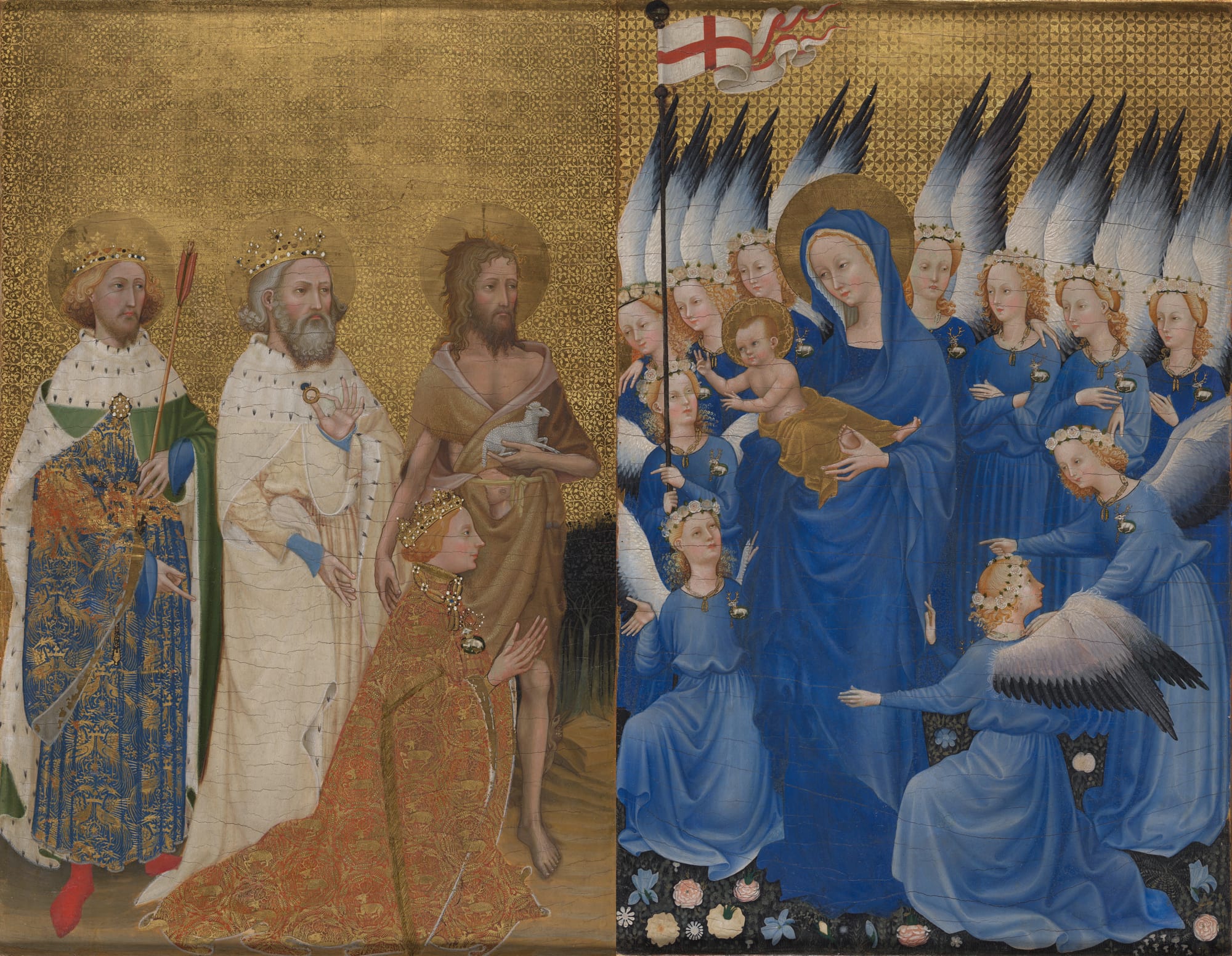
Viltonski diptih, nazvan po imanju Vilton Haus u Viltširu gde je zabeležen u kolekciji grofova od Penbroke od sedamnaestog veka naovamo, među najprefinjenijim je i najenigmatičnijim slikama koje su preživele iz kasnosrednjovekovne Engleske. Ovaj mali, prenosivi oltar sastoji se od dva hrastova panela povezana šarkama, od kojih svaki meri približno 53 sa 37 centimetara, oslikana temperom na jajetu preko blistave zlatne podloge. Levi panel prikazuje mladog kralja Ričarda II Engleskog (vladao 1377-1399) kako kleči u stavu poboženosti, predstavljen Bogorodici sa Detetom od strane tri stojeća sveca: Edmunda Mučenika, kralja Istočne Anglije, koji drži strelu svog mučeništva; Edvarda Ispovednika, koji nosi svoj atribut prstena; i Jovana Krstitelja, zaštitnika Ričardovog rodnog mesta, koji nosi Jagnje Božje. Desni panel prikazuje Bogorodicu Mariju koja drži Hrista Deteta, okruženu jedanaest anđela u zbijenom nebeskom skupu, sve postavljeno na ručno obrađenoj zlatnoj pozadini izvanredne luminoznosti. Format diptiha — dva panela projektovana da se zatvaraju poput knjige za transport i otvaraju za privatnu molitvu — identifikuje ovo kao lični devocioni predmet najvišeg kvaliteta, gotovo sigurno naručen od strane ili za samog kralja.
Slika je primer internacionalnog gotičkog stila, dvorske estetike koja je cvetala širom Evrope od otprilike 1375. do 1425. godine, karakterisane elegantnim linearnim ritmovima, bogatim kolorističkim harmonijama, delikatnim naturalističkim detaljima i sklonoću ka dragocenim materijalima. Stil je prevazilazio nacionalne granice, negovan istovremeno na dvorovima Francuske, Burgundije, Bohemije i Engleske, koji su bili povezani dinastičkim brakovima, diplomatskom razmenom i putujućim karijerama umetnika i zanatlija. Prefinjena elegancija Viltonskog diptiha — vijugavi padovi nabora draperije, idealizovane fizionomije, dragulju sličan intenzitet boja — smešta ga nepogrešivo unutar ove panevropske dvorske tradicije, ali su njegova specifična porekla predmet nerešene debate. Istoričari umetnosti ga pripisivali su engleskom slikaru koji je radio u internacionalnom gotičkom idiomu, francuskom umetniku aktivnom na engleskom dvoru ili majstoru obrazovanom u Italiji, i nikakav naučni konsenzus nije postignut. Odsustvo bilo kakvog dokumentarnog zapisa o narudžbini, u kombinaciji sa kosmopolitskim karakterom samog stila, čini definitivnu atribuciju nacionalnoj školi izuzetno teškom.
Formalna analiza
Blistavo ultramarin plava boja odora anđela dominira desnim panelom i predstavlja jednu od najspektakularnijih materijalnih odlika slike. Ovaj pigment, dobijen od lapis lazulija, bio je najskuplji kolorant dostupan srednjovekovnim slikarima, koštajući po težini više od zlata, a njegova laviš upotreba na odelima jedanaest anđela i Bogorodičinom ogrtaču predstavlja upadljiv prikaz materijalnog bogatstva u skladu sa kraljevskim pokroviteljstvom. Tehničko ispitivanje od strane konzervatorskog odeljenja Nacionalne galerije otkrilo je da je ultramarin nanesen u više slojeva preko pripremnog podslikavanja, gradeći dubinu i zasićenost boje koja plavoj daje draguljski sjaj. Zlatna pozadina, u međuvremenu, stvorena je nanošenjem zlatnog lista preko pripreme od bola (crvenkasto-smeđe gline) na gipsanoj površini panela, a zatim obradom zlata bušilicama i pisaljkama da se stvore razrađene reljefne šare vidljive u oreolima i pozadini. Ove obrađene šare uključuju delikatne cvetne motive i geometrijske dizajne koji hvataju i rasipaju svetlost, animirajući površinu treperećom luminoznošću koja bi bila posebno efektna u treperavoj svetlosti sveća kraljevske kapele.
Ikonografija i simbolika
Heraldički i simbolički program Viltonskog diptiha izuzetno je gust, kodirajući višestruke slojeve političkog i devocionog značenja. Ričard II je prikazan kako nosi odeždu od crvene i zlatne brokatne tkanine ukrašenu njegovim ličnim amblemom, belim jelenom, koji se takođe pojavljuje kao draguljem optočen broš na njegovim grudima. Svaki od jedanaest anđela na desnom panelu isto tako nosi značku belog jelena, detalj koji je protumačen kao znak njihove odanosti engleskom kralju — kao da je nebeska vojska član Ričardove sopstvene svite, noseći njegovu livreju u raju. Ogrlice od brmovog žbunja (Planta genista) koje nose anđeli dodatno pojačavaju dinastičke asocijacije sa Plantagenetima. Ričardov izbor svetaca zaštitnika sam po sebi je politički nabijen: Edvard Ispovednik, poslednji anglosaksonski kralj pre normanskog osvajanja, bio je predmet intenzivnog kraljevskog kulta koji je Plantagenetska dinastija promovisala da legitimiše svoj zahtev na engleski presto, a Ričard je pokazivao posebnu odanost njegovom kultu, usvajajući Ispovednikov grb (krst i pet lastavica) kao svoj sopstveni.
Jedan od najizuzetjnijih i najčešće diskutovanih detalja Viltonskog diptiha je sićušni prikaz Engleske vidljiv na zastavi koju drži anđeo na desnom panelu. Zastava, crveni krst Svetog Đorđa na beloj podlozi sa malim globusom na vrhu, sadrži unutar tog globusa minijaturnu naslikanu sliku zelenog ostrva u srebrnom moru, iznad koga se pojavljuje sićušan zamak ili tvrđava. Ovaj detalj, jedva vidljiv golim okom i otkriven tek tokom čišćenja i konzervacije, protumačen je kao prikaz same Engleske — sugerirajući da Hrist Dete, ka kome je zastava nagnuta, prima ili blagosilja kraljevstvo, ili alternativno, da anđeo vraća Englesku Ričardu pod božanskom sankcijom. Teološke i političke implikacije su duboke: slika implicira da je Engleska pod božanskom zaštitom, da je Ričardova vladavina sankcionisana od strane neba i da je odnos između vladara i božanstva intiman i ličan. Ovo stapanje kraljevskog autoriteta i božanske naklonosti odražava sakralnu koncepciju kraljevstva koju je Ričard aktivno promovisao i koja je u krajnjoj liniji doprinela barovskoj opoziciji koja je dovela do njegovog svrgavanja 1399. godine.
Spoljašnjost diptiha, vidljiva kada su paneli zatvoreni, predstavlja znatno drugačiju estetiku. Levi spoljni panel nosi Ričardov lični grb — pripisane grbove Edvarda Ispovednika spojene sa kraljevskim grbom Engleske — dok desni spoljni panel prikazuje belog jelena u ležećem položaju na ležaju od ruzmarina, okovanog ogrlciom u obliku krune, na polju obrađenog zlata. Ova spoljašnja slika belog jelena naslikana je sa delikatnošću i naturalističkom osetljivošću koja kontrastira sa hijeratičnijim, simboličkim karakterom unutrašnjih panela: krzno jelena prikazano je fmim potezima četke koji sugerišu meku teksturu dlake, a listovi ruzmarina su naslikani sa botaničkom preciznošću. Spoljašnjost je funkcionisala kao vrsta heraldičke identifikacione oznake, objavljujući kraljevski status vlasnika svakom ko bi naišao na zatvoreni diptih, dok je unutrašnjost otkrivala svij devocioni sadržaj samo kada je otvorena u privatnosti kraljevske kapele ili spavaće odaje.
Pitanje datiranja diptiha blisko je vezano za tumačenje njegovog političkog programa. Većina naučnika ga smešta između 1395. i 1399. godine, poslednjih godina Ričardove vladavine, kada je kralj konsolidovao svoju ličnu vlast i promovisao sve uzvišeniju koncepciju kraljevskog dostojanstva. Mladoliki izgled Ričarda na slici — pojavljuje se kao golobradi mladić od možda sedamnaest ili osamnaest godina — izazvao je alternativne sugestije da diptih komemoriše raniji trenutak, možda njegovo krunisanje 1377. godine u dobi od deset godina ili njegovo venčanje sa Anom Bohemskom 1382, sa kraljem prikazanim retrospektivno u mlađem dobu da naglasi božansku sankciju njegovog ranog preuzimanja vlasti. Dendrohrronološka analiza hrastovih panela, sprovedena od strane Nacionalne galerije, utvrdila je da je drvo posečeno nakon 1389. godine, podržavajući datiranje u devedesete godine četrnaestog veka za izvršenje slike. Sam opstanak diptiha je izuzetan: kao lični devocioni predmet povezan sa svrgnutim i ubijenim kraljem, lako je mogao biti uništen ili rasut nakon Ričardovog pada od strane Henrija Bolingbroka 1399. godine.
Recepcija i nasleđe
Viltonski diptih zauzima jedinstvenu poziciju u istoriji engleske umetnosti, predstavljajući najviše dostignuće panelnog slikarstva u srednjovekovnoj Engleskoj i jedno od retkih sačuvanih dela koja se mogu povezati sa engleskim kraljevskim dvorom. Njegova kombinacija tehničke virtuoznosti, materijalnog sjaja i ikonografske složenosti čini ga dokumentom izuzetnog bogatstva za razumevanje preseka umetnosti, politike i pobožnosti u kasnosrednjovekovnoj evropskoj kulturi. Uticaj slike na kasniju englesku umetnost teško je pratiti, delom zato što je tako malo panelnog slikarstva iz ovog perioda preživelo, ali njeno postojanje demonstrira da je engleski dvor bio potpuno uključen u najsofisticiranije umetničke struje kasnog četrnaestog veka u Evropi. Sada izložen u Nacionalnoj galeriji u Londonu, Viltonski diptih nastavlja da privlači pažnju i kao vrhunski lepi predmet i kao prozor u mentalni svet kralja čija je ambiciozna vizija svetog kraljevstva u krajnjoj liniji prevazišla političke realnosti svog vremena.