Istorijski kontekst
Venera Miloska otkrivena je 8. aprila 1820. od strane grčkog farmera po imenu Jorgos Kentrotas na egejskom ostrvu Milos (antički Melos), događaj koji će duboko oblikovati istoriju kolekcionarstva umetnosti i modernu imaginaciju antičke Grčke. Statua je pronađena u fragmentima unutar ruševina antičkog gimnazijuma, a okolnosti njenog otkupa od strane Francuske — koje su uključivale rivalske zahteve francuskih pomorskih oficira, osmanskih vlasti i grčkih ostrvljana — bile su prožete diplomatskim manevrima karakterističnim za antikvarski promet devetnaestog veka. Poklonjena kralju Luju XVIII i postavljena u Luvru 1821, skulptura je stigla u trenutku akutne kulturne potrebe: Francuska je nedavno bila prinuđena da vrati Veneru Mediči Italiji nakon Napoleonovog poraza, i Venera Miloska je odmah promovisana kao superiorna zamena, remek-delo koje bi potvrdilo Pariz kao svetsku prestonicu umetnosti. Natpis na sada izgubljenom postolju identifikovao je vajara kao “[Aleks]andros sin Menidov, građanin Antiohije na Meandru”, smestivši delo u kasnohelenistički period, mada su francuske vlasti prvobitno potisnule ovaj dokaz da bi održale fikciju datiranja u peti vek.
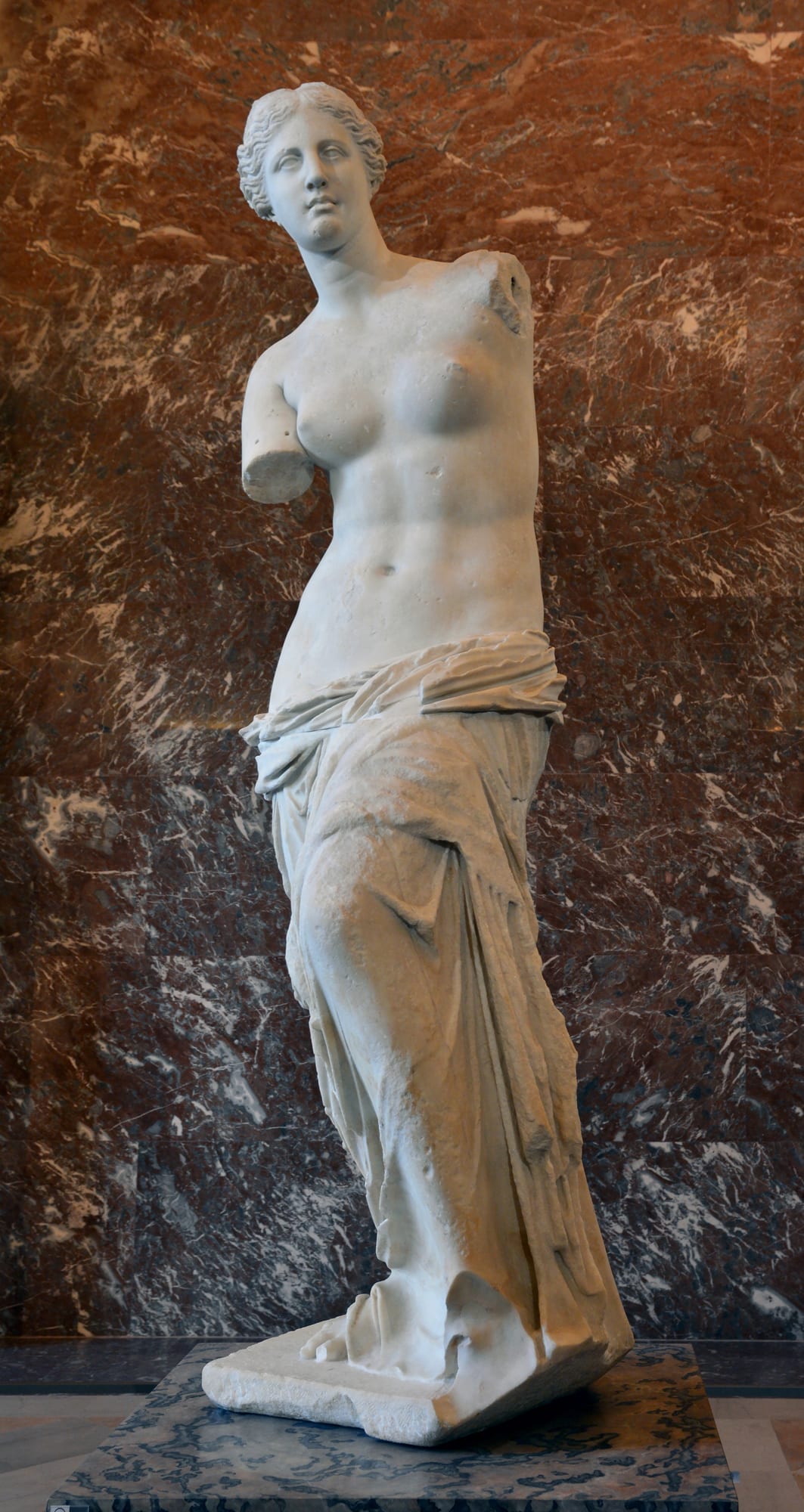
Statua prikazuje žensku figuru, gotovo univerzalno identifikovanu kao Afrodita (Venera u rimskoj tradiciji), u stojećem položaju nešto većem od prirodne veličine. Boginja je naga od pojasa nagore, dok joj je donji deo tela omotan teškom draperijom koja je skliznula do bokova, uhvaćena u poslednjem trenutku u nesigurnom rasporedu koji istovremeno skriva i otkriva. Stav figure organizovan je oko izražene S-krivine — sofisticiranog kontraposta u kome se težina oslanja na desnu nogu dok se levo koleno savija napred, gurajući bok spolja i stvarajući sinuozni ritam koji teče od nagnute glave kroz torzo do zaostale leve noge. Ova serpentinska kompozicija predstavlja helenističku razradu klasičnog kontraposta koji je pionirski razvio Poliklet u petom veku p.n.e., uvodeći torziju i dinamiku koje prevazilaze uzdržaniji prenos težine ranijih dela. Okretanje torza, blagi nagib ramena napred i nežna rotacija glave ulevo figure stvaraju mnoštvo uglova gledanja, pozivajući posmatrača da se kreće oko skulpture umesto da joj se suočava sa jednog frontalnog položaja.
Tretman tela primeruje helenističku sintezu klasičnog idealizma i nove, otvorenije čulne naturalizma. Torzo je modelovan sa suptilnom pažnjom prema osnovnoj muskulaturi i skeletnoj strukturi — nežna udubina sternuma, meki nabrek abdomena, prelaz od grudnog koša ka struku — ali su ova anatomska zapažanja podređena sveobuhvatnoj idealizaciji koja zaglađuje, usavršava i usavršava. Koža ima svetlucavi, gotovo prozirni kvalitet koji eksploatiše finu granulaciju parskog mermera, kamena cenjenog u antici za sposobnost propuštanja svetlosti do plitke dubine, proizvodeći toplu, životnu površinu. Draperija je, nasuprot tome, isklesana sa snažnim, duboko podsečenim naborima koji stvaraju izražene šare svetlosti i senke, uspostavljajući dramatičan teksturalni kontrapunkt glatkoj nagosti iznad. Ovo suprotstavljanje golog tela i teške tkanine — postupak sa dugom istorijom u grčkoj skulpturi — pojačava erotski naboj slike dok istovremeno demonstrira vajarovu virtuoznu komandu kontrastnih površina.
Formalna analiza
Nedostajuće ruke generisale su vekove spekulacija u vezi sa originalnom kompozicijom i atributima statue. Predložene su brojne rekonstrukcije: boginja je možda držala jabuku (igra reči na ime ostrva Milos, čije ime podseća na grčku reč za jabuku, melon), štit u kome je posmatrala svoj odraz (podsećajući na naoružanu Afroditu iz Kapue), ili ruku figure pratioca poput Aresa. Fragmenti ruke i šake koja drži jabuku navodno su pronađeni blizu statue ali su naknadno izgubljeni, komplikujući napore za konačnu rekonstrukciju. Što je izvesno, to je da su se ruke protezale od tela, stvarajući otvoreniju i prostorno ambiciozniju kompoziciju od zatvorenih silueta tipičnih za raniju grčku skulpturu. Paradoksalno, odsustvo ruku postalo je integralni deo modernog identiteta i estetskog privlačnosti statue — fragmentarno stanje daje figuri atmosferu misterije i nepotpunosti koja poziva na imaginativnu projekciju, pretvarajući specifičnu antičku sliku u otvoreni simbol.
Venera Miloska zauzima ključnu poziciju u istoriji grčke reprezentacije Afrodite. Tradiciju ženskog akta u monumentalnoj skulpturi inaugurisala je Praksitelova Afrodita Knidska (oko 350. p.n.e.), delo koje je skandalizovalo i oduševilo savremenike prikazujući boginju potpuno neodeven po prvi put. Venera Miloska se angažuje sa ovom tradicijom ali je transformiše: dok je Knidska Afrodita usvojila skroman gest prikrivanja (pudica poza), miloska figura ne pravi takav ustupak skromnosti, njene nedostajuće ruke onemogućavaju svako čitanje samosvesne ranjivosti. Polodrapiran format podseća na druge helenističke varijante, poput Afrodite iz Kapue i Venere Mediči, ali miloska verzija postiže monumentalnost i kompozicionu složenost koji je izdvajaju od ovih savremenika. Spoj formalne discipline petog veka — široki, planarni tretman lica, uzdržani izraz — sa helenističkim prostornim dinamizmom i čulnošću naveo je naučnike da delo okarakterišu kao “klasicizirajuće”, namernu retrospektivnu evokaciju ranijih ideala filtriranih kroz kasniju estetsku senzibilnost.
Kritička recepcija statue oblikovana je njenim preplitanjem sa francuskim nacionalnim identitetom i širom politikom kulturnog prestiža. Po dolasku u Luvr, odmah je uključena u narativ francuske kulturne suprematije, predstavljena kao najznačajnije preživelo delo antičke skulpture. Ovaj zahtev nije bio univerzalno prihvaćen — neki kritičari devetnaestog veka smatrali su figuru teškom i provincijalnom u poređenju sa elegancijom Venere Mediči — ali je težina institucionalne promocije i popularne fascinacije osigurala njen kanonski status. Pisci od Hajnriha Hajnea do Salvadora Dalija meditirali su o njenoj lepoti i fragmentarnom stanju; nadrealisti su bili posebno privučeni erotikom mutiliranog tela, pri čemu je Dali proizveo svoju slavnu Veneru Milosku sa fiokama (1936) kao psihoanalitički komentar na skrivene želje. U umetničko-istorijskoj nauci, statua je služila kao ključni spomenik u debatama o periodizaciji, klasicizmu i odnosu između originalnih grčkih dela i rimskih kopija.
Recepcija i nasleđe
Venera Miloska opstaje kao jedno od najposećenijih i najreprodukovanih dela u bilo kom muzeju, status koji pokreće pitanja o prirodi umetničke slave. Njen ikonični status duguje koliko istorijskoj slučajnosti — vremenu otkrića, francuskoj potrebi za kulturnim trofejom, evokativnoj moći njenog fragmentarnog stanja — toliko i njenim intrinzičnim estetskim kvalitetima, koji su, mada izuzetni, na ravni sa drugim helenističkim delima koja nemaju njenu slavu. Ipak, ovo zapažanje ne umanjuje dostignuće skulpture. U svom majstorskom kontrapostu, svetlucavoj obradi mermera, smelom suprotstavljanju nagih i drapiranih površina i sofisticiranom dijalogu sa klasičnom tradicijom, Venera Miloska predstavlja helenističku skulpturu na njenom najdovršenijem — delo koje gleda unazad ka idealima Fidije i Praksitela dok anticipira čulni materijalizam koji će karakterisati rimsku umetnost.