Istorijski kontekst
Ponovno otkriće grupe Laokoon 14. januara 1506. godine, u rimskom vinogradu blizu Titusovih termi na brdu Eskvilin, predstavlja jedan od najznačajnijih događaja u istoriji zapadne umetnosti. Papa Julije II, obavešten o nalazu, poslao je arhitektu Đulijana da Sangala da ga proceni; Sangalo je poveo mladog Mikelanđela, i prema svedočenju Sangalovog sina, stariji arhitekta je odmah identifikovao delo kao skulpturalnu grupu koju je Plinije Stariji hvalio u svojoj Prirodnoj istoriji kao „delo koje treba pretpostaviti svemu što su umetnosti slikarstva i vajarstva proizvele”. Plinije je pripisao grupu trojici vajara sa Rodosa — Agesandru, Atenodoru i Polidoru — i opisao je kako stoji u palati cara Tita. Da li je vatikanska skulptura upravo delo koje je Plinije video, rimska kopija helenističkog originala, ili originalna helenistička kreacija ostaje predmet naučne debate, komplikovane otkrićem srodnih skulpturalnih fragmenata u Sperlongi 1957. koji izgledaju kao rad iste rodske radionice.
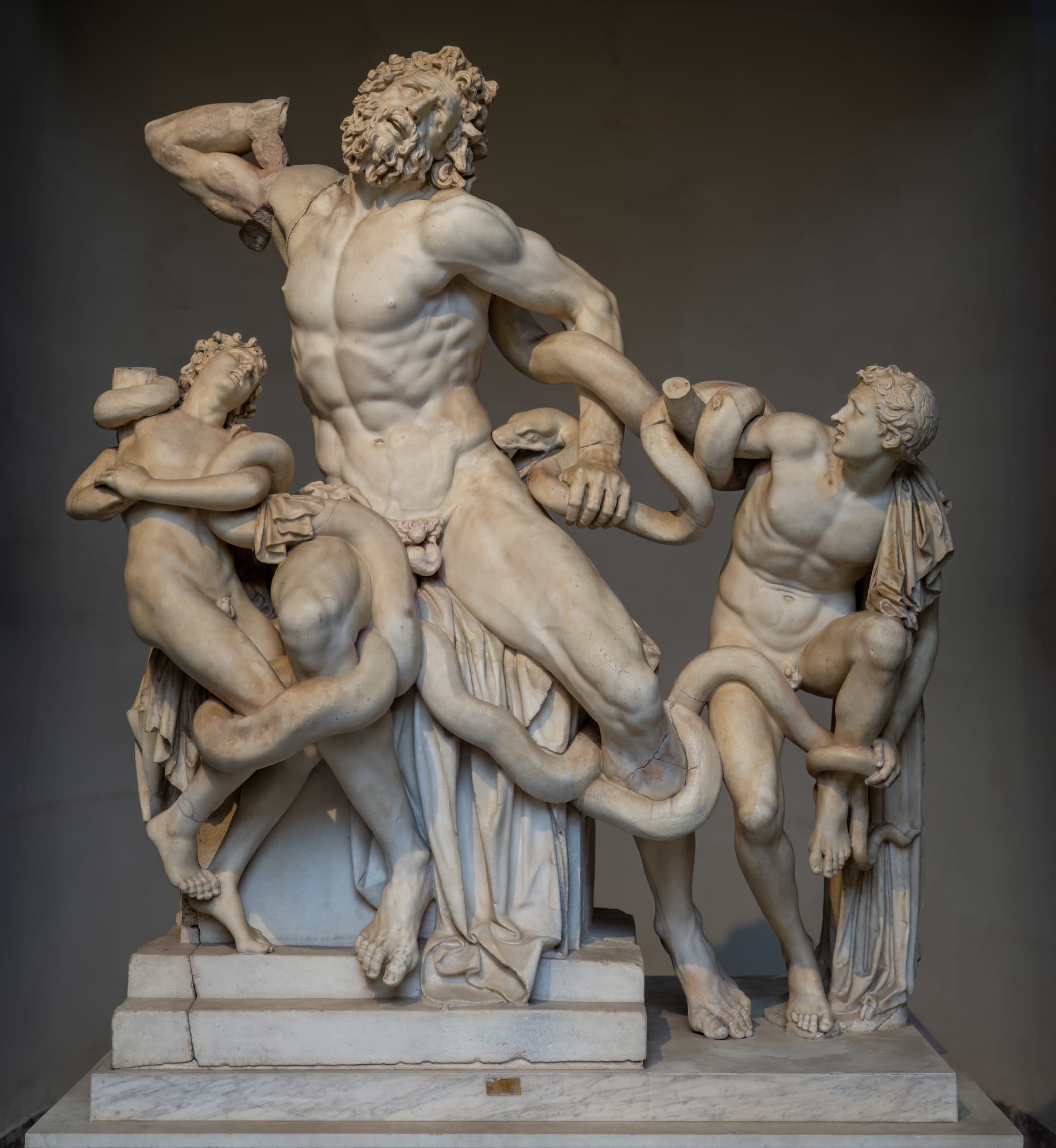
Tema je preuzeta iz ciklusa o Trojanskom ratu, najčuvenije ispričana u drugoj knjizi Vergilijeve Eneide. Laokoon, trojanski sveštenik Apolona (ili Neptuna, prema nekim izvorima), upozoravao je svoje sugrađane da ne prihvate drvenog konja Grka, bacivši koplje u njegov bok i izjavivši: „Bojim se Grka, čak i kad nose darove.” Za ovaj čin prkosa božanskom planu — bogovi su odredili propast Troje — Atena (ili Apolon) poslala je dve ogromne morske zmije da unište Laokoona i njegova dva sina na oltaru gde je sveštenik obavljao žrtvu. Skulpturalna grupa hvata kulminacioni trenutak ovog narativa: Laokoon, koji sedi na oltaru, obavijen je zavojima zmija, njegovo masivno torzo se uvija u agoniji dok pokušava da se istrgne; mlađi sin (desno od posmatrača) već podleže, dok se stariji sin (levo) bori da se oslobodi, lica ispunjenog preplašenom nadom.
Formalna analiza
Anatomski prikaz centralne figure predstavlja jedno od vrhovnih dostignuća antičke skulpture. Laokoonova muskulatura prikazana je sa gotovo kliničkom preciznošću — rectus abdominis, spoljašnji kosi mišići, serratus anterior i interkostalni mišići artikulisani su sa specifičnošću koja sugeriše studiranje prema modelu, pa ipak preterivanje određenih formi, naročito nabujani pektorali i duboko izbrazdani trbušni zid, transcendira naturalizam u potrazi za ekspresivnim intenzitetom. Telo je organizovano oko moćne dijagonale koja se proteže od podignute desne ruke (renesansna restauracija, sada zamenjena originalnom savijenom rukom otkrivenom 1906. od strane Ludviga Polaka u rimskoj kamenorezačkoj radionici) kroz uvrnuto torzo do ispružene leve noge, stvarajući dinamičnu, nestabilnu kompoziciju koja prenosi nasilje i očajanje borbe. Zmije funkcionišu ne samo kao narativni elementi već i kao kompozicioni instrumenti, njihova sinuozna tela spajaju tri figure u jednu piramidaku grupu dok njihovi zavoji ponavljaju i pojačavaju uvijene forme ljudskih tela.
Izraz lica Laokoona jedan je od najanaliziranijih detalja u čitavoj istoriji umetnosti. Usta su otvorena u kriku — ne punom urliku već uzdržanom stenjanju, čelo je naborano od bola, oči podignute u molbi prema ravnodušnim nebesima. Ovaj izraz postao je žarišna tačka Johanove Joahima Vinkelmana, utemeljujuće umetničko-istorijske analize u njegovim Mislima o imitaciji grčkih dela (1755), u kojoj je argumentovao da Laokoon ilustruje grčki ideal „plemenite jednostavnosti i mirne veličine” (edle Einfalt und stille Grosse). Za Vinkelmana, Laokoonova uzdržanost pred ekstremnom patnjom demonstrirala je grčku sposobnost da potčini fizičku agoniju duhovnom dostojanstvu — trijumf duše nad telom. Ovo čitanje, koje je postalo izuzetno uticajno u oblikovanju neoklasične estetike, osporili su kasniji naučnici koji primećuju da emocionalni intenzitet skulpture, njen teatralni patos i virtuozno prikazivanje pateće puti jasno smestaju delo u helenističku baroknu tradiciju, daleko od spokojnog klasicizma koji je Vinkelman na njega projicirao.
Gothold Efraim Lesingov epohalani esej Laokoon: Ogled o granicama slikarstva i poezije (1766) uzeo je skulpturu kao polaznu tačku za sistematsko ispitivanje fundamentalnih razlika između vizuelne i književne umetnosti. Lesing je argumentovao da dok Vergilije može opisati Laokoona kako vrišti „strašnim krikom” (clamores horrendos), vajar je s pravom izabrao da prikaže uzdržaniji izraz, jer vizuelne umetnosti, koje prikazuju jedan zamrznuti trenutak umesto temporalne sekvence, moraju izabrati „najbremenitiji” trenutak — onaj koji dozvoljava mašti da dopuni ono što je prethodilo i ono što će uslediti. Širom otvorena usta, tvrdio je Lesing, bila bi ružna u mermeru, kršeći obavezu vizuelnih umetnosti prema lepoti, dok u poeziji, gde krik prolazi u trenutku, takvo ograničenje ne važi. Dok su Lesingove specifične tvrdnje o lepoti i dekorumu prevaziliđene, njegova šira uvida — da različiti mediji imaju različite izražajne kapacitete ukorenjene u njihovim materijalnim uslovima — ostaje fundacionalna za estetiku i teoriju medija.
Uticaj ponovnog otkrića Laokoona na renesansnu i kasniju umetnost bio je neposredan i dubok. Mikelanđelo, koji je bio prisutan na ili blizu iskopavanja, upilo je lekcije anatomskog ekspresionizma i dinamičke kompozicione napetosti, uticaji vidljivi u delima od Zarobljenih robova do Strašnog suda. Rafael ga je studirao, kao i Ticijan, čija je sopstvena interpretacija teme (oko 1565) transponovala kompoziciju u slikani pejzaž. Skulptura je postala obavezan predmet studiranja za umetnike koji su se školovali u Rimu, a gipsani odlivi distribuirani su akademijama širom Evrope, obezbeđujući da njen formalni vokabular — uvrnuto torzo, agonizovan izraz, piramidalno grupisanje isprepletenih figura — uđe u mejnstrim evropske umetnosti. Barokni vajari, pre svih Bernini, eksplicitno su se oslanjali na njegov primer u delima kao što je David (1623-1624), koji deli Laokoonovu dinamičnu torziju i intenzitet otvorenih usta.
Značaj i nasleđe
Laokoon nastavlja da funkcioniše kao kritički probni kamen u diskusijama o patnji, lepoti i granicama umetničke reprezentacije. Njegov uticaj se proteže izvan vizuelnih umetnosti u filozofiju (Šopenhauer i Niče su se obojica bavili njime), psihoanalizu (Frojd je u njemu video sliku primalne anksioznosti) i kulturnu teoriju. Tekuća debata o njegovom datiranju — da li je helenistički original iz drugog veka pre nove ere ili rimska carska narudžbina iz prvog veka nove ere — ima implikacije za naše razumevanje odnosa između grčke i rimske umetnosti, originalnosti i kopiranja, i mehanizama kulturne transmisije u antičkom Mediteranu. Bez obzira na njegov precizan datum i poreklo, Laokoon ostaje ono što je Plinije proglasio: delo koje izaziva poređenje sa bilo čim što su ljudske ruke proizvele, spomenik sposobnosti skulpture da učini vidljivim nevidljive krajnosti ljudskog iskustva.