Istorijski kontekst
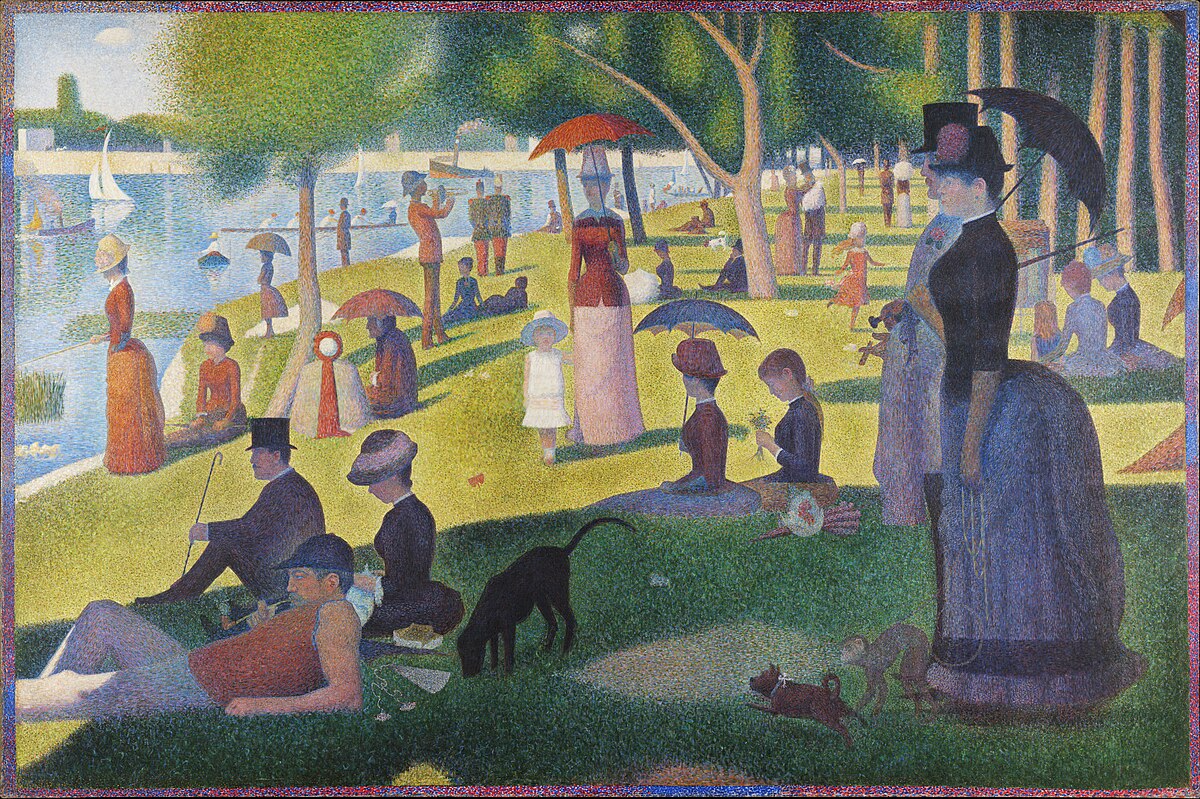
Nedeljno popodne na ostrvu La Grande Jatte Žorža Seraa jedno je od najambicioznijih i intelektualno najrigoroznijih slika devetnaestog veka — monumentalno platno koje je nastojalo da impresionizam postavi na sistematičnu, naučnu osnovu, istovremeno stvarajući sliku modernog dokolice prožetu gotovo hijeratičnom svečanošću. Sera je započeo rad 1884. godine, u dvadeset četvrtoj godini života, i radio je na njemu približno dve godine, izradivši preko šezdeset pripremnih uljanih skica i crteža (croqueton i etude) pre nego što je stigao do konačne kompozicije. Slika prikazuje nedeljno popodne na Ile de la Grande Jatte, uskom ostrvu na Seni severozapadno od Pariza koje je služilo kao popularno izletište za Parižane različitih društvenih slojeva. Kada je završeno delo izloženo na osmoj i poslednjoj izložbi impresionista u maju 1886, odmah je polarizovalo mišljenja i efektivno podelilo impresionistički pokret na dva tabora: originalne impresioniste, koji su radili intuitivno na osnovu direktnog posmatranja, i neoimpresioniste, koji su nastojali da sistematizuju otkrića pokreta kroz rigoroznu primenu nauke o bojama.
Formalna analiza
Tehnika koju je Sera razvio za La Grande Jatte — različito nazivana pointilizam, divizionizam ili hromoluminarizam (termin koji je sam Sera preferirao) — podrazumevala je nanošenje sićušnih, diskretnih tačkica čiste, nepomešane boje postavljenih jedne pored druge na površini platna. Umesto mešanja pigmenata na paleti, što je neizbežno prigušivalo njihov intenzitet kroz subtraktivno mešanje boja, Sera je postavljao tačkice komplementarnih i srodnih boja jedne pored drugih, koje su trebale da se optički pomešaju u oku posmatrača na odgovarajućoj udaljenosti, proizvodeći nijanse veće luminoznosti i živosti nego što bi bilo koje fizičko mešanje moglo postići. Ovo aditivno optičko mešanje bilo je utemeljeno na teorijama boja Mišela Ežena Ševrela, čiji je De la loi du contraste simultané des couleurs (1839) sistematizovao principe simultanog kontrasta, i Ogdena Ruda, čija je Moderna hromatika (1879) obezbedila naučni okvir za razumevanje kako se boje postavljene jedne pored drugih perceptivno prepliću. Sera je proučavao ove tekstove sa metodičnom preciznošću naučnika, i njegova slikarska tehnika predstavlja možda najpostojaniji pokušaj u istoriji umetnosti da se optička teorija direktno prevede u slikarsku praksu.
Ikonografija i simbolika
Kompozicija La Grande Jatte organizovana je sa geometrijskom strogošću koja stoji u namernom kontrastu sa naizgled opuštenom temom dokolice. Približno pedeset figura — koje šetaju, sede, pecaju, igraju se, neguju decu, šetaju pse — raspoređeno je u pažljivo kalibrisan prostorni plan koji se kreće od zasenčenog prednjeg plana, kroz osunčani srednji plan, do svetlucave reke i daleke obale iza nje. Ipak, uprkos njihovim naturalističkim aktivnostima, figure su prikazane sa čudnom, zamrznutom mirnošću koja je upadala u oči posmatračima od prve izložbe slike. Njihovi stavovi podsećaju na profilne prikaze i krutu frontalnost egipatskih grobnih slika i asirskih reljefa — namerni arhaizam koji je Sera koristio da svom modernom predmetu dâ ozbiljnost i trajnost drevne umetnosti. Žena sa suncobranom u desnom prednjem planu, sedele figure u senci, stojeći čovek sa cilindrrom — svi su prikazani kao pojednostavljeni, gotovo geometrijski volumeni, čistih i čvrstih kontura, sa pokretima zaustavljenim usred kretanja kao da su uhvaćeni u večnoj sadašnjosti. Ova monumentalna mirnoća pretvara scenu nedeljnog odmora u nešto što se približava sekularnom ritualu, modernoj sakralnoj slici.
Socijalni sastav scene bio je predmet značajne umetničko-istorijske analize. Ostrvo je privlačilo posetioce iz čitavog pariskog društvenog spektra — buržoaske porodice u nedeljnom odelu, parove iz radničke klase, vojnike na odsustvu, dadilje sa decom — i Seraova slika odražava ovu mešavinu sa pažljivom sociološkom preciznošću. Naučnici su identifikovali specifične društvene tipove po njihovoj odeći, aksesoarima i stavovima: žena koja peca u levom prednjem planu nosi jednostavnu haljinu radničke klase; par na krajnjoj desnoj strani — on u cilindru, ona sa turnirom, majmun na uzici — predstavljaju visoku buržoaziju ili možda demimonde (majmun i ženin preuveličani turnir tumačeni su kao kodirane reference na prostituciju, uobičajena viktorijanska vizuelna konvencija). Slika tako funkcioniše kao presek pariskog društva na odmoru, demokratsko mešanje klasa na ostrvu služi kao mikrokosmos samog modernog grada. Ipak, figure ne komuniciraju jedna sa drugom; svaka postoji u privatnom mehuru samoće, njihova blizina naglašava pre nego što ublažava njihovu izolaciju — oštra kritika atomizacije modernog urbanog života.
Tretman svetlosti i senke na slici jednako je rigorozno konstruisan kao i njen socijalni sadržaj. Istoričari umetnosti analizirali su ugao i pravac senki koje bacaju figure i drveće, zaključivši da scena prikazuje specifično doba popodneva — približno 16 časova letnjeg nedeljnog dana, sa suncem na zapadnom nebu koje baca duge senke na istok. Osunčana područja prikazana su toplim žutim, narandžastim i zelenim tonovima, dok su senke — koje zauzimaju veliki deo prednjeg plana — sastavljene od hladnih plavih, ljubičastih i tamnozelenih tonova, čija komplementarna toplina i hladnoća demonstriraju Ševrelov zakon simultanog kontrasta. Ivica slike je sama po sebi značajan element: Sera je naknadno dodao oslikani ram od malih tačkica u komplementarnim bojama, dizajniran da posreduje između boja slike i boje okolnog zida, sprečavajući efekte simultanog kontrasta koji bi inače iskrivili pažljivo kalibrisane hromatske odnose slike na njenim ivicama.
Ogroman rad uložen u La Grande Jatte je zapanjujući. Radeći sa sićušnim četkicama da nanese milione pojedinačnih tačkica boje — od kojih je svaka promišljena hromatska odluka — Sera je proveo približno dve godine na platnu koje meri preko dva sa tri metra. Pripremni proces bio je jednako mukotrpan: izradio je desetine uljanih skica (croqueton) na licu mesta na Grande Jatte, hvatajući svetlost, figure i predeo u brzim beleškama u impresionističkom stilu, a zatim se povlačio u atelje da sintetizuje ova zapažanja u rigorozno strukturisanu konačnu kompoziciju. Kontrast između spontanih, slobodnih skica i pedantno konstruisane slike sažima fundamentalnu razliku između impresionizma i neoimpresionizma: dok su impresionisti cenili neposredni, subjektivni utisak, Sera je nastojao da racionalizuje i sistematizuje taj utisak kroz primenu naučnog zakona. Rezultat je paradoks — slika dokolice stvorena kroz izuzetan rad, slika spontanog uživanja stvorena sa mehaničkom preciznošću.
Ironična napetost slike između njene teme (opuštanje, zadovoljstvo, slobodno vreme nedelje) i njenog formalnog karaktera (krutost, mirnoća, geometrijski red) učinila je delo beskonačno generativnim za kulturnu interpretaciju. Kompozitor i tekstopisac Stiven Sondajm prepoznao je ovu napetost kada je sliku učinio predmetom svog mjuzikla nagrađenog Pulicerovom nagradom Nedelja u parku sa Džordžom (1984), koji zamišlja kreativni proces iza dela i razmišlja o odnosu između umetnosti i života, povezanosti i izolacije, želje za trajnošću i neminovnosti promene. Sondajmov mjuzikl hvata nešto suštinsko u slici: njen istovremeno slavljenički i melanholični karakter, njen prikaz sveta u kome su ljudska bića okupljena u neposrednoj blizini a ipak ostaju fundamentalno sama, svako zatočeno u savršenoj geometriji Seraove vizije.
Recepcija i nasleđe
Sera je umro 1891. godine u trideset prvoj godini života, završivši samo sedam monumentalnih platana u svojoj kratkoj karijeri. La Grande Jatte ostaje njegovo vrhunsko dostignuće — slika koja je sintetizovala opservacione inovacije impresionizma sa kompozicionom strogošću klasične tradicije i intelektualnom ambicijom moderne nauke, stvarajući sliku koja je istovremeno tehnički bravuroza, socijalni dokument i duboka meditacija o paradoksima modernog života. Njen uticaj se prostirao kroz neoimpresionistički pokret (Sinjak, Kros, Lis) i u eksperimente sa bojom fovista, geometrijsku apstrakciju kubista i sistematske procedure pokreta dvadesetog veka od Op arta do digitalne pikseline umetnosti. Slika je ušla u kolekciju Art Instituta u Čikagu 1926. godine, gde je ostala najslavnije delo muzeja i jedno od neizostavnih remek-dela zapadne umetnosti.