Istorijski kontekst
Sulejmanija džamija, završena 1557. godine, predstavlja krunsko dostignuće Mimara Sinana (oko 1488-1588), najslavnijeg arhitekte u osmanskoj istoriji, i stoji kao arhitektonsko otelotvorenje Osmanskog carstva na svom zenitu pod sultanom Sulejmanom I, na Zapadu poznatim kao Sulejman Veličanstveni (vladao 1520-1566). Sinan, koji je služio kao glavni carski arhitekta (mimar baši) gotovo pedeset godina pod tri uzastopna sultana, projektovao je stotine objekata širom osmanskih teritorija, ali je Sulejmaniju smatrao svojim “kalfenskim delom” (kalfalik eseri) — karakteristično skromna procena zgrade koju većina naučnika smatra vrhovnim izrazom osmanske klasične arhitekture. Džamija nije zamišljena kao izolovana struktura, već kao središte ogromnog kulije (dobrotvornog kompleksa) koji je obuhvatao četiri medrese, medicinsku školu, bolnicu, javnu kuhinju (imaret), karavansaraj, hamam, prodavnice i turbeta Sulejmana i njegove supruge Hurem sultan. Ovaj sveobuhvatni program verskih, obrazovnih i socijalnih institucija odražavao je osmansku carsku ideologiju sultana kao duhovnog vođe i dobročinog zaštitnika svojih podanika.
Arhitektonski izazov s kojim se Sinan suočio bio je istovremeno tehnički i simbolički. Osvajanje Konstantinopolja 1453. godine dovelo je Osmanlije u direktan fizički i kulturni odnos sa vizantijskim nasleđem, pre svega sa Ajom Sofijom (537. n.e.), čija je masivna kupola — 31 metar u prečniku — ostala neprevaziđena čitav milenijum. Osmanska arhitektura džamija od petnaestog veka nadalje vodila je kontinuirani dijalog sa ovim vizantijskim primerom, nastojeći da dostigne i na kraju prevaziđe prostorno i strukturalno dostignuće Justinijanove crkve, istovremeno prilagođavajući centralizovani kupolni plan liturgijskim zahtevima islamskog bogosluženja. Sulejmanija predstavlja Sinanov najdoslednije rešen odgovor na ovaj izazov, postižući sintezu strukturalne jasnoće, prostorne veličanstvenosti i svetlosnog unutrašnjeg prostora koja se izjednačava sa Ajom Sofijom po ambiciji dok je prevazilazi u arhitektonskoj koherentnosti i racionalnom strukturalnom izrazu.
Formalna analiza
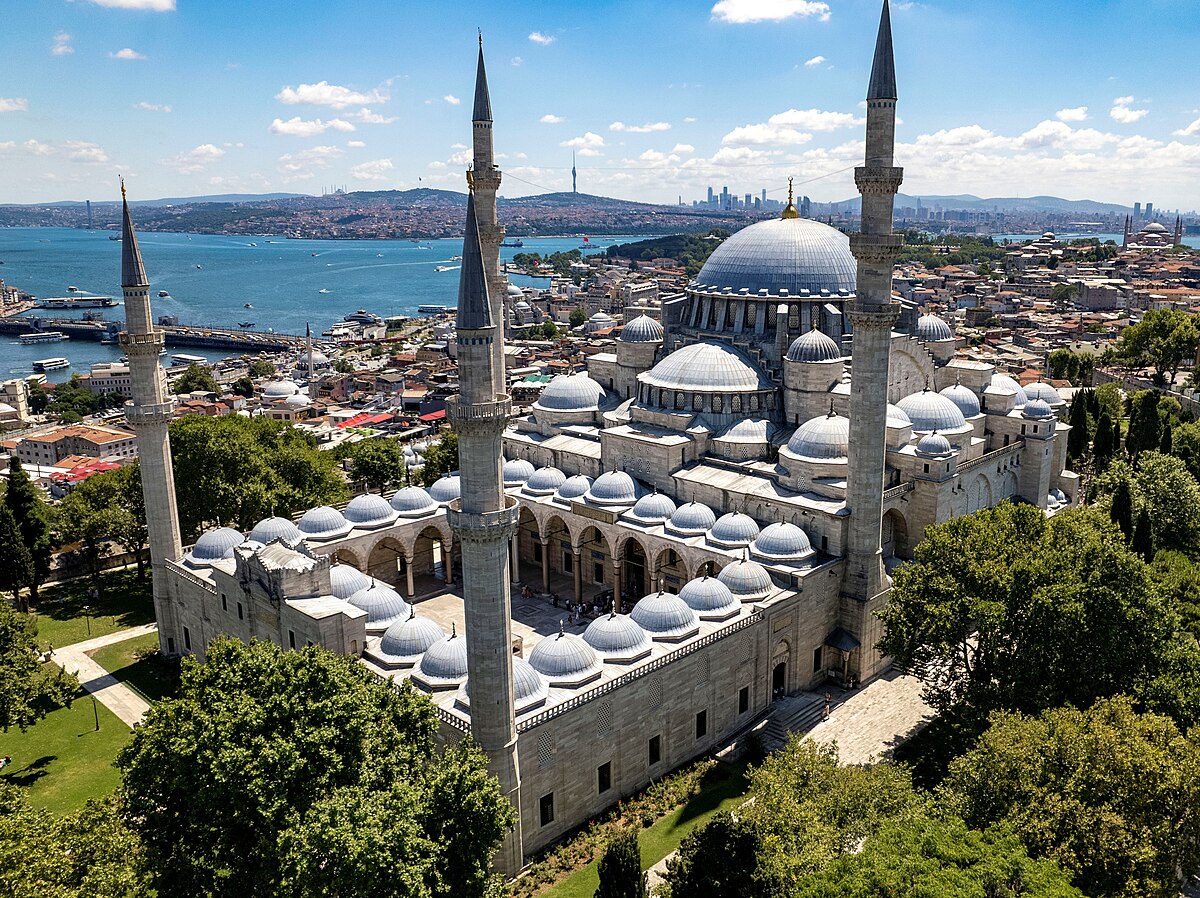
Sulejmanija džamija organizovana je oko centralne kupole prečnika 26,5 metara koja se uzdiže do visine od 53 metra iznad poda. Ova kupola je ojačana duž ose kible (pravca ka Meki) dvema polukupolama jednakog prečnika, koje su zauzvrat podržane manjim eksedrama, stvarajući kaskadnu hijerarhiju zakrivljenih površina koja usmerava ogromni bočni potisak centralne kupole ka tlu kroz racionalno čitljiv strukturalni sistem. Na poprečnoj osi, kupola je podržana masivnim stubovima i ojačana čvrstim zidovima bočnih brodova, koji su prošupljeni redovima lučnih prozora. Rezultirajući unutrašnji prostor je ogromna, ujedinjena molitvena dvorana obasjana prirodnim svetlom iz preko dvesta prozora, uključujući vitražne prozore čuvenog glazera Ibrahima Pijanca (Sarhoš Ibrahim), čiji prozori bisernih tonova na zidu kible filtriraju i boje svetlost koja ulazi u najsvetiji deo unutrašnjosti.
Spolja se ukazuje uzlazna piramidalna silueta izuzetne vizuelne logike: sporedne kupole i polukupole stepenasto se uzdižu ka centralnoj kupoli u graduisanom nizu, dok četiri vitka minareta — dva sa po dva balkona i dva sa po tri — obeležavaju uglove dvorišta i molitvene dvorane, uspostavljajući vertikalne kontrapunkte horizontalnom rasprostiranju kupolne kompozicije. Proporcionalni sistem koji upravlja odnosom između prečnika kupole, visine zgrade i rasporeda minareta bio je predmet opsežne analize, pri čemu su naučnici identifikovali geometrijske i harmonične odnose koji ukazuju na sofisticiranu matematičku projektantsku metodologiju. Unutrašnja dekoracija je uzdržana u poređenju sa kasnijim osmanskim džamijama: zidovi su pretežno od belog krečnjaka i mermera, sa Iznik pločicama koncentrisanim oko mihraba i zida kible, i kaligrafskim medaljonima majstora kaligrafa Hasana Čelebija koji krase kupolu i pandantive. Ova uzdržanost pojačava arhitektonski efekat, dozvoljavajući prostornim kvalitetima svetlosti, proporcije i strukturalnog izraza da dominiraju iskustvom posetioca.
Recepcija i nasleđe
Sulejmanija džamija se široko smatra definišućim spomenikom osmanske klasične arhitekture i jednom od velikih građevina svetske arhitekture. Njen značaj deluje na više nivoa: kao podvig strukturalnog inženjerstva koji je rešio problem centralizovanog kupolnog prostora velikih razmera sa neviđenom jasnoćom; kao urbana intervencija koja je oblikovala panoramu i topografiju Istanbula, krunišući Treći breg monumentalnom siluetom vidljivom sa Zlatnog roga i Bosfora; i kao izraz carske ideologije koja je komunicirala moć, pobožnost i kulturnu sofisticiranost osmanske države u trenutku njenog najvećeg teritorijalnog i političkog prostiranja.
Sinanovo dostignuće u Sulejmaniji duboko je uticalo na dalji razvoj osmanske arhitekture džamija. Njegov učenik Davud aga i kasniji arhitekti poput Sedefkara Mehmeda age (projektant Sultan Ahmed džamije ili “Plave džamije”, završene 1616.) radili su unutar formalnog i strukturalnog vokabulara uspostavljenog u Sulejmaniji, mada nijedan nije postigao isti stepen prostornog jedinstva i strukturalne lucidnosti. Uticaj zgrade proteže se i izvan osmanske tradicije: evropski arhitekti i putnici od šesnaestog veka nadalje prepoznavali su Sulejmaniju kao remek-delo, a njen racionalni strukturalni izraz i svetlosni prostorni kvaliteti poređeni su sa savremenim dostignućima renesansne arhitekture u Italiji. Označena kao deo UNESCO lokaliteta svetske baštine koji obuhvata Istorijska područja Istanbula, Sulejmanija nastavlja da funkcioniše kao aktivna džamija, služeći svoju prvobitnu svrhu zajedničkog bogosluženja dok istovremeno stoji kao svedočanstvo kreativne sinteze strukturalne ambicije, estetske prefinjenosti i socijalne vizije koja karakteriše najveća dela islamske arhitekture.