Istorijski kontekst
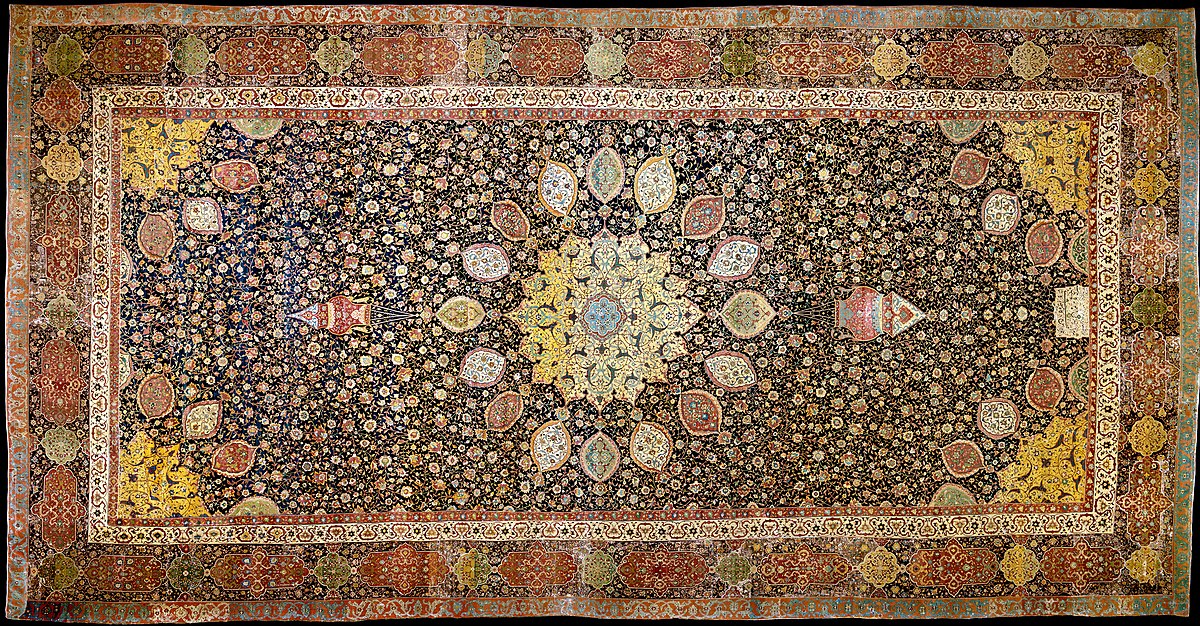
Ardabilski ćilim je jedan od para izvanrednih ćilimova napravljenih za Svetilište šeika Safija al-Dina Ardabilija u gradu Ardabilu, u severozapadnom Iranu. Šeik Safi al-Din (1252-1334) bio je eponimni osnivač safavidskog reda, a njegovo svetilište bilo je mesto dubokog verskog i dinastičkog značaja za safavidsku dinastiju, koja je vladala Iranom od 1501. do 1736. Ćilim nosi natpis u kartuši na jednom kraju koji uključuje dvostih iz ode persijskog pesnika Hafiza iz četrnaestog veka — „Nemam utočišta na svetu osim tvog praga / Moja glava nema počivališta osim ovih vrata” — zajedno sa datumom 946. AH (1539-1540. nove ere) i imenom „delo roba praga, Maksuda iz Kašana.” Da li je Maksud bio dizajner ćilima, glavni tkač ili naručilac ostaje predmet naučne debate, ali atribucija centru za tkanje ćilimova u Kašanu smešta delo u jednu od najsofisticiranijih tekstilnih tradicija islamskog sveta.
Ćilim je nabavljen od strane Victoria and Albert muzeja 1893. godine, pod okolnostima koje odražavaju složenu dinamiku kulturnog nabavljanja iz kolonijalnog doba. Mančesterska firma Ziegler & Co., koja je upravljala radionicama ćilimova u Iranu, kupila je ćilimove od svetilišta, a V&A je osigurao jedan od para uz zalaganje i finansijsku podršku Vilijama Morisa, dizajnera, pisca i vodeće ličnosti pokreta Umetnosti i zanati. Moris, koji je imao duboko poznavanje i divljenje prema islamskim tekstilnim umetnostima, prepoznao je vrhunski kvalitet ćilima i pozvao muzej da ga nabavi, navodno ga proglasivši delom „singularnog savršenstva.” Drugi, oštećeniji ćilim iz para nabavio je Los Angeles County Museum of Art. Ardabilski ćilim V&A muzeja izložen je u posebno dizajniranoj galeriji sa kontrolisanom klimom — trenutno u Jameel galeriji islamske umetnosti — gde se osvetljenje namerno drži na niskom nivou radi zaštite krhkih vunenih i svilenih vlakana.
Formalna analiza
Ardabilski ćilim meri zapanjujućih 10,51 sa 5,34 metra i sadrži procenjenih 25 do 30 miliona ručno vezanih čvorova, sa gustinom od približno 5.300 čvorova po kvadratnom decimetru — nivo tehničke profinjenosti koji predstavlja apsolutni vrhunac persijske tradicije tkanja ćilimova. Osnova se sastoji od niti svile za osnovu i potku, na kojima je vuneni čvor vezan korišćenjem asimetričnog (seneh ili persijskog) čvora, proizvodeći površinu izuzetne finoće i preciznosti koja omogućava prikazivanje najmanjih ornamentalnih detalja.
Dizajn je organizovan oko centralnog sunčanog medaljona — šesnaestokrake zvezde od koje se šire dva nivoa ogivalnih privezaka — postavljenog na duboko indigo-plavo polje gusto prekriveno isprepletenim uzorkom spiralnih loza, palmeta, oblačnih traka i lotosovih cvetova. Dve džamijske lampe, prikazane u nešto različitim veličinama da stvore iluziju perspektive, vise sa vertikalne ose medaljona, sugerirajući pogled odozgo na kupolu i pojačavajući vezu ćilima sa sakralnom arhitekturom svetilišta. Bordura se sastoji od širokog centralnog pojasa kartuša i rozeta flankiranog užim zaštitnim trakama recipročnih arabesknih obrazaca. Paleta — u kojoj dominiraju indigo, šafranski žuti, bledo zeleni, krem i ružičasti tonovi — postignuta je prirodnim bojilima i zapažena je po svojoj tonalnoj harmoniji i hromatskoj suptilnosti. Odnos između centralnog medaljona i četvrtinskih segmenata medaljona koji se pojavljuju u četiri ugla stvara osećaj beskonačnog prostiranja, kao da je vidljivi ćilim prozor na neograničeno polje ornamenta — prostorni koncept sa dubokim korenima u islamskoj estetskoj filozofiji, gde beskonačni obrazac služi kao metafora za bezgraničnost božanskog stvaranja.
Značaj i nasleđe
Ardabilski ćilim široko je priznat kao najfiniji sačuvani primer klasičnog persijskog tkanja ćilimova i jedno od vrhunskih dostignuća islamskih dekorativnih umetnosti. Njegova tehnička virtuoznost — sama gustina i preciznost čvorovanja, sofisticiranost hemije boja, složenost dizajna — predstavlja nivo zanata koji je zahtevao veliku, visoko kvalifikovanu radionicu koja je radila tokom dužeg perioda (procene se kreću od tri do deset godina za jedan ćilim ovog obima). Delo tako otelotvoruje ne samo individualni umetnički genije već kolektivnu tradiciju akumuliranog znanja u tekstilnim umetnostima, prirodnom bojenju i matematičkom dizajnu koja je bila među najnaprednijima u ranom modernom svetu.
Uticaj ćilima na kasniju zapadnu apresijaciju islamske umetnosti bio je dubok. Morisovo učešće u njegovom nabavljanju odražavalo je i pojačavalo šire angažovanje pokreta Umetnosti i zanati sa islamskim dekorativnim tradicijama, koje je Moris smatrao uzornim modelima integracije dizajna, materijala i funkcije. Ćilim je služio kao polazna tačka za diskusije o odnosu umetnosti i zanata, statusu tekstilnih umetnosti u hijerarhiji umetničkih medija i estetskim principima — naročito naglasku na geometrijski red, beskonačni obrazac i podređivanje pojedinačnih motiva sveobuhvatnom kompozicijskom jedinstvu — koji razlikuju islamsku vizuelnu kulturu od naglaska zapadne tradicije na figuraciji i narativu. Njegovo kontinuirano izlaganje u Jameel galeriji V&A muzeja obezbeđuje da ostane dostupan naučnicima i javnosti kao svedočanstvo o izuzetnim kreativnim i tehničkim dostignućima safavidskog Irana.