Istorijski kontekst
Plavi Kuran spada među vizuelno najizvanrednije i naučno najdiskutovanije rukopise srednjovekovnog islamskog sveta. Sastoji se od kuranskog teksta pisanog zlatnim kufijskim pismom na velumu obojenom dubokom, sjajnom indigo plavom, a rukopis je prvobitno obuhvatao procenjenih 600 ili više folija, od kojih značajni delovi danas preživljavaju, rasuti po brojnim kolekcijama uključujući Nacionalni muzej Bardo u Tunisu (koji čuva najveću grupu), Metropoliten muzej umetnosti, Muzej turske i islamske umetnosti u Istanbulu, Biblioteku Čester Beti u Dablinu i brojne privatne zbirke. Mesto i datum nastanka rukopisa bili su predmet trajne naučne polemike. Tradicionalna atribucija ga smešta u Kajruan, u današnjem Tunisu, tokom aglabidskog ili ranog fatimidskog perioda (deveti do deseti vek), a veza sa Velikom džamijom u Kajruanu — jednom od najvažnijih džamija u Severnoj Africi i velikim centrom učenosti — dugo je pretpostavljana. Međutim, alternativne hipoteze predlagale su poreklo u abasidskom Bagdadu, umajadskoj Kordobi ili fatimidskom Egiptu, a datiranje se kretalo od kasnog osmog do ranog jedanaestog veka.
Upotreba pergamenta bojenog indigom izuzetna je u islamskoj rukopisnoj tradiciji i pozivala je na poređenje sa vizantijskom tradicijom hrizografije — pisanja zlatom na pergamentu bojenom purpurom — koja je bila rezervisana za najprestižnije carske i liturgijske rukopise, poput Codex Purpureus Rossanensis. Da li su tvorci Plavog Kurana svesno oponašali ovu vizantijsku praksu ili se oslanjali na nezavisne centralnoazijske ili severnoafričke tradicije bojenja, ostaje otvoreno pitanje, ali izbor materijala nedvosmisleno signalizuje da je ovo bio rukopis najvišeg prestiža, gotovo sigurno nastao pod kraljevskim ili aristokratskim pokroviteljstvom. Izvanredna cena materijala — zlatnog mastila, srebrnih oznaka stihova i veluma bojenog indigom, jednim od najcenjenijih pigmenata srednjovekovnog sveta — svrstava rukopis među najraskošnije predmete nastale u ranom islamskom periodu.
Formalna analiza
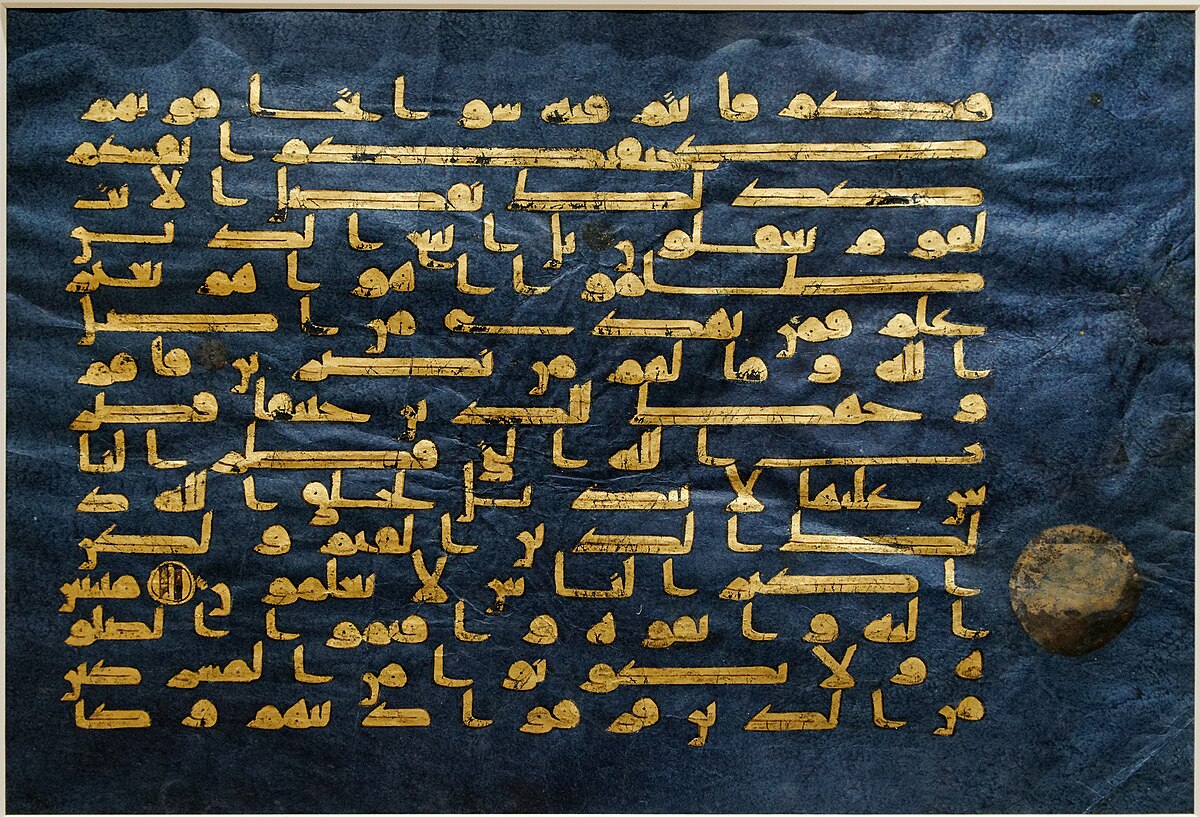
Svaki folio Plavog Kurana predstavlja polje duboko indigo-plavog pergamenta preko koga je kuranski tekst ispisan monumentalnim kufijskim pismom izvedenim zlatnim mastilom. Vizuelni efekat je zapanjujućeg bogatstva i svečanosti: zlatna slova izgledaju kao da lebde na zasićenoj plavoj podlozi, stvarajući sjajan kontrast koji evocira asocijacije sa nebeskim slikama — zlatne zvezde na noćnom nebu, ili božanska svetlost otkrovenja koja prodire kroz tamu materijalnog sveta. Podele stihova označene su srebrnim rozetama ili medaljonima (mnogi sada oksidovani u tamnosivo ili crno), a naslovi sura razlikuju se dekorativnim trakama u zlatu i srebru. Kaligrafija je pisana ugaonim, horizontalnim kufijskim pismom karakterističnim za rane kuranske rukopise, bez dijakritičkih znakova ili samoglasničkih oznaka, zahtevajući od čitaoca da ih dopuni iz sećanja i samim tim pretpostavljajući visok stepen kuranske pismenosti.
Proporcije folija — šire nego što su visoke, u pejzažnom ili podužnom formatu tipičnom za rane kuranske rukopise — doprinose svečanom, ceremonijalnom karakteru teksta. Velikodušne margine i relativno mali broj redova teksta po stranici (obično petnaest) stvaraju prostranu, neužurbanu vizuelnu ritmiku koja naglašava monumentalni kvalitet svakog pojedinačnog slova. Kufijski oblici slova sami po sebi odlikuju se izraženim horizontalnim širenjem, sa izduženim potezima po osnovnoj liniji koji stvaraju snažan linearni ritam preko stranice, isprekidan vertikalnim uzlaznim potezima slova poput alifa i lama. Ukupni estetski efekat je vrhunske formalnosti i hijeratske veličanstvenosti, prikladan svetom tekstu koji predstavlja. Igra između tople sjajnosti zlata i hladne dubine indigo podloge stvara hromatski dijalog izvanredne lepote, u kome je napisana reč istovremeno tekstualna komunikacija i vizuelna umetnost najvišeg reda.
Značaj i nasleđe
Plavi Kuran zauzima jedinstvenu poziciju u istoriji islamske umetnosti i rukopisne produkcije. Njegova kombinacija luksuznih materijala, majstorske kaligrafije i neviđene hromatske koncepcije čini ga jednim od vrhunskih dostignuća rane islamske umetnosti knjige i jednim od najčešće reprodukovanih i diskutovanih objekata u ovoj oblasti. Rukopis je bio instrumentalan u naučnim debatama o prirodi rane kuranske rukopisne produkcije, odnosu između islamske i vizantijske umetničke tradicije, ulozi kaligrafije kao preeminentnog umetničkog oblika islamske civilizacije i ekonomskim i političkim strukturama koje su podržavale produkciju luksuznih rukopisa u srednjovekovnom islamskom svetu.
Rasturanje folija Plavog Kurana po desetinama kolekcija širom sveta samo je po sebi postalo predmet naučne i etičke refleksije, odražavajući šire rasprave o fragmentaciji i dekontekstualizaciji islamskog kulturnog nasleđa. Napori naučnika poput Džonatana Bluma da rekonstruišu originalni rukopis kroz kolaciju rasutih folija unapredili su razumevanje njegovog obima i strukture, ali su takođe istakli izazove proučavanja predmeta čiji je fizički integritet nepovratno narušen. Uprkos — ili možda zahvaljujući — svojoj fragmentaciji, Plavi Kuran nastavlja da vrši snažnu fascinaciju, funkcionišući i kao remek-delo kaligrafske umetnosti i kao simbol rane kulturne sofisticiranosti islamskog sveta. Njegovi foliji, gde god da se na njih naiđe, nude direktan susret sa estetskim i duhovnim ambicijama civilizacije koja je pisanu reč postavila u sam centar svog umetničkog izraza.