Istorijski kontekst
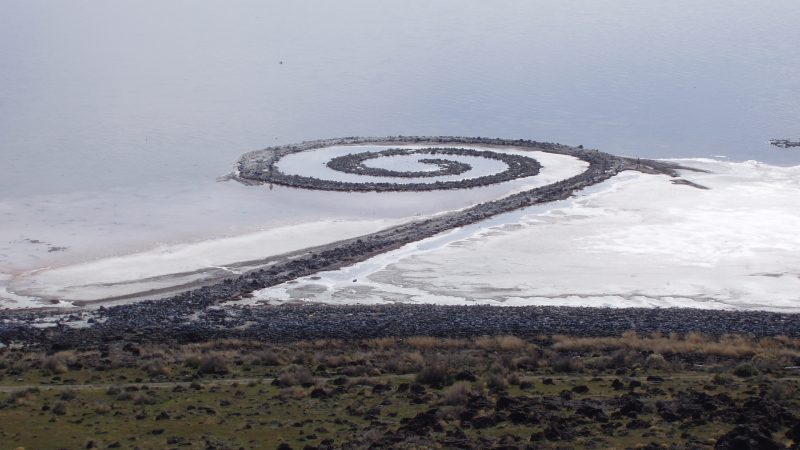
Spiralni gat Roberta Smitsona, izgrađen u aprilu 1970. godine na Rozel Pointu na severnoistočnoj obali Velikog Slanog jezera u Juti, stoji kao najikoničnije delo pokreta Land Art i jedan od najradikalnijih umetničkih gestova dvadesetog veka. Delo se sastoji od približno 6.650 tona crne bazaltne stene, zemlje i kristala soli, raspoređenih u spiralu suprotnu od kazaljke na satu koja se proteže 457 metara (1.500 stopa) u jezero i meri 4,6 metara (15 stopa) u širinu. Smitson je izabrao lokaciju nakon opsežne pretrage obale Velikog Slanog jezera, birajući Rozel Point zbog njegove udaljene, postindustrijske pustoši — područje je bilo mesto neuspelih operacija bušenja nafte — i zbog crvenkasto-ružičaste boje vode, uzrokovane bakterijama i algama tolerantnim na so koje napreduju u hiperslanom okruženju jezera. Izgradnja je sprovedena tokom šest dana koristeći utovarivač, kamion kiper i traktor, kojima je upravljao izvođač Bob Filips, premeštajući zemlju i stenu sa obližnje obale u plitku vodu. Čitav projekat koštao je približno 9.000 dolara, finansiran od strane galerije Virdžinije Dvan u Njujorku i galerije Daglas Kristmas u Los Anđelesu.
Formalna analiza
Spiralni oblik u smeru suprotnom od kazaljke na satu bio je centralan za Smitsonovu koncepciju i nosio je višestruke slojeve značenja koje je artikulisao u esejima, intervjuima i pratećem filmu. Smitson se oslanjao na lokalni mit da Veliko Slano jezero sadrži vrtlog povezan podzemnim kanalom sa Tihim okeanom — deo graničarskog folklora koji je privlačio njegovu fascinaciju pseudo-naukom, entropijom i nestabilnošću naizgled čvrstih struktura. Spirala je jedna od najstarijih i najuniverzalnijih formi u ljudskoj kulturi, pojavljujući se u neolitskim petroglifima, keltskim rukopisima, hinduističkoj kosmologiji i morfologiji galaksija i uragana. Prikazujući ovu praformu u monumentalnoj razmeri u sirovim geološkim materijalima, Smitson je stvorio delo koje je ukinulo razlike između umetnosti i geologije, kulture i prirode, ljudske vremenske skale i dubokog vremena planetarnih procesa. Smer suprotan od kazaljke na satu specifično evocira levostrane spirale određenih molekularnih struktura i, u Smitsonovoj idiosinkratičnoj kosmologiji, sugeriše entropiju — nepovratnu tendenciju svih organizovanih sistema ka neredu i raspadu.
Koncept entropije bio je filozofski i estetski motor gotovo svih Smitsonovih zrelih dela, a Spiralni gat je njen vrhovni izraz. Pod uticajem čitanja termodinamike, naučne fantastike, geoloških rasprava i spisa filozofa poput Džordža Kublera i Samjuela Beketa, Smitson je umetnost zamišljao ne kao monument trajnosti, već kao demonstraciju propadljivosti — zapis sporog, neumitnog klizanja univerzuma ka bezobličnosti. Za razliku od tradicionalne skulpture, koja teži da traje nepromenjena kroz vreme, Spiralni gat je projektovan da interaguje sa svojom sredinom i da se menja — da bude obrastao kristalima soli, erodiran vodom, zatrpan sedimentom i na kraju ponovo preuzet geološkim procesima koji su oblikovali predeo. Ovo prihvatanje propadanja i transformacije bio je direktan izazov investiciji sveta umetnosti u očuvanje, konzervaciju i održavanje umetničkog dela kao stabilnog, komercijalizujućeg objekta. Gat nije fiksirana forma, već proces, neprekidno pregovaranje između ljudske namere i prirodne sile.
Odnos dela prema lokaciji neodvojiv je od njegovog značenja, a Smitsonov koncept specifičnosti lokacije — razrađen u njegovim uticajnim esejima „Sedimentacija uma: zemaljski projekti” (1968) i „Spiralni gat” (1972) — bio je temeljan za kasniji razvoj ekološke umetnosti, instalacione umetnosti i institucionalne kritike. Za Smitsona, umetničko delo nije bilo autonomni objekt koji se mogao premestiti sa jednog mesta na drugo, već je bilo konstituisano svojim odnosom prema određenom mestu, sa svim geološkim, istorijskim i kulturnim asocijacijama tog mesta. Kvaliteti Rozel Pointa — njegova udaljenost, neuspela industrijska istorija, geološka čudnost (solane ravnice, bazaltna nalazišta, krvavo crvena voda) — nisu bili puka pozadina za skulpturu, već su bili njeni integralni sastavni delovi. Iskustvo Spiralnog gata zahteva hodočašće: vožnju od nekoliko sati iz Salt Lejk Sitija sve udaljenijim i neasfaltiranim putevima, čin fizičke posvećenosti koji je Smitson razumeo kao deo značenja dela. Putovanje je antiteza ležernoj poseti muzeju; zahteva napor, nelagodnost i spremnost da se umetnost sretne izvan kontrolisanih okruženja galerijskog sistema.
Smitsonov film Spiralni gat (1970), u trajanju od 32 minuta, snimljen tokom i nakon izgradnje zemljanog dela, esencijalni je prateći komad i mnogi naučnici ga smatraju umetničkim delom jednakog značaja. Film kombinuje dokumentarne snimke procesa izgradnje — kamioni kiperi koji istovaraju bazalt, utovarivač koji gura zemlju u jezero — sa snimcima iz vazduha završene spirale, helikopterskim kadrovima okolnog predela i halucinantnom montažom geoloških slika, mapa, rekonstrukcija dinosaurusa iz Američkog muzeja prirodne istorije i sekvenci snimljenih na lokaciji Rozel Pointa. Zvučna traka kombinuje industrijsku buku, Smitsonov glas koji čita iz svog eseja o delu i ambijentalni zvuk. Struktura filma odražava sam spiralni oblik, kruženjem se vraćajući na sopstvene slike i ideje, odbijajući linearni narativ u korist petljaste, entropske progresije koja ostvaruje filozofske brige dela. Smitson je razumeo da će film doseći publiku koja nikada neće posetiti fizičku lokaciju, i zamislio je odnos između zemljanog dela, filma i eseja kao dijalektičku trijadu — tri manifestacije jedne ideje, od kojih se nijedna ne može svesti na drugu ili zameniti drugom.
Potapanje i ponovno pojavljivanje Spiralnog gata u zavisnosti od fluktuirajućeg nivoa vode Velikog Slanog jezera postalo je jedan od najizuzetnijih aspekata njegovog postojanja i živa demonstracija Smitsonove entropske vizije. Ubrzo nakon završetka 1970. godine, rastuci nivo jezera potpuno je potopio Gat, i ostao je nevidljiv ispod površine vode približno trideset godina. Tokom 2002, kada je ozbiljna suša spustila jezero na istorijski niske nivoe, Gat se ponovo pojavio, sada obrastao debelim slojem belih kristala soli koji su dramatično izmenili njegov izgled — prvobitno tamna bazaltna spirala transformisana je u sablasnu belu formaciju na pozadini ružičaste vode. Ovo uskrsnuće izazvalo je ogromno javno i kritičko interesovanje, i Gat je od tada povremeno vidljiv, u zavisnosti od padavina i upravljanja vodom. Periodično nestajanje i ponovo pojavljivanje dela transformiše ga u nešto bez presedana u istoriji umetnosti: monumentalnu skulpturu koja je ponekad prisutna a ponekad odsutna, čija vidljivost ne određuju kustoske odluke, već klimatološke i hidrološke sile potpuno van ljudske kontrole.
Smitsonova šira praksa i njegovi teorijski spisi pozicionirali su Spiralni gat unutar sistematskog odbacivanja galerijskog i muzejskog sistema koji je smatrao saučesnikom u komodifikaciji i estetizaciji umetnosti. Njegov koncept „lokacija” i „ne-lokacija” — razvijen kroz dela u kojima je sakupljao materijale sa specifičnih spoljašnjih lokacija i izlagao ih u minimalističkim kontejnerima u galerijama — artikulisao je dijalektiku između neograničene, entropske realnosti predela i ograničenog, uređenog prostora umetničke institucije. Spiralni gat je predstavljao odlučujući pokret od galerije u potpunosti, posvećenost pravljenju umetnosti u i od predela koja se nije mogla kupiti, prodati, obesiti na zid ili skladištiti u magacinu. Ovo nije bila samo estetska preferencija već politička i filozofska pozicija: Smitson je video galerijski sistem kao mehanizam sputavanja koji neutrališe radikalni potencijal umetnosti pretvarajući je u luksuznu robu za bogate kolekcionare. Njegove veze sa minimalizmom — bio je blisko povezan sa Donaldom Džadom, Sol Levitom i Denom Flavinom — oblikovale su njegov formalni vokabular, ali je njegovo insistiranje na angažovanju sa stvarnim predelima, stvarnim materijalima i stvarnom entropijom gurnulo njegovu praksu daleko izvan čistih geometrija minimalističkog galerijskog objekta.
Značaj i nasleđe
Smrt Roberta Smitsona 20. jula 1973. godine u avionskoj nesreći dok je izviđao lokaciju za novo zemljano delo, Amarilo rampu, u Teksasu, prekinula je jednu od intelektualno najambicioznijih karijera u posleratnoj umetnosti u dobi od trideset pet godina. Tragedija je transformisala Spiralni gat iz živog projekta unutar evolucijskog opusa u neku vrstu memorijala — remek-delo umetnika koji nikada neće revidirati, proširiti ili nadmašiti to delo. Smitsonova udovica, umetnica Nensi Holt, a potom Dia Art fondacija, koja je stekla delo 1999. godine, nadgledale su njegovo starateljstvo, navigirajući složena pitanja o konzervaciji koja samo delo čini paradoksalnim: kako se čuva delo čije značenje leži u njegovoj prolaznosti? Danas, Spiralni gat privlači hiljade posetilaca godišnje koji hodočaste do Rozel Pointa, i ostaje probni kamen za svaku diskusiju o Land Art-u, specifičnosti lokacije i odnosu između umetnosti i prirodnog sveta — delo koje odbija da bude monument, čak i dok je, neporecivo, postalo monumentalno.