Istorijski kontekst
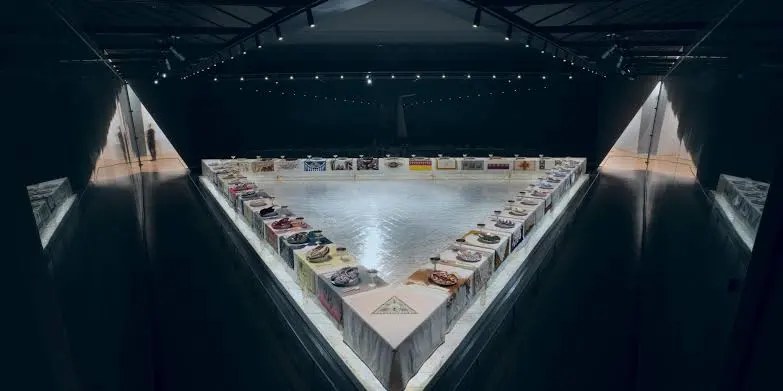
Večera Džudi Čikago, nastala između 1974. i 1979, najambicioznije je i najuticajnije delo feminističke umetnosti ikada nastalo i jedna od najznačajnijih instalacija u istoriji umetnosti dvadesetog veka. Delo ima formu masivnog ceremonijalnog stola za bankete aranžiranog u jednakostranični trougao, gde svaka strana meri 14,6 metara (48 stopa) dužine, sa 39 razrađenih kompleta — trinaest na svakoj strani — od kojih je svaki posvećen istaknutoj ženi iz zapadne istorije ili mitologije. Trougaoni oblik odabran je zbog svojih asocijacija sa ženskom simbolikom: trougao se koristi od antike kao simbol ženskog principa, a jednakostranična konfiguracija sugeriše ravnopravnost među tri krila stola, koja su organizovana hronološki. Krilo jedan obuhvata period od praistorije do Rimskog carstva i uključuje figure poput Primordijalne boginje, Ištar, Kali, Amazonke, Safo i Hipatije. Krilo dva pokriva period od ranog hrišćanstva do Reformacije i uključuje Marcelu, Svetu Brigitu, Teodoru, Hrosvitu, Eleonoru Akvitansku i Kristinu de Pizan. Krilo tri se proteže od sedamnaestog do dvadesetog veka i uključuje En Hačinson, Sakagaveju, Meri Vulstonkraft, Sodžourner Trut, Suzan B. Entoni, Emili Dikinson, Virdžiniju Vulf i Džordžiju O’Kif.
Formalna analiza
Svaki od 39 kompleta je složeno, višekomponentno umetničko delo, koje se sastoji od vezenog nadstoljnjaka, oslikanog ili skulptiranog porcelanskog tanjira, seta pribora za jelo od lustera i pozlaćenog kaleža. Porcelanski tanjiri su vizuelno najupečatljiviji element: svaki ima jedinstven dizajn izveden iz vulvarne i leptirolke ikonografije, prikazan u stilovima koji referiraju na umetničke tradicije istorijskog perioda počastvovane žene. Tanjiri napreduju od relativno ravnih, oslikanih površina za najranije figure do sve trodimenzionalnijih, skulpturalnih formi za kasnine, kulmirajući u duboko reljefno klesanim tanjirima za figure poput Virdžinije Vulf i Džordžije O’Kif. Ova progresija nameravana je da simbolizuje rastući — mada i dalje nepotpun — ženski napor ka oslobođenju i samoopredeljenju. Vulvarna ikonografija bila je, i ostaje, najkontroverzniji aspekt dela: Čikagina odluka da predstavi žene kroz apstrahovane genitalne forme kritikovana je od strane nekih feministkinja kao esencijalistička i redukcionistička, dok su Čikago i njeni pristalice argumentovali da je povratak ženske seksualne anatomije iz vekova stida i tabua suštinski čin feminističkog oslobođenja.
Ikonografija i simbolika
Vezeni nadstoljnjaci koji prate svaki tanjir spadaju među tehnički najdovrušenije i umetničko-istorijski najznačajnije komponente Večere. Svaki nadstoljnjak izveden je u tehnikama ručnog rada prikladnim za istorijski period žene koja se časti — od drevnog bliskoistočnog kaučinga i vizantijskog zlatnog rada do renesansne čipke, baroknog veza i mašinskog šivenja dvadesetog veka — i svaki inkorporira simboličke slike i tekst koji se odnose na život i dostignuća počastvovane žene. Nadstoljnjake je dizajnirala Čikago, a izveli su ih timovi veštiih ručnih radnica tokom više godina, i oni predstavljaju nameran i polemičan angažman sa istorijom tekstilnih umetnosti kao „ženskog rada”. Čikagina odluka da upotrebi ručni rad, keramiku i oslikavanje porcelana — zanatske tradicije koje su sistematski isključivane iz kanona visoke umetnosti upravo zbog svoje asocijacije sa ženama i domaćinstvom — bila je centralni aspekt feminističkog argumenta dela. Predstavljajući ove tehnike u kontekstu značajne instalacije visoke umetnosti i demonstrirajući njihovu izvanrednu lepotu i tehničku složenost, Večera je osporila hijerarhijsku distinkciju između „umetnosti” i „zanata” koja je služila marginalizaciji ženske kreativne produkcije tokom vekova.
Pod nasleđa, na kome počiva trougaoni sto, suštinska je komponenta instalacije koja se često zanemaruje u popularnim diskusijama o delu. Sastoji se od 2.304 ručno rađene trougaone porcelanske pločice sa luster-glazurom na kojima su imena 999 dodatnih istaknutih žena ispisana zlatom. Ova imena predstavljaju žene iz raznih kultura i istorijskih perioda čija su dostignuća, argumentuje Čikago, bila zaboravljena, potisnuta ili nedovoljno prepoznata od strane patrijarhalne istoriografije. Pod nasleđa funkcioniše kao temelj — doslovno i metaforično — za 39 žena počastvovanih posebnim kompletima, sugerirajući da su njihova dostignuća omogućena i neodvojiva od doprinosa stotina drugih žena čija su imena bila uglavnom izbrisana iz istorijskog pamćenja. Istraživanje potrebno za sastavljanje liste od 999 imena bilo je samo po sebi značajan naučni poduhvat, sproveden od strane Čikago i tima istraživačica tokom više godina, a rezultirajuća bibliografija postala je značajan resurs za nastajuće polje ženske istorije.
Kolaborativna priroda produkcije Večere bila je i praktična nužnost i politička izjava. Tokom petogodišnjeg stvaranja projekta, više od 400 volontera — žena i muškaraca — doprinelo je svojim radom izradi dela, uključujući keramičarke, ručne radnice, istraživačice, fotografe i osoblje za administrativnu podršku. Čikago je organizovala ovaj kolaborativni rad kroz ono što je nazvala „nehijerarhijski, kooperativni atelje”, mada je stepen hijerarhije u atelju bio predmet naknadne debate, pri čemu su neki učesnici prijavili da je Čikago održavala čvrstu kreativnu kontrolu nad svim aspektima dela. Pitanje kako kreditirati kolaborativni rad u umetničkom delu pripisanom jednom autoru — pitanje koje rezonira sa širim feminističkim kritikama ideologije individualnog genija — ostalo je sporno tokom čitave istorije dela. Čikago je dosligedno tvrdila da je, dok je izrada bila kolaborativna, koncepcija, dizajn i celokupna umetnička direkcija bila isključivo njena, i branila je atribuciju jednom autoru kao konzistentnu sa standardnom praksom u umetnostima (citirajući, na primer, renesansni radionički model u kome su slike pripisane jednom majstoru rutinski nastajale uz opsežnu pomoć učenika i asistenata).
Recepcija i nasleđe
Kritička recepcija Večere po njenom dovršetku 1979. bila je oštro podeljena i često neprijateljska. Delo je prvi put izloženo u Muzeju moderne umetnosti u San Francisku u martu 1979, gde je privuklo ogromne gužve — preko 100.000 posetilaca u svom tromesečnom trajanju — i generisalo intenzivno javno interesovanje. Ali institucionalni otpor bio je žestok: nakon San Franciska, nijedan veliki muzej nije hteo da ugosti delo, i ono je turiralo nekoliko godina kroz alternativne prostore, centre zajednice i univerzitetske galerije, organizovano od strane lokalnih komiteta žena u svakom gradu. Umetničko-kritički establišment bio je uglavnom omalovažavajući ili prezriv: Hilton Krejmer, pišući u Njujork Tajmsu, nazvao ga je „veoma lošom umetnošću” i „neuspelom umetnošću” koju karakteriše „vulgaran kič”, dok su drugi kritičari prigovarali njegovom percipiranom esencijalizmu, didaktičnosti ili fokusu na zapadne žene uz isključenje žena iz nezapadnih kultura. Feminističke kritičarke su takođe bile podeljene: neke, poput Ljusi Lipard, zagovarale su delo kao prekretničko ostvarenje, dok su druge dovele u pitanje da li vulvarna ikonografija pojačava umesto da osporava patrijarhalne definicije žena u terminima njihove seksualnosti. Ove debate ostaju nerešene i nastavljaju da informišu feministički umetnički diskurs.
Nakon godina institucionalnog beskućništva, Večera je pronašla svoj stalni dom u Centru za feminističku umetnost Elizabet A. Sakler pri Bruklinskom muzeju, gde je instalirana u namenski izgrađenoj galeriji u martu 2007. Osnivanje Centra Sakler samo po sebi bilo je prekretnica u institucionalnom priznavanju feminističke umetnosti, a permanentna instalacija Večere — koju je Čikago dugo tražila — predstavljala je potvrdu i dela i feminističkog umetničkog pokreta u celini. Dizajn galerije, autorke arhitekte Suzan T. Rodrigez, predstavlja delo u zamračenom, ceremonijalnom prostoru koji naglašava ritualne i reverencijalne kvalitete instalacije, sa trougaonim stolom dramatično osvetljenim na tamnoj pozadini. Permanentna instalacija je omogućila delu da dosegne nove generacije gledalaca — Bruklinski muzej procenjuje da su stotine hiljada posetilaca videle Večeru od 2007. — i katalizovala obnovljenu naučnu i kritičku pažnju na Čikaginu karijeru i na istoriju feminističke umetnosti.
Večera traje i kao istorijski dokument i kao živa provokacija — delo koje nastavlja da generiše debatu upravo zato što pitanja koja pokreće o rodu, umetnosti, istoriji i reprezentaciji ostaju urgentna i nerešena. Njen uticaj na naknadnu feminističku umetnost je nemjerljiv: umetnice od Gerila Grlsa do Kare Voker do Vangeči Mutu radile su u prostoru koji je Večera otvorila, čak i kada se njihove estetske strategije radikalno razlikuju od Čikaginih. Insistiranje dela da ženska istorija ima značaj, da zanatske tradicije zaslužuju priznanje kao visoka umetnost, da je kolaborativni rad validan modus umetničke produkcije i da su lično i političko nerazdvojivi — ove propozicije, koje su delovale radikalno 1979, postale su fundamentalne pretpostavke savremene umetnosti i kulture. Pa ipak, snaga dela ne leži samo u njenim argumentima, već u njenom fizičkom prisustvu: sama razmera i lepota instalacije, sjajni porcelanski tanjiri, složeno vezeni nadstoljnjaci, zlatna imena ispisana na Podu nasleđa — sve to stvara iskustvo koje prevazilazi polemiku i postiže nešto bliže ceremonijalnom i svetom, sekularnu katedralu posvećenu obnovi ženske istorije iz zaborava patrijarhalnog pamćenja.