Istorijski kontekst
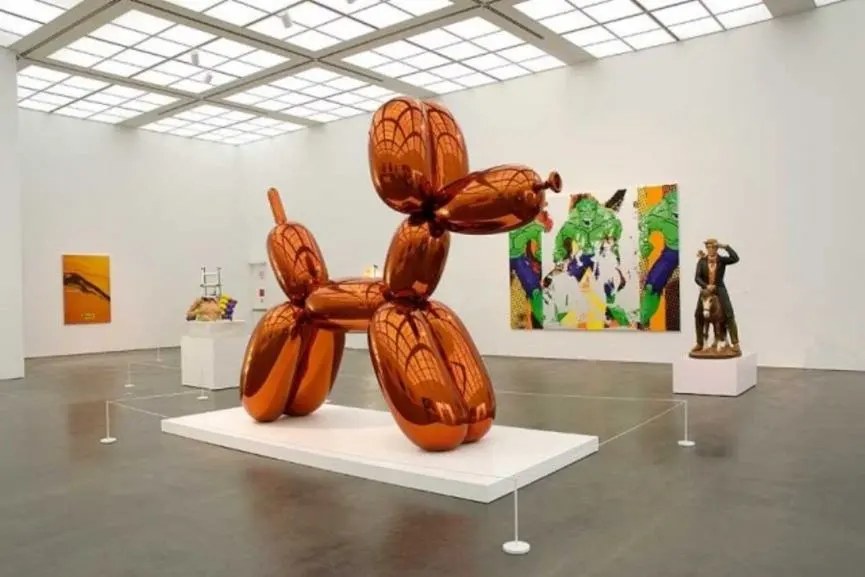
Balloon Dog (Orange) Džefa Kunsa, nastao između 1994. i 2000. kao deo serije Celebration, spada među najmomentalno prepoznatljiva i najžešće debatovana dela savremene umetnosti. Skulptura je visoka preko tri metra (307 centimetara) i teži približno jednu tonu, ali prikazuje objekat radikalne efemernosti: jednostavnu savijenu balonsku životinju kakvu zabavljači na žurkama proizvedu za sekunde a deca odbace za sat. Izrađena od ogledalno poliranog nerđajućeg čelika sa providnim narandžastim premazom, površina skulpture je toliko visoko reflektivna da funkcioniše kao konveksno ogledalo, hvatajući i iskrivljujući sliku svega oko sebe — posmatrači, arhitektura, nebo i svetlost uvučeni su u blještavu kožu skulpture, transformišući pasivni čin gledanja umetnosti u imerzivno iskustvo sagledavanja sebe prelamljenog kroz umetničko delo. Balloon Dog postoji u pet jedinstvenih izdanja u boji — plava, magenta, žuta, crvena i narandžasta — svako smatrano posebnim umetničkim delom, i kolektivno čine jedno od definišućih skulpturalnih dostignuća i provokacija kasnog dvadesetog veka.
Serija Celebration, čiji je Balloon Dog centralni deo, zamišljena je od strane Kunsa ranih devedesetih kao monumentalno istraživanje vizuelne kulture proslave, svečanosti i dečje nevinosti. Serija uključuje skulpture drugih predmeta za žurke i praznike — Balloon Swan, Balloon Monkey, Balloon Rabbit, Hanging Heart, Diamond, Moon i Play-Doh — sve prikazane u ogromno uvećanoj razmeri u ogledalno poliranom nerđajućem čeliku sa hromatskim premazima. Projekat su pratile izuzetne proizvodne teškoće i prekoračenja troškova koja su gotovo bankrotirala Kunsa: izrada ovih tehnički zahtevnih skulptura zahtevala je godine rada timova visoko kvalifikovanih metalskih radnika i inženjera, a ukupni troškovi proizvodnje navodno su premašili 25 miliona dolara. Kunsov atelje funkcioniše više kao renesansna radionica ili savremena dizajnerska firma nego tradicionalni umetnički atelje — u svom vrhuncu, zapošljavao je preko 100 asistenata, fabricenata i tehničara koji izvode Kunsove dizajne sa preciznošću koju sam umetnik ne bi mogao postići i ne tvrdi da može. Ovaj model umetničke produkcije, u kome umetnik koncipira delo i usmerava njegovu realizaciju od strane drugih, centralan je za kritičku debatu koja okružuje čitavu Kunsovu praksu.
Formalna analiza
Pitanje autorstva i umetničkog rada koje Balloon Dog pokreće spada među najkontroverznija u savremenom umetničkom diskursu. Kuns nikada nije krio činjenicu da ne izrađuje lično svoje skulpture; naprotiv, ovu delegaciju rada učinio je centralnom odlikom svog umetničkog identiteta. „Ja sam u osnovi osoba za ideje”, izjavio je. „Nisam fizički uključen u produkciju. Nemam veštine da napravim bilo koje od svojih dela.” Ovo iskreno priznanje uloge umetnika kao direktora a ne tvorca smešta Kunsa u liniju koja se proteže od Dišanovih redimejdova preko Vorholove Fabrike do savremenih umetnika poput Dejmijana Hirsta i Takašija Murakamija, koji su svi doveli u pitanje romantičarsku pretpostavku da autentičnost dela proističe iz fizičkog dodira umetnika. Ipak, Kuns gura ovu logiku dalje od većine: dok je Dišan birao postojeće objekte a Vorhol delegirao relativno jednostavan proces sito-štampe, Kuns naručuje izradu tehnički izuzetnih objekata koji zahtevaju godine specijalizovanog rada. Skulpture Balloon Dog zahtevale su inovacije u metalurškoj obradi, poliranju i tehnologiji premazivanja; timovi koji su ih proizvodili razvili su zaštićene tehnike za postizanje bešavnih, spojnica lišenih površina koje daju skulpturama njihovo jezivo savršenstvo. Kritičari koji odbacuju Kunsa kao pukog „direktora” moraju se suočiti sa činjenicom da koncepcija i specifikacija ovih objekata — njihova precizna razmera, proporcije, kvalitet površine i hromatski karakter — čine autentične kreativne odluke od ogromnog značaja.
Dana 12. novembra 2013, Balloon Dog (Orange) prodat je na aukciji Christie’s u Njujorku za 58,4 miliona dolara, postavivši novi aukcijski rekord za najskuplje delo živog umetnika — rekord koji je držao do novembra 2018, kada ga je prestio Portrait of an Artist (Pool with Two Figures) Dejvida Hoknija. Prodaja je kristalisala debatu o tome da li astronomske cene koje Kunsova dela postižu odražavaju autentičnu estetsku i intelektualnu vrednost ili samo spekulativnu groznicu pregrejane umetničke tržište. Kupac je navodno bio finansijer i kolekcionar Hoze Mugrabi, čija porodica poseduje jednu od najvećih svetskih kolekcija Vorhola i koja je dugogodišnji zagovornik Kunsovog rada. Cena — plaćena za skulpturu koju njeni oponenti opisuju kao glorifikovanu sitnicu — izazvala je predvidljivo ogorčenje onih koji vide savremeno tržište umetnosti kao sistem proizvedene oskudice i institucionalne validacije koji nema veze sa estetskim meritumom. Ipak, cena je takođe odrazila tržišnu procenu kulturnog značaja dela: poput Vorholovih Brillo Box-ova i Dišanovog Fountain, Balloon Dog zauzima poziciju na spornoj granici između umetnosti i ne-umetnosti, a intenzitet debate koju izaziva sam je mera njene konceptualne moći.
Reflektivna površina Balloon Dog nije samo tehničko dostignuće već konceptualna strategija koja povezuje delo sa dugom istorijom umetničko-istorijskog bavljenja ogledalima, refleksijom i učešćem posmatrača. Od konveksnog ogledala Jana van Ajka u Arnolfini Portrait (1434) preko složenih prostornih igara Dijega Velaskeza u Las Meninas (1656) do Cloud Gate (2006) Aniša Kapura u Čikagu, umetnici su koristili reflektivne površine da uključe posmatrača u delo, ukidajući distancu između posmatranog i posmatrača. Kunsov Balloon Dog proširuje ovu tradiciju transformišući čitavu skulpturu u reflektivnu površinu: posmatrač ne može gledati delo a da ne vidi iskrivljenu sliku samog sebe, i izgled dela se neprestano menja u zavisnosti od okruženja i pozicije posmatrača. Ovaj participativni kvalitet — skulptura nikada nije ista dva puta, nikada autonomna od svog konteksta — komplikuje optužbu da je Kunsovo delo puki spektakl ili dekoracija. Reflektivna površina stvara autentično fenomenološko iskustvo, trenutak perceptualne dezorijentacije u kome granice između ja i objekta, posmatrača i umetničkog dela, postaju nestabilne.
Kritički okvir za razumevanje Balloon Dog zahteva angažovanje sa Kunsovim strateškim prihvatanjem kiča — kategorije kulturne produkcije koju je Klement Grinberg, u svom temeljnom eseju iz 1939. „Avangarda i kič”, definisao kao antitezu autentičnoj umetnosti. Za Grinberga, kič je bio lažna kultura, proizvod industrijskog kapitalizma koji je nudio unapred svarena emocionalna iskustva umesto autentičnih estetskih izazova avangarde. Čitava Kunsova karijera može se tumačiti kao sistematski napad na ovu razliku: od rane serije The New (1980-1987), koja je izlagala potpuno nove usisivače u pleksiglasnim vitrinama, preko serije Banality (1988), koja je uključivala porcelanske skulpture Majkla Džeksona sa šimpanzom Bablsom, do serije Celebration, Kuns je konstantno uzdizao objekte i ikonografiju koju bi grinbergovska kritika klasifikovala kao kič na status visoke umetnosti. Balloon Dog, prikazujući jednokratnu novotariju sa žurke u trajnim, skupocenim materijalima u monumentalnoj razmeri, vrši ovo uzdizanje sa doslovnošću koja je ili duboko ironična ili potpuno iskrena — a Kunsovo odbijanje da precizira šta od toga je jedna od njegovih najefikasnijih provokacija.
Poređenje između Kunsa i njegovih najvažnijih prethodnika — Marsela Dišana i Endija Vorhola — osvetljava i kontinuitete i prekide u liniji umetnosti koja ispituje granice same umetnosti. Dišanovi redimejdovi predložili su da bilo koji objekat može postati umetnost kroz umetnikov čin selekcije i institucionalnog uokvirivanja; Vorholov pop art predložio je da komercijalna ikonografija može postati predmet umetnosti bez ironične distance ili kritičkog komentara. Kuns sintetizuje i proširuje oba predloga: poput Dišana, bira objekte iz svakodnevnog života i predstavlja ih kao umetnost; poput Vorhola, prihvata površinska zadovoljstva potrošačke kulture bez izvinjenja. Ipak, Kuns dodaje dimenziju odsutnu kod oba prethodnika: insistiranje na tehničkom savršenstvu, materijalnom luksuzu i čistoj fizičkoj veličanstvenosti koja savladava kritički otpor kroz senzorno zadovoljstvo. Gde je Dišanov Fountain bio jeftin, masovno proizveden pisoar, a Vorholove konzerve supe skromna platna, Kunsov Balloon Dog je monument od 25 miliona dolara i jedne tone poliranog čelika — delo koje zavodi oko čak i dok izaziva um, i koje odbija da dozvoli posmatraču udobnu poziciju ironičnog distanciranja.
Značaj i nasleđe
Da li će Balloon Dog (Orange) opstati kao značajno umetničko delo ili biti zapamćen kao simptom ekscesa tržišta umetnosti ostaje otvoreno pitanje, ali njegov uticaj na kulturu svog trenutka je van svake sumnje. Skulptura je postala jedna od najreproduciranijih slika u savremenoj umetnosti, pojavljujući se na robi, u reklamama i kao kulturna skraćenica za ekstravaganciju savremenog sveta umetnosti. Replike Balloon Dog-a u maloj razmeri postale su sveprisutni predmeti kućnog dekora, stvarajući situaciju koju Kuns — koji je agresivno gonio autorska prava protiv neovlašćenih reprodukcija — sigurno ceni kao ultimativnu potvrdu svog projekta: visokoumetlički objekat postaje masovno tržišna roba postaje visokoumetlički objekat, u beskonačnoj petlji kulturne cirkulacije koja odražava reflektivnu površinu same skulpture. Transformišući najefemerniji od objekata u monument trajnosti, i čineći tu transformaciju eksplicitnim predmetom dela, Kuns je stvorio skulpturu koja je, šta god da se misli o njenim zaslugama, neizbežna — ogledalo u kome savremena kultura vidi sebe reflektovanu, iskrivljenu i uvećanu do kolosalnih proporcija.