Istorijski kontekst
Jakopo Pontormo primio je narudžbinu za dekoraciju kapele Kaponi od bogatog firentinskog bankara Lodovika Kaponija oko 1525. godine, u periodu duboke nestabilnosti u Firenci nakon proterivanja Medičija 1494, njihovog povratka, i širih nemira Italijanskih ratova. Narudžbina je obuhvatala ne samo ovaj oltarski obraz, već i rondele sa Jevanđelistima i Blagovesti na zidovima kapele, sve izvedeno iza paravana koji su delo sakrivali od javnosti tokom stvaranja. Đorđo Vazari je sa izvesnom nestrpljivošću primetio da je Pontormo radio u gotovo potpunoj tajnosti, sugerišući umetnikovu oštru svest da njegov pristup predstavlja dramatičan otklon od uravnoteženih, harmoničnih ideala visoke renesanse. Slika je završena u intelektualnoj klimi oblikovanoj pljačkom Rima 1527, događajem koji je uzdrmao poverenje u kulturne izvesnosti ranog šesnaestog veka i pojačao okretanje ka subjektivnijim, emocionalno nabijenim modusima umetničkog izražavanja.
Sama kapela Kaponi, koju je dizajnirao Filipo Bruneleski u ranom petnaestom veku, pružila je zatvoreno arhitektonsko okruženje koje je Pontormo iskoristio da stvori totalno umetničko iskustvo. Intimna skala kapele i kontrolisano osvetljenje omogućili su da izvanredna paleta oltarskog obraza rezonira sa neuobičajenim intenzitetom. Pontormov rad odražava njegovo duboko bavljenje umetnošću Albrehta Direra, čiji su grafički otisci široko cirkulisali u Italiji, kao i kasnim delom Mikelanđela, posebno nedovršenim skulpturama i ekspresivnim slobodama ignuda sa plafona Sikstinske kapele. Ipak, Skidanje s krsta prevazilazi ove uticaje i predlaže novi slikarski jezik u kome su boja, forma i emocionalni sadržaj oslobođeni ograničenja naturalističke reprezentacije.
Formalna analiza
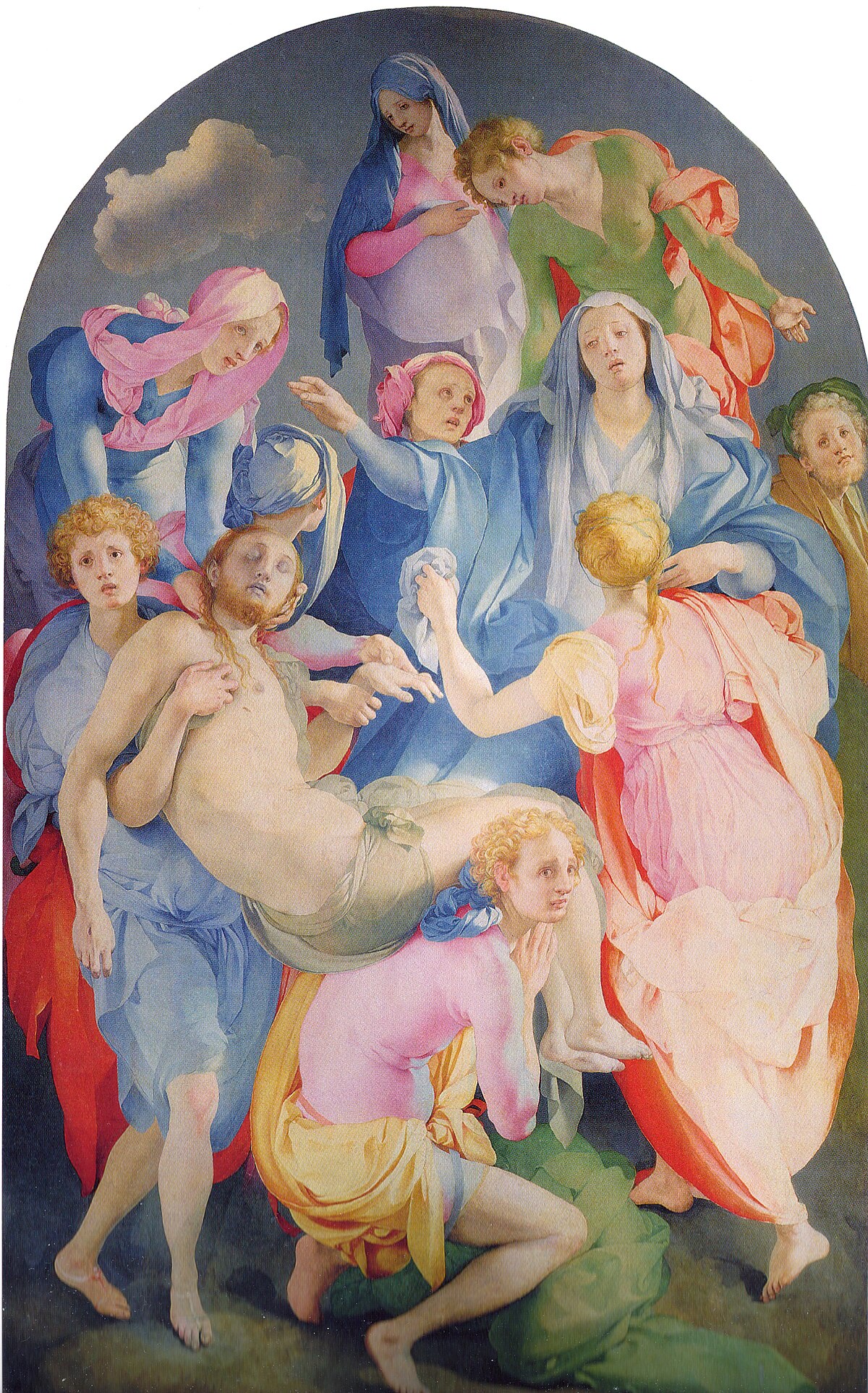
Kompozicija Skidanja organizovana je kao rotirajući oval isprepletenih figura koji deluje da lebdi u neodređenom prostoru lišenom pejzaža, arhitekture ili bilo kakve jasne linije tla. Hristovo mlitavo telo zauzima donji centar panela, podržano figurama čije su anatomske proporcije namerno izdužene i čije poze stvaraju kontinuirani serpentinski ritam kroz kompoziciju. Odsustvo krsta, i zaista bilo kakvih stabilnih prostornih markera, navelo je naučnike da debatuju da li scena prikazuje skidanje, polaganje u grob ili oplakivanje, namernu dvosmislenost koja pojačava devocioni uticaj slike. Figure deluju kao da su uhvaćene u stanju suspendovane animacije, njihove draperije se talasaju kao da ih pomera nevidljiv vetar, njihova tela bestežinska i otkačena od gravitacione realnosti.
Pontormova paleta je među najsmelim u istoriji zapadnog slikarstva. Dominantni tonovi su visokoregistarski ružičasti, električne plave, kiselo zelene i blede lavanda koji nemaju nikakav odnos sa posmatranom prirodnom bojom i umesto toga funkcionišu kao sredstva čistog emocionalnog izražavanja. Ove boje, nanete u glatkim, gotovo porcelanskim površinama, stvaraju efekat nezemaljske luminoznosti koji ne anticipira nijednu kasniju školu sve do, možda, određenih eksperimenata kolorista dvadesetog veka. Isprepleteni raspored figura eliminiše negativni prostor gotovo u potpunosti, proizvodeći kompoziciju izvanredne gustine koja ipak prenosi utisak lakoće i plovnosti. Pogledi figura, od kojih nekoliko gleda direktno u posmatrača sa izrazima prodorne tuge, uspostavljaju emocionalnu vezu koja transformiše oltarski obraz iz narativne reprezentacije u direktan duhovni susret.
Recepcija i nasleđe
Pontormovo Skidanje stoji kao jedno od definišućih remek-dela manirizma i prekretnica u istoriji evropskog slikarstva. Njegovo radikalno odbacivanje prostornog racionalizma, hromatskog naturalizma i kompozicione ravnoteže koji su karakterisali visoku renesansu Leonarda, Rafaela i ranog Mikelanđela najavilo je fundamentalno nov skup umetničkih prioriteta centriranih na subjektivni izraz, formalnu inventivnost i kultivisanje estetske složenosti. Istoričar umetnosti Sidni Fridberg identifikovao je sliku kao vrhunski primer onoga što je nazvao „prvom generacijom” manirizma, pokreta vođenog ne pukom stilskom ekscentričnošću već istinskom krizom poverenja u sposobnost klasičnih formi da prenesu duhovnu istinu u razlomljenom svetu.
Uticaj slike na naknadnu firentinsku umetnost bio je značajan, mada nijedan sledbenik nije dostigao Pontormovu fuziju hromatske smelosti i emocionalne dubine. Njegov učenik Anđelo Bronzino apsorbovao je određene formalne lekcije, posebno naglasak na uglačanim površinama i elegantnim figuralnim pozama, ali ih je usmerio ka hladnijoj, intelektualiziranijoj estetici. U širem toku istorije umetnosti, Skidanje je ponovo otkrivano i reinterpretirano, njegova anti-naturalistička boja i komprimovani prostor odzvanjaju kod uzastopnih generacija umetnika i kritičara koji traže alternative mimetičkoj reprezentaciji. Njegovo prisustvo in situ u kapeli Kaponi, gde nastavlja da funkcioniše unutar svog originalnog liturgijskog i arhitektonskog konteksta, čini ga jednim od retkih manirističkih remek-dela koja se još uvek mogu iskusiti onako kako je njihov tvorac namenio.