Istorijski kontekst
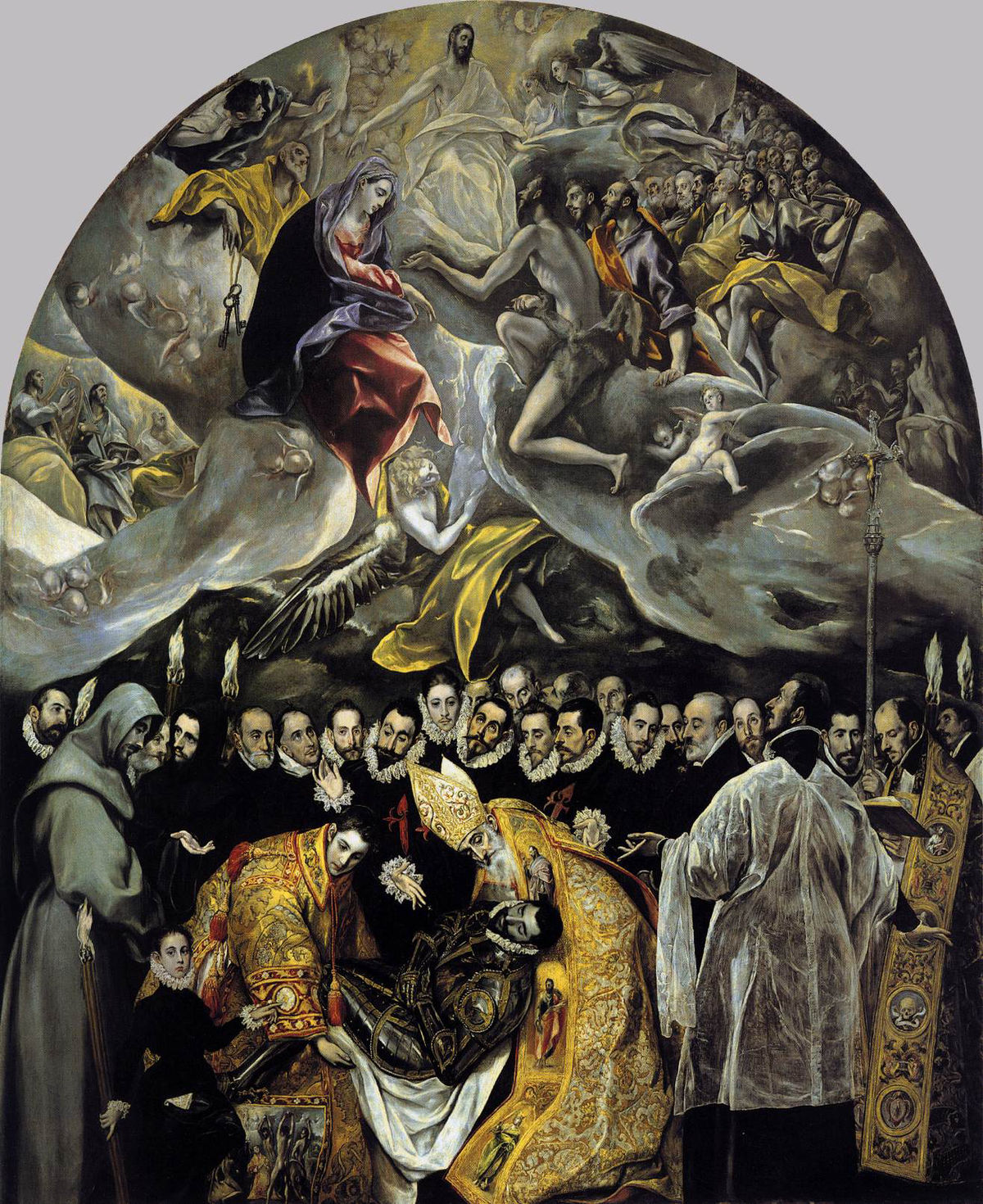
Sahrana grofa od Orgaza naručena je 1586. od strane Andresa Nunjeza de Madrida, parohijskog sveštenika crkve Santo Tome u Toledu, da bi se komemoriralo čudo za koje se tvrdi da se odigralo 1323. godine na sahrani Don Gonsala Ruiza de Toleda, gospodara grada Orgaza. Prema lokalnoj tradiciji, Sveti Avgustin i Sveti Stefan sišli su sa nebesa da lično polože pobožnog plemića u njegov grob, čudesni događaj koji je potvrdio i svetost pokojnika i duhovni prestiž parohijske crkve. Narudžbina je stigla u trenutku kada je parohija bila uključena u pravni spor oko pogrebnih taksi, i slika je delimično služila polemičkoj funkciji, podećajući toledansko društvo na slavnu istoriju crkve i čudesne milosti koje je primila. El Greko, rođen kao Domenikos Teotokopulos na ostrvu Kritu, nastanio se u Toledu 1577. godine nakon perioda provedenih u Veneciji i Rimu, i do sredine 1580-ih uspostavio se kao preeminentni slikar grada, mada su njegove ambicije za kraljevsko pokroviteljstvo Filipa II u Eskorijalu bile osujećene.
Toledo 1580-ih proživljavao je puni intenzitet protivreformacijske duhovnosti, oblikovane mističkim spisima Svete Tereze Avilske i Svetog Jovana od Krsta, obojice aktivnih u regionu. Intelektualna i verska kultura grada, sa njenim posebnim naglaskom na mističnom iskustvu božanskog sjedinjenja i propustljivosti granice između zemaljskog i nebeskog postojanja, pružala je idealno okruženje za El Grekovu vizionarsku umetnost. Slika takođe odražava umetnikovu uronjenost u kulturni milje toledanske humanističke elite, od kojih se nekoliko pojavljuju kao prepoznatljivi portreti u redu žalobnika koji prisustvuju sahrani. Ugovor je specificirao temu i njene ključne elemente sa znatnom preciznošću, ali je El Grekova interpretacija daleko prevazišla konvencionalne zahteve komemorativne oltarske slike, transformišući lokalnu legendu u univerzalnu izjavu o sudbini duše.
Formalna analiza
Slika je organizovana u dve oštro diferencirane, a opet međusobno povezane zone. Donji registar prikazuje zemaljsku sahranu sa sobritetom i materijalnom specifičnošću ukorenjenom u venecijanskoj i španskoj naturalističkoj tradiciji: Sveti Avgustin i Sveti Stefan, blistavi u zlatom vezenim odežadama prikazanim sa zapanjujućom iluzionističkom veštinom, nežno spuštaju oklopljeno telo Grofa u njegov grob. Iza njih stoji friz savremenih toledanskih plemića i sveštenika, čija su lica prikazana kao individualizovani portreti zapanjujuće psihološke pronicljivosti, njihovi strogi crni kostimi stvaraju smernu horizontalnu traku koja usidrava kompoziciju. Među ovim figurama, El Greko je uključio svog sina Horhea Manuela, koji gestom pokazuje ka čudu dok gleda direktno u posmatrača, služeći kao figura svedoka koji premošćuje prostor između naslikanog sveta i gledaoca.
Gornji registar eruira u radikalno drugačiji slikarski modus. Ovde El Greko napušta naturalističke proporcije, prostornu logiku i hromatsku uzdržanost u korist vizionarskog jezika izduženih, plamenom nalik figura, komprimovanog i turbulentnog prostora i užarene palete žutih, plavih i srebrnastosive boja. Duša Grofa, prikazana kao providna, fetalna forma, nošena je naviše od strane anđela kroz uski prolaz oblaka ka figuri Hrista na prestolu, Bogorodici i zboru svetaca. Prelaz između dva registra posredovan je podignutim rukama sveštenika i pogledima naviše nekoliko žalobnika, stvarajući kompozicioni kontinuitet koji vezuje zemlju i nebo u jedno vizuelno polje. Namerni kontrast između pedantnog realizma donje zone i ekstatične apstrakcije gornje zone najsnažniji je formalni postupak slike, izražavajući teološku distinkciju između smrtnog tela i besmrtne duše, istovremeno potvrđujući njihovu povezanost kroz misteriju božanske milosti.
Značaj i nasleđe
Sahrana grofa od Orgaza univerzalno je priznata kao El Grekovo vrhunsko ostvarenje i jedna od najizvanrednijih slika evropske tradicije. Njena sinteza disparatnih umetničkih tradicija, uključujući vizantijsku hijeratsku frontalnost, venecijansko tonsko bogatstvo, mikelanđelovsku figuralnu dinamiku i potpuno ličnu vizionarsku intenzivnost, stvorila je slikarski jezik bez presedana ili bliskog paralele. Slika je interpretirana kroz višestruke kritičke okvire: kao izraz protivreformacijske teologije, sa naglaskom na delatotvornosti svetačkog posredovanja i stvarnom prisustvu božanskog u zemaljskim poslovima; kao izjava građanskog identiteta, ugrađujući portrete toledanske elite u narativ svete istorije; i kao meditacija o prirodi umetničke vizije same, gde kontrast između dva registra odražava razliku između empirijskog posmatranja i inspirisane imaginacije.
El Grekov uticaj bio je ograničen u neposrednom periodu nakon njega, jer su barokni naturalizam Velaskeza i Surbarana odveli špansko slikarstvo u drugačijim pravcima. Međutim, njegovo ponovno otkrivanje u devetnaestom i ranom dvadesetom veku imalo je transformativni uticaj na modernu umetnost. Ekspresionisti, posebno umetnici grupe Plavi jahač, pronašli su u El Grekovim izduženim formama i nenaturalističkoj boji presedan za sopstveno odbacivanje akademskog realizma. Pikasovo rano delo pokazuje duboko bavljenje El Grekovim figuralnim distorzijama, a Sahrana grofa od Orgaza citirana je kao izvor za vertikalnu kompresiju i duhovnu intenzivnost slika poput Gernike. Slika ostaje na svom originalnom mestu u crkvi Santo Tome, gde nastavlja da funkcioniše i kao devociona slika i kao hodočasničko odredište za ljubitelje umetnosti, otelotvorujući nerazdvojivost estetskog iskustva i duhovnog značenja koja leži u srcu El Grekove umetnosti.