Istorijski kontekst
Persej sa glavom Meduze naručen je od vojvode Kozima I Medičija ubrzo nakon Čelinijevog povratka u Firencu sa francuskog dvora 1545. godine. Narudžbina je bila izrazito politička: skulptura je bila namenjena za Lođa dei Lanci na Pjaca dela Sinjorija, glavnom gradskom trgu Firence, gde bi se pridružila Donatelovoj Juditi i Holofernu i, na kraju, Đambolonjinom Otmici Sabinjanki u programu javne skulpture koji je artikulisao moć i legitimitet uzastopnih firentinskih vlada. Kozimo, koji je došao na vlast 1537. godine nakon atentata na vojvodu Alesandra Medičija, vodio je sistematsku kampanju konsolidacije svoje vlasti i transformacije firentinske republike u naslednu vojvodinu. Lik Perseja, mitološkog heroja koji je ubio čudovišnu Meduzu i oslobodio Andromedu, nudio je nedvosmislenu alegoriju Kozimovog sopstvenog narativa: mladi princ koji je pobedio tiraniju i haos kako bi uspostavio red i civilizaciju.
Čelinijeva autobiografija, jedan od najživopisnijih i najsamohvalisnijih dokumenata renesanse, pruža dramatičan prikaz nastanka skulpture, uključujući legendarnu priču o završnom livenju u kojoj je umetnik, grozničav i očajan, navodno bacio svoje kućno kositreno posuđe u peć kako bi osigurao da rastopljena bronza ispuni kalup. Mada je istinitost ovog prikaza dovedena u pitanje, tehnička analiza skulpture potvrdila je da je livenje zaista izvedeno u jednom jedinom izlivanju izuzetne ambicije i složenosti, podvig koji je demonstrirao Čelinijevu vladavinu tehnikom koja je porazila mnoge njegove savremenike. Skulptura je otkrivena u Lođa dei Lanci u aprilu 1554. godine uz trenutno i trajno priznanje, utvrđujući Čelinijevu reputaciju kao vrhovnog majstora obrade metala svoga doba.
Formalna analiza
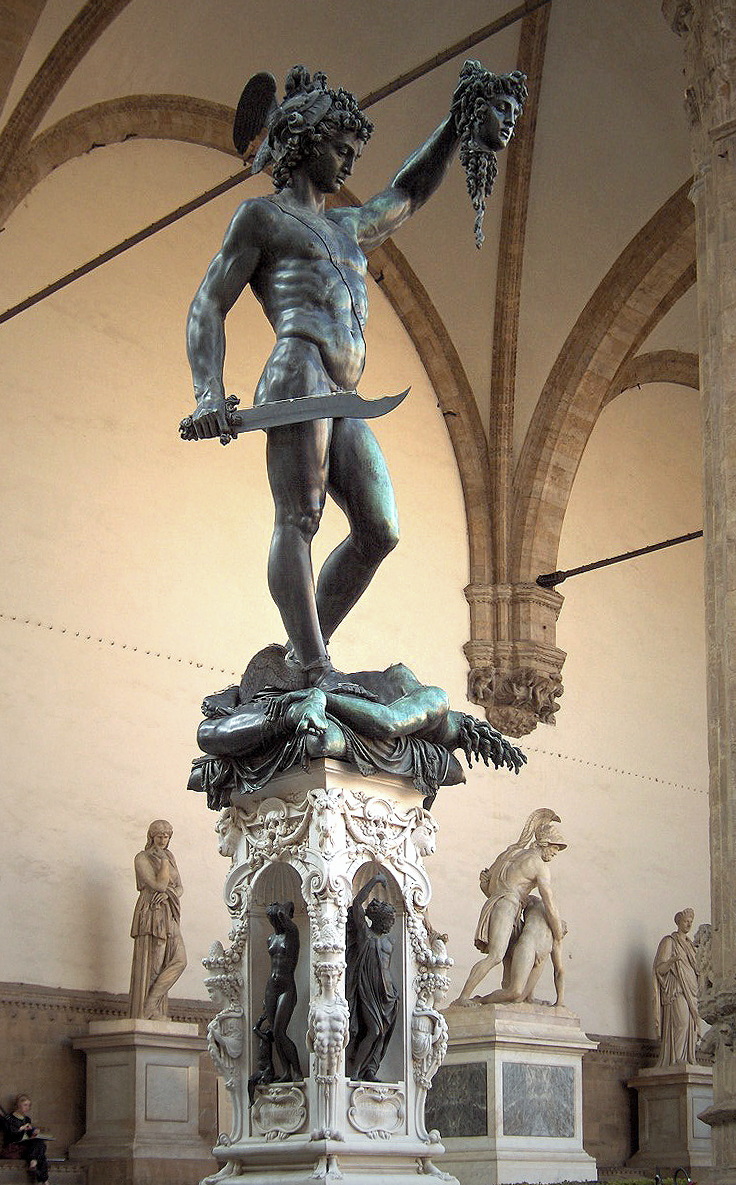
Persej je zamišljen kao figura zapovednički vertikalnog autoriteta, stojeći u kontrapostu na telu ubijene Meduze, čije obezglavljeno telo se grči pod njegovim stopalima u konvulziji smrti koja je istovremeno zastrašujuća i formalno elegantna. Persej drži odsečenu glavu u levoj ruci, krv teče iz vrata u mlazovima bronza koje je Čelini iscrtao sa tečnim naturalizmom koji transformiše trenutak ekstremnog nasilja u predmet estetske kontemplacije. Herojevo telo je idealizovano prema klasičnim proporcijama, ali sa manirističkim profinjenjemem: torzo je izdužen, udovi atenuirani, a ukupna silueta poseduje vijugavu eleganciju koja je razlikuje od robusnije fizičnosti Donatelovih ili Mikelanđelovih muških figura. Krilati šlem i zakrivljeni mač, atributi herojeve božanske opreme, izrađeni su sa zlatarskom preciznošću koja je karakterisala sve Čelinijevo delo, odražavajući njegovu obuku kao zlatara.
Elaborirano postolje, sada zamenjeno kopijom na Lođi, dok se original nalazi u Barđelu, integralni je deo koncepcije skulpture i jedan od najambicioznijih primera manirističke dekorativne umetnosti. Sadrži četiri bronzane statuete koje predstavljaju Jupitera, Merkura, Minervu i Danaju sa bebom Persejem, smeštene unutar arhitektonskog okvira mermernih niša, girlandi i ovnujskih glava. Postolje proširuje narativni i simbolički sadržaj skulpture, ugrađujući pojedinačni dramatični trenutak obezglavljivanja Meduze u širu mitološku genealogiju. Skulptura je zamišljena da se primarno posmatra spreda, stvarajući snažnu siluetu naspram otvorene arkade Lođe, ali Čelini je takođe posvetio pažnju bočnim i zadnjim pogledima, ugradivši reljef Perseja koji oslobađa Andromedu u bazu i osiguravajući da složene konture figure nagrađuju obilaženje.
Recepcija i nasleđe
Čelinijev Persej predstavlja vrhovno dostignuće manirističke bronzane skulpture i jedan od velikih tehničkih trijumfa u istoriji obrade metala. Uspešno livenje figure ove veličine i složenosti u jednom izlivanju bio je podvig koji je rivalivao sa dostignućima antike i prevazilazio sve što su pokušali Čelinijevi renesansni prethodnici, postavljajući novi standard ambicije u velikoj bronzanoj skulpturi. Postavljanje skulpture u Lođa dei Lanci, uz remek-dela koja se protežu od četrnaestog do šesnaestog veka, stvorilo je javni muzej firentinskog skulpturalnog dostignuća koji ostaje jedna od najizvanrednijih umetničkih instalacija na otvorenom u svetu.
Političke dimenzije Perseja osigurale su njegovu trajnu relevantnost za umetnoistorijske rasprave o odnosu između umetničkog patronata i političke moći. Transformacija mitološkog narativa u političku alegoriju u skulpturi uspostavila je model korišćenja javne skulpture kao instrumenta državne propagande koji bi bio razrađivan kroz čitav barokni period i dalje. Čelinijeva autobiografija, sa živopisnim opisom procesa livenja, doprinela je romantičarskom mitu o umetniku kao herojskom individualnom geniju koji se bori protiv materijalnih i društvenih prepreka, narativ koji je duboko oblikovao zapadne koncepcije umetničke kreativnosti. Sama skulptura, izložena vremenskim uticajima ali i dalje zapovednička na svom prvobitnom mestu, nastavlja da otelotvoruje maniristički ideal umetničkog dela kao demonstracije nadljudske veštine, trijumfa ljudske volje i inventivnosti nad otporom nepopustljivih materijala.