Istorijski kontekst
Bronzinova Alegorija sa Venerom i Kupidom gotovo sigurno je nastala u orbiti medičejskog dvora u Firenci tokom 1540-ih, perioda kada je vojvoda Kozimo I učvršćivao svoju političku vlast i negovao diplomatske odnose kroz strateške poklone luksuznih predmeta i umetničkih dela. Vazari beleži da je Kozimo poslao sliku Bronzina kralju Fransoau I od Francuske, i mada identifikacija londonskog panela sa ovim poklonom ostaje predmet debate, tematika slike, formalna sofisticiranost i erotski sadržaj potpuno su konzistentni sa tipom virtuozne dvorske produkcije namenjene demonstriranju firentinske umetničke supremacije. Fransoa I bio je poznati koneser sa posebnim ukusom za italijansku umetnost i tolerancijom prema erotskoj tematici, o čemu svedoči njegovo pokroviteljstvo Škole u Fontenblou. Slika je tako funkcionisala istovremeno kao diplomatski instrument, demonstracija umetničkog majstorstva i intelektualna zagonetka dizajnirana da angažuje i polaska erudiranost svog primaoca.
Alegorijski modus u kome je Bronzino ovde radio odražava širu kulturu emblematskog i hijeroglifskog mišljenja koja je prožimala intelektualni život Italije sredinom šesnaestog veka. Emblemata Andreje Alkijata, prvi put objavljena 1531. godine, inaugurisala je modu za vizuelne zagonetke koje kombinuju klasičnu učenost sa moralnom podukom, a Bronzino, koji je i sam bio objavljen pesnik znatne književne sofisticiranosti, bio je idealno pozicioniran da stvara slike koje funkcionišu na više nivoa značenja. Interpretativna teškoća slike nije slučajnost, već namerna strategija dizajnirana da nagradi trajnu kontemplaciju i da demonstrira slikarovu sposobnost za invenciju, ili inventio, kvalitet koji je renesansna teorija umetnosti cenila kao najvišu oznaku umetničke genijalnosti.
Formalna analiza
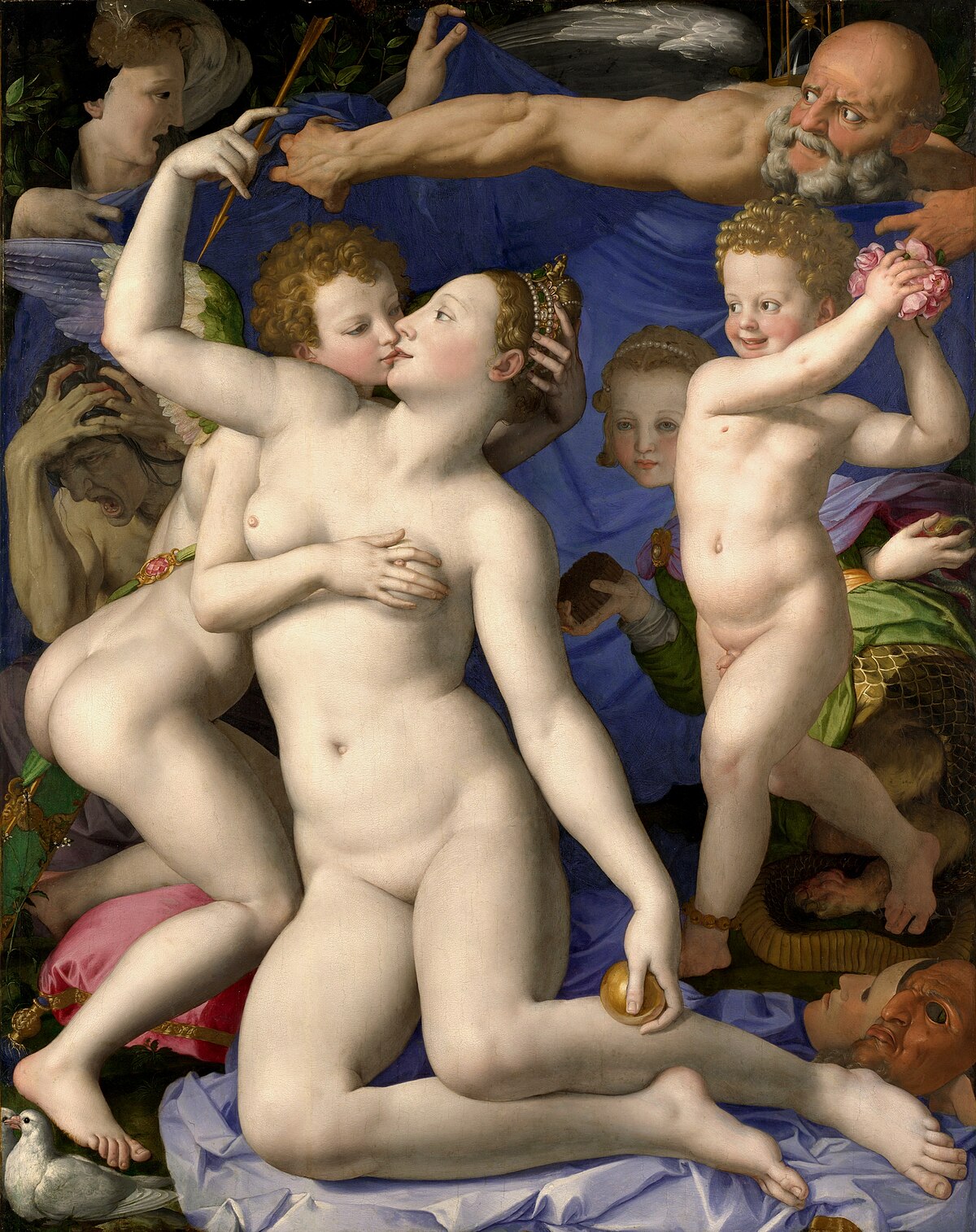
Kompozicija predstavlja čvrsto komprimovan raspored figura priljubljenih uz slikovnu ravan u plitkom, pozorničkom prostoru zatvorenom zavesom živopisnog ultramarin plavog, koju figura Vremena, u gornjem desnom uglu, povlači unazad da otkrije scenu. Venera zauzima centar, njeno sjajno telo okrenuto u složenoj serpentinskoj pozi koja istovremeno izlaže njenu lepotu posmatraču i privlači Kupida u incestuozni poljubac. Kupid klči sa leve strane, jednom rukom obuhvatajući majčinu dojku, drugom držeći strelu čiji je vrh suptilno uperen ka samoj Veneri. Njihov zagrljaj posmatraju alegorijske figure čije su precizne identifikacije izazivale vekovima naučne debate: dečak koji se smeje sa desne strane, spreman da ih zaspe laticama ruža, generalno se identifikuje kao Ludost ili Zadovoljstvo; izpaćena figura sa leve strane, koja steže sopstvenu glavu, kao Ljubomora ili Sifilis; zavodljivo stvorenje devojka sa repom zmije i izvrnutim rukama kao Prevara ili Obmana.
Bronzinova tehnika postiže površinu gotovo metalne savršenosti. Put Venere i Kupida prikazana je sa emajliranom glatkoćom koja eliminiše sve tragove četke i transformiše živa tela u predmete hladne, lapidarne lepote. Ova polirana završna obrada, karakteristična za Bronzinov zreli stil, stvara efekat erotske distance: tela su intenzivno čulna, a opet čudno neprobojana, njihove površine zapečaćene protiv imaginativnog ulaska posmatrača. Kolorističku shemu dominira kontrast između toplih tonova bjelokosti puti i hladnog intenziteta plave draperije, sa akcentima zelene, zlata i zapanjujuće crvene latice ruža. Prostorna kompresija, umnožavanje preklapajućih udova i ambivalentnih anatomskih veza, i odsustvo atmosferske dubine — sve doprinosi osećaju bezvazdušne, hermetičke zatvorenosti koji odražava intelektualnu neprozirnost slike.
Značaj i nasleđe
Alegorija sa Venerom i Kupidom zauzima singularan položaj u istoriji evropskog slikarstva kao možda najsloženija i najnamiernije enigmatična alegorijska slika šesnaestog veka. Njen otpor prema definitivnoj ikonografskoj interpretaciji učinio ju je večitim predmetom umetničko-istorijskog istraživanja, pri čemu su naučnici predlagali tumačenja koja se kreću od neoplatonskih meditacija o opasnostima čulne ljubavi do političkih alegorija medičejske diplomatije, pa do istraživanja odnosa između umetničke lepote i moralne korupcije. Uticajna analiza Ervina Panofskog iz 1939. uspostavila je okvir unutar koga se kreće većina kasnijih interpretacija, identifikujući temu slike kao razotrivanje zadovoljstava i bolova ljubavi od strane figure Vremena, ali čak je i Panofski priznao da se određene figure opiru pouzdanoj identifikaciji.
Širi značaj slike leži u njenoj demonstraciji sposobnosti vizuelne umetnosti da podrži nivoe semantičke složenosti i ambivalentnosti uporedive sa onima iz književnih tekstova. Bronzinovo dostignuće ovde nije samo tehničko, mada je njegova tehnika formidabilna, već intelektualno: stvorio je sliku koja zahteva aktivan interpretativni angažman i koja nagrađuje ponovljeno gledanje novim slojevima značenja. Uticaj slike može se pratiti u tradiciji alegorijskog dvorskog slikarstva koje je cvetalo u Fontenblou i na severnoevropskim dvorovima tokom kasnog šesnaestog veka, kao i u širem manirističkom negovanju teškog, opskurnog i namerno paradoksalnog. U modernom kritičkom diskursu, slika je postala ključni eksponat u debatama o odnosu erotizma i moći u renesansnoj dvorskoj kulturi i o sposobnosti umetnosti da istovremeno otelotvoruje i kritikuje vrednosti društva koje je proizvodi.