Istorijski kontekst
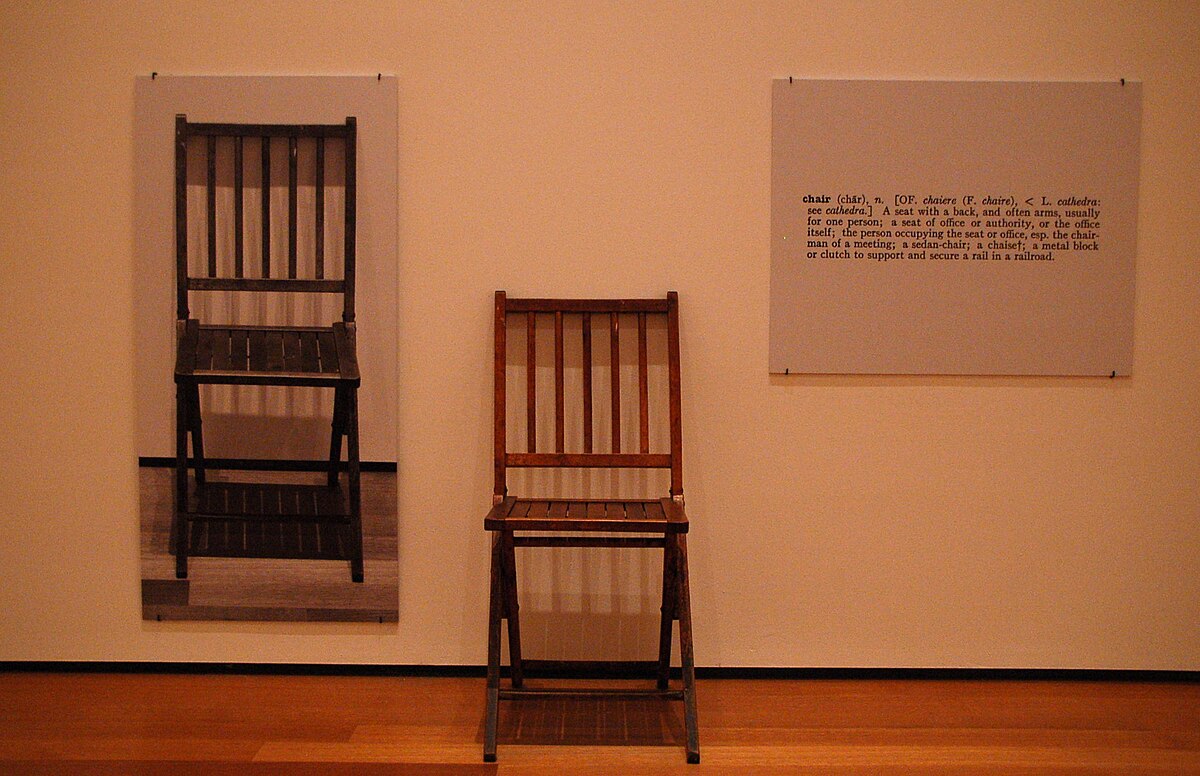
Jedna i tri stolice (1965) Džozefa Kosuta spada među osnivačka dela konceptualne umetnosti — pokreta koji je radikalno repozicionirao lokus umetničkog značenja sa materijalnog objekta na ideju, sa retinalnog na intelektualno, sa zanatski izrađenog artefakta na konceptualnu propoziciju. Delo se sastoji od tri elementa raspoređena jedan pored drugog: fizičke drvene preklopne stolice, crno-bele fotografije te iste stolice u prirodnoj veličini i uvećane fotografske reprodukcije rečničke definicije reči „stolica”. Ove tri komponente — objekat, slika, tekst — predstavljaju ono što izgleda kao isti referent kroz tri fundamentalno različita modusa reprezentacije, svaki sa sopstvenim epistemološkim tvrdnjama, sopstvenim odnosom prema konceptu „stoličnosti” i sopstvenom sposobnošću da prenese značenje. Varljiva jednostavnost aranžmana prikriva izvanrednu filozofsku složenost koju aktivira, i delo je generisalo korups kritičkog komentara ogromno neproporcionalan njegovom skromnom materijalnom prisustvu.
Formalna analiza
Najneposrednija filozofska rezonancija Jedne i tri stolice je sa Platonovom teorijom formi, artikulisanom u Knjizi X Države. Platon je razlikovao tri ontološka nivoa: idealnu Formu (savršen, nematerijalni koncept „stolice” koji postoji u carstvu Ideja), fizički objekat (konkretna stolica napravljena od strane zanatlije, koja je nesavršena kopija Forme) i umetničku reprezentaciju (slika ili fotografija stolice, koja je kopija kopije — dvostruko udaljena od ideala). Kosutov trodelni raspored može se mapirati na ovu platonsku shemu: rečnička definicija ukazuje na univerzalni koncept (lingvistički ekvivalent Forme), fizička stolica je konkretna instancijacija (zanatlijina kopija), a fotografija je reprezentacija reprezentacije (umetnikova imitacija). Ipak, Kosutovo delo ne ilustruje jednostavno Platonovu hijerarhiju; ono je destabilizuje. Koji od tri elementa je „prava” stolica? Fizički objekat izgleda kao očigledan odgovor, ali je i on sam masovno proizvedena roba — već kopija, proizvod industrijske replikacije a ne jedinstvenog zanatstva. Fotografija beleži specifičan vizuelni izgled stolice vernije nego što sam objekat može da prenese svoju „stoličnost”. Definicija, uprkos svojoj apstraktnosti, najprenosivija je i najkomunikabilnija forma koncepta. Delo drži ova tri modusa reprezentacije u nerazrešenoj tenziji koja odbija da privileguje bilo koji od njih.
Ikonografija i simbolika
Uticaj filozofije jezika Ludviga Vitgenštajna prožima delo, mada je Kosutov angažman sa Vitgenštajnom bio više tematski nego sistematski. Vitgenštajnova Filozofska istraživanja (1953) demontirala su pretpostavku da reči svoje značenje crpe iz objekata koje imenuju, tvrdeći umesto toga da je značenje konstituisano upotrebom — „jezičkim igrama” unutar kojih reči funkcionišu. Rečnička definicija u Jednoj i tri stolice ilustruje ovu problematiku: definicija izgleda kao da fiksira značenje „stolice” u jeziku, ali je ona sama tekst koji zahteva interpretaciju, koji zavisi od čitaočevog prethodnog razumevanja svake reči u definiciji i koji, na kraju, ne može da premosti jaz između jezika i sveta. Fizička stolica je, s druge strane, nema — ona „znači” ništa sama po sebi već samo unutar konteksta upotrebe, izlaganja i interpretacije koji je okružuju. Postavljajući uporedo ova tri modusa kreiranja značenja — ostenzivni (objekat), ikonički (fotografija) i lingvistički (definicija) — Kosut otkriva kontingenciju i nestabilnost svake reprezentacije, nemogućnost da se dođe do bilo kakvog neposredovanog susreta sa „stvari samom”.
Ključni aspekt Jedne i tri stolice koji je razlikuje od puke filozofske ilustracije jeste njena instrukcijama zasnovana, varijabilna priroda. Kosut je specifikovao da delo nije vezano za nijednu konkretnu stolicu: kada se delo instalira, može se koristiti bilo koja preklopna stolica, fotografija mora biti snimljena te specifične stolice in situ, a definicija se reprodukuje iz rečnika na jeziku zemlje u kojoj se delo izlaže. To znači da se delo menja sa svakom instalacijom — različita stolica, različita fotografija, različit jezik, različit galerijski kontekst — dok konceptualno ostaje isto delo. Identitet umetničkog dela ne rezidira ni u jednoj specifičnoj fizičkoj konfiguraciji već u skupu instrukcija koji ga generiše — radikalna propozicija koja odvaja umetnički identitet od materijalne instancijacije. Ova ontologija zasnovana na instrukcijama anticipira strategije kasnijih konceptualnih umetnika (Sol Levitovi zidni crteži, tekstualna dela Lorensa Vajnera) i pokreće fundamentalna pitanja o tome šta, tačno, konstituiše umetničko delo: Da li su to fizički objekti na podu i zidu galerije? Skup instrukcija u umetnikovim dosijema? Koncept u umu umetnika (ili posmatrača)?
Kosut je situirao Jednu i tri stolice unutar šire prakse koju je nazvao „Umetnost kao Ideja kao Ideja” — formulacija koja naglašava rekurzivnu, samoreferentnu prirodu njegovog projekta. Umetnost, za Kosuta, ne reprezentuje ideje o svetu; ona istražuje prirodu same umetnosti. Dvostruko „kao Ideja” signalizira da delo nije ideja o stolicama već ideja o tome kako ideje funkcionišu — meta-istraživanje uslova značenja, reprezentacije i umetničkog identiteta. U svom uticajnom eseju iz 1969. „Umetnost posle filozofije”, Kosut je tvrdio da je funkcija umetnosti istorijski preuzeta od strane filozofije i da je jedina održiva umetnička praksa ona koja istražuje sopstvene konceptualne temelje: „‘Najčistija’ definicija konceptualne umetnosti bila bi da je ona ispitivanje osnova koncepta ‘umetnost’, onako kako je on došao da znači.” Ova antifomalistička pozicija — eksplicitno suprotstavljena Klement Grinbergovom naglasku na svojstvima specifičnim za medijum — uskladila je Kosuta sa Sol Levitom, čiji su „Paragrafi o konceptualnoj umetnosti” (1967) objavili da „ideja postaje mašina koja pravi umetnost”, i sa širim pokretom ka dematerijalizaciji umetničkog objekta koji je kritičarka i kustoskinja Lusi Lipard dokumentovala u svojoj kapitalnoj studiji iz 1973. Šest godina: Dematerijalizacija umetničkog objekta od 1966. do 1972.
Recepcija i nasleđe
Institucionalni kontekst dela — njegovo prisustvo u Muzeju moderne umetnosti, jednom od najprestižnijih čuvalica materijalnih umetničkih objekata na svetu — generiše produktivnu ironiju koja je sama po sebi deo značenja dela. Jedna i tri stolice dovodi u pitanje da li umetnost rezidira u objektu, slici, ideji ili interpretaciji posmatrača, a ipak je ono samo smešteno, konzervirano, osigurano i izloženo kao objekat (ili tačnije, skup objekata) unutar tradicionalnog institucionalnog okvira muzeja. Ova tenzija između dematerijalizujućih konceptualnih ambicija dela i njegove neizbežne rematerijalizacije unutar institucionalnih struktura anticipira institucionalnu kritiku praktkovanu od strane umetnika kao što su Marsel Brodtaers, Hans Hake, Andrea Frejzer i Fred Vilson u narednim decenijama. Muzej, izlažući Jednu i tri stolice, istovremeno validira tvrdnju dela za umetnički status i podriva njegovu implicitnu kritiku sistema umetnosti zasnovanog na objektu — paradoks koji delo izgleda dizajnirano da proizvede a ne da razreši.
Pitanje koje delo na kraju postavlja — gde rezidira umetnost? — ostaje podjednako urgentno i nerazrešeno kao što je bilo 1965. U eri digitalne reprodukcije, veštačke inteligencije i NFT-ova, odnos između objekta, slike i koncepta koji je Kosut anatomizirao postalo je samo složenije i osporavanije. Jedna i tri stolice opstaje ne zato što odgovara na pitanje šta je umetnost, već zato što postavlja to pitanje sa takvom jasnoćom i ekonomičnošću da svaki naknadni pokušaj da se na njega odgovori mora da se obračuna sa Kosutovom formulacijom. To je, u najdubljem smislu, delo o nemogućnosti definisanja — predstavljeno, sa karakterističnim konceptualističkim duhovitošću, uz stvarnu definiciju. Jaz između stolice, njene fotografije i rečničke definicije je jaz u kome sva umetnost operiše: prostor između stvari, njene reprezentacije i njenog značenja, prostor koji se može beskonačno istraživati ali nikada zatvoriti.