Istorijski kontekst
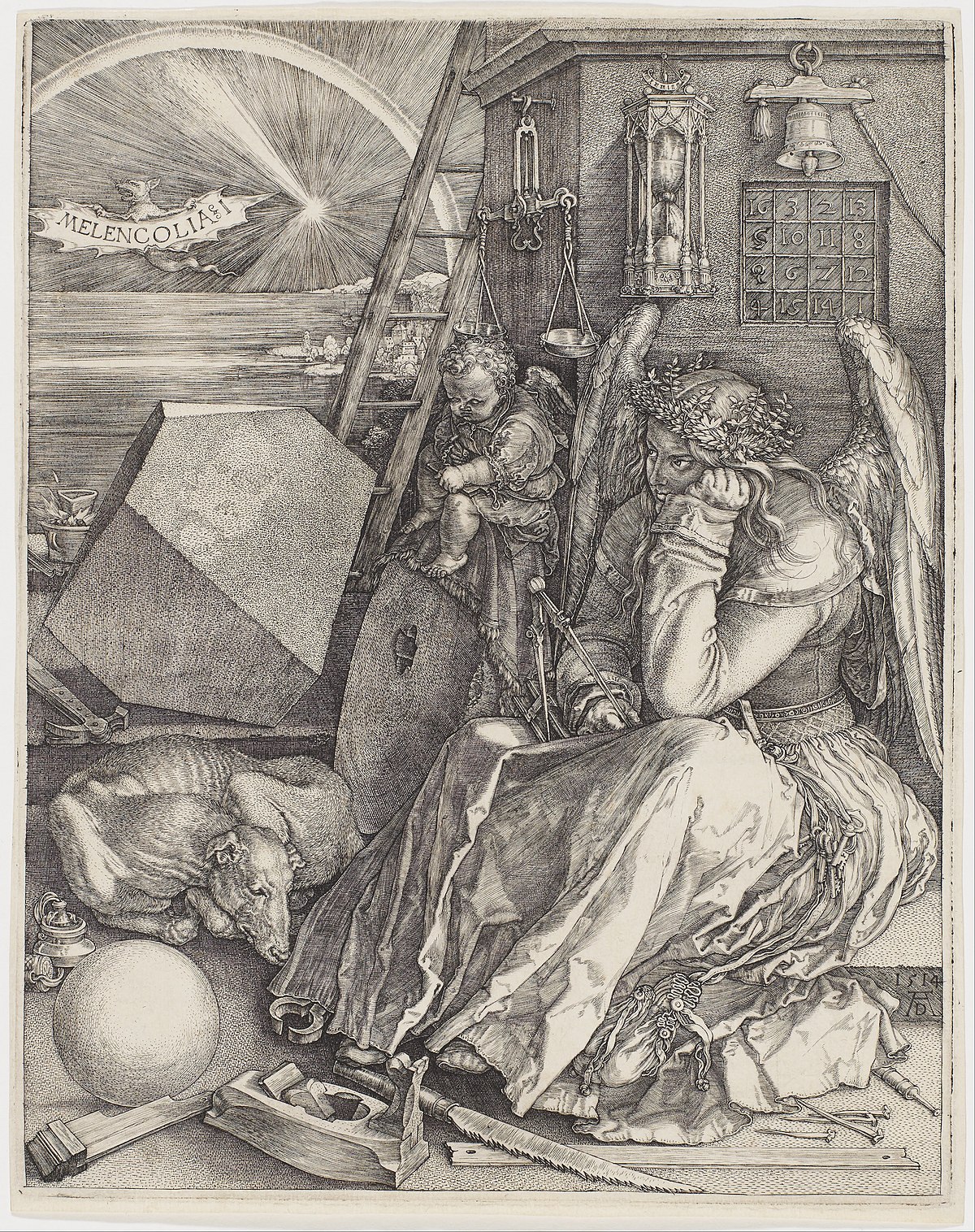
„Melanholija I” gravirana je od strane Albrehta Direra 1514. godine i pripada trijadi majstorskih gravura — zajedno sa „Vitezom, Smrću i Đavolom” (1513) i „Svetim Jeronimom u svom kabinetu” (1514) — koje se kolektivno smatraju vrhunskim dostignućima renesansne grafičke tradicije. Delo je nastalo tokom perioda intenzivnog intelektualnog angažmana za Direra, koji se nedavno vratio sa svog drugog italijanskog putovanja (1505-1507) duboko pod uticajem teorijskih spisa italijanskih humanista, posebno neoplatonske tradicije koja je povezivala melanholiju sa umetničkim i intelektualnim genijem. Ova asocijacija potekla je konačno iz pseudo-aristotelijanskih „Problematika XXX.1”, koja je postavila pitanje zašto su svi ljudi izvanrednih postignuća u filozofiji, poeziji i umetnosti bili melanholici, i bila je oživljena u Direrovo vreme od strane firentinskog filozofa Marsilia Fičina, čiji je „De Vita Triplici” (1489) preokrenuo melanholiju iz puke patološke bolesti u temperament kreativnog genija pod uticajem Saturna.
Direrovo angažovanje sa ovom intelektualnom tradicijom posredovano je njegovim bliskim prijateljstvom sa nirnberškim humanistom Vilibaldom Pirkajmerom, koji je služio kao kanal za italijanske filozofske ideje u nemačko govorno područje. Gravura je nastala tokom perioda ličnih poteškoća za Direra — majka mu je umrla u maju 1514, a njegova prepiska iz ovog perioda otkriva anksioznost zbog opadajućeg zdravlja i kreativnih snaga. Broj „I” u naslovu generisao je opsežnu naučnu debatu: kasnija trodelna klasifikacija melanholije Kornelijusa Agripe na imaginativnu, racionalnu i intelektualnu navela je neke naučnike da tumače „I” kao oznaku prvog i najnižeg stepena melanholije, onog umetnika i zanatlije, za razliku od viših melanholija naučnika i teologa. Drugi čitaju „I” jednostavno kao redni broj za planirani serijal koji nikada nije dovršen.
Formalna analiza
Kompozicija je centrirana oko masivne krilate ženske figure koja sedi u zamišljenoj neaktivnosti usred gusto nagomilanog sklopa predmeta i simbola. Poza figure — glava oslonjena na stisnutu pesnicu, tamno lice okrenuto od alata i instrumenata koji je okružuju — klasična je poza melanholične kontemplacije, odmah prepoznatljiva iz srednjovekovnih i renesansnih reprezentacija temperamenta. Njena krila, mada snažna, sklopljena su; drži šestar u desnoj ruci ali ga ne koristi. Ova tenzija između sposobnosti i paralize, između posedovanja znanja i nesposobnosti da se po njemu deluje, centralna je tema slike i izvor njene trajne psihološke moći.
Okolni predmeti čine razrađen simbolički program koji zaokuplja tumače pet vekova. Veliki poliedar — identifikovan naizmenično kao zarubljeni rombohedar ili kocka iskrivljena duž telesne dijagonale — ističe se u srednjem planu, njegove matematički precizne stranice demonstriraju Direrovo majstorstvo geometrijske projekcije dok istovremeno sugerišu neprobojnost apstraktnog znanja. Magični kvadrat na zidu iza figure sadrži datum 1514 u svom donjem redu, a njegove kolone, redovi i dijagonale zbrajaju trideset četiri, demonstrirajući matematički red koji kontrastira sa neredom okolnih alata. Izgladnjeli pas leži sklupčan pored nogu figure; puto sedi na mlinskomu kamenu, šarjući; zvono, peščani sat, vaga, rendica, ekseri i testera upotpunjuju inventar instrumenata koji obuhvataju praktične i spekulativne umetnosti. Kometa i duga na zamračenom nebu — ova poslednja označena naslovom „MELANHOLIJA I” na transparentu sa krilima nalik šišmišu — uvode nebeske i atmosferske pojave koje smeštaju scenu u liminalni prostor između prirodnog i natprirodnog.
Tehnički, gravura predstavlja Direra na apsolutnom vrhuncu njegovog majstorstva dleta. Tonalni raspon postignut različitim gustinama i unakrsnim šrafurama graviranih linija je izvanredan, od baršunaste tame zasenčenog lica figure do brilijantnih odsjaja na poliranim površinama sfere i poliedra. Preciznost sa kojom su teksture diferencirane — perje krila, gruba dlaka psa, neobrađeni kamen građevine, glatka geometrija instrumenata — demonstrira virtuoznost u intaljo medijumu koja nikada nije bila nadmašena.
Recepcija i nasleđe
„Melanholija I” opisana je kao grafički list o kome je najviše pisano u čitavoj istoriji umetnosti, a njena interpretativna literatura konstituiše naučnu tradiciju za sebe. Kapitalna studija Ervina Panofskog, Frica Saksla i Rejmonda Klibanskog, „Saturn i melanholija” (1964), smestila je gravuru unutar čitavog raspona tradicije melanholije od antike kroz renesansu, uspostavljajući je kao ključni dokument u intelektualnoj istoriji zapadnih stavova prema kreativnosti, ludilu i geniju. Naknadna nauka čitala je grafiku kroz prizme koje se kreću od alhemijske simbolike do reformacione teologije, od teorije brojeva do psihoanalize, svaka interpretacija crpeći iz različitih elemenata neiscrpne simboličke gustine grafike. Delo se pokazalo podjednako plodnim za umetnike: njene slike kreativne paralize i intelektualnog očajanja odzvanjale su kroz romantični i moderni period, utičući na figure tako raznolike kao što su Kaspar David Fridrih, Đorđo de Kiriko i Anzelm Kifer.
U okviru istorije grafike, „Melanholija I” stoji kao demonstracija sposobnosti medijuma da održi istu gustinu značenja i formalnu sofisticiranost kao slikarstvo ili skulptura, i odigrala je značajnu ulogu u podizanju statusa grafike od reproduktivnog zanata do autonomnog umetničkog oblika. Direr, koji je bio i graver i izdavač svojih grafika, bio je pionir komercijalnog modela za distribuciju umetničkih slika koji je anticipirao moderno tržište grafika, a otisci „Melanholije I” sakupljani su revnosno od trenutka njihovog objavljivanja. Opstanak brojnih visokokvalitetnih otisaka u velikim grafičkim kabinetima širom sveta — uključujući Metropoliten muzej umetnosti (akvizicioni broj 43.106.1), Britanski muzej i Državnu umetničku galeriju Karlsrue — svedoči o pažnji sa kojom je grafika čuvana kroz pet vekova. Ona ostaje neiscrpno delo, koje nastavlja da generiše nova čitanja upravo zato što je zamišljeno kao slika nesvodivosti samog značenja — alegorija suočavanja uma sa granicama sopstvenog razumevanja.