Istorijski kontekst
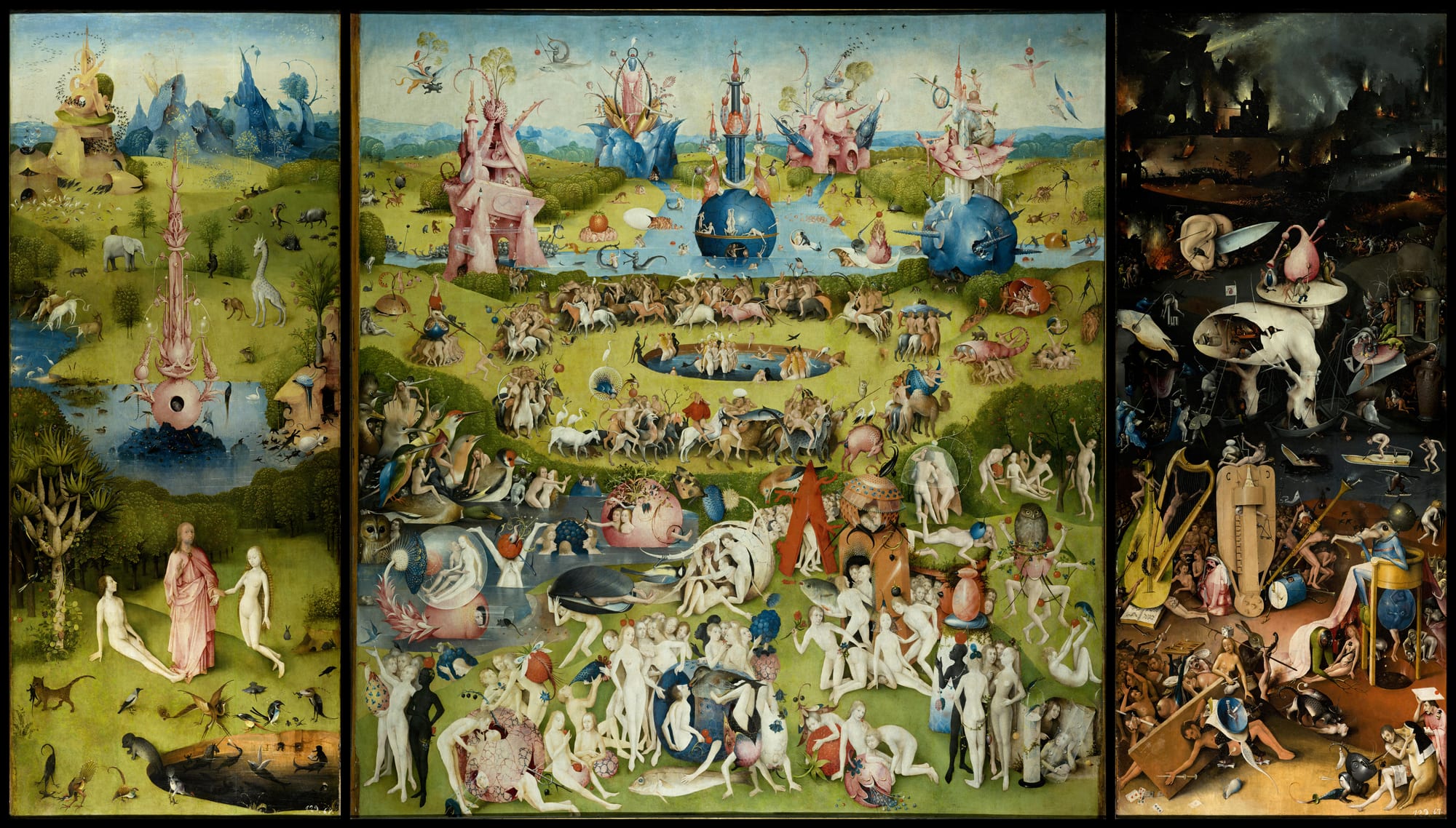
Vrt zemaljskih naslada, koji je naslikao Jeronim Boš (Jheronimus van Aken) verovatno između 1490. i 1510. godine, monumentalni je triptih u ulju na hrastovim panelima koji prkosi konačnom tumačenju već više od pet vekova, dok ostaje jedno od vizuelno najupečatljivijih i intelektualno najprovokativnijih dela u celokupnom kanonu zapadne umetnosti. Rana provenijencija slike je neizvesna, mada se nalazila u kolekciji grofa Henrika III od Nasau-Brede do 1517. godine i naknadno je stečena od strane Filipa II Španskog, strogog borca za protivreformaciju, koji ju je obesio u Eskorialu — iznenađujuće mesto za delo tako fantastične i često opscene ikonografije, što sugeriše da ju je Filip razumeo u moralističkom smislu, a ne kao slavlje uživanja koja prikazuje. Format triptiha — centralni panel flankirani šarkama spojenim krilima koji se zatvaraju da bi otkrili oslikanu spoljašnjost — tradicionalno je bio povezan sa oltarskim slikama namenjenim liturgijskoj upotrebi, ali Vrt zemaljskih naslada ne sadrži otvoreno liturgijske slike, a njegova funkcija je raznovrsno predlagana kao privatni devocioni predmet, konverzacioni komad za elitnog patrona, ili moralizatorski spektakl namenjen sali bratstva.
Formalna analiza
Spoljašnjost zatvorenog triptiha predstavlja grizajnu (monohromatsku sivozelenu) sliku zemlje trećeg dana stvaranja, prikazanu kao prozirnu sferu napola ispunjenu vodom i nastajućom vegetacijom, sa figurom Boga Oca malom u gornjem levom uglu i latinskim natpisom iz Psalma 33 — „Ipse dixit, et facta sunt; ipse mandavit, et creata sunt” (Rekao je, i bilo je učinjeno; zapovedio je, i sve je nastalo) — vidljivim u gornjim registrima. Ova slika prvobitne zemlje, izvedena sa geološkom preciznošću neobičnom za to razdoblje, uspostavlja kosmički okvir unutar kojeg se odvijaju narativni sadržaji unutrašnjosti triptiha. Tmurna, monohromatska paleta stvara vizuelni prag: čin otvaranja krila otkriva unutrašnje panele u dramatičnom izlivu zasićene boje, prelaz od stroge početnosti stvaranja do ogromnog hromatskog bogatstva stvorenog sveta.
Levo krilo prikazuje Rajski vrt, sa Bogom koji predstavlja Evu klečećem Adamu u prednjem planu, dok iza njih pejzaž vrvi izuzetnom menažerijom stvarnih i fantastičnih životinja — slonova, žirafa, jednoroga — okupljenih oko centralnog Izvora života, ružičaste, kristalne strukture nejasno organskog oblika. Scena deluje spokojno, ali je već obeležena uznemirujućim detaljima: mačka nosi mrtvu guštera u ustima, tamni bazen u srednjem planu vrvi zlokobnim hibridnim stvorenjima, a sam Izvor života ima uznemirujući, gotovo biološki kvalitet, čiji otvori i ispupčenja sugerišu organske procese, a ne arhitektonski red. Ovi suptilni prodori predatorstva, mutacije i čudnosti u edenski pejzaž tumačeni su kao Bošova naznaka da su semena korupcije bila prisutna u stvaranju od samog početka — da Pad nije bio prekid raja, već njegovo neizbežno odvijanje.
Centralni panel — „vrt zemaljskih naslada” koji triptyhu daje moderno ime — najizvanredniji je i najenigmatičniji od tri panela. Stotine nagih ljudskih figura, izvedenih bledim, gotovo prozirnim tonovima mesa, upuštaju se u zapanjujuću raznovrsnost aktivnosti na panoramskom pejzažu nastanjenom prevelikim voćem (jagodama, kupinama, trešnjama i grožđem), ogromnim pticama, fantastičnim arhitekturama i nadrealnim hibridnim stvorenjima. Figure jašu konje, kamile i grifone u velikoj kružnoj povorci; igraju se u bazenima i potocima; grle se, izvijaju i komuniciraju sa voćem i životinjama na načine koji se kreću od raziganih do eksplicitno erotskih. Odnosi razmera namerno su destabilizovani — jagoda nadvisuje ljudsku figuru, školjka služi kao sklonište za par, ptice veličine kuća gaze kroz plitke vode — stvarajući svet u kome su normalne hijerarhije prirode rastvorene. Odsustvo starih ili ostarelih figura, univerzalna nagost i atmosfera neumorne, bezbolne naslade naveli su neke naučnike da predlože da centralni panel ne prikazuje zemaljski greh, već viziju čovečanstva kakvo bi moglo biti da se Pad nikada nije desio — spekulativni raj nevine senzualnosti koji Boš predstavlja kao istovremeno privlačan i nemoguć.
Desno krilo — panel Pakla — razbija sanjalačku spokojnost centralnog panela vizijom noćnog mučenja koja ostaje jedna od najuznemirujućih slika u zapadnoj umetnosti. Pejzaž je osvetljen dalekim požarima — gorućim gradovima ili ustima pakla — i nastanjen monstruoznim figurama koje se bave sistematskim mučenjem prokletih. Muzički instrumenti postaju instrumenti kazne: figura je razapeta na harfi, druga je zarobljena unutar bubnja, trećoj je flauta provedena kroz telo. Takozvani „Čovek-drvo” — kolosalna hibridna figura čiji torzo je slomljena ljuska jajeta, čije noge su mrtva stabla drveća zasađena u čamcima, a čija glava podržava ravan disk na kome sitne figure šetaju oko džinovske gajde — najslavniji je i najbeskonačnije analizirani lik panela, ponekad identifikovan kao autoportret Boša. Džinovski par ušiju, proboden strelom i flankirajući sečivo, napreduje kroz scenu poput ratne mašine. Kazne slede logiku kontrapasa — grešnici su mučeni upravo uživanjima kojima su se predavali za života — princip poznat iz Danteovog Pakla, ali kome je Boš dao vizuelnu specifičnost i inventivnu surovost koja prevazilazi bilo šta u literarnoj tradiciji.
Interpretativna istorija Vrta zemaljskih naslada predstavlja studiju o granicama istorijsko-umetničke metodologije. Moralističko čitanje, dominantno od šesnaestog veka, razume triptih kao upozorenje protiv greha tela: Eden prikazuje prvobitno stanje blagodati čovečanstva; centralni panel prikazuje zavodljive naslade sveta koje neizbežno vode prokletstvu; panel Pakla otkriva večne posledice. Alternativna tradicija, koju je predložio Vilhelm Frenjer 1947. godine, tvrdila je da je Boš bio član adamitske sekte (Braća slobodnog duha), i da centralni panel prikazuje ritualne prakse sekte zajedničke nagosti i slobodne ljubavi — tumačenje koje bi sliku učinilo slavljem, a ne osudom naslada koje prikazuje. Ovo čitanje je uglavnom odbačeno od strane mainstream nauke, ali nastavlja da vrši uticaj. Novija tumačenja koristila su alhemiju (fantastične posude i procesi nalik destilaciji u panelu Pakla sugerišu alhemijski aparat), astrologiju i kasnosrednjovekovnu propovednicu, dok su digitalno snimanje i infracrvena reflektografija otkrili podcrteže i kompozicione promene koje osvetljavaju Bošov radni proces bez rešavanja fundamentalnih interpretativnih pitanja.
Recepcija i nasleđe
Uticaj slike na modernu i savremenu umetnost bio je dubok, posebno na pokret nadrealizma. Salvador Dali, Maks Ernst i Rene Magrit svi su priznali Boša kao preteču, prepoznajući u njegovom delu istu posvećenost iracionalnoj ikonografiji, sanjalačkoj jukstapoziciji i destabilizaciji razmera i kategorija koju su nadrealisti sledili kroz automatsko pisanje i istraživanje nesvesnog. Vrt zemaljskih naslada je reprodukovan, referenciran i prisvajan u bezbrojnim medijima — od omota albuma do video igara — a njegova ikonografija ušla je u kolektivni vizuelni rečnik zapadne kulture kao skraćenica za fantastično, transgresivno i uznemiravajuće. Ipak, slika se opire pripitomljivanju: njena čudnost nije svediva na nijedan pojedinačni interpretativni ključ, a njena moć proizilazi upravo iz sposobnosti da generiše značenje koje prevazilazi svaki okvir koji joj se nametne. Pet vekova nakon nastanka, Vrt zemaljskih naslada ostaje ono što je oduvek bio: jedno od najenigmatičnijih, vizuelno najimpozantnijih i intelektualno najneiscrpnijih dela u istoriji umetnosti.