Istorijski kontekst
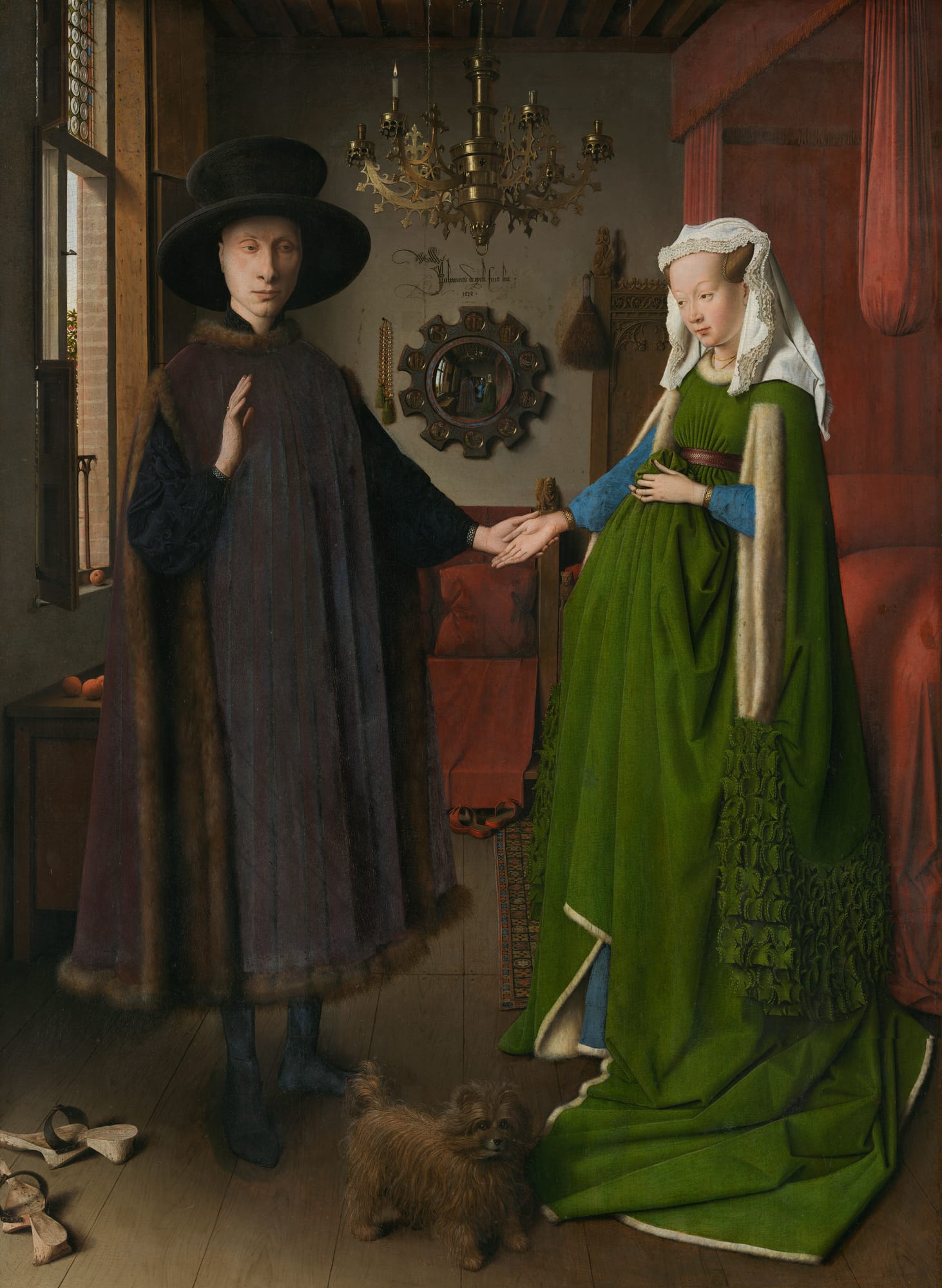
Arnolfini Portrait, koji je Jan van Ajk naslikao 1434. godine i potpisao upadljivim natpisom na zadnjem zidu prikazanog enterijera, jedna je od najdetaljnije posmatranih, simbolički najgušćih i tehnički najsavršenijih slika severne renesanse. Delo prikazuje portret u punoj figuri muškarca i žene koji stoje u dobro opremljenom buržoaskom enterijeru, njihove podignute i spojene ruke sugerišu formalni gest ujedinjenja. Muška figura je gotovo sigurno Đovani di Nikolao Arnolfini, imućni italijanski trgovac iz Luke koji se nastanio u Brižu, jednom od velikih trgovačkih gradova burgundske Nizozemske. Identitet žene bio je predmet većih sporova — dugo je identifikovana kao Đovana Čenami, Đovanijeva supruga, ali novija arhivska istraživanja su zakomplikovala ovu identifikaciju, i neki naučnici sada predlažu da bi mogla biti druga supruga ili sasvim druga žena. Tačna funkcija slike — da li je bračni portret, pravni dokument, memorijal preminulom supružniku ili jednostavno prikaz domaćeg blagostanja — ostaje jedno od najdiskutovanijih pitanja u istoriji umetnosti severne renesanse.
Natpis na zadnjem zidu — „Johannes de eyck fuit hic 1434” (Jan van Ajk je bio ovde, 1434) — jedinstven je u Van Ajkovom opusu i neobičan u evropskom slikarstvu pre modernog doba. Napisan u razrađenom pravnom pismu, a ne umetnikovim uobičajenim potpisom, njegovo formulisanje sugeriše formulu svedočenja korišćenu u pravnim dokumentima, a ne umetničku tvrdnju o autorstvu tipičnu za slikarev potpis. Ovo zapažanje bilo je centralno za slavnu interpretaciju istoričara umetnosti Ervina Panofskog iz 1934, koji je tvrdio da slika funkcioniše kao slikovni venčani list — da je Van Ajk prikazao sebe kao svedoka razmene zaveta para, pri čemu sama slika služi kao pravni zapis događaja. Panofskijevo tumačenje, iako izuzetno uticajno, osporavano je na više osnova: pravni status takvog „slikovnog dokumenta” u burgundskom pravu petnaestog veka je nejasan, a brak Đovanija Arnolfinija i Đovane Čenami (ako je ona zaista prikazana žena) dokumentovan je 1447, trinaest godina nakon datuma slike. Ipak, neobična formulacija natpisa nastavlja da signalizira da je odnos slike prema prikazanom događaju složeniji od onog u jednostavnom portretu.
Formalna analiza
Konveksno ogledalo na zadnjem zidu je najslavniji i najanaliziraniji detalj slike — bravura minijaturnog slikarstva koja obuhvata čitavu sobu u iskrivljenom odrazu prečnika od približno 5,5 centimetara. Ogledalo reflektuje leđa dve glavne figure, prozor sa leve strane, krevet sa desne i — ključno — dve dodatne figure koje stoje na vratima, od kojih jedna može biti sam Van Ajk koji ulazi u sobu kao posetilac ili svedok. Deset medaljona koji okružuju ogledalo prikazuju scene iz Hristovih stradanja u izuzetnoj minijaturi, pretvarajući kućanski predmet u teološki objekat i smeštajući domaću scenu u okvir svete istorije. Ogledalo funkcioniše na više nivoa istovremeno: kao demonstracija Van Ajkove virtuozne tehnike (dokazujući njegovu sposobnost da prikaže vidljivi svet u bilo kojoj razmeri); kao prostorni instrument koji proširuje prikazanu sobu izvan ravni slike, uključujući prostor posmatrača; i kao teološki simbol — ogledala su u srednjovekovnoj i renesansnoj misli bila povezana sa čistoćom, istinom i speculum sine macula (ogledalom bez mrlje), marijanskim epitetom koji je povezivao domaći enterijer sa Bogorodičinom svetošću.
Ikonografija i simbolika
Simbolički program slike, kako su ga razradili Panofski i kasniji naučnici, otkriva sistem „prikrivene simbolike” u kome svakodnevni domaći predmeti nose skrivena teološka ili moralna značenja. Jedna upaljena sveća u lusteru — koja gori po dnevnom svetlu — tumačena je kao svevidjeće oko Božje ili svadbena sveća tradicionalno prisutna na venčanjima. Mali pas kod nogu para simbolizuje vernost (fides). Skinute cipele, vidljive u donjem levom uglu i reflektovane u ogledalu, mogu upućivati na biblijsku zapovest Mojsiju da skine sandale na svetom tlu (Izlazak 3:5), sugerirajući da je prostor bračnog zaveta svet. Pomorandže na prozorskoj dasci i škrinji označavaju bogatstvo (bile su skupi import u severnoj Evropi) ili plodnost, ili mogu aludirati na nevinost Edenskog vrta pre Pada. Izrezbarena figura Svete Margarete na stubu kreveta — zaštitnice porođaja — i brojanica koja visi pored ogledala pojačavaju teme domaćinstva, plodnosti i pobožnosti. Da li su sva ova simbolička tumačenja bila namerna od strane Van Ajka ili predstavljaju preteranu interpretaciju modernih naučnika ostaje predmet debate, ali izuzetna gustina značajnih detalja slike je van svake sumnje.
Tehničko izvođenje predstavlja vrhunac ranog holandskog uljnog slikarstva, medija koji je Van Ajk, ako ga nije izumeo (kako je Vazari pogrešno tvrdio), usavršio do neviđenih nivoa sjaja i preciznosti. Uljane boje, za razliku od tempere koju su koristili italijanski savremenici, mogle su se nanositi u tankim, prozirnim lazurama koje su dozvoljavale da donji slojevi prosijavaju, proizvodeći efekte dubine, sjaja i hromatskog bogatstva nedostižne u neprozirnim medijima. Van Ajk je iskoristio ovu osobinu sa nenadmašnom sofisticiranošću: mesingani luster sija toplinom proizvedenom višestrukim prozirnim slojevima žute, zlatne i braon; krzno na muškarčevom ogrtaču prikazano je dlaku po dlaku, svaka nit hvata svetlost pod nešto drugačijim uglom; drveni pod se povlači u perspektivu konstruisanu ne geometrijom već akumuliranim detaljima pojedinačnih dasaka; prozor propušta svetlost koja se prelamа, reflektuje i rasipa po sobi sa vernošću optičkim pojavama koja anticipira holandske slikare enterijera sedamnaestog veka za dvesta godina. Površina slike, ispitana pod uvećanjem, otkriva svet unutar sveta — detalje nevidljive ležernom posmatraču koji nagrađuju pažljivo ispitivanje sve dubljim nivoima deskriptivne istine.
Formalna kompozicija postiže ravnotežu između simetrije i naturalizma koja je karakteristična za Van Ajkov zreli rad. Dve figure postavljene su sa obe strane centralne vertikalne ose definisane lusterom i ogledalom, njihova tela su blago nagnuta jedno prema drugom u kompozicijskoj rimi koja sugeriše partnerstvo i komplementarnost. Soba je konstruisana sa suptilnom asimetrijom — prozor sa leve strane, krevet sa desne — što sprečava da kompozicija postane rigidno dijagramska, dok povlačenje poda prema zadnjem zidu stvara odmeren prostorni dublju. Paletu dominiraju bogata zelena ženine haljine i tamna šljivasto-braon muškarca ogrtača, sa akcentima bele (ženina marama), crvene (prekrivači kreveta) i toplih zlatnih tonova lustera i ram ogledala. Svetlost ulazi sa leve strane, modelujući figure nežnim kijaroskurom koji im daje trodimenzionalno prisustvo bez dramatičnih kontrasta italijanskog slikarstva. Ukupni efekat je tišine, intimnosti i domaćeg reda — vizija dobrog života kako ga je shvatala imućna buržoazija Briža petnaestog veka.
Recepcija i nasleđe
Uticaj Arnolfini Portrait na kasniji razvoj evropskog slikarstva bio je i direktan i difuzan. Njegov pionirski naturalizam i integracija simboličkog značenja unutar ubedljivo prikazanog domaćeg prostora ustanovili su paradigmu za slikarstvo severne renesanse koju bi razvijali umetnici od Rožijea van der Vajdena do Vermera. Njegova demonstracija deskriptivnih mogućnosti uljane slike pomogla je ubrzavanje usvajanja ulja kao dominantnog medija širom Evrope, jer su italijanski slikari — Antonelo da Mesina pre svega — apsorbovali lekcije holandske tehnike. Šire gledano, slika predlaže viziju umetnosti kao sveobuhvatnog zapisa vidljive stvarnosti — svaka površina, svaka tekstura, svaka igra svetlosti prikazana s vernošću koja tretira materijalni svet kao dostojan najustrajnije i najpoštovanije pažnje. Ova posvećenost vidljivom, daleko od toga da bude samo tehnička, nosi sopstvenu filozofsku težinu: u svetu gde je svaki predmet istovremeno i on sam i znak nečega izvan sebe, čin gledanja postaje čin tumačenja, a slikarstvo postaje forma znanja.