Istorijski kontekst
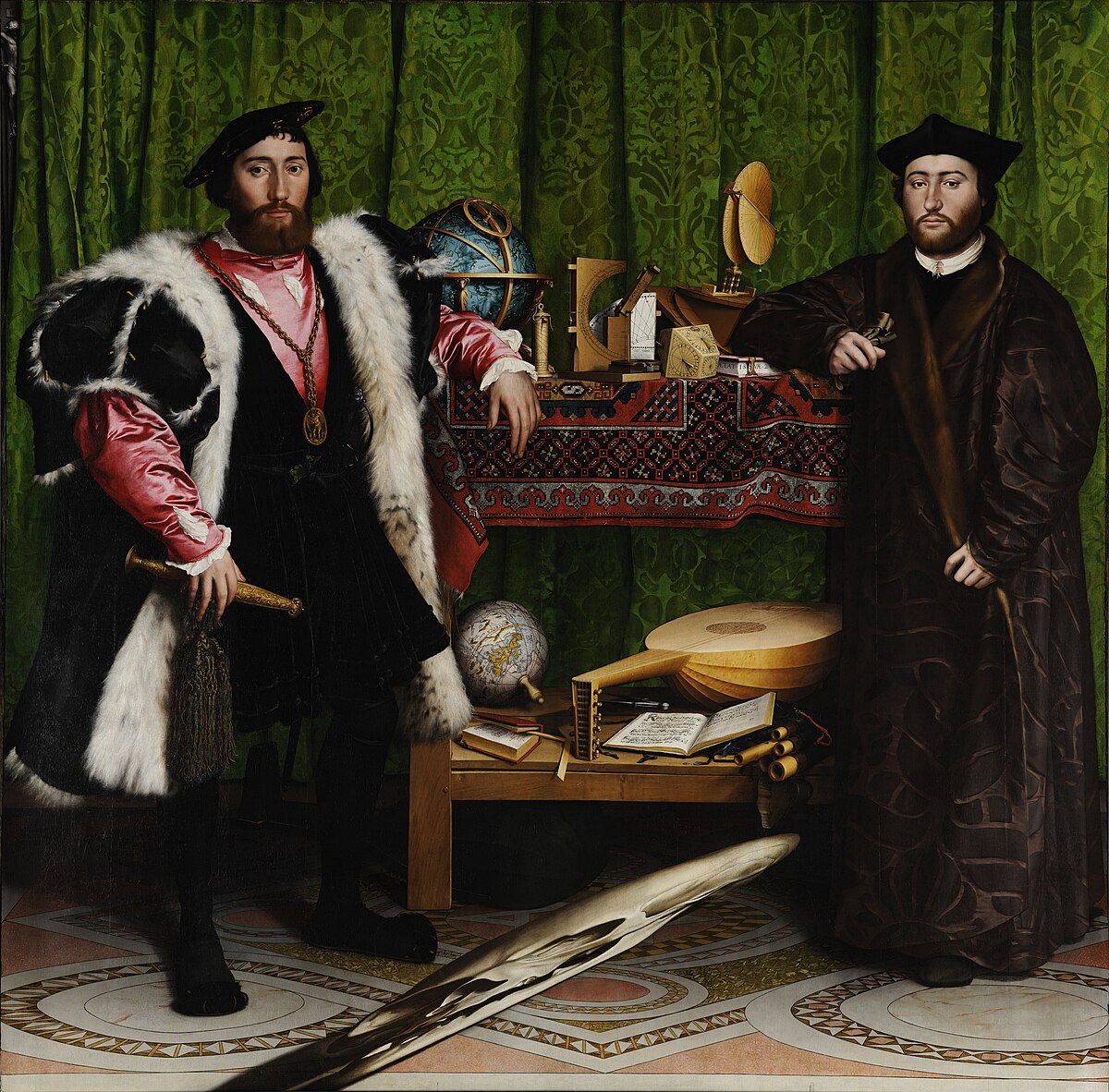
The Ambassadors, koje je Hans Holbein Mlađi naslikao 1533. godine, predstavlja monumentalni dvostruki portret dvojice mladih Francuza — Žana de Dentvila, gospodara Polizija i francuskog ambasadora na dvoru Henrija VIII, i Žorža de Selva, biskupa od Lavora — koji stoje sa obe strane dvospratne police natrpane naučnim instrumentima, muzičkim predmetima i knjigama. Slika, dimenzija 207 sa 209,5 centimetara (gotovo savršeno kvadratna), nastala je tokom Holbajnovog drugog boravka u Engleskoj, kada se nemački umetnik etablirao kao vodeći portretista na Tjudorskom dvoru. Dentvil, koji je u vreme nastanka slike imao dvadeset devet godina (starost je urezana na koricama njegovog bodeža), stigao je u London u februaru 1533. u diplomatskoj misiji od značajne delikatnosti: pregovaranje o složenim političkim posledicama Henrijevog VIII raskida sa Rimom zbog razvoda od Katarine Aragonske i braka sa Anom Bolen. Selv, star dvadeset pet godina (starost urezana na knjizi ispod njegovog lakta), posetio je svog prijatelja u Londonu u proleće te godine, i slika komemorira ovaj susret u trenutku duboke verske i političke krize u evropskom hrišćanstvu.
Formalna analiza
Dvojica muškaraca prikazani su sa prodornim naturalizmom koji definiše Holbajnovu zrelu portretistiku. Dentvil, sa leve strane, nosi raskošan kaput od ružičastog satena postavljen krznom preko crnog dubleta sa prorezima koji otkrivaju belu svilu ispod, sa dodacima u vidu zlatnog lanca, draguljem ukrašene kape sa značkom u obliku lobanje (lični amblem) i Ordena svetog Mihaila koji visi na zlatnom lancu oko vrata. Njegov izraz je oprezan, budni, blago melanholičan — prikladan za diplomatu koji plovi opasnim političkim vodama. Selv, sa desne strane, odeven je u tamne svešteničke odežde prikladne njegovoj episkopskoj službi, držanja je uzdržanijeg, pogled mu je blago usmeren u stranu od posmatrača. Holbajnovo prikazivanje tekstura — sjaj satena, dubina krzna, prozirnost kože, metalni odsjaj zlata — izvedeno je s preciznošću koja graniči sa nadnaravnim, svaka materijalna površina je diferencirana s pažnjom prema optičkoj istini koja ga smešta u liniju naslednika Jana van Ajka i holandske tradicije deskriptivnog realizma.
Predmeti raspoređeni na dvospratnoj polici između portretisanih čine jedan od najrazrađenijih aranžmana mrtve prirode u renesansnom slikarstvu, a njihova simbolika je predmet opsežne naučne analize. Gornja polica, povezana sa nebesima i kontemplativnim životom, prikazuje nebeski globus (podešen na specifičnu astronomsku konfiguraciju), cilindrični sunčani sat, torquetum (složeni astronomski instrument za izračunavanje položaja nebeskih tela), poliedarski sunčani sat i kvadrant — instrumente astronomije, kosmografije i merenja vremena. Donja polica, povezana sa zemaljskim i aktivnim životom, sadrži zemaljski globus (na kome je označeno Dentviliovo imanje Polizi), ugaonik, par šestara, lutnju sa pokidanom žicom, kutiju sa flautama kojima nedostaje jedna flauta, luteranski pesmenik otvoren na Johanu Valterovoj verziji „Veni Sancte Spiritus” i Luterovom „Mensch willt du leben seliglich” (parafraza Deset zapovesti), i knjigu aritmetike otvorenu na stranici o deljenju. Zajedno, ovi predmeti predstavljaju quadrivium — četiri matematičke veštine aritmetike, geometrije, astronomije i muzike — i, po proširenju, pun opseg ljudskog znanja i intelektualnog dostignuća.
Ipak, nekoliko ovih predmeta je suptilno poremećeno, uvodeći tonove nesklada i prolaznosti u prikaz učenosti i ovozemaljskog postignuća. Pokidana žica lutnje, istaknuto pozicionirana u centru donje police, tumačena je kao simbol nesklada — konkretno verskog nesklada koji razdire hrišćanstvo, gde Reformacija razbija jedinstvo Zapadne crkve kao što pokidana žica remeti harmoniju instrumenta. Luteranski pesmenik pojačava ovo tumačenje, postavljajući teološku kontroverzu Reformacije bukvalno u centar simboličkog programa slike. Kutija sa flautama, kojoj nedostaje jedna flauta, može slično sugerisati nepotpunost ili odsustvo. Knjiga aritmetike, otvorena na stranici o deljenju, dodatno odzvanja temom loma i razjedinjenosti. Čak i naučni instrumenti, iako impresivni kao prikaz ljudske genijalnosti, istovremeno su instrumenti za merenje vremena — i stoga, implicitno, podsetnici na prolaznost vremena i ljudsku smrtnost.
Najslavnija i vizuelno najupečatljivija karakteristika slike je anamorfna lobanja koja se dijagonalno proteže preko donjeg prednjeg plana, njena forma toliko radikalno iskrivljena da iz normalnog ugla posmatranja izgleda kao neshvatljiva mrlja braonkaste boje — upad vizuelnog haosa u inače meticulozan naturalizam slike. Lobanja se razrešava u svoj pravi oblik tek kada se slika posmatra iz oštro ukošenog ugla, bilo sa donje desne ili gornje leve strane. Ova anamorfna tehnika — projekcija slike na ravan pod ekstremnim uglom tako da izgleda iskrivljeno iz normalnog ugla ali ispravno iz specifične pozicije — bila je predmet značajnog interesovanja u optici i geometriji šesnaestog veka, a Holbajnova upotreba ovde spada među najranije i najdramatičnije primere u evropskom slikarstvu. Lobanja funkcioniše kao memento mori — podsetnik na smrt — koji doslovno prekida slavlje ovozemaljskog znanja, diplomatske moći i materijalnog sjaja. Efekat je i filozofski i perceptualni: posmatrač koji promeni položaj da bi razrešio lobanju otkriva da se ostatak slike rastvara u distorziju, tako da se dve realnosti slike — ovozemaljski sjaj i činjenica smrti — nikada ne mogu istovremeno percipirati.
Verski i politički kontekst slike proteže se izvan Reformacije i obuhvata specifičnu krizu Henrijevog raskola. Godine 1533, Henrijeva VIII odlučnost da poništi brak sa Katarinom Aragonskom i oženi se Anom Bolen izazivala je raskid Engleske sa papskim autoritetom — Akt o supremaciji, koji je proglasio kralja poglavarom Engleske crkve, usledio bi 1534. godine. Dentvil, kao francuski ambasador, bio je zadužen za posredovanje između Henrija i pape Klementa VII, misiju u kojoj je na kraju propao. Selv, posvećeni zagovornik crkvenog jedinstva i pomirenja sa protestantizmom, delio je Dentviliovo očajanje zbog raspada hrišćanskog sveta. Naglasak slike na neskladu, podeli i smrtnosti stoga se može tumačiti kao duboko lični odgovor na političku i versku katastrofu koju su obojica iskusili iz blizine. Mozaički pod na kome stoje, reprodukovan sa izvanrednom tačnošću prema Kozmati podu u Vestminsterskoj opatiji (krunidbenoj crkvi engleskih monarha), usidruje sliku u njen specifični engleski kontekst i može aludirati na krunisanje Ane Bolen, koje se odigralo u Vestminsteru 1. juna 1533.
Ikonografija i simbolika
Gotovo nevidljiv u gornjem levom uglu slike, napola sakriven iza zelene damastne zavese koja čini pozadinu, nalazi se mali srebrni krucifix — slika raspetog Hrista, sitna i skoro skrivena, ali pozicionirana na tačnom mestu sa koga se anamorfna lobanja razrešava u svoj pravi oblik. Ovaj detalj, lako previđen, transformiše značenje slike. Ako lobanja predstavlja smrt, a predmeti na policama predstavljaju ljudsko znanje i ovozemaljsko dostignuće, onda krucifix nudi jedino razrešenje sukoba između njih: obećanje vaskrsenja i večnog života kroz Hristovu žrtvu. Slika se tako kreće od ovozemaljskog sjaja (portretisani i njihovi instrumenti) kroz realnost smrti (lobanja) do nade u spasenje (krucifix), ocrtavajući teološki luk od temporalnog ka večnom. Gotovo nevidljivost krucifiksa — njegovo postavljanje na marginu, iza zavese — može sugerisati da se ova istina lako previđa usred distrakcija ovozemaljskog života, vidljiva samo onima koji su, poput posmatrača koji menja položaj da vidi lobanju, spremni da promene svoju perspektivu.
Recepcija i nasleđe
The Ambassadors je ušla u kolekciju National Gallery 1890. godine, kupljena za tadašnju ogromnu sumu od 55.000 franaka od grova od Radnora, čija porodica je sliku posedovala od početka devetnaestog veka. Ranija provenijencija slike vodi do Dentvilinog zamka u Poliziju, gde je beležena u inventarima do Francuske revolucije. Njena moderna slava u velikoj meri počiva na anamorfnoj lobanji, koja ju je učinila kamenom temeljcem za diskusije o perspektivi, iluziji i odnosu između gledanja i znanja — Žak Lakan joj je posvetio opsežnu analizu u svom delu Četiri fundamentalna koncepta psihoanalize (1973), tumačeći lobanju kao amblem „pogleda” koji remeti subjektovu vlast nad vizuelnim poljem. Za istoričare umetnosti, slika predstavlja apoteozu severnoevropske renesansne portretistike: delo koje kombinuje virtuoznu tehniku, enciklopedijsku učenost, oštru psihološku karakterizaciju i duboku filozofsku ambiciju u kompoziciju nenadmašne složenosti i intelektualne gustine.