Istorijski kontekst
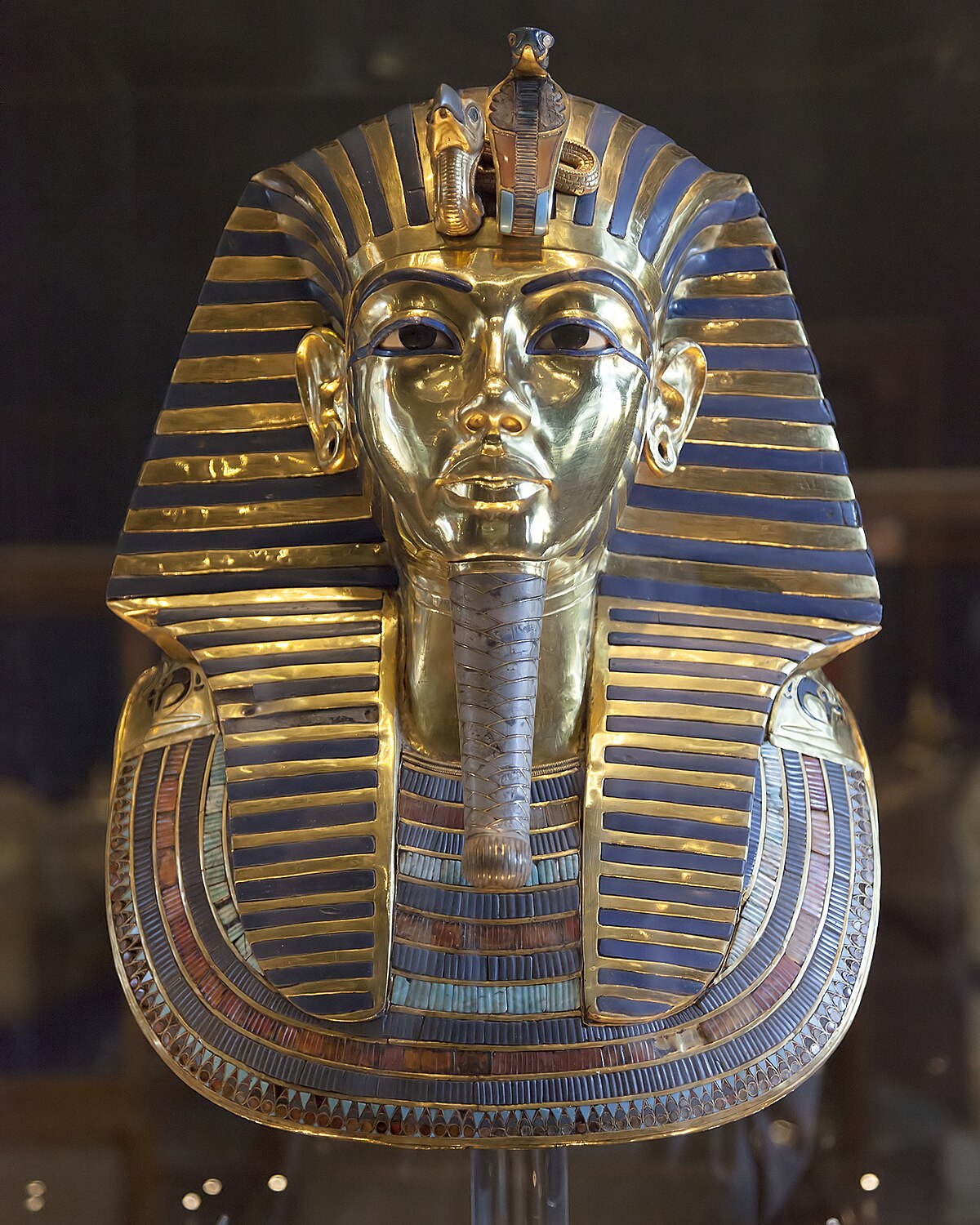
Pogrebna maska Tutankamona je najpoznatiji predmet koji je preživeo iz drevnog Egipta i verovatno najprepoznatljiviji artefakt bilo koje predmoderne civilizacije. Otkrivena 28. oktobra 1925. od strane britanskog arheologa Hauarda Kartera tokom mukotrpnog čišćenja grobne komore u grobnici KV62 u Dolini kraljeva, maska je pronađena kako pokriva glavu i ramena kraljevog mumificiranog tela, koje je ležalo unutar tri ugneždena antropoidna kovčega — najunutrašnji od čistog zlata — zatvorenih zauzvrat u sarkofag od kvarcita i četiri pozlaćene drvene svetilišta. Otkriće Tutankamonove grobnice 4. novembra 1922. od strane Kartera i njegovog pokrovitelja Džordža Herberta, petog grofa od Karnavona, bilo je najspektakularnije arheološko otkriće dvadesetog veka, otkrivajući praktično netaknut kraljevski ukop koji je sadržao preko pet hiljada predmeta koji su ležali neporemećeni više od tri milenijuma. Sam Tutankamon (vladao oko 1334-1325. p.n.e.) bio je relativno mali faraon Osamnaeste dinastije koji je stupio na presto sa otprilike devet godina i umro sa oko devetnaest, verovatno od komplikacija povezanih sa prelomlenom nogom pogoršanom malarijom, kako je otkriveno CT skeniranjem i DNK analizom sprovedenom 2005. i 2010. godine. Njegov istorijski značaj primarno proizlazi iz njegovog preokretanja verske revolucije koju je pokrenuo njegov otac (ili tast) Ahenaton, koji je pokušao da zameni tradicionalnu politeističku religiju Egipta isključivim obožavanjem sunčevog diska Atona; Tutankamon je obnovio stare bogove, vratio prestonicu iz Ahenatonovog nameski izgrađenog grada Amarne u Tebu i promenio sopstveno ime iz Tutankatona („Živa slika Atona”) u Tutankamona („Živa slika Amona”).
Opstanak maske je sam po sebi istorijska slučajnost izvanrednih posledica. Gotovo svaka kraljevska grobnica u Dolini kraljeva temeljno je opljačkana u antici, uglavnom tokom perioda političke nestabilnosti na kraju Novog carstva (oko 1070. p.n.e.), a zlato i dragoceni materijali pogrebne opreme pretopljeni su ili rasejani. Tutankamonova grobnica izbegla je ovu sudbinu uglavnom zato što je njen ulaz bio zatrpan krhotinama od izgradnje kasne, veće grobnice Ramzesa VI (KV9), koja ju je efikasno sakrila od drevnih pljačkaša grobnica, mada je grobnica bila otvorena bar dva puta u antici pre nego što su je ponovo zapečatili službenici nekropole. Opstanak maske — i celokupnog blaga — tako zavisi od lanca slučajnosti: nepoznatosti malog kralja, slučajnosti kasnije gradnje i revnosti drevnih grobljeanskih čuvara, bez kojih bilo kog maska bi delila sudbinu bezbrojnih drugih kraljevskih zlatnih predmeta koji su pretopljeni kroz vekove i zauvek izgubljeni.
Formalna analiza
Maska je izrađena od približno 10,23 kilograma zlata (nedavna analiza revidirala je tradicionalno navođenu cifru od 11 kilograma), kovanog u oblik od dva glavna lista — jednog za lice i jednog za zadnji deo glave i nemes pokrivala za glavu — spojenih kovanjem i dopunjenih manjim delovima za uši, bradu i ostale detalje. Legura zlata varira u sastavu na različitim delovima maske, sa licem i vratom sastavljenim od svetlijeg, čistijeg zlata (otprilike 18,4 karata) i nemes pokrivalom za glavu od nešto drugačije legure, što je navelo neke naučnike, posebno egiptologa Nikolasa Rivsa, da predlože da je maska prvobitno napravljena za drugu osobu (moguće Neferneferuatena, Ahenatonovog savladara) i naknadno modifikovana za Tutankamonov ukop — hipoteza koja ostaje osporavana ali je generisala produktivnu debatu o radioničkim praksama i ponovnoj upotrebi pogrebne opreme u kasnoj Osamnaestoj dinastiji. Lice prikazuje idealizovani portret mirne, mladalačke lepote: blago zakošene bademaste oči umetnute pupilama od opsidijana i belim delom od kvarca, oivičene lapis lazulijem koji simulira kohl šminku, gledaju napolje sa izrazom transcendentnog mira. Obrve i kozmetičke linije umetnute su od lapis lazulija, a mesnate, blago stegnute usne — jedna od najekspresivnijih odlika maske — renderovane su sa senzitivnošću koja sugeriše specifičnu, mada idealizovanu, sličnost pre nego generički kraljevski tip.
Površina maske ukrašena je virtuoznom demonstracijom kluazone umetanja i primenjenog zlatarskog rada koja demonstrira vrhunsko tehničko dostignuće metalurgije Novog carstva Egipta. Nemes pokrivalo za glavu — prugasti povez za glavu koji je nosio isključivo faraon — prikazano je u naizmeničnim prugama poliranog zlata i plave staklene paste (prvobitno smatrane lapis lazulijem ali identifikovane kroz spektrografsku analizu kao staklena pasta), nabori plisiranja artikulisani preciznim paralelnim linijama koje beleže teksturu lanene tkanine u metalu. Na čelu, dvostruki zaštitni amblemi Gornjeg i Donjeg Egipta — boginja-lešinar Nehbet i boginja-kobra Vadžet (urej) — ispupčeni su napred u trodimenzionalnom zlatu sa umetnutim detaljima u lapis lazuliju, karneolu i obojenoj staklenoj pasti. Glava lešinara, zamena instalirana nakon oštećenja originala, je sama po sebi minijaturno remek-delo zlatarstva, perje joj je pojedinačno artikulisano a oči umetnute opsidijanom. Široka ogrlica (vesek) koja pokriva grudi sastoji se od redova umetnutih plaketa u lapis lazuliju, kvarcu, staklenoj pasti boje amazonita i karneolu, raspoređenih u karakteristični obrazac ogrlice sa završecima u obliku sokola koji se nalazi širom egipatskog nakita. Na poleđini maske, vertikalni stub hijeroglifskog teksta urezan u zlato sadrži Poglavlje 151b Knjige mrtvih, čaroliju koja identifikuje svaki deo maske sa specifičnim zaštitničkim božanstvom, transformišući objekat iz pukog pokrivala u magijski aktivirani instrument faraonovog uskrsnuća i oboženja.
Recepcija i nasleđe
Značaj Maske Tutankamona u istoriji umetnosti i materijalne kulture deluje na više registara istovremeno: kao vrhunsko dostignuće antičke zlatarske tehnike, kao dokument egipatske kraljevske pogrebne teologije i kao kulturna ikona čija je slava oblikovala razumevanje modernog sveta o — i fascinaciju — drevnom egipatskom civilizacijom. Kao delo metalurške umetnosti, maska predstavlja kulminaciju tradicije zlatarstva koja se protezala kroz više od jednog milenijuma do najranijeg dinastičkog perioda, a njena tehnička sofisticiranost — preciznost kovanih zlatnih listova, složenost kluazone umetanja, integracija višestrukih materijala u jedinstvenu skulpturalnu formu — potvrđena je od strane uzastopnih generacija naučne analize, najskorije opsežnom studijom sprovedenom od strane konzervatorskog tima Velikog egipatskog muzeja u pripremi za instalaciju maske u novom muzeju. Maska takođe otelotvoruje centralnu teološku preokupaciju egipatske pogrebne prakse: očuvanje i transformaciju tela preminulog kralja u nepropadljivu, božansku formu sposobnu da prođe podzemni svet, pobedi sile haosa i postigne večni život u jedinstvu sa Ozirisom i Raom. Zlato maske nije bilo samo dekorativno već supstantivno — Egipćani su opisivali telo bogova kao zlato a njihove kosti kao srebro, i okivajući faraonove smrtne ostatke u zlato, maska je izvršila materijalnu metamorfozu iz ljudskog leša u božansko telo.
Uticaj maske na modernu kulturu bio je izvanredan i verovatno bez premca među antičkim artefaktima. Globalna putujuća izložba „Blago Tutankamona”, koja je putovala u sedam zemalja između 1972. i 1981. (mada sama maska nije putovala, ostajući u Kairu), privukla je preko osam miliona posetilaca i inaugurisala fenomen „blokbaster” muzejske izložbe, transformišući odnos javnosti sa antičkom umetnošću i uspostavljajući model kulturne diplomatije putem putujućih izložbi koji se održava do današnjeg dana. Slika maske reprodukovana je milijardama puta — na poštanskim markama, koricama knjiga, posterima, reklamama i suvenirima — postajući univerzalni označitelj drevnog Egipta u popularnoj svesti i, šire, simbol privlačnosti i misterije antičke prošlosti. Ova sveprisutnost paradoksalno je i obogatila i osiromašila razumevanje objekta: dok je slava maske privukla milione ljudi da se upoznaju sa egipatskom umetnošću i istorijom, njeno svođenje na ikonu često je zamaglilo teološku složenost, tehničku majstoriju i istorijsku specifičnost koje je čine ne samo lepim zlatnim licem već jednim od najgušće značenjskih predmeta ikad stvorenih ljudskim rukama. Očekivana instalacija maske u Velikom egipatskom muzeju blizu platoa Gize pružiće priliku da se objekat rekontekstualizuje unutar pnog sklopa Tutankamonove pogrebne opreme, vraćajući nešto od integrisanog pogrebnog programa koji je Karterovo otkriće otkrilo i koji su decenije izložbi i reprodukovanja težile da fragmentiraju.