Istorijski kontekst
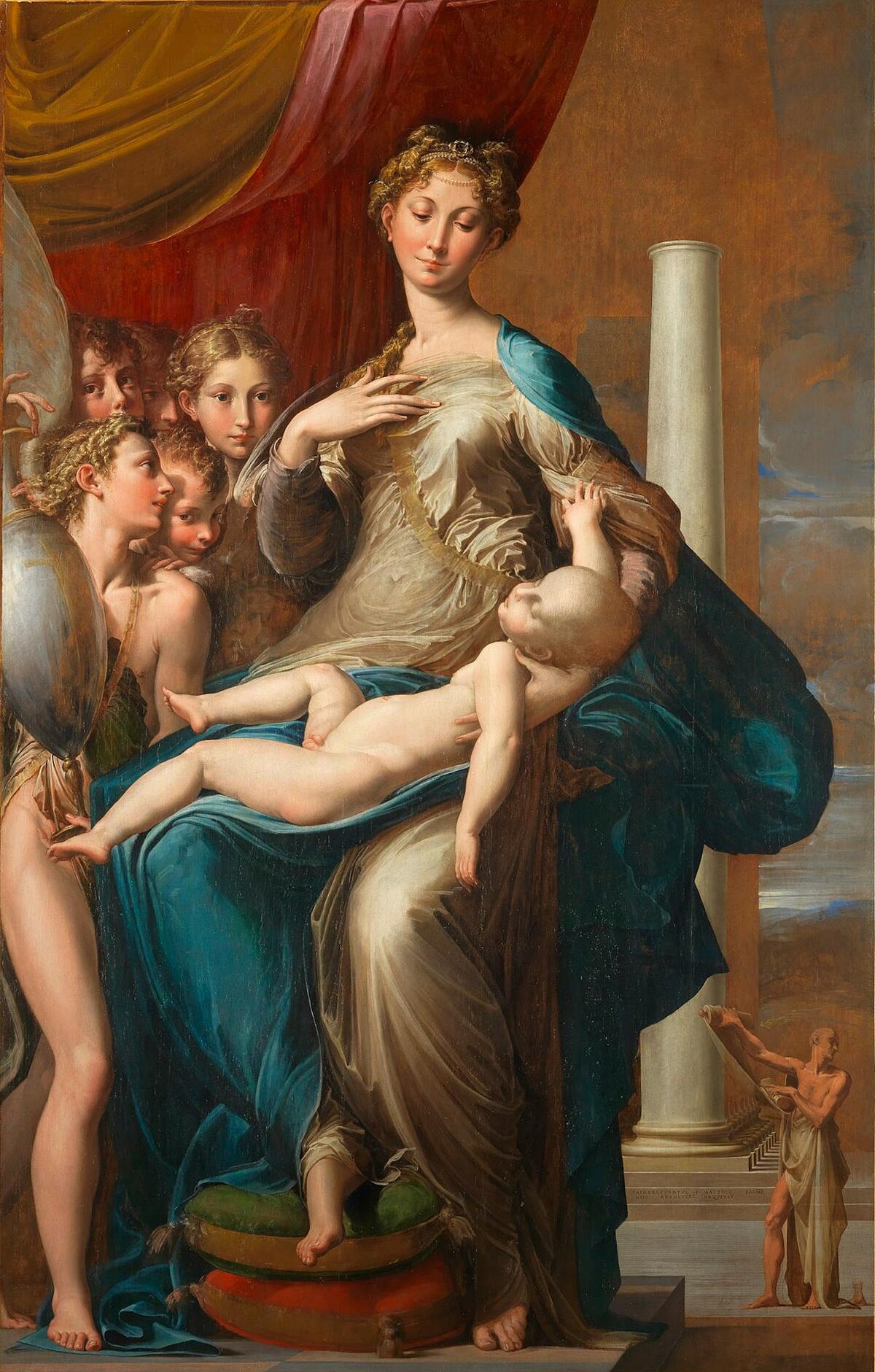
Madona dugog vrata naručena je 1534. od strane Elene Bajardi za porodičnu kapelu u crkvi Santa Marija dei Servi u Parmi. Parmidžanino, rođen kao Đirolamo Frančesko Marija Macola, vratio se u Parmu 1531. nakon produženog boravka u Rimu i Bolonji, tokom kojih je apsorbovao monumentalna dostignuća Rafaela i Mikelanđela razvijajući sve ličniji i idiosinkratičniji stil. Narudžbina se poklopila sa burnim periodom u umetnikovom životu obeleženim rastućom opsednutošću alhemijom, eskalacijom dugova i nesposobnošću da dovrši ugovorene radove, uključujući freske u Santa Marija dela Stekata koje bi na kraju dovele do njegovog hapšenja zbog kršenja ugovora. Parmidžanino se mučio nad Madonom dugog vrata šest godina bez dovršetka; na njegovu smrt 1540. u trideset sedmoj godini, desna strana panela ostala je uočljivo nedovršena, sa usamljenim stubom i sićušnom figurom Svetog Jeronima koji drži odmotani svitak jedva skiciranim.
Sliku treba razumeti u kontekstu kulture italijanske dvorske sredine sredine šesnaestog veka, u kojoj je potraga za gracija, ili lakom, rafiniranom elegancijom, postala vrhunska estetska i društvena vrednost. Knjiga o dvorejaninu Baldazarea Kastiljonea, objavljena 1528, kodifikovala je ovaj ideal sprecature — umetnosti da se teško čini prirodnim — a Parmidžaninova umetnost prevodi ovaj dvorski etos u vizuelnu formu. Namerno izduženje i rafiniranost figura u Madoni dugog vrata nisu greške crtačke veštine već proračunati izrazi estetske filozofije koja je cenila veštinu iznad naturalizma i ideal iznad posmatranog.
Formalna analiza
Kompozicija je podeljena na dve prostorno nepomirljive zone. Na levoj strani, skupina izuzetno lepih anđela nagomilana je oko Madone u rasporedu koji podseća na klasičnu reljefnu skulpturu, njihova preklopljena tela stvaraju gusti friz idealizovanog mesa, kaskadne kose i diafane draperije. Devica sama dominira centrom panela, sedeći na tronu nemoguće visine, telo joj je izduženo do proporcija koje prevazilaze svaki naturalistički model. Njen vrat, po kome slika nosi svoj uobičajeni naziv, proteže se do dužine koja evocira polirani stub vidljiv u pozadini, uspostavljajući vizuelnu metaforu između ljudskog tela i arhitektonske forme koja se oslanja na tradiciju Marijinih himni koje porede Devičin vrat sa kulom od slonovače. Dete Hristovo, prekrupno i naizgled bez kostiju, rasteže se preko njenog krila u pozi koja jezivo anticipira mlitavost smrti, uvodeći podtok žrtvene simbolike ispod površinske elegancije slike.
Prostorna konstrukcija slike prkosi racionalnoj analizi. Pozadina na desnoj strani naglo se povlači otkrivajući portik izduženih stubova i sićušnu figuru Svetog Jeronima, koji izgleda kao da postoji na nemogućoj udaljenosti od grupe u prvom planu uprkos tome što zauzima poziciju samo neznatno ispod njih na slikovnoj ravni. Ova disjunkcija između prednjeg i zadnjeg plana, između monumentalne razmere Madone i liliputanske razmere proroka, stvara osećaj prostornog vrtoglavice koji je centralan za uznemirujući efekat slike. Površinski tretman je izuzetno rafiniran, sa mesom renderovanim u glatkim, porcelanskim tonovima koji eliminišu vidljiv potez četke i daju figurama gotovo skulpturalnu prisutnost. Nedovršeno stanje delova panela nenamerno pruža uvid u Parmidžaninov radni metod, otkrivajući pažljiv crtež ispod i slojevitu konstrukciju koji leže ispod privida beznaporne savršenosti slike.
Recepcija i nasleđe
Madona dugog vrata postala je najkoničnija slika italijanskog manirizma, slika toliko blisko identifikovana sa pokretom da funkcioniše kao virtuelni amblem manirističke estetike. Njeno namerno iskrivljenje ljudske figure, prostorna iracionalnost i kultivacija lepote koja je istovremeno privlačna i uznemirujuća otelotvoruju centralne tenzije manirističke umetnosti: želju da se prevaziđu dostignuća majstora visoke renesanse uz istovremeno priznanje nemogućnosti da im se bude ravan, i prihvatanje veštačkosti kao legitimnog, čak superiornog, modusa umetničkog izražavanja. Vazari, pišući u drugom izdanju svojih Života, hvalio je Parmidžaninovu gracioznost i eleganciju uz napomenu o ekscentričnom ponašanju koje je sprečilo dovršenje velikih narudžbina, uspostavljajući narativ o mučenom, perfekcionističkom umetniku koji je opstao u umetničko-istorijskoj literaturi.
Uticaj slike proteže se daleko izvan njenog neposrednog istorijskog konteksta. Njene izdužene figuralne proporcije i istanjena elegancija informisale su rad kasnijih manirista uključujući Primatičoa i umetnike Škole Fontenblo, koji su preneli Parmidžaninovu estetiku na francuski dvor. U dvadesetom veku, slika je postala probni kamen za kritičare i istoričare koji su nastojali da rehabilituju manirizam od pejorativnih konotacija koje je stekao tokom ere neoklasične i akademske kritike. Maks Dvoržak je u svom uticajnom eseju iz 1920. o El Greku citirao Parmidžaninov rad kao dokaz da manirističko iskrivljenje izražava istinski duhovni i intelektualni sadržaj, a ne puku hirovitost. Nedovršeno stanje slike, nekada smatrano nedostatkom, počelo je da se vrednuje kao integralni deo njenog značenja, svedočanstvo manirističke potrage za idealnom lepotom koja ostaje večno, i možda nužno, izvan potpunog ostvarenja.