Istorijski kontekst
Lindisfarnska jevanđelja (Britanska biblioteka, Cotton MS Nero D.IV) stoje kao jedno od najdostignućih i istorijski najznačajnijih rukopisa nastalih u ranosrednjovekovnoj Evropi, delo zapanjujuće umetničke virtuoznosti nastalo u manastiru Lindisfarn na Svetom ostrvu, plimskom ostrvu uz severnoistočnu obalu Nortambrije. Rukopis sadrži četiri Jevanđelja Novog zaveta na latinskom, napisana elegantnom insularnom poluuncijalnom skriptom izvanredne doslednosti i lepote. Kolofon dodat u desetom veku od strane Aldreda, priora Čester-le-Strita, pripisuje nastanak rukopisa Edfridu, biskupu Lindisfarna (698-721. n.e.), navodeći da je on napisao i iluminirao čitav tom jednoručno — tvrdnja koja, ako je tačna, čini ovo jednim od retkih velikih insularnih rukopisa pripisivim imenovanom pojedincu. Aldred dalje beleži da je Etelwald, Edfridov naslednik kao biskup, uvezao tom, i da je Bilfrit Pustinjak ukrasio povez plemenitim metalima i draguljima, rizničnim koricama koje su odavno izgubljene. Paleografska i umetničko-istorijska analiza uglavnom je potkrepila datiranje oko 700. godine n.e., smeštajući nastanak rukopisa u zlatno doba nortambrijskog monaštva kada je Lindisfarn služio kao jedan od vodećih centara učenosti i umetničke produkcije na Britanskim ostrvima.
Formalna analiza
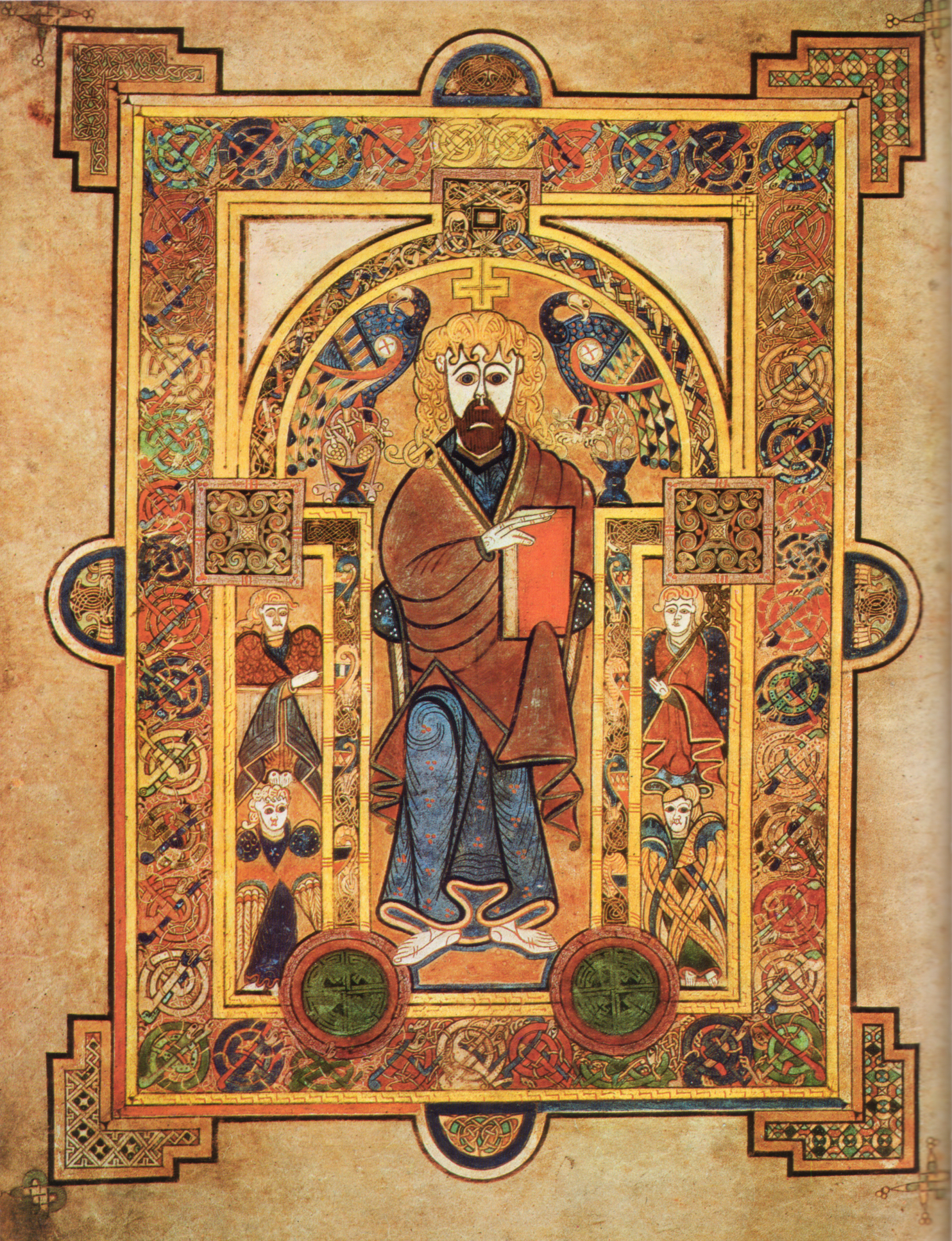
Dekorativni program Lindisfarnskih jevanđelja organizovan je sa strukturnom preciznošću koja ga razlikuje od raskosnijeg Kelskog knjige nastale otprilike vek kasnije. Svakom Jevanđelju prethodi niz ukrašenih stranica: minijaturni portret jevanđeliste, tepih-stranica čistog ornamenta i velika ukrašena inicijalna stranica koja uvodi tekst Jevanđelja. Pet tepih-stranica — dodatna se pojavljuje na početku toma — spadaju među vrhunska dostignuća insularne umetnosti. Svaka predstavlja celostranicu kompoziciju prepleta, čvorova i geometrijskih uzoraka raspoređenih unutar krstastog okvira, pri čemu oblik krsta izranja iz međuigre obojenih traka na kontrastnim pozadinama. Matematička preciznost ovih dizajna je izvanredna: analiza je otkrila da su uzorci prepleta konstruisani na rigoroznoj geometrijskoj mreži, pri čemu svaka nit prati doslednu logiku iznad-ispod koja se može neprekidno pratiti kroz stotine ukrštanja bez greške. Ova strukturna disciplina daje tepih-stranicama kvalitet meditativnog reda koji kontrastira sa naizgled beskonačnom složenošću njihovog površinskog detalja.
Ikonografija i simbolika
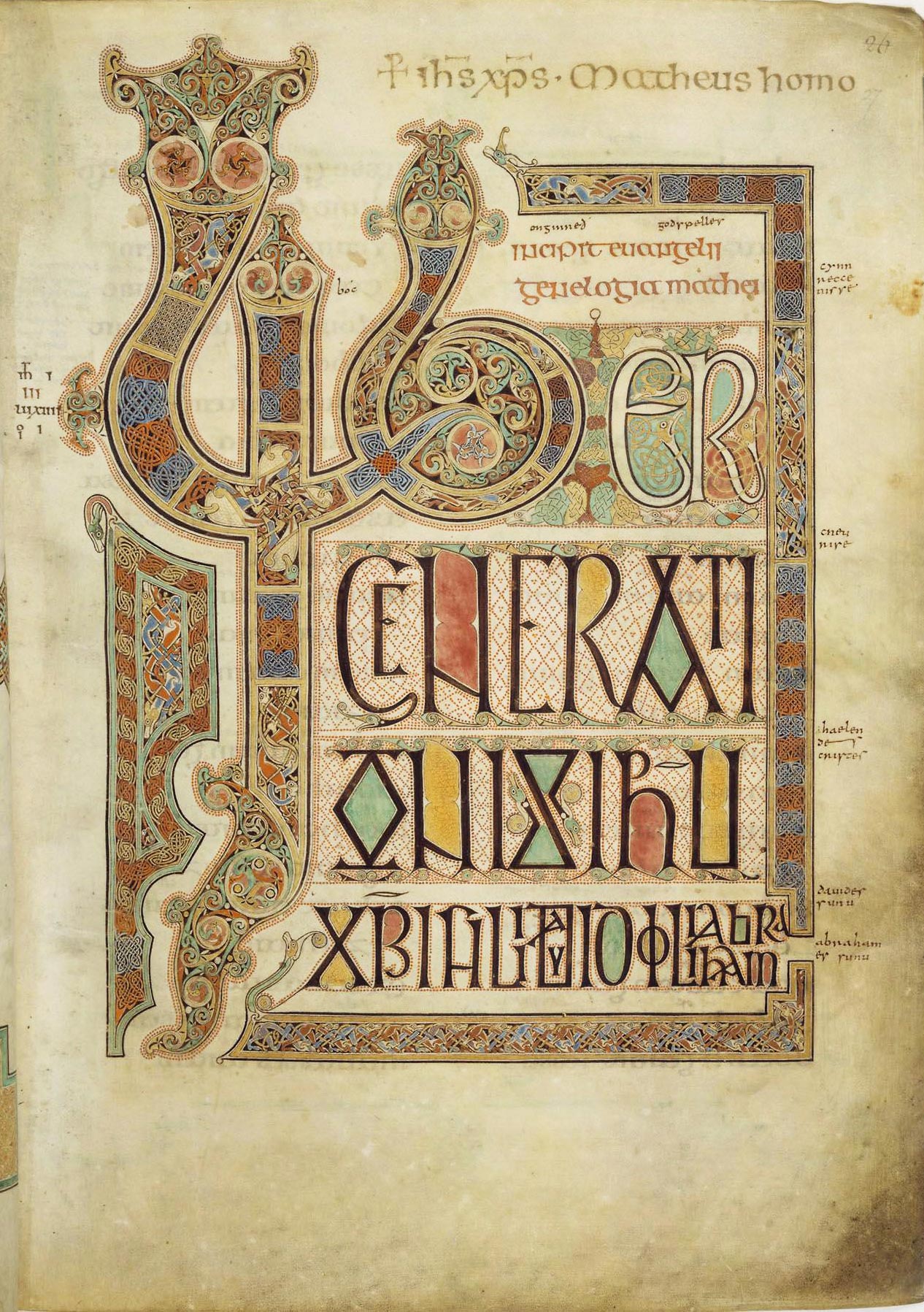
Hi-Ro stranica (folio 29r), koja uvodi opis Hristovog rođenja u Jevanđelju po Mateju, predstavlja jedan od velikih komada rukopisa. Grčki monogram Hrista — slova hi (X) i ro (P) — širi se da dominira stranicom, njegove forme artikulisane kroz spirale, prepleta, ptičje glave i apstraktne geometrijske uzorke. Za razliku od eksplozivnog pristupa Hi-Ro stranice Kelske knjige koji ispunjava prostor, lindisfarnska verzija održava napetu kompozicionu disciplinu, sa monogramom postavljenim na čistoj osnovi koja omogućava posmatraču da istovremeno čita i slovne forme i ornament. Okolni tekst napisan je u diminuendo obrascu, sa veličinama slova koja se postepeno smanjuju od monumentalne razmere monograma do regularne veličine teksta, stvarajući vizuelnu tranziciju koja vodi čitaoca od kontemplacije svetog simbola u narativ samog Jevanđelja. Ovo pažljivo kalibriranje razmere i ornamenta odražava sofisticirano razumevanje stranice rukopisa kao hijerarhijski organizovanog vizuelnog polja.
Sinteza raznolikih umetničkih tradicija vidljiva u Lindisfarnskim jevanđeljima odražava kosmopolitsku kulturu nortambrije sedmog veka, regije u kojoj su keltska i rimska hrišćanska tradicija nedavno bile pomirene na Sinodu u Vitbiju 664. godine. Spirale, trubasti zavoji i pelta motivi potiču iz La Ten tradicije pretkršćanske keltske umetnosti, prenešeni kroz metalurgiju i kamenu skulpturu u Irskoj i zapadnoj Britaniji. Preplet i zoomorfni ornament — izduženeh životinja čija vijugava tela formiraju zamršene čvorove — crpe iz germanskih životinjskih stilova (Salinov Stil II) donesenih u Britaniju od strane anglosaskih doseljenika. Portreti jevanđelista, međutim, slede mediteranske modele: figura Svetog Mateje, prikazan kako sedi sa knjigom i u pratnji svog simbola krilatog čoveka, veoma podseća na portrete pronađene u italijanskim rukopisima, posebno portret Ezre iz šestog veka u Kodeksu Amijatinusu, koji je sam proizveden u dvostrukom manastiru Virmat-Džerou, samo kilometrima od Lindisfarna. Ova fuzija insularnih i kontinentalnih elemenata bila je omogućena opsežnom bibliotekom u Lindisfarnu i mrežom naučne razmene koja je povezivala nortambrijske manastire sa Rimom, Galijom i istočnim Mediteranom.
Naučna analiza pigmenata korišćenih u Lindisfarnskim jevanđeljima otkrila je paletu izvanrednog raspona i, u nekoliko slučajeva, egzotičnog porekla. Primarne boje uključuju crveni i beli olov, verdegris (bakarni acetat zeleni), žuti arsenov sulfid (orpiment) i biljni indigo. Najupečatljivije, rukopis obilno koristi lapis lazuli, blistavo ultramarin-plavu dobijenu iz poludragulja lazurita, čiji je jedini poznati izvor u ranom srednjem veku bio rudnik Badahšana u današnjem severoistočnom Avganistanu. Prisustvo ovog materijala u nortambrijskom rukopisu iz osmog veka pruža ubedljiv dokaz o dometu duge trgovačke mreže koja se prostirala od Britanskih ostrva kroz Mediteran do Centralne Azije. Nedavna analiza korišćenjem Raman spektroskopije takođe je identifikovala upotrebu folijuma, ljubičaste boje ekstraktovane iz biljke Chrozophora tinctoria, porekla iz mediteranskog regiona. Uvoz ovih skupih i dalekih materijala naglašava prestiž narudžbine rukopisa i resurse kojima je lindisfarnska zajednica mogla da raspolaže tokom ovog perioda kulturnog procvata.
Aldredova glosa, dodata rukopisu oko 970. godine kada se zajednica Svetog Katberta preselila u Čester-le-Strit bežeći od vikinških najezda, predstavlja najraniji sačuvan prevod Jevanđelja na engleski jezik. Napisana sitnim, urednim rukopisom između redova originalnog latinskog teksta, Aldredov staroengleski prevod transformiše Lindisfarnska jevanđelja iz čisto latinskog liturgijskog objekta u dvojezični dokument ogromnog lingvističkog značaja. Glosa je napisana na nortambrijskom dijalektu staroengleskog, pružajući neprocenjive dokaze za fonologiju, morfologiju i vokabular dijalekta koji je inače slabo potvđen u pisanim izvorima. Aldredov kolofon, u kome imenuje tvorce rukopisa i pripisuje sebi zaslugu za glosu, takođe predstavlja važan rani primer onoga što bi se moglo nazvati umetničkom samosvešću — želja da se zabeleže imena i uloge onih koji su doprineli izradi svetog predmeta, potvrđujući vrednost individualnog ljudskog rada u službi božanske svrhe.
Opstanak rukopisa kroz vekove previranja je narativ izvanredne sreće i posvećenosti. Kada su vikinški napadi opustošili Lindisfarn 793. godine — događaj koji je Alkuin iz Jorka zabeležio kao katastrofu koja je šokirala hrišćanstvo — monaška zajednica je na kraju napustila ostrvo, noseći sa sobom moštine Svetog Katberta i svoje najdragocenije posed, uključujući Jevanđelja. Zajednica je lutala godinama pre nego što se nastanila u Čester-le-Stritu 883. godine i konačno u Daramu 995. godine. Prema izveštaju Simeona iz Darama iz dvanaestog veka, rukopis je pao u more tokom pokušaja morskog prelaska u Irsku i čudesno pronađen na obali za vreme oseke — događaj koji, kakva god mu bila istorijska osnova, svedoči o izvanrednom poštovanju u kome je tom držan. Nakon Raspuštanja manastira pod Henrijem VIII, rukopis je prošao kroz razne privatne ruke pre nego što je ušao u kolekciju ser Roberta Kotna, čija je biblioteka zaveštana naciji 1700. i na kraju postala deo Britanske biblioteke.
Recepcija i nasleđe
Lindisfarnska jevanđelja zauzimaju ključnu poziciju u istoriji insularne umetnosti, hronološki stojeeći između ranije Knjige iz Daroua (oko 650-700. n.e.) i kasnije Kelske knjige (oko 800. n.e.). Dok Knjiga iz Daroua eksperimentiše sa relativno ograničenom paletom i smelim, pomalo strogim dekorativnim vokabularom, a Kelska knjiga gura ornamentalnu raskoš do gotovo halucinatornog ekstrema, Lindisfarnska jevanđelja postižu klasičnu ravnotežu — harmoniju strukturne jasnoće i dekorativnog bogatstva koju mnogi istoričari umetnosti smatraju vrhuncom insularne tradicije. Rukopis demonstrira da manastiri ranosrednjovekovne Britanije i Irske nisu bili izolovani punktovi već dinamični centri umetničke inovacije, sposobni da apsorbuju uticaje iz celog poznatog sveta i sintetizuju ih u vizuelni jezik izvanredne originalnosti i snage. Danas Lindisfarnska jevanđelja ostaju jedno od najdragocenijih blaga Britanske biblioteke, svedočanstvo kreativnog genija Edfrida i duhovne zajednice koja je podržavala njegov rad na vetrovima izloženim obalama Svetog ostrva.