Istorijski kontekst
Kelska knjiga (Triniti koledž Dablin, MS 58) je najraskošnije ukrašen od velikih insularnih jevanđeljskih rukopisa, delo toliko izvanredne ornamentalne složenosti i hromatske blistavosti da ga je hroničar iz dvanaestog veka Džerald od Velsa opisao kao proizvod anđeoskog, a ne ljudskog rada. Rukopis sadrži četiri Jevanđelja Novog zaveta na latinskom, napisana pretežno insularnim majuskulnim pismom na 340 folija pripremljenog telećeg veluma. Naučni konsenzus smešta njegovo nastajanje oko 800. godine nove ere, tokom turbulentnih decenija kada se manastirska zajednica koju je Sveti Kolumba (Kolum Kile) osnovao na ostrvu Ajona, uz zapadnu obalu Škotske, suočavala sa eskalacijom vikinških napada. Široko je prihvaćeno da je rukopis započet na Ajoni i prenet u kolumbanski manastir u Kelsu u okrugu Mit, Irska, nakon razornog vikiškog napada 806. godine koji je ubio šezdeset osam članova zajednice. Da li je Knjiga dovršena u Kelsu ili je tamo stigla suštinski završena ostaje predmet debate, ali transfer smešta rukopis na raskršće dva sveta — kontemplativnog ostrvskog monaštva Ajone i sve više opsednutog kulturnog pejzaža ranosrednjovekovne Irske i Britanije.
Dekorativni program rukopisa organizovan je oko nekoliko kategorija ukrašenih stranica, od kojih svaka služi posebnoj liturgijskoj i estetskoj funkciji. Najslavnije su celostranične ukrašene inicijale i monogramske stranice, od kojih je Hi-Ro stranica (folio 34r) — koja ilustruje početak Matejovog izveštaja o Hristovom rođenju grčkim slovima hi (X), ro (P) i jota (I), prvim slovima reči „Christi” — univerzalno priznata kao remek-delo insularne iluminacije. Dva slova se šire da ispune čitavu stranicu u vrtoglavom umnožavanju spirala, prepleta, ključ uzoraka i zoomorfnih formi — izduženih životinja čija se tela rastvaraju u trake ornamenta, samo da bi se ponovo pojavila kao prepoznatljive glave i udovi na neočekivanim mestima. Gustina dekoracije je gotovo halucinatorna: uvećanje otkriva detalje nevidljive golim okom, uključujući sićušne ljudske figure, mačke, miševe i insekte utkane u preplet, sugerirajući da je stranica zamišljena kao predmet produženog meditativnog razmatranja, a ne brze vizuelne potrošnje.
Formalna analiza
Tepih-stranice — celostranične kompozicije čistog ornamenta bez teksta, nalik razrađenim šarenim tekstilima — predstavljaju još jednu karakteristiku insularne rukopisne umetnosti. Ove stranice, koje obično prethode otvaranju svakog Jevanđelja, funkcionišu kao vizuelni pragovi, označavajući prelaz sa jednog svetog teksta na drugi i pozivajući čitaoca u stanje kontemplativne pažnje. Ornamentalni vokabular crpi iz višestrukih kulturnih tradicija: spirale i trubasti zavoji potiču iz prethrišćanskog keltskog metalnog zanatstva; preplitajući uzorci odražavaju germanski animalistički stil; uokvirujuće bordure i arhitektonski motivi pokazuju mediteranski i moguće koptski uticaj. Ova sinteza raznovrsnih umetničkih tradicija u koherentan dekorativni idiom jedno je od velikih dostignuća insularne umetnosti, odražavajući kosmopolitsku intelektualnu kulturu ranosrednjovekovnih manastira, koji su služili kao riznice i prenosioci učenosti iz čitavog poznatog sveta.
Pigmenti korišćeni u Kelskoj knjizi svedoče o ekstenzivnim trgovačkim mrežama i posvećenosti materijalnom sjaju. Paleta uključuje orpiment (arsenov sulfid, koji daje briljantan žuti ton), olovno crveno i belo, verdigris (bakarno zeleno), kermes (crveno dobijeno od insekata) i — najzapažljivije — lapis lazuli, poludragi kamen koji je dolazio isključivo iz rudnika Badahšana u severnoistočnom Avganistanu. Prisustvo lapis lazulija u irskom rukopisu iz osmog ili devetog veka demonstrira doseg ranosrednjovekovnih trgovačkih puteva i vrednost koja je pridavana stvaranju rukopisa — ovo nije bila utilitarna kopija Jevanđelja, već prestižni predmet najvišeg reda, namenjen slavljenju Boga kroz samu veličanstvenost svog materijalnog ostvarenja. Pigmenti su nanošeni četkicama izvanredne finoće, proizvodeći linije tanane delikatnosti — neki detalji, posebno u preplitajućim uzorcima, mere manje od pola milimetra u širini, preciznost koja se približava granicama neosvetljenog ljudskog vida.
Ikonografija i simbolika
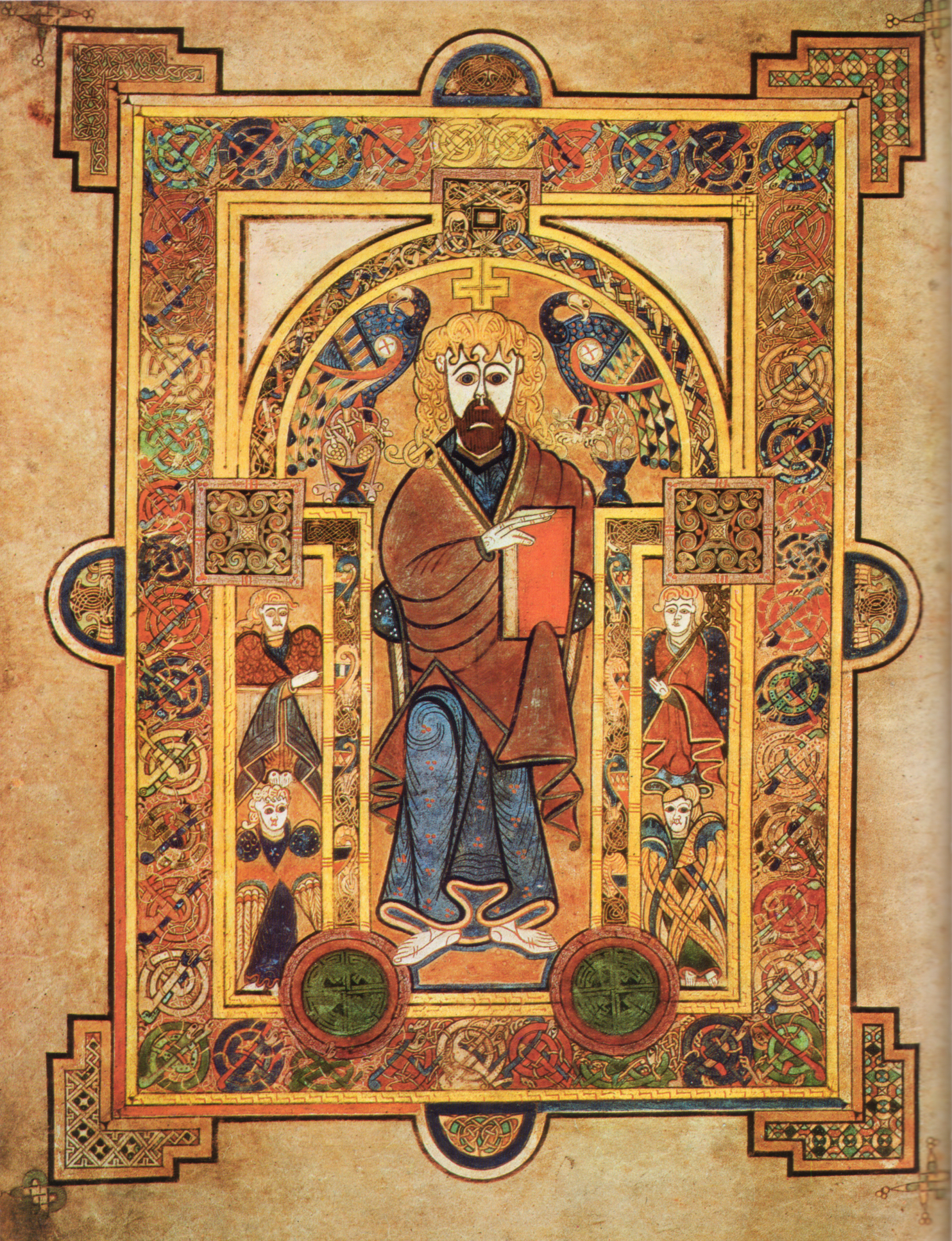
Zoomorfna i antropomorfna dekoracija kroz čitav rukopis čini složen simbolički program čije potpuno značenje ostaje samo delimično shvaćeno. Izduženi lavovi, zmije, paunovi, ribe i fantastična kompozitna bića nastanjuju margine, bordure i inicijalna slova, njihova tela se preplićući u uzorke koji istovremeno evociraju prirodni svet i prevazilaze ga. Neka od ovih stvorenja nose prepoznatljiv hrišćanski simbolizam — paun kao vaskrsenje, riba kao Hrist, lav kao jevanđelista Marko — ali druga opiru se lakom alegorijskom čitanju, zauzimajući ambivalentnu zonu između dekoracije i značenja koja je karakteristična za insularnu umetnost. Ljudske figure pojavljuju se u raznim oblicima: portreti jevanđelista, iako snažno stilizovani, prate prepoznatljive mediteranske ikonografske tipove; druge figure, zagonetnije, pojavljuju se unutar inicijalnih slova ili dekorativnih bordura, ponekad angažovane u prepoznatljivim radnjama (čovek koji hvata dve guske za vrat, figura koja vuče svoju bradu) čiji narativni ili simbolički značaj ostaje nejasan.
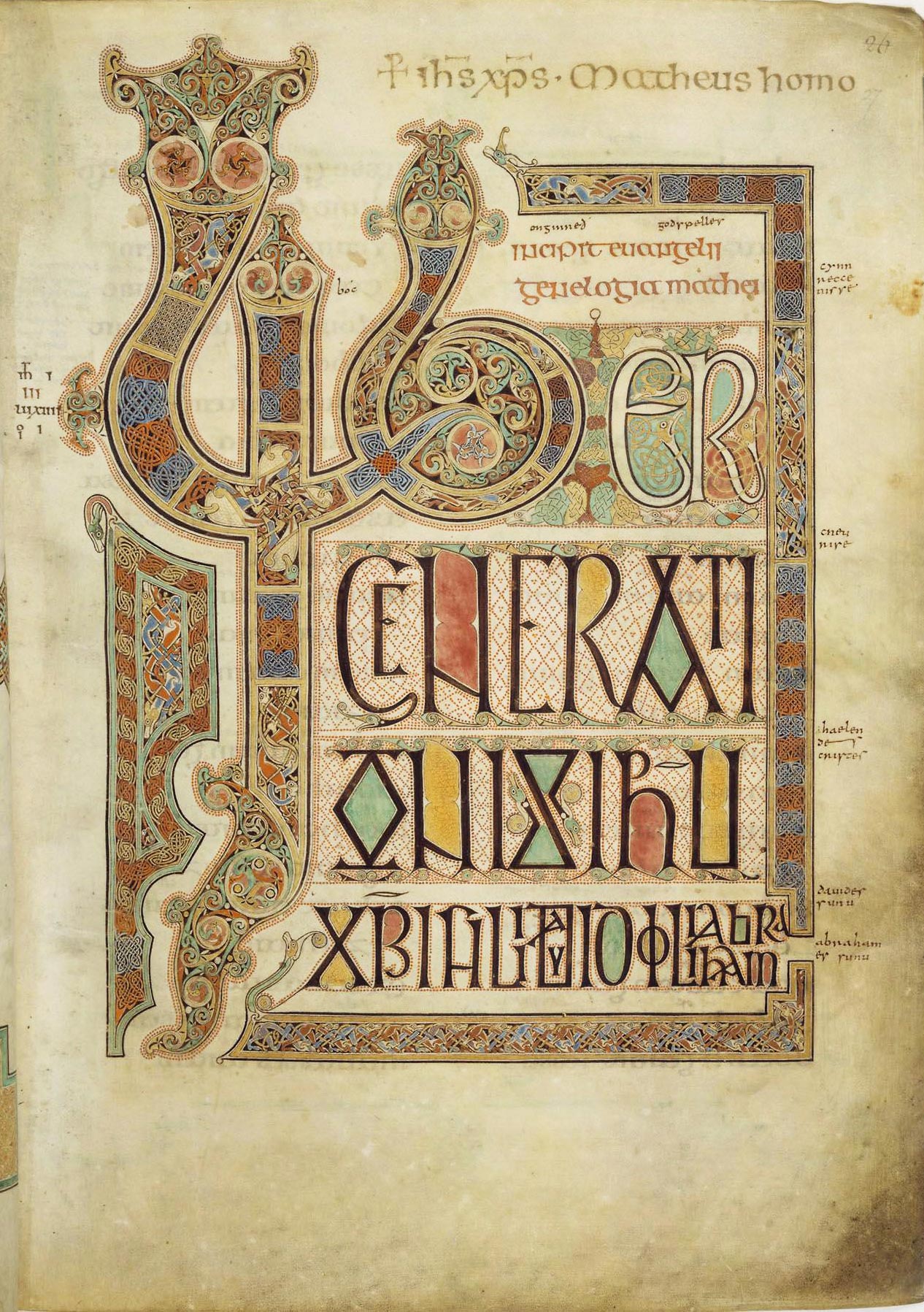
Poređenje sa Lindisfarenskim jevanđeljima (oko 700. godine, Britanska biblioteka, Cotton MS Nero D.IV), drugim velikim spomenikom insularne iluminacije, osvetljava distinktivne kvalitete Kelske knjige. Lindisfarnenska jevanđelja, nastala u manastiru Lindisfarn u Nortumbriji, pokazuju uporedivu majstoriju prepleta i dizajna tepih-stranica, ali održavaju disciplinovaniju, geometrijskiju pravilnost — svaka tepih-stranica se pridržava jasne strukturne mreže, a ornamentalni repertoar, mada virtuozan, umereniji je u svojoj raznovrsnosti. Kelska knjiga, nasuprot tome, karakteriše gotovo barokna bujnost: uzorci se umnožavaju, probijaju svoje okvire, prelivaju u margine i opiru se ograničenju; figure izranjaju iz ornamenta i rastvaraju se u njemu sa fluidnošću koja podriva granicu između reprezentacije i apstrakcije. Ovo preobilje navelo je neke naučnike da u Kelskoj knjizi vide kulminaciju i, u izvesnom smislu, kriznu tačku insularne tradicije — delo u kome dekorativni impuls dostiže takav intenzitet da preti da preplavi tekstualni sadržaj koji naizgled služi.
Recepcija i nasleđe
Preživljavanje rukopisa kroz milenijum političkih previranja, ratova i zanemarivanja samo je po sebi izvanredna priča. Anali Alstera beleže da je „veliko Jevanđelje Kolumkilovo” ukradeno iz zapadne sakristije kamene crkve u Kelsu 1007. godine i pronađeno dva meseca kasnije „pod busenom”, lišeno svog zlatnog i draguljima ukrašenog poveza. Ovaj zapis se generalno tumači kao referenca na Kelsku knjigu i sugeriše da je njen metaluški okvir — gotovo sigurno veličanstven komad insularnog zlatarstva — bio primarna privlačnost za lopove, dok su stranice od veluma smatrane bezvrednim u poređenju. Rukopis je prošao kroz razne ruke tokom Reformacije i predat je Triniti koledžu u Dablinu 1661. godine od strane Henrija Džounsa, biskupa od Mita. Od tada se nalazi u Trinitiju, gde je sada izložen u Dugoj sobi Stare biblioteke i privlači preko milion posetilaca godišnje, što ga čini jednim od najgledanijih rukopisa na svetu. Nedavni konzervatorski napori i digitalno snimanje otvorili su nove puteve proučavanja, otkrivajući podcrteže, ubodne smernice i kompozicione promene koje osvetljavaju radne metode anonimnih kolumbanskih monaha čiji je zajednički rad proizveo ovaj nenadmašni spomenik ranosrednjovekovne umetnosti.