Istorijski kontekst
Justinijanov mozaik u bazilici San Vitale u Raveni završen je oko 547. godine nove ere, ubrzo nakon što je vizantijski general Velizarije ponovo zauzeo grad od ostrogotskog kraljevstva u okviru ambiciozne kampanje cara Justinijana I za ponovno osvajanje zapadnih teritorija nekadašnjeg Rimskog carstva. Mozaik zauzima severni zid apside, direktno naspram pratećeg panela koji prikazuje caricu Teodoru i njene pratilje. Zajedno, ova dva panela predstavljaju jedno od najznačajnijih sačuvanih dela rane vizantijske carske umetnosti i služe kao vizuelni manifest Justinijanove pretenzije na univerzalnu suverenitet nad svetovnim i svetim oblastima. Ravena, koja je služila kao prestonica Zapadnog rimskog carstva i potom ostrogotskog kraljevstva, bila je grad ogromnog simboličkog značaja, a dekoracija San Vitalea ovim carskim portretima predstavljala je namerni čin političke i kulturne aproprijacije.
Značajno je da Justinijan gotovo izvesno nikada nije lično posetio Ravenu, čineći mozaik formom surogat carskog prisustva — koncept duboko ukorenjen u rimskim tradicijama imago, prema kojima je careva slika nosila pravni i sakralni autoritet samog cara. Mozaik je naručen pod pokroviteljstvom biskupa Maksimijana, koji se istaknuto pojavljuje u kompoziciji i čije je ime upisano iznad njegove glave, jedina figura na panelu tako identifikovana. Program San Vitalea u celini predstavlja sofisticiranu sintezu starozavetne tipologije, hristološke ikonografije i carske ideologije, odražavajući shvatanje justinijanskog dvora o caru kao Božjem namestniku na zemlji, teološko-politički koncept poznat kao cezaropapizam koji će duboko oblikovati vizantijsko upravljanje tokom vekova.
Formalna analiza
Kompozicija raspoređuje trinaest figura u plitkoj, frizolkoj procesiji na luminoznoj zlatnoj pozadini koja eliminiše svaki osećaj prostorne dubine ili prirodnog okruženja. Justinijan zauzima centar, istaknut carskim purpurnim hlamidom, draguljarskom fibulom i zlatnim oreolom koji signalizuje njegov kvazi-sakralni status. On drži veliku zlatnu patenu — liturgijski sud za nošenje euharistijskog hleba — uspostavljajući direktnu vizuelnu analogiju između carskog i svešteničkog autoriteta. S njegove leve strane stoji biskup Maksimijan, prepoznatljiv po natpisu i palijumu, držeći draguljarsku krst, dok desno vojnici carske garde nose štit ukrašen hi-ro monogramom Hrista. Figure se blago preklapaju, stvarajući komprimiran prostorni raspored koji ipak održava strogi hijerarhijski poredak centriran na cara.
Formalni tretman figura karakteristično je vizantijski u svom odbacivanju klasičnog naturalizma u korist hijeratske apstrakcije. Tela su spljošena i frontalna, stopala izgledaju kao da lebde na uskoj zelenoj liniji tla, a ne da stoje na uverljivoj površini. Lica su prikazana sa velikim, netremičnim očima i shematizovanim crtama koje prenose status i duhovni autoritet pre nego individualni lik, mada određene figure — posebno Maksimijan i, moguće, Justinijan — prikazuju dovoljno individualizovanih detalja da sugerišu portretisanje. Tesere su izuzetno fine, sa pojedinačnim kockicama malim i do pet milimetara u nekim delovima lica, omogućavajući suptilne gradacije tona. Zlatna pozadina sastavljena je od staklenih tesera sa zlatnim listićem između slojeva stakla, postavljenih pod blago nepravilnim uglovima da bi se proizveo karakterističan treperavi efekat koji dematerijalizuje zidnu površinu. Paleta je dominirana carskim purpurom, liturgijskim belim, vojničkim zelenim i sveprisutnim zlatom, stvarajući hromatsku shemu koja pojačava tematsko jedinstvo crkve, države i božanskog poretka.
Značaj i nasleđe
Justinijanov mozaik u San Vitaleu među najreproducovanijim je i najdiskutovanijim delima u čitavom kanonu srednjovekovne umetnosti, služeći kao primarni dokument za razumevanje vizuelne kulture ranog Vizantijskog carstva. Njegov značaj daleko prevazilazi oblast estetike: istoričari umetnosti, politički istoričari i teolozi pretraživali su panel u potrazi za dokazima u vezi sa Justinijanovom carskom ideologijom, odnosom između svetovnog i crkvenog autoriteta u Vizantiji šestog veka i funkcionisanjem slika kao instrumenata političke moći u predmodernim društvima. Namerno stapanje carske i liturgijske ikonografije na mozaiku — Justinijan koji nosi patenu kao da je sveštenik koji prilazi oltaru — sažima cezaropapističku teologiju koja je definisala vizantijsku političku misao i razlikovala je od zapadne srednjovekovne tradicije razdvojenih temporalnih i duhovnih vlasti.
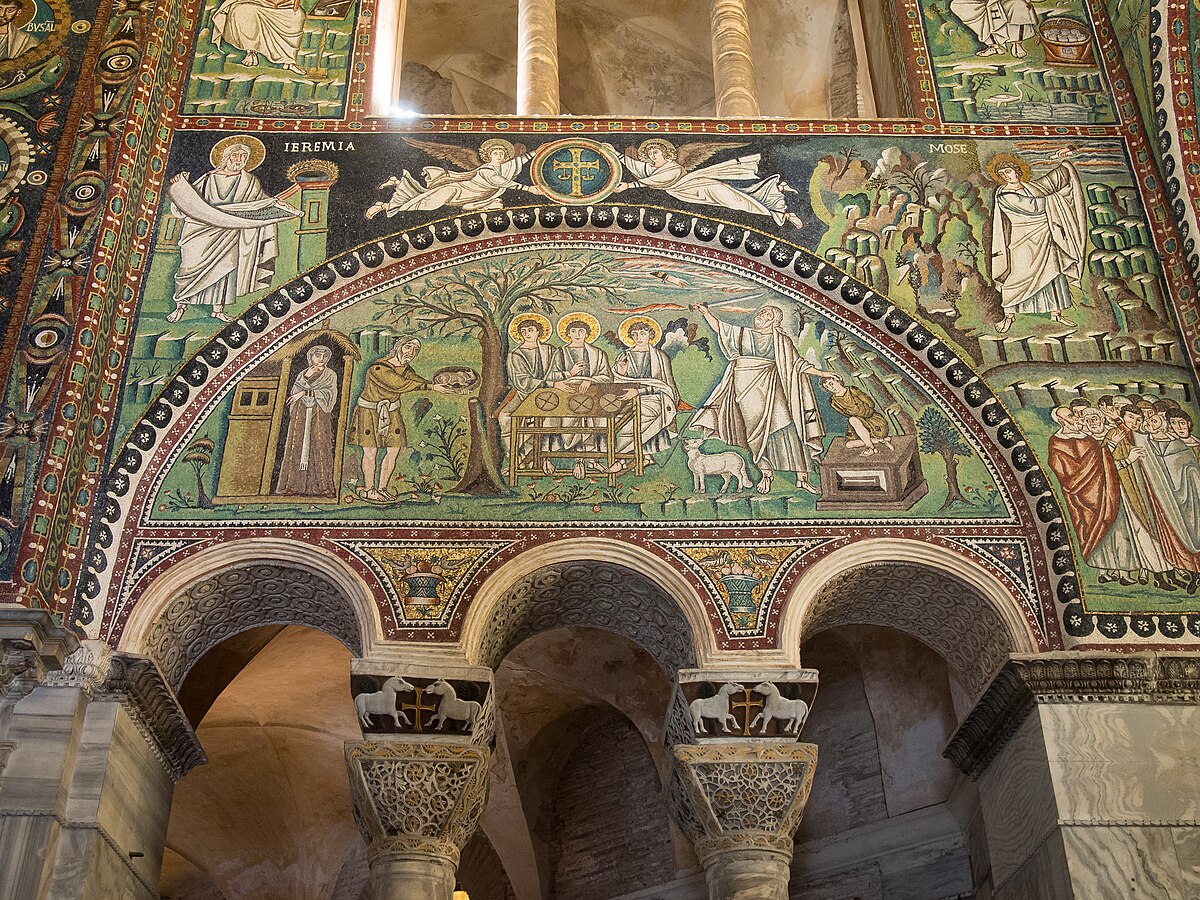
Očuvanost mozaika u San Vitaleu u gotovo kompletnom stanju sama po sebi je izvanredna, delimično zahvaljujući relativnoj političkoj marginalnosti Ravene posle osmog veka, što je baziliku poštedelo opsežnih renovacija i destrukcija koje su izbrisale uporedive programe na drugim mestima. Mozaici su izvršili značajan uticaj na karolinšku umetnost — Karlova Palatinska kapela u Ahenu direktno je modelovana prema arhitektonskom planu San Vitalea — i nastavili su da inspirišu moderne i savremene umetnike, najistaknutije bečkog secesonistu Gustava Klimta, čija je poseta Raveni 1903. duboko oblikovala njegovo kasnije korišćenje zlata i uzoraka nalik mozaiku. Kao lokalitet svetske baštine UNESKO-a, San Vitale i njegovi mozaici ostaju u centru aktuelnih naučnih debata o prirodi vizantijske vizualnosti, politici sakralnog prostora i sposobnosti monumentalne umetnosti da projektuje moć kako kroz prostor, tako i kroz vreme.