Fovizam, mada je trajao jedva cetiri godine kao koherentan pokret, predstavlja jedan od najznacajnijih raskola u istoriji zapadne umetnosti: definitivno oslobodjenje boje od njene obaveze da opisuje vidljivi svet. Pokret je prodro u javnu svest na Salonu d’Automne 1905, gde je grupa mladih slikara — Anri Matis, Andre Deren, Moris de Vlamenk, Anri Mangen, Alber Marke, Sarl Kamoan i drugi — izlozila platna takvog hromatskog intenziteta i prividne grubosti da su izazvala gnev medju kriticarima i publikom. Umetnicki kriticar Lui Voksel, usavsi u galeriju gde su ove usijane slike okruzivale malu renesansnu bronzanu skulpturu, navodno je uzviknuo “Donatelo chez les fauves!” — “Donatelo medju divljim zverima!” Ime se zadrzalo, i mada sami umetnici nikada nisu objavili manifest niti formirali formalnu grupu, “fovizam” je postao oznaka za prvi veliki avangardni pokret dvadesetog veka, koji je prethodio kubizmu za dve a futurizmu za cetiri godine.
Koreni fovizma lezali su u postimpresionistickoj revoluciji 1880-ih i 1890-ih, posebno u radu trojice umetnika koje su Matis i njegov krug obozavali kao prorocke prethodnike. Pol Gogen je u svojim tahitskim slikama demonstrirao da boja ne mora odgovarati opazhenoj stvarnosti — da crveni pas ili roze nebo mogu nositi ekspresivne i simbolicke istine nedostupne naturalistickoj reprezentaciji. Vinsent van Gog je pokazao da gusti, usmereni potezi cetke i zasicena boja mogu prenositi intenzivnu subjektivnu emociju, cineci samu slikanu povrsinu sredstvom psiholoskog izraza. Pol Sezan je otkrio da konstrukcija slikarskog prostora kroz modulaciju toplih i hladnih ravni boja moze zameniti tradicionalnu perspektivu i kjaroskuro. Fovisti su apsorbovali ove lekcije i radikalizovali ih: dok su postimpresionisti uglavnom radili u izolaciji i bili priznati tek posthumno, fovisti su svoju hromatsku revoluciju predstavili kao kolektivnu izjavu, generacijsku deklaraciju nezavisnosti od prigusenog, tonskog slikarstva koje je jos uvek dominiralo francuskom akademijom i zvanicnim Salonima.
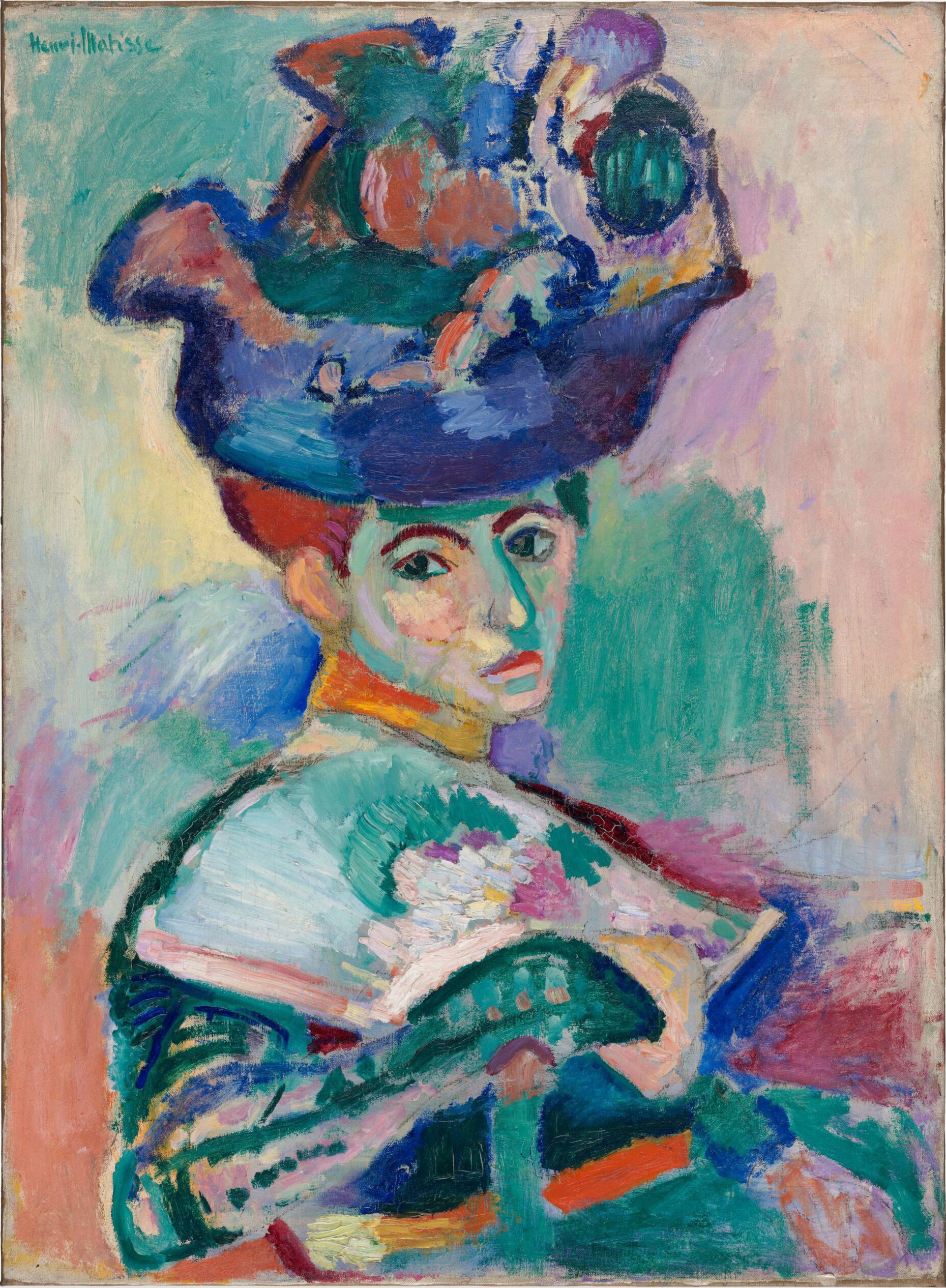
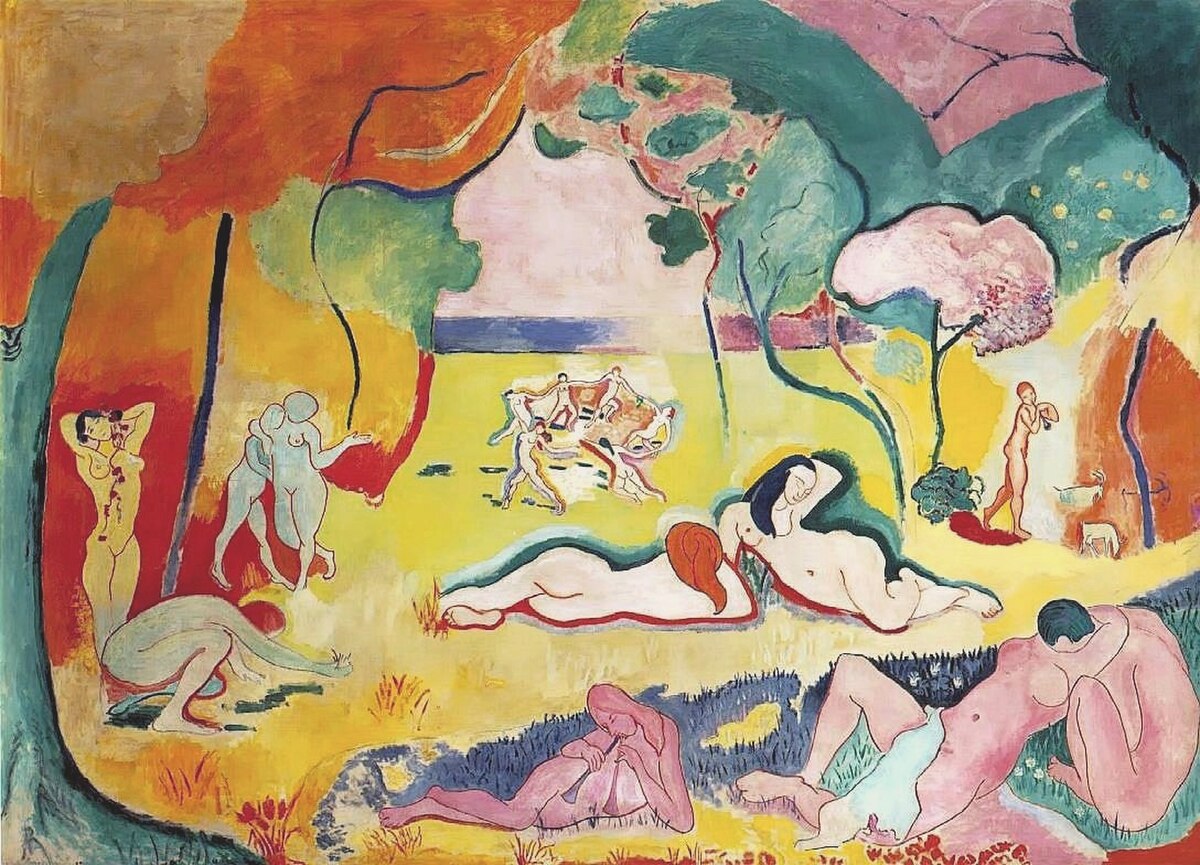
Anri Matis (1869-1954) bio je neosporni vodjla fovista, mada je sa trideset pet godina bio znatno stariji od vecine svojih saradnika. Njegova Woman with a Hat (1905), portret njegove supruge Ameli, postala je skandal Salona 1905: lice je modelovano ne u tonovima puti vec u smelim potezima zelene, ljubicaste i narandzaste, sesir fantazija nemesanog pigmenta, pozadina sareni mozaik proizvoljnih nijansi. Leo i Gertruda Stajn su kupili sliku, zapocevsi svoje legendarno pokroviteljstvo pariske avangarde. Matis je nastavio sa The Joy of Life (Le Bonheur de vivre, 1905-1906), monumentalnim platnom golih figura u arkadijskom pejzazu prikazanom u sirokim, ravnim povrsinama zasicene boje — roze tela, narandzasta drveca, zeleno i zuto nebo — koja je sintetisala fovisticki eksperiment u viziju culne harmonije. Radikalno spljostavanjenje prostora slike i njeno otvoreno prihvatanje dekorativne lepote najavili su pravac koji ce Matis slediti do kraja svoje duge karijere: stvaranje onoga sto je slavno opisao kao “umetnost ravnoteze, cistoce i spokoja, lišenu uznemirujuceg ili deprimirajuceg sadrzaja… nesto poput dobre fotelje.”
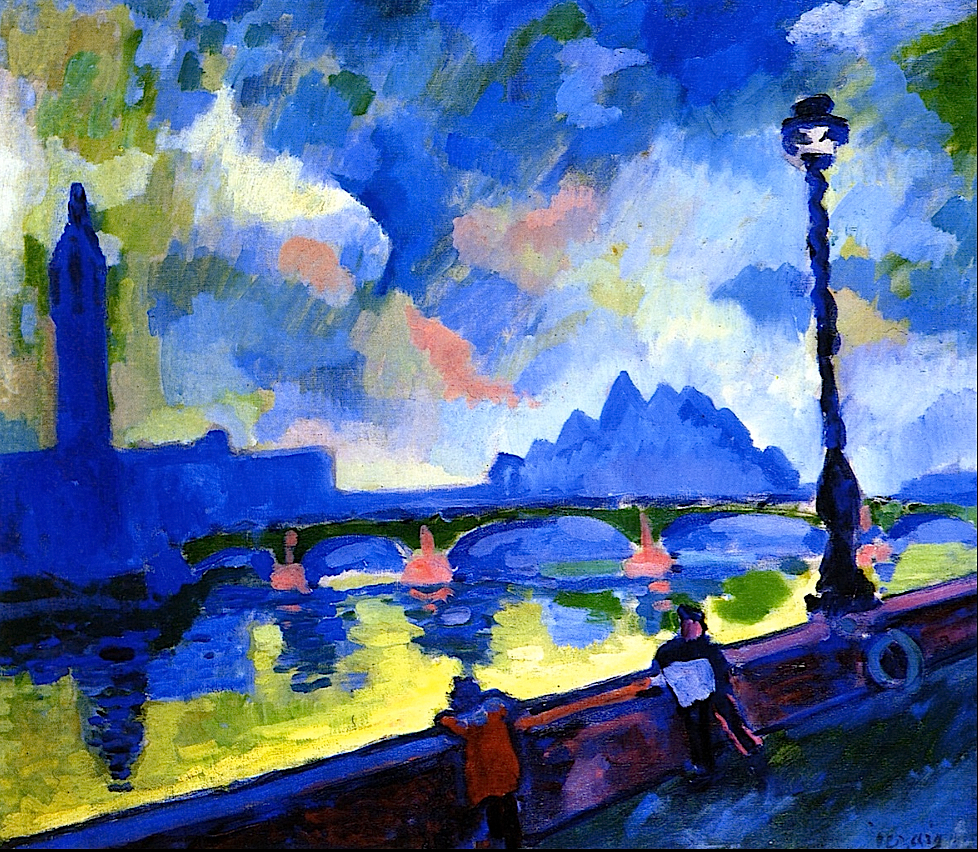
Andre Deren (1880-1954) i Moris de Vlamenk (1876-1958), bliski prijatelji koji su zajedno slikali duz Sene u Satuu od 1900, predstavljali su instinktivniji, manje teorijski utemeljen krak fovizma. Vlamenk, autodidakt koji se hvalio da nikada nije krocion u Luvr, tvrdio je da slika “srcem i slabinama”, istiskujuci pigment direktno iz tube na platno sa gotovo nasilnom energijom. Njegovi pejzazi doline Sene pulsiraju gustim impastom u cistom vermilijonu, kobalt plavom i hrom zutom, prenoseci sirovu vitalnost koja vise duguje Van Gogovoj emocionalnoj direktnosti nego bilo kakvoj sistematskoj teoriji boja. Deren je bio cerebraliji, proizvodecu tokom presudnog leta u Koliuru sa Matisom 1905. seriju pejzaza i luckih prizora u kojima su komplementarne boje — narandzasta nasuprot plavoj, crvena nasuprot zelenoj — postavljene u mozaickim mrljama koje su razbijale jedinstvo lokalne boje a istovremeno odrzavale iznenadujuce koherentan osecaj svetlosti i atmosfere. Njegovi pogledi na London, naslikani 1906. na predlog dilera Ambroaza Volara, pretvorili su sivu Temzu u reke elektricno plave a gradske mostove u strukture kadmijum narandzaste i smaragdno zelene, proizvodecu neke od najradosnije hromatskih gradskih pejzaza u istoriji slikarstva.
Teorijsko utemeljenje fovistieke boje, u meri u kojoj je postojalo, crpelo je iz neoimpresionisticke nauke o boji Misel-Ezhena Sevriela i Ogdena Ruda, prenesene kroz divizionisticku tehniku Pola Sinjaka, ciji je traktat iz 1899. D’Eugene Delacroix au Neo-Impressionnisme pazljivo proucavan od strane Matisa i Derena. Sinjalov princip “ciste, razdvojene boje” — nemesanih pigmenata postavljenih jedan do drugog da stvore opticke mesavine maksimalne svetlosti — usvojen je a zatim prevazidjhen od strane fovista, koji su napustili male, sistematske tacke neoimpresionizma u korist velikih, slobodno cetkanih povrsina boje koje su zrtvovale opticku preciznost zarad emocionalnog uticaja. Matis je takodje crpeo iz ideja svog ucitelja Gistava Moroa, simbolistickog slikara koji je rekao svojim ucenuicima da “boje moraju biti mišljene, sanjane, zamišljene” — da boja nije svojstvo objekata vec autonomna ekspresivna sila. Ovo uverenje da boja moze funkcionisati nezavisno od forme i opisa, komunicirajuci direktno sa emocijama posmatraca, pokazalo se kao jedna od najplodnijih ideja u umetnosti dvadesetog veka.
Uprkos svojoj usijanoj energiji, fovizam je bio izuzetno kratkog veka. Do 1907, Deren je pao pod uticaj Sezana i africke skulpture, krecuci se ka geometrijskom pojednostavljivanju koje ce voditi ka kubizmu. Vlamenk je sledio slicnu putanju ka tamnijem, strukturiranijem slikarstvu. Brak, koji je kratko usvojio fovistiecku paletu, izlozio je svoje proto-kubisticke pejzaze na Salonu d’Automne 1908 — na istoj izlozbi na kojoj ce Voksel skovati termin “kubizam.” Cak je i Matis, koji nikada nije napustio boju kao svoje primarno sredstvo izraza, prevazišao spontane hromatske eksplozije 1905-1906. ka kontrolisanijoj, arhitektonskoj upotrebi ravnih ravni boje u remek-delima poput The Red Studio (1911) i The Dance (1910). Fovisticki trenutak je, dakle, bio manje odrziv pokret a vise kataliticka blesak — kolektivni cin oslobodjenja koji je trajno prosiirio mogucnosti slikarstva i otvorio vrata kroz koja ce proci gotovo svaki kasniji avangardni pokret.
Nasledje fovizma se prostire daleko izvan njegovog kratkog istorijskog trenutka. Demonstriravsi da boja moze biti razvedena od svoje reprezentacione funkcije i koriscena kao autonomni ekspresivni element, fovisti su uspostavili princip koji ce oblikovati nemacki ekspresionizam (grupe Di Brike i Blaue Rajter eksplicitno su priznavale svoj dug), apstraktni ekspresionizam (Matis je bio presudni uticaj i na Marka Rotka i na Hansa Hofmana) i slikarstvo Polja boja 1960-ih. Sam Matis, koji je nastavio da razvija fovistiecko nasledje tokom cele karijere — kulminiraci u papirnim iseccima svojih poslednjih godina, koje je opisao kao “slikanje makazama” — postao je jedna od dve dominantne figure umetnosti dvadesetog veka, njegova hromatska vizija pruzajuci liricni, hedonisticki protivteg analitickoj strogosti njegovog velikog rivala Pikasa. Fovistiecka revolucija je dokazala da primarna odanost umetnosti nije oku vec masti, i da istina slike ne lezi u njenoj vernosti pojavama vec u intenzitetu i autenticnosti njene ekspresivne vizije.